Your espresso tastes bitter because your extraction time is too long, your grind is too fine, or your water temperature is too high. Try shortening your shot to 25-30 seconds, slightly coarsening your grind, and lowering water temperature to 90–94°C.
Also, make sure you dose correctly, tamp evenly, and use fresh, medium or light roast beans. Maintaining clean equipment and quality water helps prevent bitterness buildup.
Explore these key adjustments to transform your shot’s flavor and balance. You’ll be surprised how a few simple changes can make a big difference!
How Over-Extraction Makes Espresso Bitter
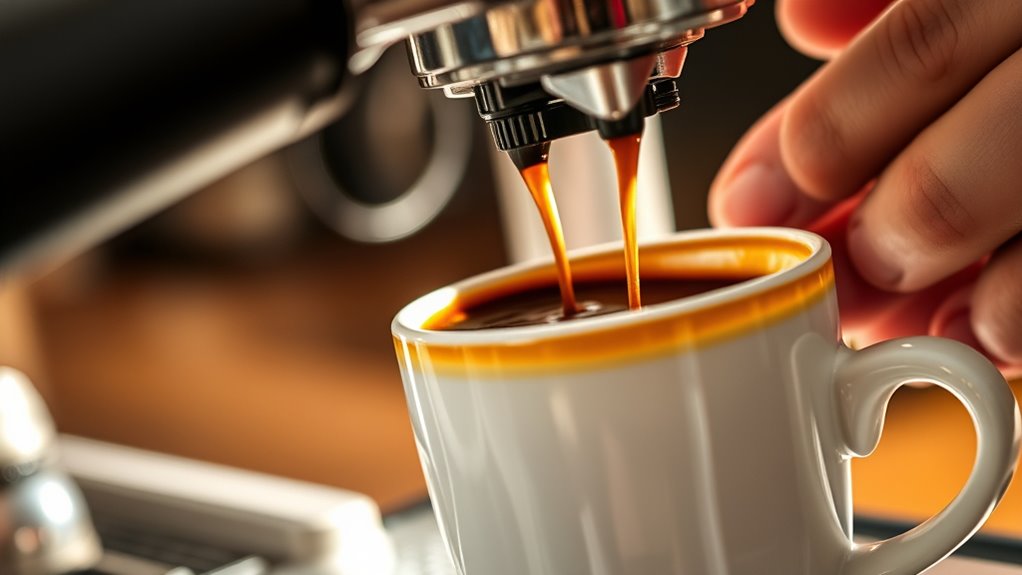
When you let water stay in contact with coffee grounds for too long, usually beyond 35 to 40 seconds, you risk over-extraction. This pulls out excessive bitter compounds that can ruin your espresso. Ideally, your extraction time should be 25 to 30 seconds to avoid harsh flavors.
If you go past this window, your espresso will taste overly bitter because unwanted elements dissolve. Over-extraction often happens if you use a grind that’s too fine. That slows water flow and increases contact time.
Also, water temperatures above 95°C speed up the extraction of bitter, burnt notes. Watch for a dark, persistent flow during brewing. This signals over-extraction and links directly to bitterness in your shot.
To prevent this, control your extraction time and brewing parameters carefully. That way, you get a balanced espresso every time. Maintaining consistent shot timing is essential for reproducible flavor and avoiding bitterness.
How Grind Size Affects Espresso Bitterness and Flow
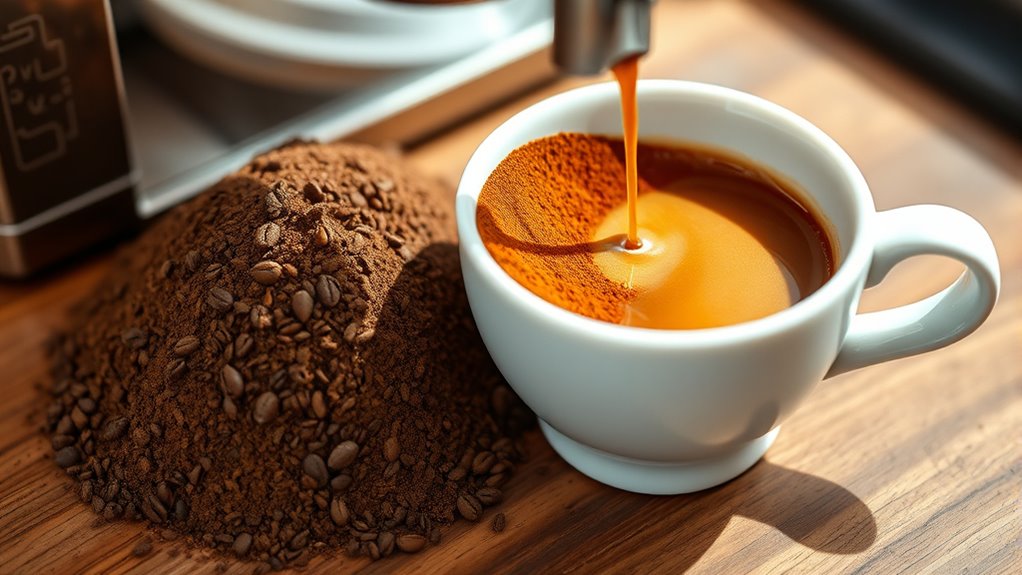
Although grind size might seem like a minor detail, it plays a crucial role in controlling the flow rate and bitterness of your espresso. When your grind is too fine, the increased surface area slows water flow, extending extraction time and pulling out bitter compounds. This over-extraction often leads to that harsh, unpleasant bitterness you want to avoid.
By slightly coarsening your grind, you can speed up the flow rate, reducing extraction time and preventing excessive bitterness. The key is finding an ideal grind size that extracts rich flavors without dragging out unwanted bitter elements.
Adjusting grind size gives you precise control over extraction, making it one of the most effective ways to balance taste and flow in your espresso. It’s all about dialing it in just right so your espresso tastes smooth and just how you like it.
Remember that maintaining a consistent, uniform particle size helps prevent channeling and ensures even extraction for better flavor balance.
How to Adjust Brew Time and Water Temperature to Reduce Bitterness
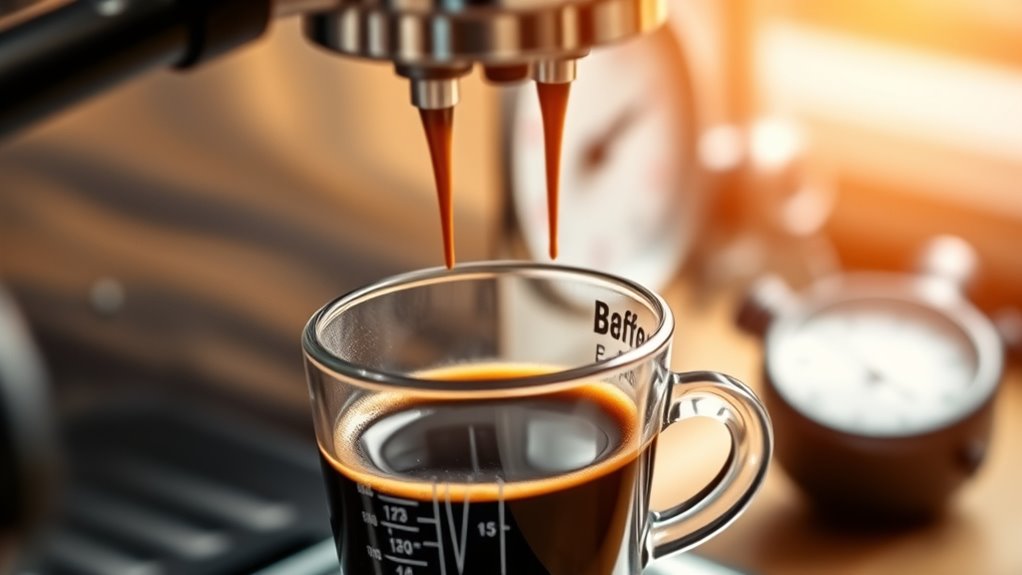
Since over-extraction often causes bitterness, you can reduce it by shortening your brew time to about 25-30 seconds and lowering the water temperature to between 90°C and 94°C.
Aim to decrease your current extraction time if it’s over 35 seconds, as this cuts down on bitter compounds.
Adjust your water temperature gradually, dropping it by 2-5°F increments to avoid under-extraction while preventing scorching the coffee grounds.
These combined tweaks balance flavor, enhancing sweetness and reducing harshness.
Regularly monitor your shot timing and temperature to maintain consistency and fine-tune as needed.
Using a PID machine can help maintain stable temperature control, improving shot repeatability and flavor balance.
How Dose, Tamp, and Puck Prep Affect Espresso Bitterness
Proper dosing, tamping, and puck preparation play crucial roles in controlling espresso bitterness by ensuring even extraction. You need to dose the correct amount of coffee for your basket size. Too much creates a dense puck, which leads to over-extraction and bitterness.
When tamping, apply consistent pressure, ideally around 30 pounds, to form an even, compact puck that reduces channeling. Uneven tamping causes water to flow through weak spots, extracting bitter compounds unevenly.
For puck prep, use thorough distribution techniques like the Weiss Distribution Technique (WDT) to break up clumps and level the grounds before tamping. This minimizes gaps and prevents water from bypassing parts of the puck.
Adjusting the dose also requires minor grind size changes to maintain optimal extraction time and avoid bitterness caused by over-extraction or channeling, as explained in the dose and grind size relationship.
Pick the Right Roast and Fresh Beans to Cut Bitterness
When you select the right roast and fresh beans, you substantially reduce the chances of bitterness in your espresso. Opt for medium or light roasts. Medium roasts offer a balanced, sweeter profile with less bitterness, while light roasts preserve fruity and sour notes that naturally counter bitterness.
Avoid dark roasts because they can introduce harsher bitter flavors. Always choose high-quality, freshly roasted beans, preferably within a month of roasting, to maintain vibrancy and avoid flat, bitter extractions.
Store your beans in airtight containers away from light and heat to prevent oxidation. This oxidation dulls flavor and promotes bitterness. Using a burr grinder ensures a consistent grind size, which is crucial for optimal extraction and minimizing bitterness.
Why Water Quality and Machine Cleanliness Matter for Espresso Bitterness
Choosing the right beans and roast sets the stage for a better espresso, but water quality and machine cleanliness play just as important a role in preventing bitterness.
Hard or mineral-rich water extracts too many minerals, which can cause harsh, bitter flavors. To avoid this, use filtered water that removes impurities and balances mineral content.
Using filtered water helps balance minerals and prevents harsh, bitter flavors in your espresso.
It’s also really important to clean your espresso machine and grinder regularly. Oil and residue buildup can introduce rancid, bitter tastes that ruin your shot. Over time, calcification and grime can even harbor mold and bacteria, which makes the flavor worse.
Stick to a consistent cleaning routine. Wipe down your machine daily and do a deep clean once a week to keep the water flowing clearly and ensure ideal extraction.
When your water is pure and your equipment spotless, you’ll reduce bitterness a lot and enjoy a smoother, more balanced espresso.
Additionally, maintaining proper brewing variables such as pressure and temperature ensures optimal extraction and flavor balance.
Quick Home Brewing Tips to Fix Bitter Espresso Fast
If your espresso tastes bitter, adjusting your grind size and brew time can make a quick difference. Coarsen your grind if your shot runs over 35 seconds to reduce over-extraction. Stop the shot between 25-30 seconds to avoid harsh flavors.
Lower water temperature to 90-94°C to prevent burnt notes. Always use 18-20 grams of coffee for balanced extraction. Regularly clean your grinder and machine to eliminate old oils causing bitterness.
Remember that consistent tamping pressure and proper puck preparation also play a key role in avoiding bitterness by ensuring even extraction and preventing channeling.
| Adjustment | Tip |
|---|---|
| Grind Size | Coarsen gradually if over 35s |
| Brew Time | Stop extraction at 25-30s |
| Water Temperature | Lower to 90-94°C |
| Coffee Dose | Use 18-20 grams per double shot |
| Machine Cleanliness | Clean regularly to remove oils |
These quick fixes help you brew smoother, less bitter espresso fast. Give them a try and taste the difference!
Frequently Asked Questions
Can Adding Milk Reduce the Bitterness in Espresso?
Yes, adding milk can reduce espresso’s bitterness by diluting harsh flavors and balancing the taste. Its natural sweetness and proteins help mask bitterness.
But remember, it doesn’t fix the underlying extraction or bean quality issues causing bitterness. So, while milk can make your espresso smoother, it’s not a cure-all.
Does Espresso Bitterness Vary by Coffee Origin?
Espresso bitterness varies wildly by origin, like tasting a thousand suns! You’ll find African beans brighter and less bitter.
On the other hand, Robusta or certain Latin American beans pack more bite. Choose your beans wisely to control bitterness levels.
How Does Espresso Bitterness Change With Different Espresso Machines?
Your espresso’s bitterness changes with machine precision. High-end models keep temperature and pressure stable, which prevents over-extraction.
Less consistent machines cause uneven extraction, and that usually makes your espresso more bitter. Automated features like pre-infusion help you avoid harsh, bitter flavors easily.
Can Storing Espresso Beans Improperly Cause Bitterness?
Yes, improper storage can definitely cause bitterness. When you leave beans exposed to air, heat, or moisture, they stale fast, developing harsh flavors.
Keep them airtight, cool, and dry to protect that smooth espresso taste you crave. It really makes a big difference in how your espresso turns out. So, treat your beans right!
Does the Type of Water (Filtered vs. Tap) Affect Espresso Taste?
Yes, the type of water directly affects your espresso’s taste. You’ll get cleaner, sweeter flavors using filtered water. Tap water, especially hard water, can cause bitterness and dullness.
That happens because minerals in tap water disrupt the extraction balance. So, using filtered water really helps bring out the best in your espresso. It’s a simple change that makes a big difference!
Conclusion
Remember, “a watched pot never boils,” but with espresso, paying close attention actually helps prevent bitterness. By dialing in your grind size and adjusting your brew time and temperature, you can tame over-extraction. Also, prepping your puck properly makes a big difference.
Choosing fresh, quality beans and keeping your equipment clean will further enhance the flavor. With these practical tweaks, you’ll enjoy a smooth, balanced espresso every time. No bitterness, just rich satisfaction in every cup.
Keep practicing, and your perfect shot is totally within reach.