Espresso itself doesn’t contain milk. It’s pure, concentrated coffee brewed by forcing hot water through finely ground beans under pressure. When you order a straight shot, you get a small, intense coffee without any dairy.
Milk only comes into play when you choose espresso-based drinks like lattes or cappuccinos. It softens bitterness and adds a creamy texture. If you want to explore how milk changes espresso’s taste and the popular milk-based options, you’ll find plenty to discover.
Does Espresso Contain Milk? Understanding the Basics

Although you might associate espresso with creamy coffee drinks, the espresso shot itself contains no milk. It’s made solely by forcing hot water under pressure through finely ground coffee, producing a concentrated, pure coffee extract.
Traditional espresso is a small, 1-2 ounce shot, served without any milk or dairy products.
Traditional espresso is a concentrated 1-2 ounce shot served purely, without milk or dairy additions.
While milk often complements espresso in beverages like lattes or cappuccinos, it’s always added after brewing.
The espresso shot remains a milk-free coffee concentrate by definition.
Even when espresso-based drinks include toppings like whipped cream, the espresso portion itself contains no milk.
Understanding this distinction helps you appreciate espresso’s pure form before milk or other ingredients transform it into various coffee beverages.
Espresso is brewed under high pressure to extract its rich flavor and crema without the addition of milk.
How Is Espresso Different From Milk-Based Drinks?
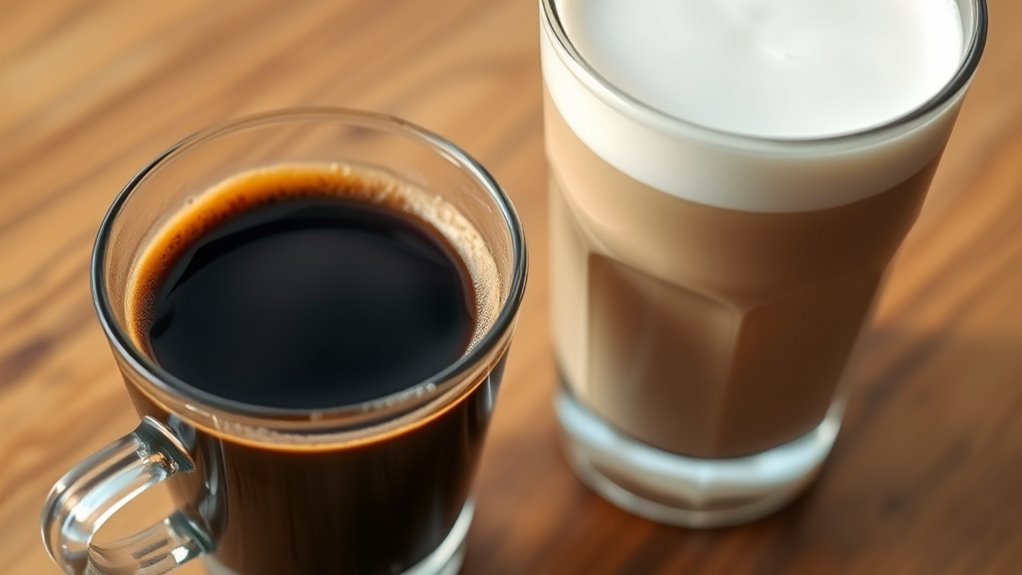
Now that you know espresso itself contains no milk, it’s important to recognize how it differs from milk-based coffee drinks.
Espresso is a concentrated shot of coffee brewed by forcing hot water through finely ground beans under high pressure.
Milk-based drinks blend this shot with steamed or frothed milk, creating entirely different textures and flavors.
Here’s how you can picture the difference:
- Espresso is pure coffee served in small, intense 1-2 ounce shots.
- Milk drinks, like lattes or cappuccinos, add creamy, steamed milk or foam, making larger, milder beverages.
- Espresso relies on pressure extraction, while milk-based drinks depend on milk steaming and frothing techniques.
Understanding these contrasts helps you appreciate espresso’s boldness versus the softness milk adds.
Additionally, mastering the steam wand technique is essential for creating the perfect milk texture in milk-based espresso drinks.
Popular Espresso Drinks Made With Milk
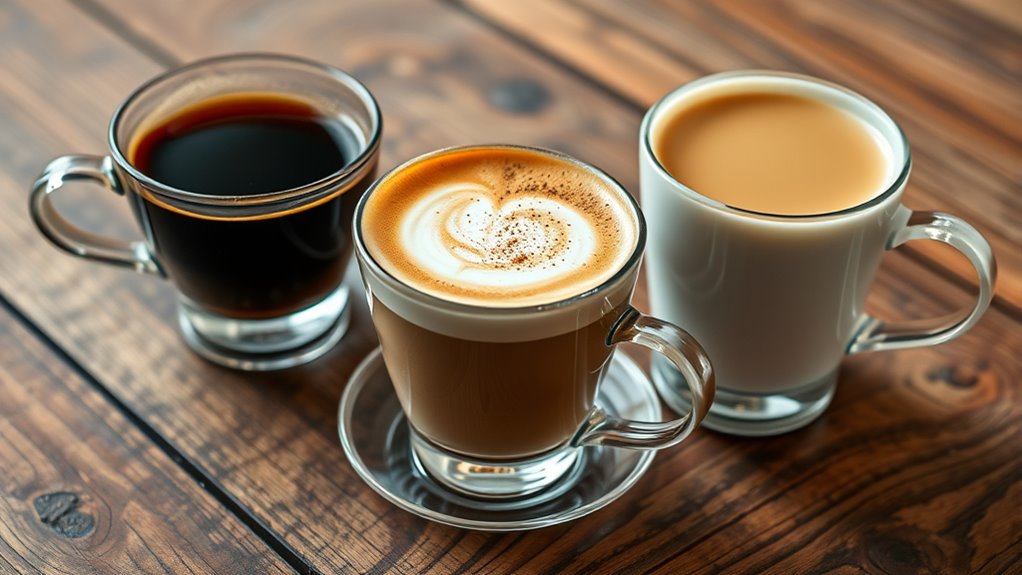
When you explore espresso drinks made with milk, you’ll find a variety of popular options that balance bold coffee flavors with creamy textures. A latte combines a shot of espresso with at least 75% steamed milk and a light foam layer, creating a smooth, mellow drink.
Cappuccinos feature equal parts espresso, steamed milk, and microfoam, offering a rich yet airy experience in 6-8 oz servings.
Macchiatos highlight espresso by “marking” it with just a small dollop of milk foam, keeping the coffee robust.
Flat whites, originating from Australia and New Zealand, blend espresso with a thin layer of velvety microfoam, delivering a creamier alternative to cappuccinos.
Each drink varies in milk-to-espresso ratio, letting you choose your preferred balance of strength and creaminess.
A double shot of espresso typically provides a strong caffeine boost, which is balanced by the milk in these popular drinks.
How Adding Milk Changes Espresso’s Flavor and Texture
Exploring popular espresso drinks made with milk reveals how milk transforms the espresso experience beyond just adding volume. When you add milk, it softens espresso’s natural bitterness and acidity, making it smoother and more approachable. The fats in milk interact with espresso’s soluble solids, enhancing nutty and chocolatey notes.
Plus, steamed milk creates microfoam, contributing a velvety texture and visual appeal. It’s pretty amazing how just a bit of milk can change the whole vibe of your espresso.
Here’s how milk changes espresso:
- Creamier texture: Milk’s fats blend with espresso, yielding a rich, smooth mouthfeel.
- Balanced flavor: Milk’s sweetness balances espresso’s bitterness and acidity.
- Velvety microfoam: Steamed milk adds a luxurious, creamy layer that enhances both taste and presentation.
These changes make espresso more complex and enjoyable, especially if you prefer less intense flavors. So, if you’re not a fan of espresso’s natural bite, adding milk might just be the perfect fix. The quality and extraction of the espresso shot also play a crucial role in how well milk complements the drink’s flavor and texture.
Common Ways to Customize Your Espresso With Milk
You can totally customize your espresso by tweaking the milk ratio and texture. This way, you can whip up drinks like lattes, cappuccinos, or macchiatos.
Each one changes the flavor balance and mouthfeel a bit — from bold and concentrated to smooth and creamy.
Knowing these differences makes it easier to pick or create the perfect milk-enhanced espresso that suits your taste.
Because espresso is naturally a concentrated shot, even small amounts of milk significantly alter its flavor and texture.
Popular Milk Espresso Drinks
Although espresso shines on its own, adding milk transforms it into a variety of popular drinks, each with unique textures and flavors. You can explore these classic milk-based espresso options to customize your coffee experience.
- Cappuccino Enjoy equal parts espresso, steamed milk, and microfoam. Served in an 8-12 oz cup, it offers a balanced, airy texture.
- Macchiato Savor a bold espresso shot “marked” with just a dollop of milk foam, highlighting the pure coffee intensity with minimal milk.
- Cortado Try this smaller, 4 oz drink combining equal parts espresso and steamed milk, creating a smooth, less intense flavor.
Each drink showcases a distinct milk-to-espresso ratio. This lets you tailor your cup to your taste preferences with precision. Because espresso has a high caffeine concentration per ounce, adding milk can help moderate its intensity and caffeine effects.
Milk Ratios And Textures
Milk plays a vital role in shaping the flavor and texture of espresso drinks. Understanding the variations in milk ratios and textures can help you customize your cup perfectly. Different drinks balance milk and foam in unique ways, which influences creaminess and mouthfeel.
For example, lattes have mostly steamed milk, while cappuccinos split evenly between espresso, milk, and foam. Microfoam adds a velvety texture that’s perfect for latte art. On the other hand, dry foam creates a lighter mouthfeel in dry cappuccinos.
| Drink | Milk to Espresso Ratio | Texture Description |
|---|---|---|
| Latte | ~75% milk | Velvety microfoam |
| Cappuccino | 1:1:1 espresso/milk/foam | Dry foam on top |
| Flat White | Thin microfoam layer | Creamy, blended texture |
| Cortado | 1:1 milk to espresso | Smooth, lightly textured |
| Dry Cappuccino | More foam, less milk | Light, airy foam texture |
Adjusting the espresso dose can also affect how the milk texture and flavor balance interacts with the coffee, making dose control a key factor in crafting your ideal milk-based espresso drink. This is why understanding espresso dose is essential for baristas and enthusiasts alike.
Tips for Ordering Espresso Drinks With Milk
When ordering espresso drinks with milk, specifying the exact type, whether a latte, cappuccino, or macchiato, ensures you get the perfect balance between espresso and milk. To tailor your drink perfectly, keep these tips in mind:
- Milk Texture: Request microfoam for a velvety cappuccino or lightly steamed milk for a smooth flat white.
- Dry vs. Wet: Decide if you want a “dry” drink with more foam and less liquid milk, or a “wet” one with more milk and less foam.
- Size & Customization: Confirm your preferred size (6-12 oz) and mention any dietary preferences like plant-based milk or flavor syrups.
Being precise helps baristas craft your ideal espresso drink with milk every time. It makes the whole experience smoother and more enjoyable. Remember that the crema on espresso signals freshness and quality, which influences the final taste even when milk is added.
Choosing the Right Espresso Drink for Your Taste
You’ll want to get a feel for milk ratios to find that perfect balance between espresso strength and creaminess. It’s all about what suits your taste best.
Trying out popular espresso variations is a great way to figure out whether you’re more into a bold macchiato or a frothy cappuccino.
And hey, don’t forget about milk alternatives—they can totally change the texture and flavor of your drink, so they’re worth considering too.
Understanding the impact of espresso bean roast on flavor can also help you choose the best base for your milk-based drinks.
Milk Ratios Explained
Although espresso serves as the concentrated base without any milk, the variety of milk ratios across espresso drinks lets you tailor your coffee experience just the way you like it.
Understanding these ratios helps you pick a drink that matches how much milk you want in your cup.
- Macchiato: Minimal milk, just a dollop of foam on top of a strong espresso shot. It offers a bold flavor with a creamy hint.
- Cappuccino: Balanced 1:1:1 ratio of espresso, steamed milk, and foam. This creates a harmonious blend of strength and creaminess.
- Latte: At least 75% steamed milk with espresso, producing a smooth, milk-forward drink that’s gentle yet rich.
Mastering the extraction variables in espresso preparation ensures that each milk ratio complements the flavor and texture of the base shot perfectly.
Popular Espresso Variations
Understanding milk ratios sets the stage for exploring popular espresso variations that cater to different taste preferences. Espresso itself is a pure coffee shot without milk, but many drinks build on this base.
For instance, a macchiato adds just a touch of milk foam to accentuate the espresso’s boldness, while a cortado blends equal parts espresso and steamed milk for a balanced, smooth flavor.
If you prefer a creamier texture, a flat white uses a higher ratio of microfoam to steamed milk, creating a velvety experience that still highlights espresso’s intensity.
Choosing the right espresso variation depends on how much milk and foam you enjoy, whether you want a strong, minimal milk drink or something softer and milk-forward.
Knowing these differences helps you pick the perfect espresso drink for your palate. It’s all about matching your taste buds with the right balance of coffee and milk.
Choosing Milk Alternatives
How do you choose the best milk alternative for your espresso drink? It depends on the flavor, texture, and foam quality you want. Each option brings something unique to the cup, so consider what suits your taste and dietary needs.
- Oat Milk: Creamy and neutral, perfect for lattes and cappuccinos. It offers a smooth mouthfeel without overpowering the espresso.
- Soy Milk: High in protein, it froths well, creating stable foam similar to cow’s milk. This makes it ideal if you want that classic espresso texture.
- Almond Milk: Light with a subtle nutty flavor. It’s especially good if you prefer less sugar and a delicate taste.
Experimenting with brands and types helps you find the right balance of crema, flavor, and foam for your perfect espresso drink.
Give it a try and see what works best for you!
Frequently Asked Questions
What Is the Ideal Water Temperature for Brewing Espresso?
You should brew espresso using water heated between 195°F and 205°F (90°C to 96°C). This precise range extracts ideal flavors, avoids sourness or bitterness, and guarantees your espresso has a rich, balanced crema and taste every time.
Sticking to this temperature range makes a big difference. It helps pull out all those delicious notes without over-extracting anything unpleasant. So, next time you brew, just keep your water within this sweet spot for the best results.
How Long Should an Espresso Shot Be Pulled?
You should pull an espresso shot for about 25 to 30 seconds to guarantee balanced extraction. Pull it too fast, and it’ll taste sour; too slow, and bitterness will overpower the delicate flavors you want.
What Grind Size Is Best for Espresso Machines?
Think of grind size as the gateway to espresso’s soul. You’ll want a very fine grind, like powdered sugar, to reveal rich flavors and crema.
Adjust precisely using a burr grinder for balanced extraction and smooth taste. It’s all about finding that sweet spot to get the perfect shot every time.
Can Espresso Be Made Without an Espresso Machine?
You can’t make true espresso without an espresso machine because it requires high pressure and precise temperature control.
While alternatives like Moka pots produce strong coffee, they don’t achieve authentic espresso’s rich crema or intensity. So, if you’re craving that real espresso experience, an espresso machine is really the way to go.
How Does Espresso Caffeine Content Compare to Drip Coffee?
Wondering which packs more caffeine? Espresso is far more concentrated, delivering about 60-100 mg per shot. Drip coffee has more total caffeine but less per ounce.
You get a powerful caffeine punch in less volume. It’s like a quick jolt compared to a longer sip with drip coffee. So, if you want caffeine fast, espresso’s your go-to.
Conclusion
Now that you know espresso itself doesn’t contain milk, you can appreciate how milk transforms it into creamy delights like lattes or cappuccinos. Did you know that nearly 60% of coffee drinkers prefer their espresso with milk? This highlights how milk softens espresso’s boldness, creating smooth, balanced flavors.
So next time you order, feel confident customizing your drink to match your taste perfectly. Whether you want pure espresso intensity or a silky, milk-infused treat, it’s all up to you.