To clean your Philips espresso machine, first unplug it and remove all detachable parts like the drip tray, water tank, and brew group. Rinse these components with lukewarm water, drying them thoroughly before you put them back together.
Make sure to clean the brew group weekly. Using a descaling solution every 1-3 months helps prevent buildup and keeps everything running smoothly.
Don’t forget to rinse your LatteGo or milk frother after each use. Following these easy steps will guarantee great coffee quality and help your machine last longer. There’s more detailed guidance available if you want to maintain it perfectly.
Preparing Your Philips Espresso Machine for Cleaning
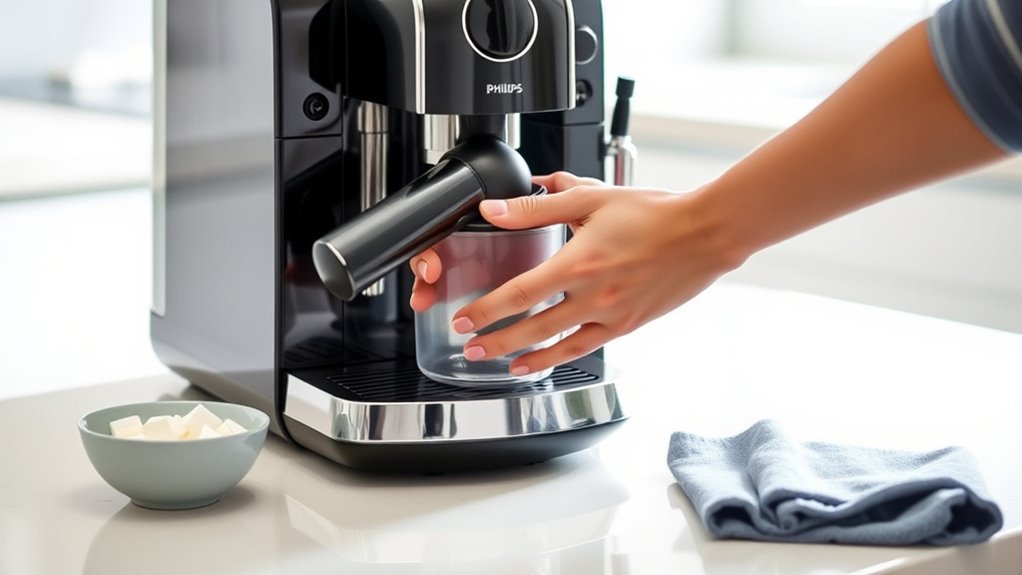
Before you begin cleaning your Philips espresso machine, make sure it’s turned off and unplugged to guarantee safety.
Always ensure your Philips espresso machine is turned off and unplugged before cleaning for safety.
Start by removing all detachable parts like the drip tray, water tank, brew group, and milk frother or LatteGo system.
Empty the drip tray and coffee grounds container, then rinse them thoroughly with lukewarm water to remove residue.
Fill the water tank with fresh, lukewarm water and set it aside for cleaning or rinsing later.
Follow the manufacturer’s instructions closely to disassemble and clean each removable component properly.
This preparation assures your machine is ready for a thorough cleaning cycle and keeps all parts in excellent condition.
Taking these steps methodically will help maintain your espresso machine’s performance and longevity.
It’s a simple routine that makes a big difference in the long run.
Regularly descaling your espresso machine is essential to prevent mineral deposits that can impair its function and coffee quality.
Cleaning the Brew Group Step-by-Step
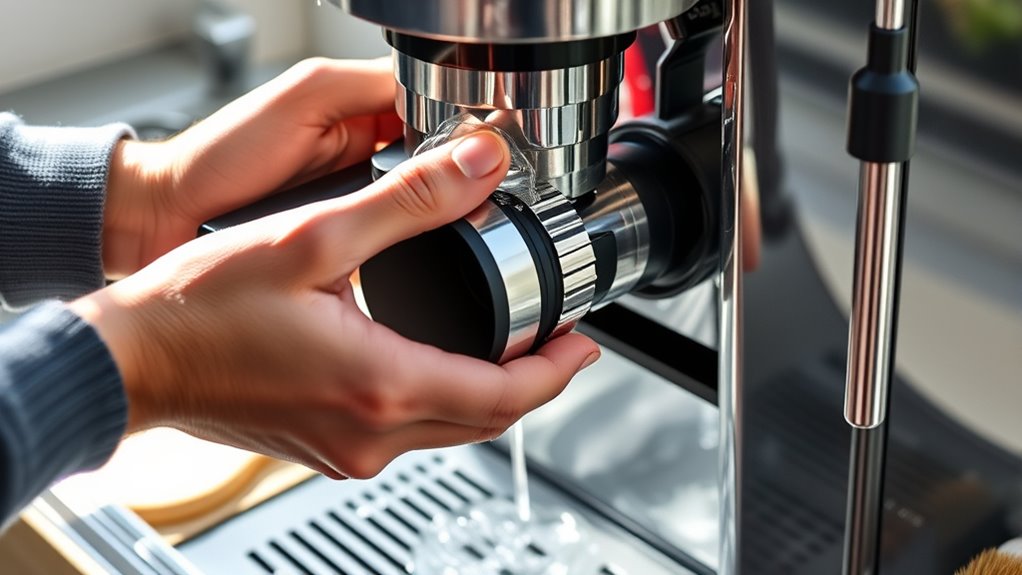
Although cleaning the brew group may seem tedious, doing it regularly is essential to keep your Philips espresso machine performing at its best. Start by rinsing the brew group with lukewarm water every week to clear away coffee residues and prevent clogging.
Once a month, remove the brew group from the machine and use coffee oil remover tablets (CA6704) to thoroughly clean the filter, eliminating stubborn oil buildup. Refer to the instructional video for precise steps on safely removing and handling the brew group.
After cleaning, make sure the brew group is completely dry before reassembling it. This step is vital to avoid mold and bacterial growth.
Following this routine maintains peak brewing performance and extends your machine’s lifespan. Regular cleaning also helps prevent channeling, ensuring consistent extraction and balanced flavor in every shot.
Cleaning the Drip Tray and Coffee Grounds Container on Your Philips Espresso Machine
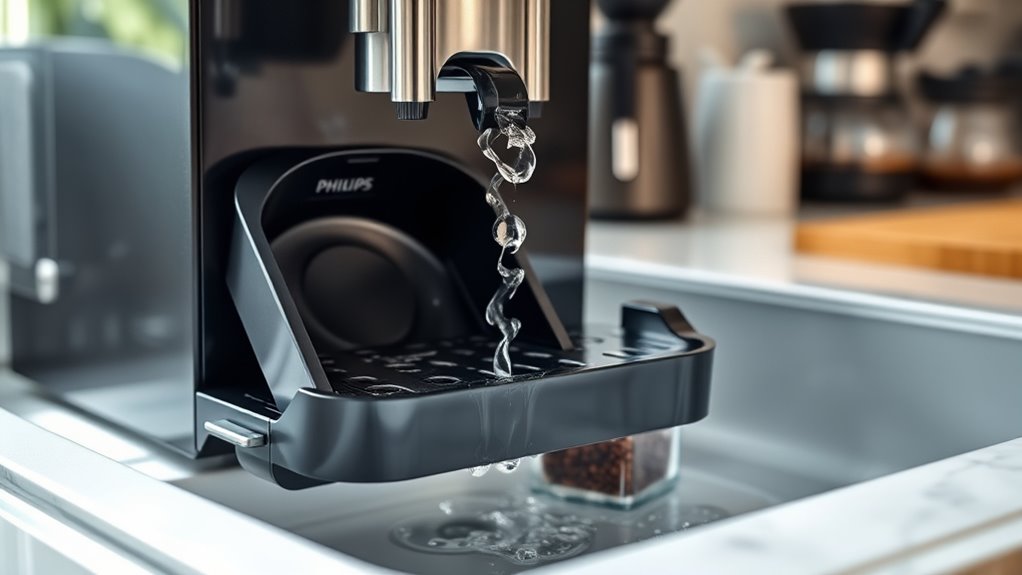
After keeping your brew group clean, turn your attention to the drip tray and coffee grounds container. Empty the drip tray daily or as soon as the red indicator appears to prevent overflow and keep things hygienic. It’s a simple step but makes a big difference.
Remove the coffee grounds container once a week and rinse it under lukewarm water to avoid buildup.
Give both the drip tray and grounds container a thorough rinse under tap water to wash away any leftover coffee and debris.
Before putting them back, make sure they’re completely dry to stop mold from forming.
Regular cleaning of these parts not only helps your Philips espresso machine run smoothly but also stops any unpleasant smells.
Keeping up with this easy maintenance will extend your machine’s life and make sure every cup tastes fresh and clean.
For the best flavor results, regularly cleaning removes residue that can affect the complex flavor of your espresso.
Cleaning the Water Tank and Activating the AquaClean Filter
To keep your Philips espresso machine running efficiently and guarantee the freshest taste, you should rinse the water tank weekly under tap water to prevent limescale buildup. Regular cleaning maintains hygiene and ensures ideal water flow.
Before inserting a new AquaClean filter, soak it in water for 5 minutes to activate it properly. Then, place the filter into the water tank, pressing until no air bubbles appear. This step ensures effective filtration.
After that, activate the AquaClean filter via the machine’s menu settings to enable continuous filtration and delay descaling. Remember to replace and reactivate the filter regularly as recommended.
This routine prolongs your machine’s performance, reduces maintenance, and delivers consistently great-tasting espresso. Additionally, maintaining proper water temperature is essential for optimal extraction and flavor consistency.
Cleaning Your LatteGo and Milk Frother
Maintaining the water tank and AquaClean filter sets a solid foundation, but keeping your LatteGo and milk frother clean guarantees every cup tastes fresh and smooth.
After each use, remove and rinse LatteGo parts under tap water or use the dishwasher. Rinse the milk frother’s external parts and tiny hole daily with lukewarm water to prevent buildup.
Use the Quick Clean feature regularly to flush hot water through the milk system. It saves time and helps keep everything hygienic.
For thorough care, here’s what you should do:
- Disassemble and wash the milk carafe weekly in lukewarm water, then reassemble.
- Monthly, clean the entire milk circuit with Philips milk circuit cleaner (CA6705) to prevent clogs.
- Rinse all removable parts carefully to avoid residue and maintain optimal performance.
Following this routine keeps your machine running smoothly and ensures your milk-based drinks taste perfectly fresh every time. Remember, proper maintenance also supports safe espresso consumption by helping control caffeine intake variability in your drinks.
Descaling Your Philips Espresso Machine Safely
To descale your Philips espresso machine safely, make sure you always use the approved descaler. Avoid using acidic cleaners like vinegar, as they can cause damage to your machine.
First, remove the AquaClean filter and empty the water tank.
Then, follow the specific descaling cycle instructions for your model step-by-step.
Once you’ve dispensed the descaler and rinsed the machine thoroughly, go ahead and reinstall all the components.
Finally, run a last rinse to keep your espresso machine in top condition. It is also important to perform regular maintenance and monitor for mineral buildup to ensure optimal performance and prolong your machine’s lifespan.
Proper Descaler Usage
Although it might be tempting to use household alternatives like vinegar, you should always use Philips-approved descaler solutions to protect your espresso machine from damage. These official products guarantee effective limescale removal without harming internal components.
To use the descaler properly, start by emptying the water tank, removing the AquaClean filter, and filling the tank with the recommended descaler solution. Then, follow the on-screen prompts and allow the descaling cycle to run, which usually takes about 30 minutes.
After the cycle finishes, thoroughly rinse the water tank and parts. Reinstall the filter, and run a fresh water rinse cycle.
Using the correct descaler and following these steps helps maintain performance and extends your machine’s lifespan. Regular descaling prevents buildup and keeps your espresso tasting great. It is recommended to descale every 3 to 6 months for regular use to ensure optimal machine performance and longevity through the removal of mineral deposits.
Descaling Step-by-Step
Now that you understand the importance of using the right descaler, let’s walk through the safe and effective steps to descale your Philips espresso machine.
First, empty the drip tray, remove the milk frother or LatteGo, and take out the AquaClean filter. Then, fill the water tank with the approved descaler solution up to the Calc/Clean indicator.
Start the descaling cycle by holding the Calc/Clean icon for 3 seconds or select it via the display. Follow prompts to dispense the solution until empty.
Rinse the tank thoroughly with fresh water, reinstall all parts, including the filter, and run a final rinse cycle.
Regular descaling every 1 to 3 months helps maintain optimal machine performance and flavor quality.
| Step | Action |
|---|---|
| 1. Prepare | Empty tray, remove frother and filter |
| 2. Fill Tank | Add descaler solution to indicator level |
| 3. Start Descale | Hold Calc/Clean icon or select via display |
| 4. Dispense Solution | Follow prompts until tank is empty |
| 5. Rinse & Reassemble | Rinse tank, reinstall parts, final rinse |
Lubricating the Brew Group to Keep It Running Smoothly
You should lubricate the brew group every two months to keep it running smoothly. Just focus on applying a thin layer of Philips HD5061 grease on the piston, shaft, and rails on both sides of the brew group.
Doing this proper lubrication helps minimize wear and can really extend the lifespan of your machine. It’s a simple step that makes a big difference! Regular maintenance, including descaling and lubrication, is vital for quality espresso extraction and machine longevity.
Lubrication Frequency Guidelines
Since the brew group handles the core mechanical movements in your Philips espresso machine, lubricating it every two months keeps everything running smoothly. This routine prevents parts from sticking or jamming and reduces wear, extending your machine’s lifespan.
Use a thin layer of Philips HD5061 grease, applying it precisely and sparingly to avoid buildup.
Remember these key points for lubrication frequency:
- Lubricate every 2 months to maintain smooth operation.
- Follow the manufacturer’s instructions to prevent over-lubrication.
- Regular lubrication helps avoid costly repairs and machine downtime.
Sticking to this schedule ensures consistent performance and reliability. Don’t skip this step. It’s vital for keeping your espresso machine in top condition.
Key Lubrication Areas
Regular lubrication every two months keeps the brew group operating smoothly. But knowing exactly where to apply the grease guarantees maximum effectiveness.
Start by applying a thin layer of Philips HD5061 grease to the piston, which helps it move easily during brewing.
Next, grease the shaft at the bottom of the brew group to prevent wear and keep it properly aligned.
Don’t forget the rails on both sides of the brew group. Lubricating these makes inserting and removing the brew group effortless.
Using the recommended grease not only reduces friction but also extends the lifespan of the components.
Regular Maintenance Tips for Your Philips Espresso Machine
To keep your Philips espresso machine performing at its best, you’ll need to incorporate consistent maintenance into your routine. This guarantees longevity, hygiene, and superior coffee quality. Focus on these key tasks:
Clean the brew group weekly with lukewarm water to prevent clogging and maintain smooth operation.
Empty and rinse the coffee grounds container daily, and refill the water tank with fresh water weekly to avoid stale residues.
Descale your machine every 30 days using Philips-approved descaler.
Rinse LatteGo parts monthly with a milk circuit cleaner to prevent buildup.
Additionally, lubricate the brew group every two months with Philips grease to keep mechanical parts moving smoothly.
Following these steps consistently will help your espresso machine deliver delicious coffee and stay reliable for years. For optimal espresso quality, ensure you use high-quality, freshly ground coffee beans and maintain proper extraction techniques.
Frequently Asked Questions
How Often Should I Replace the Aquaclean Filter?
You should replace the AquaClean filter every 8 to 12 months, depending on your water hardness and usage.
Your machine will alert you when it’s time, so you don’t have to worry about remembering.
This helps ensure peak water quality and prevents limescale buildup.
It’s pretty convenient, right? Just keep an eye out for the alert!
Can I Use Vinegar for Descaling My Philips Espresso Machine?
Using vinegar to descale your Philips espresso machine is like inviting a storm to a peaceful garden. It damages internal parts and voids your warranty.
It’s really best to stick to Philips-approved descalers. They’re safe, effective, and help keep your machine in great shape for the long haul.
What Type of Water Is Best for My Espresso Machine?
You should use filtered or softened water with low to moderate mineral content (60-80 mg/L). This helps keep your espresso machine running smoothly and ensures the best flavor in your coffee.
Try to avoid distilled or hard water because they can cause limescale buildup. That buildup isn’t just bad for your machine—it can also mess with the taste of your espresso over time.
Using the right water means your machine will last longer and your coffee will taste just right every time. It’s a small step that makes a big difference!
How Do I Troubleshoot Common Error Messages on the Machine?
Think of error messages as flashing warning lights guiding you. You’ll reset the machine, check for blockages, and guarantee parts fit snugly.
If issues linger, the Philips app or support team will steer you back on course.
Is It Safe to Leave Coffee Grounds in the Container Overnight?
It’s not safe to leave coffee grounds in the container overnight because moisture and warmth encourage mold and bacteria growth.
You should empty and clean the container daily to avoid unpleasant odors. This also helps maintain your machine’s hygiene and safety.
Trust me, taking a little time each day makes a big difference in keeping things fresh and clean!
Conclusion
Keeping your Philips espresso machine in tip-top shape is like tuning a fine instrument. It guarantees every cup sings with rich, smooth flavor. By regularly cleaning, descaling, and lubricating, you’re not just maintaining a machine; you’re preserving your daily coffee ritual.
Follow these easy steps, and your espresso maker will reward you with perfect brews, time after time. Treat it well, and it’ll keep pouring joy into your mornings.