You’ll need about 18 to 20 grams of finely ground coffee to pull a balanced double shot of espresso. This usually yields roughly 50 to 60 milliliters of rich, flavorful coffee.
The exact dose can vary slightly depending on your roast level. Darker roasts pack denser and may need less, while lighter ones require more grounds.
Precision matters, so use a scale and adjust grind size for the best extraction. Keep going to explore tips for perfecting your shot.
What Is a Double Shot of Espresso?
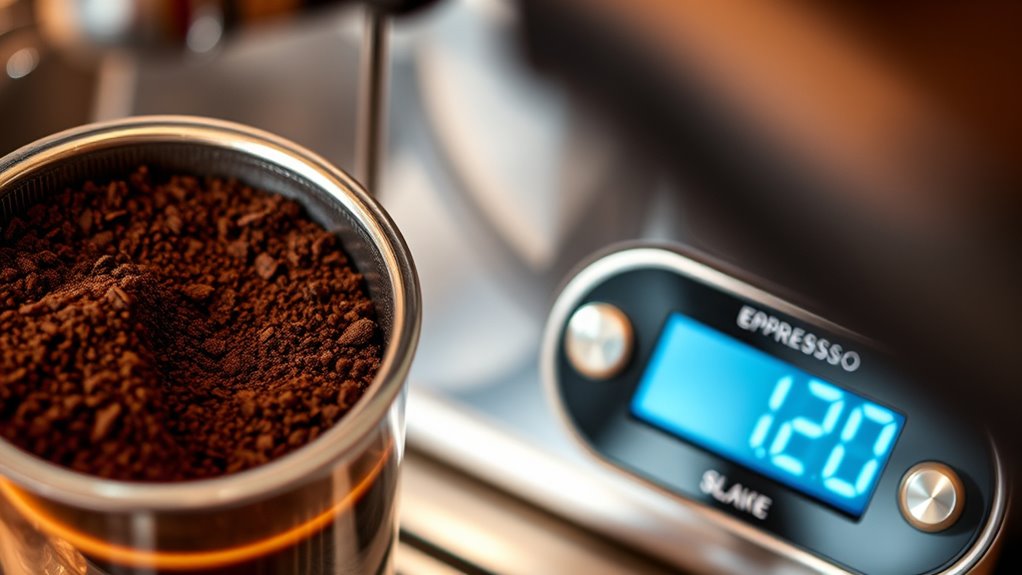
What exactly makes a double shot of espresso? You start with about 18 to 20 grams of coffee grounds, though some cafes or machines might use as little as 14 grams. This dose produces roughly 50 to 60 milliliters (1.7 to 2 fluid ounces) of rich espresso.
The term “doppio” means double in Italian, highlighting the shot’s larger volume and intensified flavor compared to a single shot. When you prepare a double shot, you typically pull two single shots at the same time using a double portafilter.
This method guarantees balanced extraction and consistency in flavor.
In the coffee industry, 18 grams is the standard measurement, but variations exist based on equipment and barista preference. So, it’s not set in stone, and you might notice some differences depending on where you get your espresso.
Proper extraction requires hot water forced at approximately 9 bars pressure, which is essential for developing the crema and flavor in the shot.
Ideal Coffee Dose (Grams) for a Double Shot
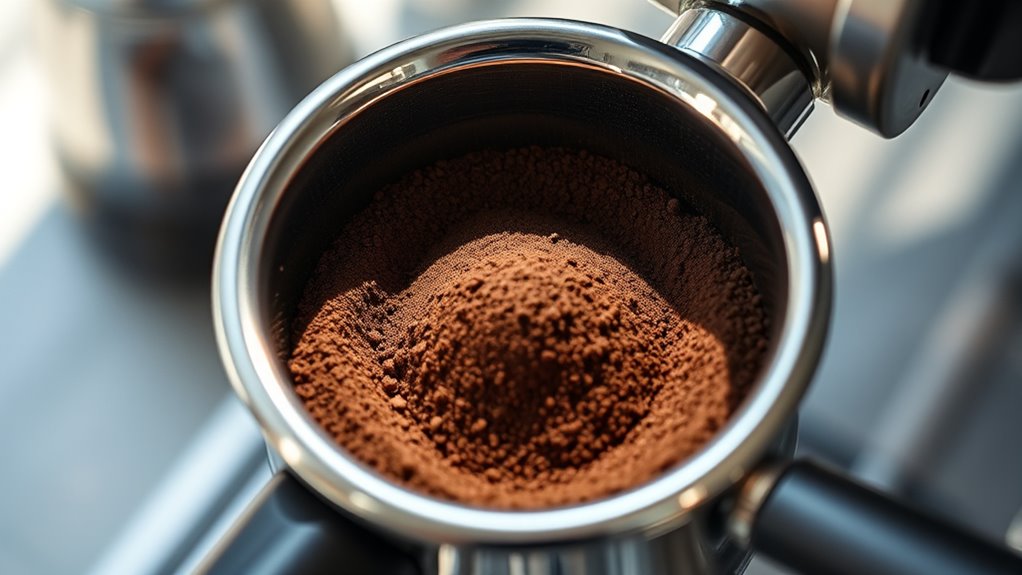
Although espresso preferences can vary, the ideal coffee dose for a double shot usually falls between 18 and 20 grams of ground coffee. Most professionals recommend around 18 grams to achieve a balanced extraction. This ensures your shot has the right strength, flavor, and crema.
Sticking to a consistent dose, say 18.5 grams, helps maintain uniformity across shots. That’s essential for quality control.
Slight adjustments within this range let you fine-tune the shot’s intensity and extraction profile to suit your taste. Understanding the proper extraction of espresso is key to maximizing flavor without overly increasing strength.
How Grind Size Affects Double Shot Quality
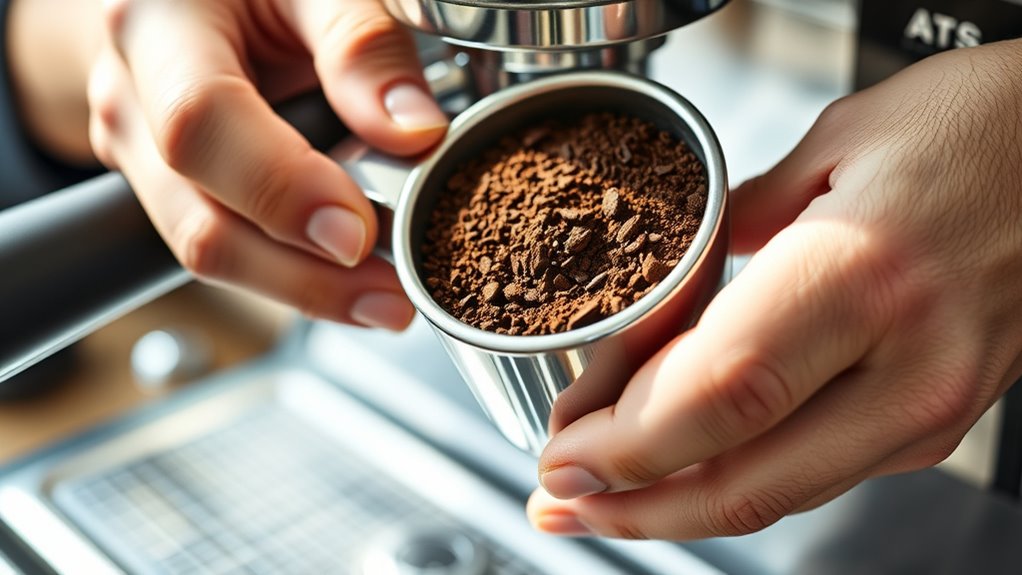
You really can’t overlook grind size when you’re aiming for that perfect double shot. It directly impacts how your espresso extracts.
If your grind is too fine, you’re risking over-extraction, which usually means a bitter taste. On the other hand, if it’s too coarse, your shot might come out sour and weak.
Adjusting grind size controls extraction time and shot quality to achieve the ideal balance.
Grind Size Importance
Because grind size directly influences extraction time, it plays a crucial role in determining the quality of your double shot.
If your grind is too fine, extraction slows down, risking bitterness from over-extraction.
Too coarse, and extraction speeds up, causing sourness and weak flavor from under-extraction.
Aim for a grind resembling powdered sugar to balance flow rate and flavor.
Even slight adjustments affect shot volume, crema, and taste, so consistency is key.
Uniform grind size prevents channeling, ensuring an even extraction and a well-rounded double shot.
Additionally, the small serving size of a double shot helps keep its calorie content minimal, making it a low-calorie beverage option.
Effects On Extraction
When you adjust the grind size, you directly control the extraction dynamics of your double shot. A finer grind increases resistance, slowing water flow and extracting more solubles. This often yields a richer, more concentrated flavor but risks over-extraction and bitterness if it’s too fine.
On the other hand, a coarser grind lets water pass quickly, leading to under-extraction, sourness, and weak taste. Finding the right grind balances flow rate to guarantee ideal extraction.
Consistency is equally vital. Variable grind size causes channeling, uneven extraction, and inconsistent shot quality.
To master your double shot, dial in a grind size that maintains steady flow and extraction time. This prevents clogging or weak flavors.
This control ultimately defines the flavor profile and quality of each espresso you pull. Adjusting grind size in relation to your espresso dose is essential to maintain balanced extraction and prevent channeling.
Why Precise Dosing Matters for Espresso
Although it might seem minor, even a 0.5-gram difference in espresso dose can drastically alter the flavor and strength of your shot. Accurate dosing guarantees you achieve consistent extraction, balancing taste and strength every time.
When you measure precisely, you avoid common pitfalls like under-extraction, which makes your espresso weak and sour, or over-extraction, which brings bitterness and harshness.
By dosing precisely, you maintain flavor consistency across shots. You also fine-tune grind size and tamping for ideal extraction.
Plus, you avoid taste imbalances caused by dose variations.
Using a scale that measures to the tenth of a gram helps you hit the perfect dose. This way, every double shot delivers the rich, balanced flavor you expect.
For best results, choose beans roasted between the first and second crack to preserve natural flavors and avoid bitterness, enhancing your espresso’s overall quality and taste. This is especially important when working with roast levels & flavor profiles.
How to Measure Coffee Accurately for a Double Shot
You’ll want a high-precision scale that measures to the tenth of a gram to get your coffee dose just right for a double shot. It really makes a difference.
Using tools like a funnel and a distribution tool can help you transfer and level the grounds evenly. That way, you get consistent results every time.
And don’t forget to weigh your coffee before tamping—it’s key to keeping the flavor spot on with every shot.
Keep in mind that the caffeine content in espresso varies depending on factors like bean type and extraction, so accurate measurement helps control your caffeine intake.
Precise Coffee Dosing
Because precise dosing directly impacts the flavor and consistency of your espresso, measuring 18 to 20 grams of coffee grounds for a double shot is essential.
You should weigh the coffee before tamping to maintain consistency between shots. Accurate measurement helps you control extraction and enhances your espresso’s flavor profile.
To dose precisely, use a scale that measures to the tenth of a gram for consistent results. Weigh coffee grounds before tamping to guarantee exact dosing.
And a good trick is to employ a funnel to avoid spillage when transferring grounds to the portafilter.
Adjusting dose controls shot strength and extraction quality, so regular experimentation with dose adjustments is key to perfecting your espresso.
Tools For Accurate Measurement
Achieving the perfect double shot starts with the right tools to measure coffee accurately. You’ll want a high-precision digital scale that measures to the tenth of a gram. Place your portafilter or coffee basket directly on the scale while dosing to hit the ideal 18-20 grams of coffee grounds precisely.
Using a funnel helps transfer grounds without spillage, preserving your exact measurement.
Consistency in grind size is essential, so a burr grinder is your best bet for uniform coffee particles.
Always weigh the coffee before tamping to guarantee a consistent dose, ensuring repeatable quality.
How Roast Level Influences Double Shot Coffee Dose
While roast level might seem like a minor detail, it considerably influences how much coffee you need for a double shot. The density and packing properties of the beans change with roast level, affecting your dosing strategy.
Darker roasts tend to be denser and pack tighter, often requiring slightly less weight, around 14 grams, to fill the basket efficiently.
Lighter roasts, having less density, usually need a higher dose to achieve the same volume.
Keep these points in mind when dosing for your double shot:
- Darker roasts require less coffee by weight but fill the basket more compactly.
- Lighter roasts need more grams to fill the basket due to their lower density.
- Adjust your dose depending on roast level to maintain consistency and extraction quality.
Regular maintenance, including descaling frequency, helps ensure your espresso machine performs consistently regardless of dosing adjustments.
How to Brew a Perfect Double Shot
When you want a perfect double shot, start by using 18 to 20 grams of finely ground coffee. Use a grind size slightly finer than table salt for ideal extraction. Tamp evenly with about 30 pounds of pressure to guarantee consistent water flow.
Extract for 25 to 30 seconds, aiming for a final yield of 50 to 60 milliliters of espresso. This balance creates rich flavor and a smooth crema. Begin timing from pump activation to include pre-infusion for improved extraction consistency.
| Step | Recommendation |
|---|---|
| Coffee Dose | 18-20 grams |
| Grind Size | Fine, finer than salt |
| Tamping Pressure | 30 pounds |
| Extraction Time | 25-30 seconds |
Follow these precise steps to brew a double shot that’s both flavorful and balanced every time. It’s easier than you might think once you get the hang of it!
Common Dose Mistakes and How to Fix Them
If you don’t measure your coffee dose carefully, you risk producing espresso that’s either weak or overly bitter. Using too little coffee, like 7 grams instead of the recommended 18-20 grams, leads to under-extraction and a watery taste.
On the other hand, overpacking with 25 grams causes over-extraction and bitterness.
Uneven distribution and tamping pressure create channeling, which results in inconsistent shots.
To fix these common mistakes, use a scale to weigh 18-20 grams of coffee for a double shot.
Distribute grounds evenly before tamping to prevent channeling.
And make sure to apply firm, consistent tamp pressure with a level surface.
Caffeine Content: Double vs. Single Espresso Shot
You get about 63 mg of caffeine in a single espresso shot and roughly double that, 125 mg, in a double shot. This increase lines up with using twice the coffee grounds, so the caffeine content nearly doubles.
But the caffeine concentration per ounce stays consistent at around 63 mg, whether you drink a single or double shot. Keep in mind, things like bean variety, roast level, and brewing technique can affect caffeine levels, not just the shot size.
Choosing a double shot gives you more caffeine per serving, which makes it a popular pick if you want a stronger kick.
Opt for a double shot when you’re craving an extra caffeine boost.
Knowing this helps you tailor your caffeine intake just right, whether you need a gentle boost or a bigger jolt.
Frequently Asked Questions
Can I Use Pre-Ground Coffee for a Double Espresso Shot?
Yes, you can use pre-ground coffee for a double shot, but it might not be as fresh or flavorful.
Just make sure it’s finely ground and you measure out about 18-20 grams.
Also, storing it airtight really helps keep the aroma and consistency intact.
How Does Water Temperature Affect a Double Shot’s Taste?
You’ll notice the shot’s flavor shift as water temperature rises or falls. Too hot brings bitterness, and too cold leaves sourness.
Hitting that sweet 92-96°C range reveals balanced, rich notes. It makes every sip a perfect harmony.
What Equipment Is Best for Dosing Espresso Coffee?
You’ll want a burr grinder for consistent grind size, a digital scale to weigh grounds precisely, a dosing funnel to minimize mess, and a calibrated tamper for even pressure. These tools guarantee accurate, consistent espresso dosing every time.
Using the right equipment makes all the difference. It helps you get that perfect shot without any guesswork or wasted coffee. Plus, it keeps your setup neat and your process smooth.
How Long Should a Double Shot Extraction Take?
You should shoot for a steady 25 to 30 seconds to secure a superb, smooth shot. Stay sharp, scanning your shot time and tweaking your grind to tame bitterness and boost balanced, brilliant brews.
Keep an eye on how things are flowing. Adjusting your grind just right can make all the difference between a good shot and a great one. It’s all about finding that perfect balance.
Can I Adjust Double Shot Grams for Different Espresso Drinks?
Yes, you can adjust double shot grams to suit different espresso drinks. Experiment within 14-20 grams to control strength, flavor, and extraction. This way, you can tailor your shot for ristretto, lungo, or milk-based beverages like lattes and cappuccinos.
Feel free to play around with the amount until you find what tastes best for each type of drink. It’s all about finding that perfect balance that suits your preference.
Conclusion
When it comes to your double shot, precision is your best friend. Using the right grams of espresso isn’t just a suggestion; it’s a subtle art that guarantees your brew shines. Don’t let guesswork cloud your coffee’s potential.
By measuring carefully and understanding your grind and roast, you’ll consistently reveal a balanced, rich shot. Remember, a well-dosed espresso is the quiet champion behind every perfect cup you enjoy.