Three shots of espresso contain about 180 to 225 mg of caffeine, which fits within the safe daily limit of 400 mg for most adults. You can usually enjoy them without concern. But drinking more or consuming them quickly might cause jitters or sleep issues.
If you have heart conditions, pregnancy, or caffeine sensitivity, it’s best to be cautious. Understanding how your body reacts and the effects of caffeine helps you manage your intake wisely and safely. Just pay attention to how you feel, and adjust your consumption accordingly.
How Much Caffeine Is in 3 Shots of Espresso?
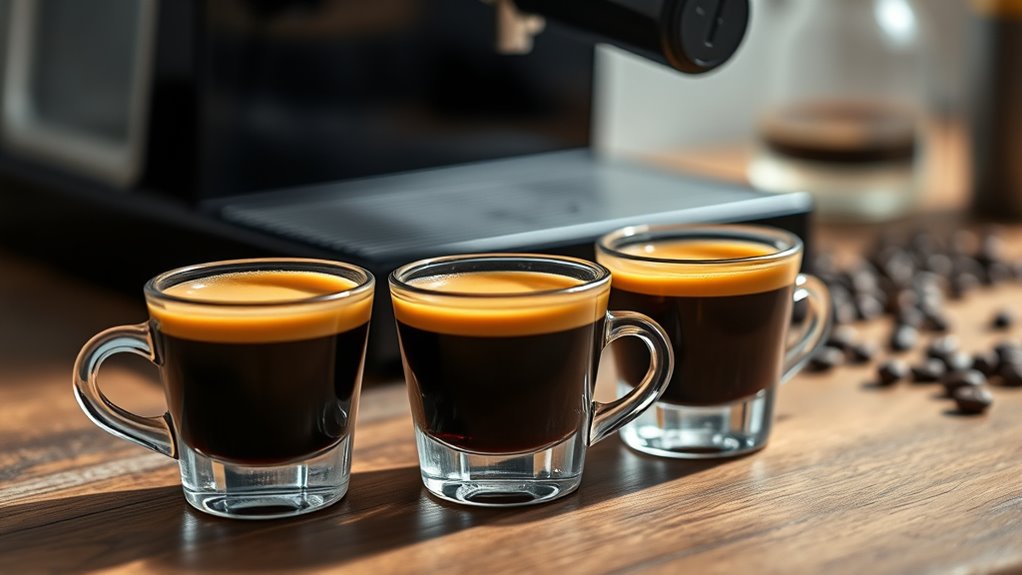
How much caffeine do you actually get from three shots of espresso? Typically, you’ll consume between 180 to 225 mg of caffeine, depending on shot size and how the espresso is prepared. Each single shot contains about 60 to 75 mg.
Three shots of espresso deliver roughly 180 to 225 mg of caffeine, depending on preparation and shot size.
Factors like the type of coffee bean, Arabica or Robusta, the roast level, and extraction time can cause some variation in caffeine content. For example, Robusta beans generally have more caffeine than Arabica.
While these differences exist, three shots usually fit well within the safe daily caffeine intake for most healthy adults.
Understanding these variations helps you gauge your caffeine consumption more accurately. It also lets you make informed choices based on your tolerance and health considerations.
Espresso is more concentrated than regular coffee, which is why even a small amount can provide a significant caffeine boost and flavor enhancement due to its concentrated nature.
What Is the Recommended Daily Caffeine Limit for Adults?
You should aim to keep your daily caffeine intake below 400 mg to stay within safe limits. That’s about three to five shots of espresso.
Going over that amount might cause side effects like jitteriness or sleep problems.
Keep in mind, everyone’s tolerance is a bit different. So, it’s important to watch how much caffeine you’re getting from all your drinks and snacks to stay safe.
Caffeine content can vary depending on factors like bean type and preparation method, so being mindful of these helps manage your intake effectively.
Safe Caffeine Intake
Although individual tolerance to caffeine varies, health experts generally agree that most adults can safely consume up to 400 mg of caffeine per day without adverse effects. This amount roughly equals 3 to 5 shots of espresso.
Staying within this limit helps you avoid symptoms like jitteriness, increased heart rate, and sleep disturbances.
Consuming more than 400 mg daily increases your risk of these adverse effects. The FDA supports this 400 mg guideline as a safe upper limit for healthy adults.
However, if you’re pregnant or have certain health conditions, it’s wise to limit your intake to under 200 mg daily.
Understanding these limits allows you to enjoy your espresso while minimizing health risks effectively. So, keeping track of your caffeine can really make a difference in how you feel throughout the day.
Remember that a double shot of espresso typically contains around 126 mg of caffeine, which contributes significantly to your daily caffeine total.
Daily Consumption Guidelines
Health authorities, including the FDA, set daily caffeine limits to help you enjoy your espresso without adverse effects. For most healthy adults, the recommended safe limit is up to 400 mg of caffeine per day. Since three shots of espresso contain about 180-300 mg, you’re generally within the safe range.
However, exceeding 3-5 shots daily may push you beyond this limit, increasing risks like jitteriness or sleep disturbances. Remember, your individual tolerance and health conditions play a key role.
It’s also important to consider extraction time and preparation methods, as they can influence the caffeine content and overall strength of your espresso.
| Caffeine Source | Approximate Caffeine (mg) |
|---|---|
| Single Espresso Shot | 60-100 |
| Three Shots of Espresso | 180-300 |
| FDA Daily Limit | 400 |
Stay mindful to keep your intake safe and comfortable.
Who Should Avoid Drinking 3 Shots of Espresso?
Since consuming three shots of espresso can markedly increase caffeine levels in your body, certain individuals should avoid this amount to prevent adverse effects.
Consuming three espresso shots significantly raises caffeine levels, so some people should avoid this to prevent negative effects.
If you have heart conditions, high blood pressure, or arrhythmias, three shots could strain your cardiovascular system.
Pregnant women should limit caffeine because it may impact fetal development and raise miscarriage risk.
If you struggle with anxiety or sleep disorders, high caffeine intake might worsen your symptoms.
Also, if you’re on medications like certain antibiotics or stimulants that interact with caffeine, it’s safer to avoid three espresso shots to prevent complications.
Finally, if you have low caffeine tolerance or sensitivity, three shots may cause jitters, rapid heartbeat, or restlessness, so consuming less is advisable.
It is important to consider that individual tolerance varies based on body weight, metabolism, health conditions, and sensitivity.
What Are the Early Signs You’ve Had Too Much Espresso?
When you consume too much espresso, your body often reacts quickly with noticeable symptoms like jitters, restlessness, and a racing heart. These usually show up within 30 to 60 minutes. You might also experience headaches, dizziness, or anxiety, which means your caffeine intake is too high.
Insomnia and stomach discomfort can develop hours later, especially if you drink espresso late in the day. Recognizing these early signs helps you adjust your consumption before more severe effects occur. It is important to note that consuming more than 4-5 shots in a short period can increase the risk of adverse effects such as increased heart rate and anxiety.
| Symptom | Onset Time | What It Indicates |
|---|---|---|
| Jitters | 30-60 minutes | Nervous system overstimulation |
| Restlessness | 30-60 minutes | Increased adrenaline |
| Racing Heart | 30-60 minutes | Elevated heart rate |
| Headache/Dizziness | Within 1 hour | Possible caffeine sensitivity |
| Stomach Discomfort | Within hours | Acid reflux or irritation |
What Health Risks Come From Drinking More Than 3 Shots Regularly?
If you regularly drink more than three shots of espresso, you might be putting extra strain on your heart and blood vessels. This can lead to higher blood pressure and a faster heart rate.
Plus, your nervous system could react too, causing jitteriness or making you feel more anxious—especially if caffeine affects you strongly.
Knowing these risks can help you decide how much espresso is safe to enjoy without harming your health. It’s all about finding the right balance for you.
Consuming more than four shots regularly increases the risk of adverse effects such as sleep issues and irregular heart rhythms.
Cardiovascular Health Concerns
Although many enjoy the boost from multiple espresso shots, consuming more than three daily can considerably impact your cardiovascular health. Excessive caffeine intake may increase your heart rate and blood pressure, which is particularly risky if you have hypertension or existing heart conditions.
You might also experience arrhythmias or irregular heartbeats, especially if you’re sensitive to caffeine.
Over time, regularly drinking more than three shots can contribute to long-term problems like elevated cholesterol and arterial inflammation, raising your heart disease risk. High caffeine levels cause vasoconstriction and increase cardiac workload, potentially worsening pre-existing conditions.
If you have cardiovascular issues or high blood pressure, it’s wise to limit your espresso intake to reduce these risks and protect your heart health. Taking it easy on caffeine can really make a difference in the long run. Keep in mind that even decaf espresso contains small amounts of residual caffeine, which can accumulate if consumed frequently.
Nervous System Effects
Since consuming more than three shots of espresso daily considerably stimulates your nervous system, you might notice symptoms like jitteriness, restlessness, and increased anxiety.
Excess caffeine elevates cortisol and adrenaline, which amps up stress and nervous tension.
Over time, this overstimulation can mess with your sleep patterns, leading to insomnia and impaired cognitive function.
You might also experience tremors, dizziness, and heightened reflexes as your central nervous system gets overactive.
Regularly going over this limit raises the risk of developing anxiety disorders or making existing nervous system sensitivities worse.
To keep your nervous system in good shape, it’s a smart idea to stick to three shots or fewer daily.
Doing this can help you avoid these side effects and support your overall well-being.
Additionally, understanding and controlling your espresso yield can help manage caffeine intake more precisely.
Is It Safe to Drink 3 Shots of Espresso at Once?
How much caffeine is too much when you drink three shots of espresso at once? Typically, three shots contain about 180-225 mg of caffeine, which stays within the FDA’s daily safe limit for most healthy adults.
Drinking that amount at once is generally safe if you don’t have underlying health issues or heightened caffeine sensitivity. However, you might experience temporary side effects such as jitteriness or increased heart rate, especially if you consume it rapidly.
It’s important to weigh your personal tolerance.
If you’re pregnant or have certain medical conditions, even three shots could pose risks, so consulting a healthcare provider is wise.
Keep in mind that caffeine stays in the system for 3 to 5 hours on average, which can influence how you feel after consumption.
How 3 Shots of Espresso Compare to Other Caffeinated Drinks
When you consider the caffeine content in three shots of espresso, typically between 180 and 225 mg, you might wonder how it stacks up against other popular caffeinated beverages. Three shots deliver a higher caffeine concentration than an 8 oz cup of drip coffee, which contains 80-140 mg.
Three espresso shots pack 180-225 mg of caffeine, surpassing an 8 oz drip coffee’s 80-140 mg.
Compared to a 12 oz cold brew, which ranges from 150-250 mg, the caffeine content is roughly equivalent.
Energy drinks in 8 oz servings can vary widely, from 70 to 200 mg, placing three espresso shots at the upper end of that spectrum.
In contrast, green tea provides markedly less caffeine, about 30-50 mg per 8 oz.
This comparison highlights that three shots of espresso offer a potent caffeine dose, comparable or higher than many common caffeinated drinks.
How Your Body and Health Affect How Much Espresso You Can Drink
Although three shots of espresso contain a significant amount of caffeine, your body’s unique characteristics and health status play a crucial role in determining how much you can safely consume. Factors like your weight, existing medical conditions, and current medications can lower your caffeine tolerance, making three espresso shots too much for some.
Consider these key points:
- If you have anxiety, high blood pressure, or heart issues, caffeine’s stimulating effects may intensify, increasing risks from three espresso shots.
- Your body’s caffeine metabolism varies; slow metabolizers process caffeine more slowly, resulting in prolonged effects that can feel overwhelming.
- Medications, especially stimulants or certain antibiotics, can amplify caffeine’s impact, pushing your safe limit below three shots.
Understanding these factors helps you assess whether three espresso shots fit your individual health profile.
How to Adjust Your Espresso Intake Based on Your Body’s Signals
Your body’s reactions provide the most reliable guide to adjusting your espresso intake. If you experience jitteriness, rapid heartbeat, or restlessness after three shots, it’s a clear signal to reduce your consumption. Difficulty sleeping or increased anxiety are also important indicators that you might be exceeding your personal caffeine tolerance.
Pay close attention to stomach discomfort or headaches, as these symptoms often mean you’ve gone too far. To better understand your limits, try spacing out your espresso shots throughout the day and observe how each dose affects you.
If you notice dizziness or other adverse effects, cut back accordingly.
Frequently Asked Questions
Can Drinking 3 Shots of Espresso Improve Athletic Performance?
Yes, drinking three shots of espresso can improve your athletic performance by increasing alertness and endurance. Just time it 30-60 minutes before exercise.
But be mindful of your caffeine tolerance to avoid side effects. It’s all about finding what works best for your body.
Does the Time of Day Affect How 3 Shots of Espresso Impact Sleep?
Yes, the time of day greatly affects how 3 shots of espresso impact your sleep. Consuming them earlier lets caffeine metabolize, reducing sleep disruption.
But if you drink them late, it can delay when you fall asleep and shorten your total sleep time. So, timing really matters when it comes to espresso and sleep.
How Does Espresso Consumption Affect Hydration Levels?
Don’t worry, three shots of espresso won’t turn you into a desert! Its mild diuretic effect won’t dehydrate you considerably if you drink water alongside.
Staying hydrated is easy with balanced caffeine and fluid intake. Just keep an eye on how much you’re drinking, and you’ll be fine. It’s all about moderation!
Are There Benefits to Spacing Out 3 Shots of Espresso Instead of Drinking at Once?
Yes, spacing out 3 shots of espresso helps you avoid caffeine spikes. It reduces jitters and keeps your alertness steady.
Plus, it lessens sleep disturbances and prevents overwhelming your system. This way, you get a smoother, more controlled caffeine experience.
Can 3 Shots of Espresso Interact With Common Medications?
Coincidentally, yes, 3 shots of espresso can interact with common medications. You might experience amplified effects or side effects, especially if you’re on antibiotics, antidepressants, or stimulants.
Always check with your healthcare provider first. It’s better to be safe than sorry!
Conclusion
You might think three shots of espresso are your perfect pick-me-up, but remember, even a strong brew can tip the scale. Your body knows best. Listen for signs like jitters or a rapid heartbeat.
While generally safe for most adults, exceeding your caffeine limit risks your health. Think of espresso as a powerful tool. Use it wisely and respect your limits so it energizes rather than overwhelms you.
Balance is the key to lasting resilience.