You can expect your espresso beans to stay fresh for up to two to three weeks after roasting if you store them properly in airtight, opaque containers away from light, heat, and moisture. Freshness peaks within the first 5-10 days following a vital resting period that allows CO₂ to degas and flavors to stabilize.
Once opened, beans remain ideal for about 1-2 weeks before flavor declines more rapidly. Understanding these timelines helps you maximize your brew and flavor consistently. Just keep in mind that proper storage really makes all the difference.
How Long Do Espresso Beans Stay Fresh After Roasting?
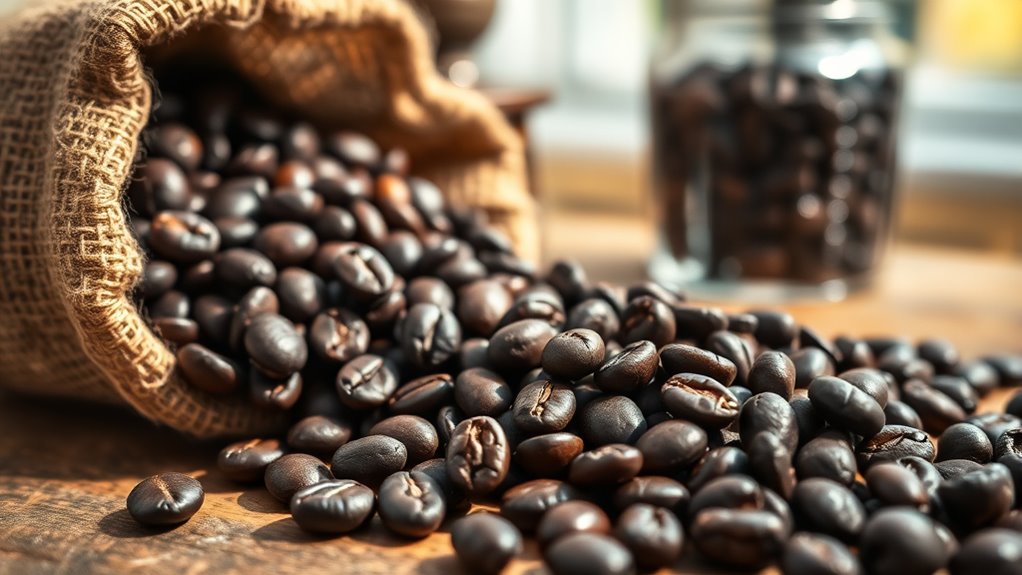
Although espresso beans can technically remain fresh for several months if unopened and stored correctly, you’ll get the best flavor within 5 to 10 days after roasting. According to Tim Wendelboe’s guidelines, this initial resting period lets the beans degas and develop their ideal aroma and taste.
After this, the beans generally stay fresh for up to 2-3 weeks when stored properly in an airtight, opaque container kept cool and dark. Beyond this window, the flavor and aroma gradually decline, which negatively impacts extraction quality.
While unopened beans may last several months, their peak freshness and the best espresso experience happen within the first few weeks post-roast. Understanding this timeline helps you maximize flavor and avoid diminished quality from storing the beans too long. Proper storage in airtight, opaque containers is essential to block oxygen and light, which accelerates flavor loss.
When Does Opening the Bag Affect Espresso Bean Freshness?
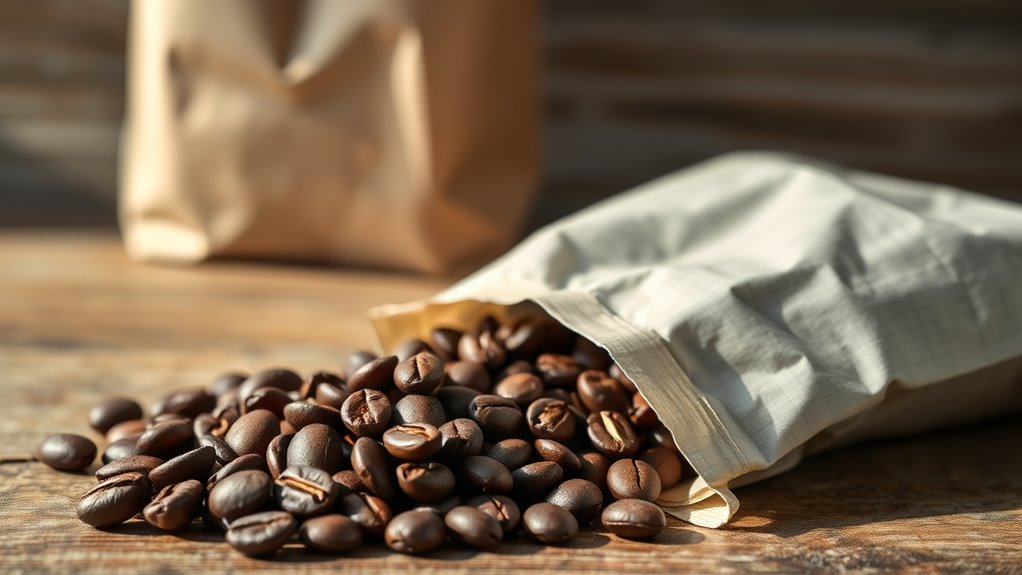
Once you open the bag, the espresso beans start losing freshness more quickly because they’re exposed to air, moisture, and light. This moment marks the start of a noticeable drop in both quality and aroma.
Research shows that espresso beans keep their ideal flavor for about 1-2 weeks after opening if you store them properly.
The peak freshness is within the first few days, and after that, the flavor starts to fade faster. To slow this down, you should transfer the beans into an airtight, opaque container right after opening.
This helps limit their exposure to things like oxygen and light that cause oxidation and staling. Proper storage also preserves the essential oils that contribute to espresso’s rich flavor and crema extraction under high pressure.
Why Does Resting Espresso Beans Matter for Flavor?
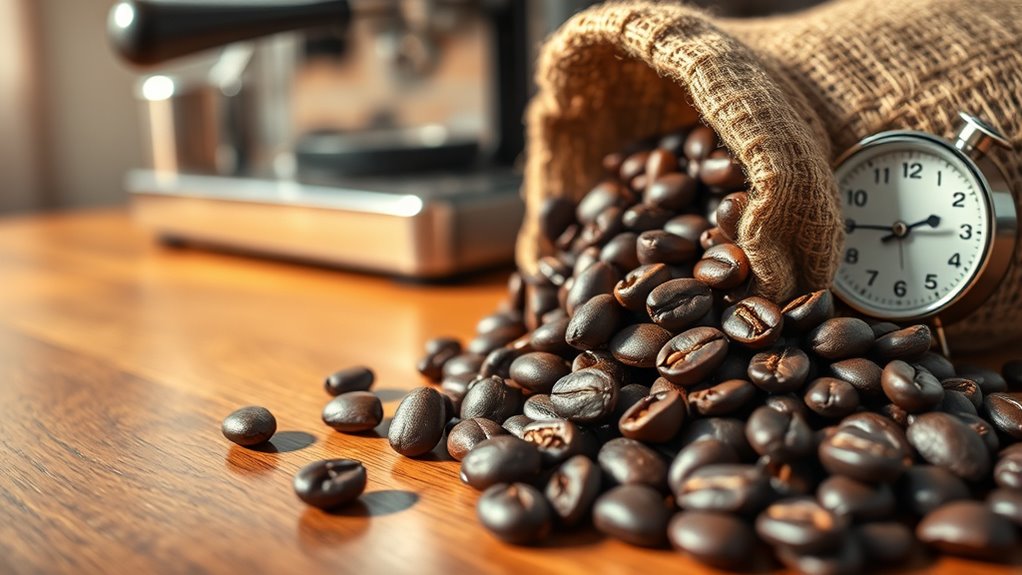
Because freshly roasted espresso beans release carbon dioxide, resting them before use is essential to prevent this gas from disrupting extraction and flavor balance. Proper resting allows degassing, which reduces over-extraction risks that cause sour or bitter notes.
This resting period also promotes the development of complex aromas and flavor profiles, enhancing the espresso’s overall quality. So, giving your beans some time to rest really makes a difference in taste. Maintaining consistent extraction timing during brewing further ensures these flavors are properly expressed in the final shot.
| Factor | Effect | Recommended Duration |
|---|---|---|
| CO2 Degassing | Prevents extraction disruption | 5–10 days post-roast |
| Flavor Development | Enhances complexity | Varies by roaster |
| Over-extraction Risk | Sour/bitter flavors | Insufficient resting |
| Consistency | Reliable quality | Monitoring rest time |
How Do You Track Espresso Beans’ Rest Time From Roast Date?
To accurately track espresso beans’ rest time, you need to start counting from the roast date rather than the delivery or opening date. This guarantees you measure the true aging period that impacts flavor development.
Always record both the roast date and the first brew date separately to maintain precise rest period calculations.
Record roast and first brew dates separately to ensure accurate tracking of espresso bean rest periods.
Don’t reset the rest clock when you open the bag. The roast date remains your consistent reference point.
To calculate rest time, subtract the roast date from the brewing date, giving you the exact number of days after roast.
Keeping detailed “days after roast” notes lets you clearly communicate resting periods and compare different batches effectively.
This way, you can make evidence-based adjustments to optimize espresso quality.
What Happens to Espresso Beans During the Rest Period?
During the rest period, your espresso beans release carbon dioxide through degassing. This process directly impacts flavor development and how consistently your espresso extracts.
If you don’t give the beans enough time to rest—usually between 5 to 14 days—you might end up with unstable crema and uneven brewing. This resting phase also links to the tradition of enhancing espresso’s sensory experience, much like how the three coffee beans symbolize deeper cultural meanings in espresso martinis.
Degassing And Flavor Development
Although freshly roasted espresso beans seem ready to brew, they actually go through a critical transformation called degassing during the rest period. During this time, beans release excess carbon dioxide trapped during roasting. This release usually peaks within 5 to 10 days but can last beyond six weeks for denser varieties.
Proper degassing is really important. It prevents over-extraction, which can cause sour flavors, and it also allows volatile compounds to stabilize. This stabilization boosts the aroma and refines the overall taste profile.
If beans don’t rest long enough, too much gas can cause inconsistent extraction and off-flavors. On the other hand, resting them too long can reduce their aromatic intensity.
Knowing how degassing and flavor development work during the rest period helps you get the freshest beans and best flavor before brewing. That way, your espresso comes out balanced and consistent every time.
Impact On Brewing Quality
How exactly does the rest period affect the quality of your espresso shot? During this phase, espresso beans off-gas CO₂ and undergo chemical changes that directly influence extraction and flavor stability.
If you don’t allow enough rest time, excess gas causes uneven extraction, leading to sour or underdeveloped flavors.
On the other hand, resting too long can degrade freshness and diminish flavor quality. Specifically, resting impacts brewing quality by reducing excess CO₂ that can cause blooming and channeling during extraction.
It also enhances crema formation and overall extraction consistency.
Plus, it helps stabilize flavor development to produce a balanced, well-rounded shot. Understanding these changes helps you control the brewing process, ensuring your espresso tastes vibrant and balanced rather than harsh or flat.
This balance is crucial since a properly rested bean enables optimal extraction within the recommended 25-30 seconds brewing time.
Optimal Rest Timing
Since espresso beans release carbon dioxide and other gases after roasting, allowing them to rest is essential for achieving consistent extraction and ideal flavor. During the rest period, degassing reduces excess gas, preventing uneven brewing and improving crema formation.
Roasters typically recommend resting beans between 5 to 14 days post-roast for the best results. Monitoring aroma and taste during this phase helps you pinpoint the perfect brewing time, ensuring shot stability and peak flavor. The crema formation is a key indicator of proper degassing and optimal espresso quality.
| Rest Period (Days) | Key Process | Impact on Espresso |
|---|---|---|
| 0-2 | High CO2 release | Uneven extraction, sourness |
| 3-5 | Moderate degassing | Developing flavor profile |
| 6-9 | Ideal degassing | Balanced crema, smooth shot |
| 10-14 | Low CO2 release | Stable extraction, rich taste |
| 15+ | Minimal gases | Possible flavor decline |
How Does Proper Storage Extend Espresso Bean Shelf Life?
When you store espresso beans properly, in airtight, opaque containers at room temperature, you slow down the processes that cause staling and flavor degradation. This method minimizes exposure to oxygen, light, heat, and moisture. These are the main factors that speed up oxidation and the loss of aromatic oils.
Proper storage helps keep the beans’ chemical makeup intact. That means the flavor compounds needed for a great extraction stick around longer.
Here are some key things to keep in mind:
- Airtight, opaque containers block air and light. This stops oxidation and UV damage from happening.
- Valved bags let CO2 escape but don’t let oxygen in, which helps keep the beans fresh.
- Keeping storage conditions consistent avoids flavor contamination and prevents the beans from absorbing moisture.
- Avoiding refrigeration is important because moisture and temperature fluctuations in the fridge can cause flavor loss and spoilage.
How Long Can You Store Opened Espresso Beans Without Losing Freshness?
You can expect opened espresso beans to stay fresh for about two weeks if you store them properly. Just make sure to keep them in an airtight, opaque container away from light and heat.
After those two weeks, air and light start to take their toll, and you’ll notice the flavor and aroma beginning to fade. That’s when your beans are starting to go stale.
Knowing how to store your beans right really helps you tell when they’ve lost their peak quality. Grinding beans immediately before brewing preserves volatile compounds for better taste and aroma.
Optimal Freshness Window
Although espresso beans can remain usable after opening, their ideal freshness typically lasts about two weeks if you store them correctly. After roughly 14 days, exposure to air and light begins to degrade their flavor and aroma, which impacts your espresso’s quality.
To maximize freshness, consider these key points: consume opened beans within 10-14 days for the best flavor and crema. Use an airtight, opaque container at room temperature to slightly extend freshness beyond two weeks.
Keep in mind, beyond 2-3 weeks, you’ll notice a decline in taste vibrancy and crema quality. Sticking to this freshness window ensures you experience espresso at its peak, avoiding the dullness that comes with prolonged exposure after opening. Proper storage techniques help preserve the flavor complexity and aromatic oils that are essential for a rich espresso experience.
Storage Impact Factors
The freshness of espresso beans after opening depends heavily on how you store them. Once opened, espresso beans retain peak freshness for about two weeks if you keep them in an airtight, opaque container.
Exposure to air, light, heat, and moisture accelerates their degradation, causing rapid flavor and aroma loss.
Storing your beans in a cool, dark place at room temperature can slightly extend this freshness beyond two weeks. Keep in mind that ground espresso beans spoil faster than whole beans due to increased surface area, often losing freshness within days.
To gauge freshness accurately, rely on taste and aroma rather than just the calendar. Proper storage directly influences how long your opened espresso beans maintain their quality and ensure a satisfying brew.
For the best espresso experience, consistent extraction quality also depends on using fresh beans stored properly.
Signs Of Staleness
When espresso beans are exposed to air after opening, oxidation begins to degrade their flavor and aroma within 10 to 14 days. This signals the onset of staleness. You’ll notice freshness fades even if you store beans in an airtight, opaque container.
To identify staleness, look for these signs:
1. Dull Aroma
The rich, vibrant scent weakens or disappears, which means the flavor is fading.
2. Flat or Rancid Flavor
The espresso tastes muted, bitter, or unpleasant, lacking brightness.
3. Visual Oiliness
A greasy surface can suggest aging, but aroma and flavor are more reliable indicators.
Can Longer Resting Replace Dialing In Your Espresso?
Even if you let your espresso beans rest longer to allow gases to degas and flavors to stabilize, you can’t skip dialing in your machine. Resting improves flavor stability but doesn’t replace adjustments in grind size, dose, and pressure that are essential for ideal extraction.
Proper dialing balances flavor, body, and extraction, which resting alone can’t achieve.
| Factor | Resting Beans | Dialing In Machine |
|---|---|---|
| Purpose | Flavor stabilization | Optimize extraction |
| Impact on shot | Reduces crema inconsistencies | Adjusts grind & pressure |
| Required adjustments | None after resting | Grind size & dose changes |
| Effect on flavor | Enhances consistency | Balances flavor profile |
| Complements | Helps but doesn’t replace | Necessary despite resting |
You still have to dial in even well-rested beans to get the best espresso. Skipping this step means missing out on the full flavor potential. So, resting is helpful, but dialing in your machine is a must.
How Do You Test and Compare Espresso Beans Over Time?
Resting your espresso beans and dialing in your machine set the stage for great shots. But understanding how those beans change over time takes some systematic testing.
To track these changes accurately, you’ve got to keep your brewing variables consistent. That means grind size, extraction time, and all that good stuff should stay the same. That way, any flavor differences you notice come from the bean’s age, not from how you brewed it.
It really helps to do blind tastings every now and then. This keeps things objective when you’re checking for freshness and shifts in flavor profiles.
Make sure you keep detailed records too. Note down roast and brew dates along with your tasting notes. Focus on sensory qualities like acidity, body, and sweetness.
Here’s a simple way to test and compare espresso beans over time:
- Brew and taste the same beans at set intervals, noting flavor and aroma changes.
- Use blind tastings to eliminate bias and evaluate freshness objectively.
- Record all variables and sensory observations to clearly analyze how your beans evolve.
Frequently Asked Questions
Can Espresso Beans Be Reused After Brewing?
You can technically reuse espresso beans after brewing, but you’ll end up with bitter, over-extracted coffee lacking balance.
For the best flavor, it’s more effective to use fresh beans every time you brew espresso.
Trust me, your taste buds will thank you!
How Does Bean Origin Affect Espresso Shelf Life?
Bean origin affects espresso shelf life because moisture, density, and natural oils vary by region. You’ll notice beans from high-altitude or dry-processed areas stay fresher longer, while others oxidize faster. So, you must adjust storage accordingly.
It’s all about how the environment influences the beans. Different climates and processing methods change how long your espresso stays tasty. Paying attention to where your beans come from can really help your coffee routine.
Do Flavored Espresso Beans Have Shorter Shelf Life?
Flavored espresso beans spoil faster, like ice melting in the sun. You’ll notice flavor fading within 1-3 months due to oils degrading.
Store them airtight and dark, but expect reduced freshness compared to plain beans. It’s just how the flavors work—they don’t last as long. So, if you want that bold flavored kick, it’s best to enjoy them sooner rather than later.
Can Moisture Cause Mold in Espresso Beans?
Yes, moisture can cause mold in espresso beans by creating a damp environment that promotes fungal growth. You should store beans in airtight, moisture-proof containers to maintain quality and prevent visible mold, off smells, or texture changes.
Keeping your beans dry is key. When moisture gets in, it not only encourages mold but can also ruin the flavor and freshness. So, make sure your storage method keeps moisture out for the best espresso experience.
Is Refrigeration Better Than Freezing for Espresso Beans?
No, refrigeration isn’t better than freezing for espresso beans. You’ll risk moisture buildup and flavor loss in the fridge.
Freezing in an airtight container slows oxidation, preserving freshness and quality for much longer. It’s a much smarter choice if you want to keep your beans tasting great.
Conclusion
You can’t underestimate how vital proper storage and timing are for espresso beans. Freshness peaks within weeks after roasting, but resting them just right releases flavors like a symphony in your cup. Once opened, beans lose their edge faster than you think. So, track roast dates and store them airtight.
While longer resting improves taste, it won’t replace precise dialing in. Testing beans over time sharpens your palate, ensuring every shot hits perfection.