You can expect about 60–65 mg of caffeine in a typical espresso martini. This mainly comes from a single shot of espresso, combined with smaller amounts from coffee liqueurs like Kahlúa.
Factors like espresso type, bean origin, and brewing method affect caffeine levels. Coffee liqueurs add an extra 4.5–25 mg, depending on the brand and quantity.
If you want to manage your intake or explore caffeine-free versions, there’s more to think about regarding ingredients and preparation. It’s all about finding the right balance for your taste and caffeine needs.
What Is an Espresso Martini Made Of?
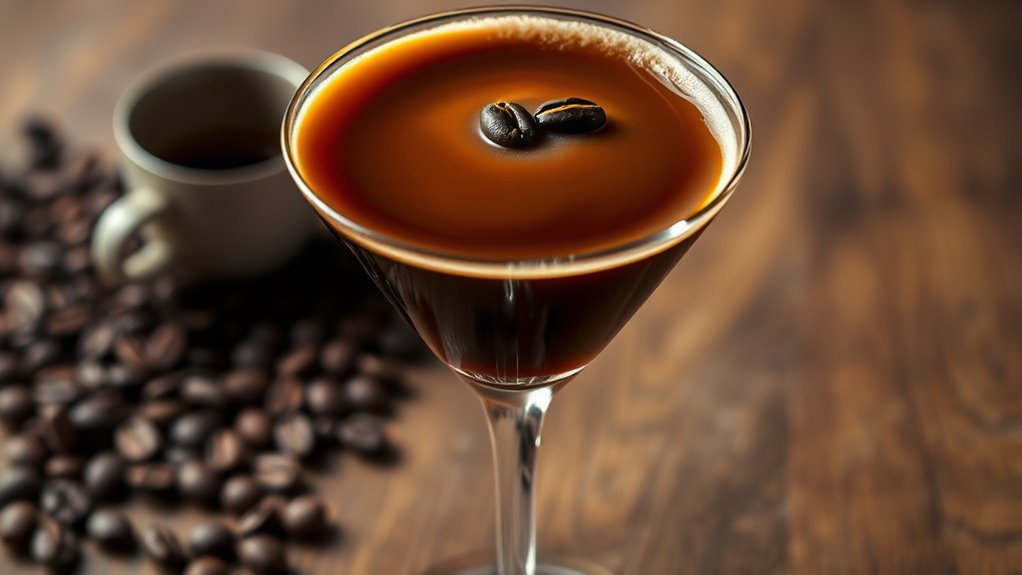
Although it’s known for its bold flavor, an espresso martini’s composition is straightforward: vodka, coffee liqueur, and a shot of espresso or cold brew form its base. You’ll typically find 1 to 1.5 ounces of espresso or cold brew to provide the coffee element.
Coffee liqueurs such as Kahlúa or Lyre’s Coffee Originale add both flavor complexity and caffeine content.
To guarantee bitterness, recipes often include simple syrup or sugar, enhancing sweetness without overpowering the drink’s character.
Presentation matters too; the cocktail is traditionally garnished with three coffee beans floating on top, signaling its coffee essence.
This precise combination ensures the espresso martini delivers a consistent, bold coffee flavor balanced with the spirit’s warmth and subtle sweetness.
For an added depth of flavor and subtle richness, some variations incorporate a small amount of espresso powder as a dry ingredient to enhance the coffee notes without overpowering the drink.
How Much Caffeine Does a Typical Espresso Martini Have?
You’ll find that a typical espresso martini contains about 60–65 mg of caffeine, mostly from the single shot of espresso it includes.
There are small amounts coming from coffee liqueurs like Kahlúa, but their contribution is pretty minimal.
Just keep in mind, if you swap in cold brew or caffeine-free alternatives, the caffeine content can change quite a bit.
The caffeine content can also vary depending on factors like bean type and extraction methods used in preparing the espresso, which influence the caffeine variability.
Typical Caffeine Amount
When you order a typical espresso martini, expect it to contain about 60 to 65 mg of caffeine, mostly coming from a single shot of espresso. This amount can vary a bit depending on the coffee beans’ origin, roast level, and how the espresso is extracted.
Coffee liqueurs in the cocktail can add some caffeine too, usually between 4.5 and 25 mg per serving. But the main caffeine source is still the espresso shot.
Bottled versions, like those from DrinkThat, usually deliver around 60 mg per serving, so you get a pretty reliable caffeine dose.
Just keep in mind that if you use cold brew or decaffeinated espresso, the caffeine content will drop a lot or even disappear.
Knowing these details helps you get a good sense of your caffeine intake when enjoying an espresso martini.
For the best experience, it’s important to use fresh, high-quality beans and proper extraction methods to ensure the espresso shot has its full flavor profile and caffeine content.
Key Caffeine Sources
Since the espresso shot provides the bulk of the caffeine in an espresso martini, you can expect about 60 to 65 mg of caffeine from it alone. This amount depends on factors like the coffee bean variety, roast level, and extraction method.
Additionally, coffee liqueurs included in the cocktail contribute a smaller caffeine portion, typically between 4.5 and 25 mg per serving.
When combined, these elements define the drink’s total caffeine content.
For ready-to-drink canned or bottled espresso martinis, caffeine levels can vary widely, ranging from 30 mg to over 150 mg, influenced by product formulation.
Keep in mind that a single espresso shot contains approximately 63 mg of caffeine, which offers a quick and concentrated energy boost.
Factors Influencing Content
Understanding the caffeine sources in an espresso martini sets the stage for examining the factors that influence its caffeine content. Typically, an espresso martini contains about 60-65 mg of caffeine, primarily from a single espresso shot.
However, the type and strength of the coffee bean you use can change this amount considerably.
If you substitute espresso with cold brew or add coffee liqueur, the caffeine level varies since cold brew generally has more caffeine than espresso.
The size of the espresso shot and the quantity of coffee or liqueur you add also directly affect the caffeine content.
To maintain consistency, you should use precise preparation techniques and high-quality ingredients.
This way, you can ensure a reliable caffeine dose in every espresso martini you make.
A well-extracted espresso shot with a thick crema often indicates freshness and optimal caffeine extraction.
Espresso vs. Other Coffees: What It Means for Your Martini’s Caffeine
You might think espresso is the biggest caffeine hitter in your martini, but actually, an 8 oz drip coffee has more caffeine per serving.
It’s pretty interesting how the type of coffee you pick—whether it’s espresso, cold brew, or decaf—can really change how much caffeine ends up in your cocktail.
Knowing these differences lets you fine-tune the caffeine kick in your drink just the way you like it.
The extraction time and method directly influence the caffeine content and flavor profile of your espresso, making extraction timing an important factor to consider.
Espresso Caffeine Compared
Although an espresso shot contains about 63 mg of caffeine, its concentration per ounce surpasses that of an 8-ounce cup of drip coffee with roughly 95 mg total. This means when you use espresso in an espresso martini, you’re getting a dense caffeine hit despite the smaller volume.
Cold brew coffee can exceed espresso’s caffeine per ounce depending on the beans and brewing method, but it’s less common in martinis.
Coffee liqueurs like Kahlúa contribute only about 4.5 mg of caffeine per 1.5-ounce serving, making their impact minimal compared to espresso.
If you’re sensitive to caffeine, opting for decaffeinated espresso or caffeine-free liqueurs considerably lowers your drink’s caffeine content without sacrificing flavor. This way, you can enjoy the cocktail with less stimulant effect.
Coffee Types Impact
How does the type of coffee you choose affect the caffeine kick in your espresso martini? The coffee variety directly influences caffeine content, altering your drink’s stimulation level. Consider these factors:
Espresso delivers about 63 mg of caffeine per shot, the standard for espresso martinis. Drip coffee averages 95 mg per 8 oz, increasing caffeine if substituted. Cold brew can surpass espresso caffeine levels, depending on brewing time and ratios.
Beans matter: Robusta beans contain roughly twice the caffeine of Arabica beans, impacting your cocktail’s strength. Choosing decaffeinated options drastically lowers caffeine, tailoring your martini’s intensity.
Understanding these variables helps you control how much caffeine you consume, ensuring your espresso martini matches your desired energy level precisely. The extraction process in an espresso machine, including factors like grind size and extraction time, also affects the final caffeine concentration in your shot, which directly influences your cocktail’s potency. extraction process
Key Factors Influencing Espresso Martini Caffeine Content
Since the caffeine content in an espresso martini hinges on several variables, understanding these key factors can help you gauge the drink’s stimulant impact more accurately. Primarily, the amount and type of espresso or cold brew you use determine the caffeine level.
The coffee beans’ origin and roast level also matter. Lighter roasts generally contain more caffeine than darker ones.
Additionally, extraction methods, like brewing time and pressure, directly influence caffeine concentration in the espresso. While ingredient variations like coffee liqueurs can alter caffeine, focusing here on espresso highlights these core contributors.
Preparation techniques such as shaking duration and serving temperature affect froth and flavor perception but not caffeine content. By analyzing these variables, you can better estimate how much caffeine your espresso martini delivers. The caffeine amount can also vary based on the coffee dose, bean type, roast, grind, and extraction process.
Does Coffee Liqueur Add Much Caffeine to Your Espresso Martini?
What role does coffee liqueur play in the caffeine content of your espresso martini? While it does contribute caffeine, its impact is generally minor compared to the espresso shot.
Here’s a precise breakdown:
Coffee liqueurs like Kahlúa contain about 4.5 mg caffeine per 1.5-ounce shot, which is far less than what you get from espresso.
Some brands, such as Mr. Black, can deliver 25-40% of an espresso shot’s caffeine per ounce, but this varies by brand.
The actual caffeine from liqueur depends on both the quantity you use and the product’s caffeine concentration.
So, even though coffee liqueur adds caffeine, it’s not the main source in your drink.
The espresso shot definitely dominates when it comes to caffeine content.
Additionally, the caffeine strength of your espresso can be influenced by the coffee dose used during extraction, which affects shot concentration and flavor.
Is It Safe to Mix Caffeine and Alcohol in Espresso Martinis?
Although combining caffeine and alcohol might seem harmless in an espresso martini, it can mask alcohol’s depressant effects and lead you to underestimate your level of intoxication. This masking effect increases the risk of drinking more than you realize, impairing judgment and coordination.
The CDC warns that mixing high caffeine doses, especially from energy drinks, with alcohol can cause dehydration and cardiovascular stress. While espresso martinis contain caffeine naturally from coffee, which is generally safer, excessive intake still strains your heart and heightens health risks.
To stay safe, you should drink espresso martinis in moderation. Remember, caffeine doesn’t neutralize alcohol’s impairing effects but may delay your awareness of intoxication. This delay could increase the chance of accidents or risky behavior.
The fresh espresso used in an espresso martini provides essential oils and crema, which contribute to its invigorating caffeine content but do not reduce alcohol’s effects.
Can You Order a Caffeine-Free Espresso Martini?
You can definitely order a caffeine-free espresso martini by asking for a decaf espresso shot, which many bars and restaurants have on hand.
Plus, if you choose coffee liqueurs that have little to no caffeine—or even swap them out—you can cut down on the caffeine even more.
Just make sure to check in with your bartender so they can tailor the drink to your caffeine needs.
Decaf Espresso Options
How can you enjoy the rich flavors of an Espresso Martini without the caffeine buzz? The solution lies in opting for decaf espresso shots. Many bars and restaurants offer decaffeinated espresso, which retains the coffee’s robust taste but contains only about 2-5 mg of caffeine per shot, significantly less than regular espresso.
To ensure a caffeine-free experience, follow these steps:
- Request decaf espresso explicitly when ordering your Espresso Martini.
- Confirm with the bartender that the espresso used is indeed decaffeinated.
- Understand that decaf espresso preserves the cocktail’s traditional flavor profile while minimizing caffeine intake.
- Note that availability varies, so verify beforehand if decaf espresso is stocked.
This approach lets you savor the cocktail’s essence without the stimulating effects of caffeine. It’s a great way to enjoy your drink any time of day without worrying about staying up all night.
Low-Caffeine Alternatives
Building on the option of decaf espresso, several low-caffeine alternatives can help you enjoy an Espresso Martini without the typical caffeine kick. You can request decaf espresso shots at most bars, which reduces caffeine content to nearly zero while preserving the coffee flavor.
Additionally, using caffeine-free coffee liqueurs, such as caffeine-free versions of Kahlúa, further lowers caffeine levels. These substitutions let you enjoy the classic cocktail’s taste without the stimulant effects.
To guarantee your drink meets your caffeine preferences, always ask your bartender or server if they offer decaf espresso and caffeine-free liqueurs.
This approach allows precise customization of your Espresso Martini, making it suitable for those sensitive to caffeine or looking to avoid it altogether.
How to Enjoy Espresso Martinis Without Too Much Caffeine
Although espresso martinis are known for their bold caffeine kick, you can still enjoy their rich coffee flavor without overloading on caffeine. Managing caffeine intake involves deliberate choices in ingredients and consumption habits. Consider these evidence-based strategies:
- Opt for decaf espresso shots to preserve the coffee essence without the stimulant effect.
- Select coffee liqueurs labeled as caffeine-free or lower in caffeine, such as Kahlúa or homemade variants.
- Limit the number of espresso martinis you drink in one sitting to control total caffeine consumption.
- Use cold brew coffee with reduced caffeine or caffeine-free coffee extracts to maintain flavor while decreasing caffeine levels.
These methods allow you to enjoy espresso martinis thoughtfully, balancing flavor and caffeine intake efficiently.
Give them a try and see how you can savor the taste without the jitters!
Caffeine Levels in Popular Canned Espresso Martinis
When you choose a canned espresso martini, you’re selecting a beverage with caffeine content that can vary considerably, from as low as 30 mg to over 150 mg per can. This variation largely depends on the brand and whether the product uses 100% Arabica cold brew or espresso.
Typically, a canned espresso martini contains caffeine roughly equivalent to 6 ounces of black coffee or 1.25 ounces of espresso.
Some cans deliver caffeine levels comparable to a single espresso shot, while others approach that of a drip coffee cup.
Labels usually specify the exact caffeine content, helping you make informed choices based on your caffeine sensitivity.
Understanding these distinctions guarantees you can control your caffeine intake effectively when opting for these convenient cocktails.
Where to Find Bottled Espresso Martinis With Consistent Caffeine
If you want a reliable caffeine boost in your espresso martini, bottled options from brands like DrinkThat offer consistent caffeine levels, typically around 60 mg per can. That’s about the same as a standard espresso shot.
These ready-to-drink cocktails use measured ingredients, including 100% Arabica cold brew or espresso, distilled vodka, and natural coffee liqueurs. This ensures the caffeine content is standardized every time you pour a drink.
To find these bottled espresso martinis with consistent caffeine, consider:
- Upscale liquor stores that curate premium beverages
- Online retailers specializing in ready-to-drink cocktails
- Specialty beverage outlets focused on quality and consistency
- Brand websites where you can order directly
Choosing these sources guarantees predictable caffeine intake, unlike the variable bar-made versions. So, your caffeine consumption stays precise and dependable.
Frequently Asked Questions
What Is the History of the Espresso Martini Cocktail?
You’ll find the espresso martini was created in the 1980s by bartender Dick Bradsell in London. It all started when a model asked him for a drink that could both wake her up and get her a little tipsy.
How Do You Properly Garnish an Espresso Martini?
You garnish an espresso martini by placing three coffee beans evenly spaced on the frothy surface immediately after shaking.
Press them gently to prevent sinking. This enhances the aroma, symbolism, and visual appeal with precision and balance.
It’s a simple touch, but it really makes a difference. Plus, those beans are a classic finishing touch everyone recognizes.
Can Espresso Martinis Be Made With Alternative Milk Options?
Yes, you can use alternative milks like almond or oat in espresso martinis. They’ll change the texture and creaminess a bit, so it’s good to pick neutral, unsweetened options. That way, you keep the coffee’s flavor front and center.
Plus, it helps you stay in control of how much sugar you’re adding. It’s all about balancing taste and texture to make your drink just right.
What Glassware Is Traditionally Used for Serving Espresso Martinis?
You typically use a chilled, stemmed martini or coupe glass for espresso martinis. This design preserves the frothy crema, maintains ideal temperature, and enhances presentation. It holds the classic 3 to 4-ounce serving size precisely and efficiently.
Using this kind of glass not only looks stylish but also helps keep your drink just right while you enjoy it. Plus, it’s the perfect way to show off that beautiful espresso martini foam on top.
How Do Espresso Martinis Compare in Taste to Other Coffee Cocktails?
Espresso martinis hit your palate like a bold symphony, sharper and cleaner than other coffee cocktails. You’ll notice their intense, aromatic espresso notes, balanced bitterness, and refined texture.
They’re quite different from the sweeter, creamier alternatives that tend to mask coffee’s true character. So, if you want a coffee cocktail that really lets the espresso shine, this is the one to go for.
Conclusion
Now that you know the caffeine content in an espresso martini can vary widely, from the espresso shot to the coffee liqueur, you’re better equipped to sip smartly. It’s not just about the buzz. It’s about balancing flavor and alertness without going overboard.
Whether you’re cutting back or craving a caffeine kick, understanding these factors helps you avoid flying blind. This way, you can enjoy your cocktail exactly how you want it.