To keep your espresso beans fresh, store them in airtight, opaque containers. This helps block oxygen and light, which can ruin the beans. Make sure to keep them in a cool, dark, dry place away from any heat sources.
Avoid refrigerating your beans because they can absorb moisture and odors from the fridge. If you need to store them for a longer time, freeze the beans in small, vacuum-sealed portions. Only thaw what you plan to use right away.
Grind your beans just before brewing to preserve their flavor. Proper handling really goes a long way in keeping your beans fresh and flavorful. Knowing these simple tips will help you maintain perfect bean quality every time.
Why Freshness Matters for Espresso Beans
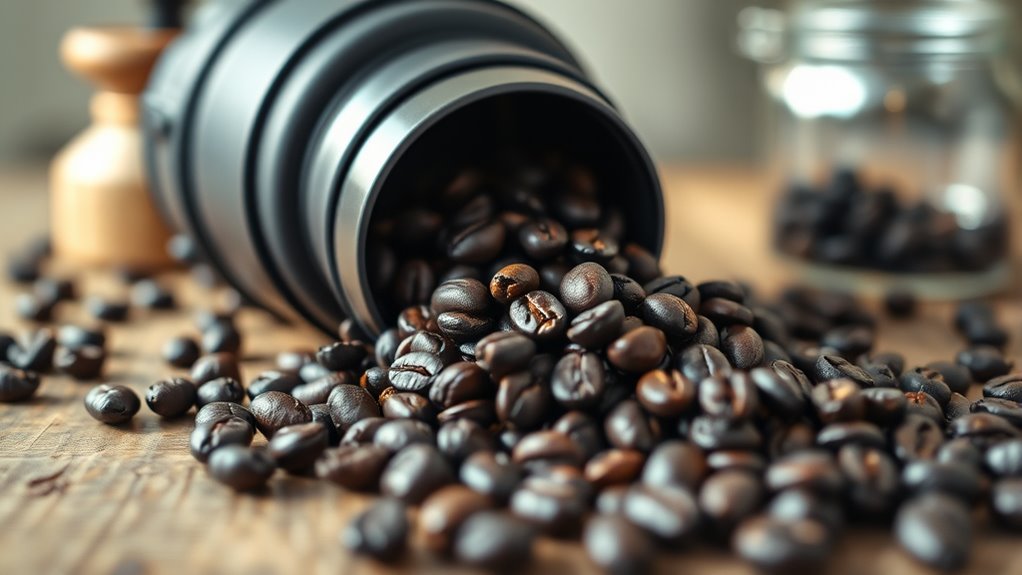
Although many factors influence your espresso’s quality, freshness plays a critical role because freshly roasted beans retain higher levels of CO₂. This gas creates the rich crema that’s essential for a balanced shot.
When beans are fresh, you get vibrant acidity and complex flavors that really define a superior espresso. But after about 7 to 21 days post-roast, those flavors and aromas start to fade, leaving a dull, stale profile.
Proper storage is key to preserving the volatile compounds responsible for espresso’s brightness and aroma. If you use freshly stored beans, you’re guaranteeing ideal extraction, which means a fuller, more nuanced cup.
Neglecting freshness means sacrificing crema quality and flavor integrity. In the end, that diminishes your espresso’s true potential.
Maintaining the right roast profile during storage can also enhance flavor by optimizing the beans for high-pressure extraction.
How Roast Date Impacts Freshness
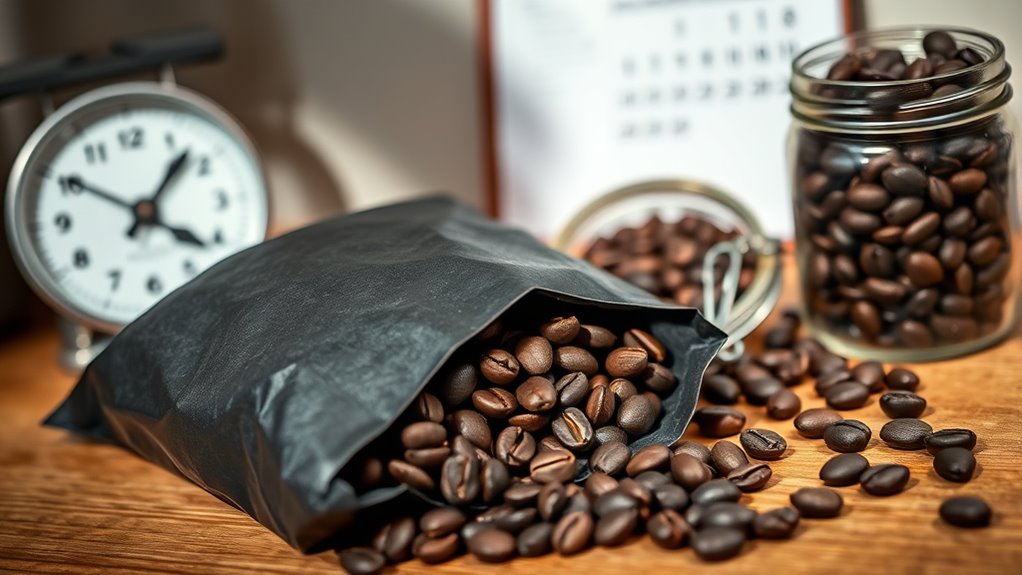
When you pay attention to the roast date on your espresso beans, you’re tapping into the most reliable measure of their freshness and flavor potential. Unlike expiration or packaging dates, the roast date directly reflects how recently your beans were roasted. This is vital for ideal taste.
Here’s why it matters:
Beans peak in flavor between 7 to 21 days post-roast, offering the richest aroma and nuanced taste. Light roasts maintain their freshness and origin characteristics longer than dark roasts. Beyond this window, volatile aromatic compounds dissipate, causing flavor degradation.
Flavor peaks 7–21 days after roasting; light roasts stay fresh longer, while dark roasts lose aroma faster.
Using beans closer to their roast date guarantees a more vibrant, complex espresso experience. So, if you want the best cup, keep an eye on that roast date! The roast level also influences caffeine content, with light roasts retaining more caffeine than dark roasts.
Pick the Best Container for Your Espresso Beans
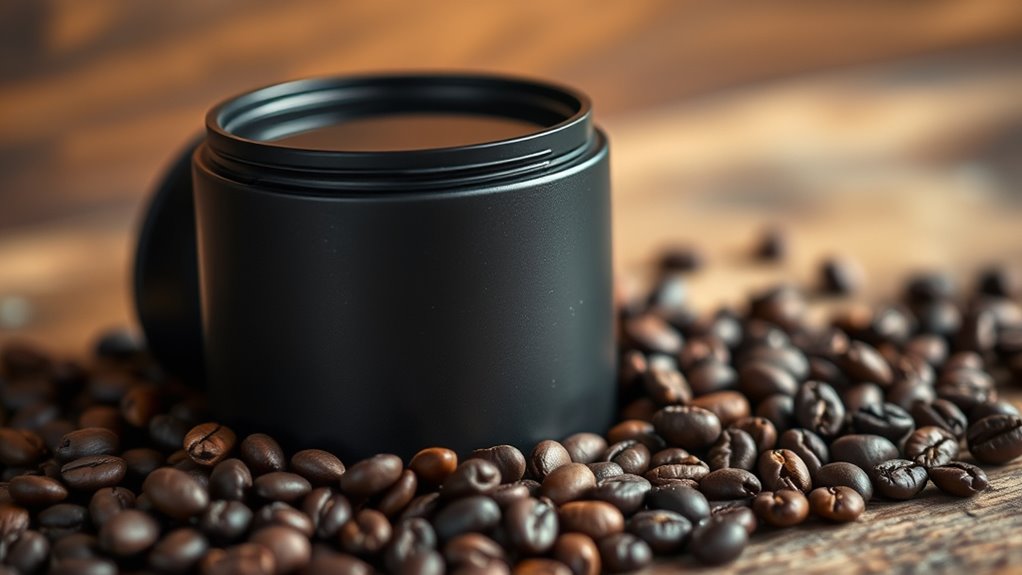
To preserve the full flavor and aroma of your espresso beans, you need to choose a container that effectively blocks oxygen and light. Airtight containers made from opaque materials are your best bet because they prevent exposure to elements that degrade freshness.
If you prefer glass or clear plastic, just make sure the container has a sealed, airtight lid. This helps minimize light and oxygen contact. Also, consider containers with one-way valves. These allow built-up gases to escape without letting oxygen in, keeping beans fresher longer.
Stainless steel canisters are another excellent choice. They’re durable, non-reactive, and shield beans from environmental factors.
Finally, label your container with the roast date so you can track freshness easily. Using your beans within their ideal window ensures every cup tastes as vibrant as intended.
Additionally, maintaining consistent timing in espresso extraction helps preserve the intended flavor profile from fresh beans to cup.
Best Places to Store Espresso Beans at Home
Since espresso beans lose their freshness quickly when exposed to heat, light, and moisture, you should store them in an airtight container placed in a cool, dark spot like a pantry or cupboard.
Here’s where to keep them for ideal freshness:
- Pantry or Cupboard – Away from ovens, stoves, and direct sunlight to avoid heat exposure.
- Cool, Dark Corner – Minimizes light damage, preserving flavor and aroma.
- Dry Environment – Prevents moisture absorption, which can cause mold and degrade taste.
- Vacuum-Sealed or One-Way Valve Containers – These reduce oxygen exposure, extending freshness without refrigeration.
To maintain the beans’ flavor complexity, it is essential to preserve the dehydration process effects by minimizing exposure to air and moisture.
Why You Should Avoid Refrigerating Espresso Beans
You should avoid refrigerating espresso beans because the moisture inside the fridge encourages spoilage and dulls their flavor.
On top of that, beans tend to absorb strong odors from other foods, which can mess with their taste.
Plus, the temperature changes cause the beans to expand and contract, which can damage their quality over time.
Proper storage involves keeping espresso beans in an airtight container in a cool, dry, dark place away from sunlight to maintain freshness and aroma.
Moisture Risks In Refrigerators
Although refrigerators seem like a convenient storage option, they expose espresso beans to high humidity that causes moisture absorption. This leads to staleness and mold growth. You should avoid refrigerating your beans because:
- Moisture absorption disrupts the delicate oils, dulling aroma and freshness.
- Temperature fluctuations cause condensation, accelerating deterioration.
- Mold growth becomes a risk due to persistent dampness.
- Exposure to humidity undermines the beans’ flavor integrity.
Refrigeration’s moisture compromises espresso beans far more than it preserves them. Instead, store beans in a cool, dark, and dry place to maintain ideal quality.
This kind of environment prevents moisture-related damage and keeps your espresso flavorful and fresh longer. For optimal espresso extraction, maintaining consistent temperature control during brewing is crucial to preserving the beans’ flavor profile.
Odor Absorption Issues
Beyond moisture issues, another big reason to avoid refrigerating espresso beans is that they tend to absorb odors from nearby foods. Since beans are porous, they easily pick up strong scents like garlic, onions, or leftovers. This can really mess with their natural flavor profile.
When beans soak up these odors, it dulls the rich, complex taste you expect from fresh espresso. Plus, the fridge environment exposes beans to humidity, which increases the risk of mold growth and lowers the quality.
To keep your espresso beans fresh and flavorful, store them in a cool, dark place inside an airtight container. Make sure it’s away from anything with a strong smell.
This way, you preserve the beans’ aroma and taste way better than in the fridge. That means every shot you pull will give you the authentic espresso experience you want. Proper storage also supports maintaining the ideal extraction pressure during brewing, which is essential for optimal flavor.
Temperature Fluctuation Effects
Since espresso beans are sensitive to environmental changes, refrigerating them exposes the beans to temperature fluctuations that lead to condensation inside the container. This moisture absorption can cause mold growth and stale flavors.
When you take beans in and out of the fridge, repeated warming and cooling accelerate oxidation, which dulls the coffee’s aroma and taste.
Plus, exposure to humidity and temperature shifts compromises bean freshness and stability. To maintain peak quality, avoid refrigeration and instead store your beans in a consistent, cool, dark place.
- Temperature swings cause condensation and moisture buildup.
- Moisture leads to mold and off-flavors.
- Oxidation speeds up with repeated warming and cooling.
- Humidity changes harm freshness and taste stability.
Does Freezing Espresso Beans Really Help?
Freezing espresso beans can actually keep them fresh for months, but there’s a catch—you’ve got to do it right.
For example, vacuum-sealing small portions is key to preventing moisture and flavor from slipping away.
You’ll also want to steer clear of common mistakes, like thawing and refreezing your beans repeatedly.
That causes condensation, which really messes with the quality.
Using airtight, vacuum-sealed containers is essential to avoid freezer burn and preserve the beans’ freshness.
Freezing Benefits Explained
Although storing espresso beans in the freezer might seem unconventional, it can considerably extend their freshness by slowing oxidation and staling. When you freeze beans properly, you preserve their flavor longer, but you need to handle them carefully to avoid quality loss.
Here’s why freezing benefits your espresso beans:
- It slows down chemical reactions that cause staling, preserving aroma and taste.
- Storing in small, airtight portions minimizes moisture exposure and temperature swings during thawing.
- Properly frozen beans can maintain their flavor for several months if kept away from humidity and repeated freeze-thaw cycles.
- Gradually thawing at room temperature prevents condensation, protecting the beans from moisture damage.
Freezing works best on freshly roasted beans and is ideal for use within 1-3 months of freezing.
Proper Freezing Techniques
When you want to extend the freshness of your espresso beans, proper freezing techniques make all the difference. Start by freezing your beans immediately after roasting and opening to lock in peak flavor.
Use small, airtight, vacuum-sealed bags to prevent moisture and air exposure, which can degrade quality.
Only thaw the amount you need to avoid repeated temperature changes that cause moisture buildup and flavor loss. Remember, once thawed, don’t refreeze the beans.
Properly frozen espresso beans maintain ideal flavor for up to three months, but for the best taste, aim to use them within one month of freezing.
This careful approach slows oxidation effectively, preserving your espresso’s rich, nuanced profile until you’re ready to brew. It’s all about keeping those flavors locked in so every cup tastes just right.
Additionally, storing your beans in airtight containers at or below 40°F (4°C) before freezing helps slow oxidation and preserve quality.
Common Freezing Mistakes
If you want to preserve your espresso beans by freezing them, you need to avoid common mistakes that can quickly undermine their flavor and freshness. Freezing can extend shelf life, but mishandling causes moisture and flavor loss.
Here are four critical errors to avoid:
- Repeated thawing and refreezing This causes condensation, which speeds up oxidation and staling.
- Storing beans in large, unsealed bags This exposes them to moisture and freezer odors, which degrade quality.
- Not dividing beans into small portions Temperature fluctuations happen when you expose all the beans every time.
- Using frozen beans beyond one month or opening before fully thawed Both of these reduce freshness and flavor.
Avoid these pitfalls if you really want to benefit from freezing your espresso beans.
How Long Are Opened Espresso Beans Fresh?
Because exposure to oxygen and environmental factors starts degrading espresso beans as soon as you open the bag, you can expect them to stay fresh for about 2 to 3 weeks with proper storage. During this time, the beans retain most of their flavor and aroma, ensuring your espresso is vibrant and rich.
Espresso beans stay fresh for 2 to 3 weeks after opening, preserving rich flavor and aroma with proper storage.
To maximize freshness, transfer your opened beans to an airtight container and store it in a cool, dark place away from heat and sunlight.
Although the beans remain usable beyond this period, their flavor profile gradually diminishes, resulting in less lively espresso.
Minimizing air exposure is essential. Every interaction with oxygen accelerates staling.
Grind Espresso Beans Just Before Brewing
Although it might be tempting to grind your espresso beans ahead of time, grinding them just before brewing is vital to preserve their freshness and maximize flavor.
When you grind espresso beans immediately before brewing, you preserve CO₂, which enhances crema and flavor. You also retain aromatic oils essential for a vibrant taste profile.
Plus, grinding just before brewing helps prevent oxidation and moisture exposure that cause staleness. It guarantees ideal extraction for a balanced, nuanced shot.
Grinding too early exposes the larger surface area of ground beans to oxygen, which speeds up flavor loss. Pre-ground coffee quickly loses its complex notes, resulting in stale, flat espresso.
This practice is especially important with blonde espresso beans, as their delicate flavors and higher acidity are more susceptible to degradation.
Frequently Asked Questions
Can Espresso Beans Be Stored With Other Coffee Varieties?
Yes, you can store espresso beans with other varieties, but keep them in airtight, opaque containers. It’s important to separate aromatic types to avoid flavor transfer.
Only store fresh beans together if you’ll use them quickly. This way, you maintain their quality and freshness. It’s all about keeping those flavors just right!
How Does Humidity Affect Espresso Bean Freshness?
Humidity deteriorates espresso bean freshness by introducing moisture that swells the beans and accelerates staling. It also promotes mold growth and causes the oils to go rancid.
Are Vacuum-Sealed Bags Better Than Airtight Containers?
Yes, vacuum-sealed bags are better because they remove almost all the air, drastically slowing oxidation. This means your espresso beans stay fresh and flavorful for a much longer time.
Especially if you’re storing them for a while, vacuum sealing really helps preserve that quality. On the other hand, airtight containers still let in some oxygen, which can degrade the beans faster.
Can Light Exposure After Opening Degrade Espresso Beans Quickly?
Yes, light exposure after opening can degrade your espresso beans quickly. It speeds up oxidation and breaks down the essential oils that give your coffee its flavor and aroma.
This means your beans can lose their freshness much faster than you might expect. To keep them tasting great, use opaque, airtight containers. These help shield the beans from light and preserve their freshness effectively.
Is It Okay to Buy Pre-Ground Espresso Beans for Convenience?
Sure, you can buy pre-ground espresso beans for convenience. But remember, it’s like choosing fast food over a home-cooked meal. They lose aroma and flavor quickly.
Grinding fresh just before brewing guarantees a richer, more vibrant cup. It really makes a difference you can taste. So if you can, go fresh!
Conclusion
Storing your espresso beans properly keeps them fresh and flavorful longer, so don’t overlook it. You might think freezing beans preserves freshness, but frequent temperature changes cause moisture and flavor loss. Instead, use an airtight container and store beans in a cool, dark place.
Remember, grinding just before brewing locks in the best taste. With these simple steps, your espresso will consistently taste rich and vibrant, just like from your favorite café. Give it a try and enjoy every cup!