Drip coffee isn’t stronger than espresso per ounce. Espresso packs about 40–80 mg of caffeine per ounce, while drip coffee contains 10–15 mg.
However, because drip servings are larger, you usually consume more total caffeine with drip coffee. For example, an 8 oz cup often has more caffeine than a 2 oz espresso shot.
Your brewing method affects extraction, and how quickly you drink it influences the caffeine impact. There’s more to understand about how brewing styles shape your coffee experience.
Key Differences Between Espresso and Drip Coffee
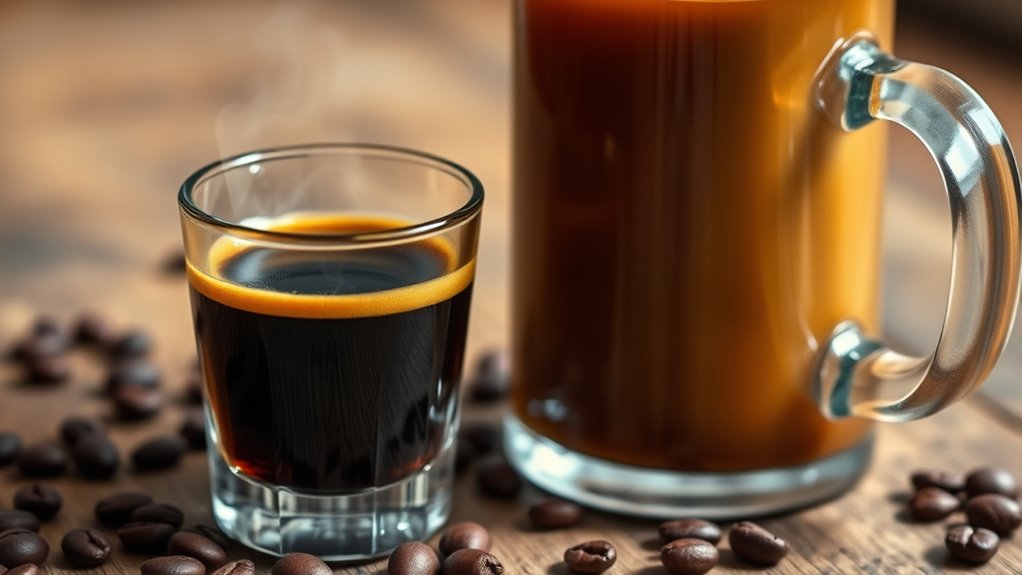
Although both espresso and drip coffee start with the same basic ingredient, coffee beans, their brewing methods create distinctly different beverages. When you make espresso, hot water is forced under high pressure through finely-ground coffee in just 20-30 seconds, producing a small, thick, and intensely flavored shot.
In contrast, drip coffee relies on gravity, with hot water slowly filtering through medium-coarse grounds over several minutes. This results in a larger, lighter-bodied cup.
You’ll notice espresso’s rich texture and concentrated taste, while drip coffee offers a milder, more diluted profile.
These brewing differences not only affect flavor and body but also influence the caffeine concentration per ounce. So, each is suited for different preferences and occasions without overlapping in strength or volume.
The precise extraction time in espresso brewing, typically 25-30 seconds, is key to achieving its distinctive flavor and crema.
How Caffeine Concentration Varies Between Espresso and Drip Coffee
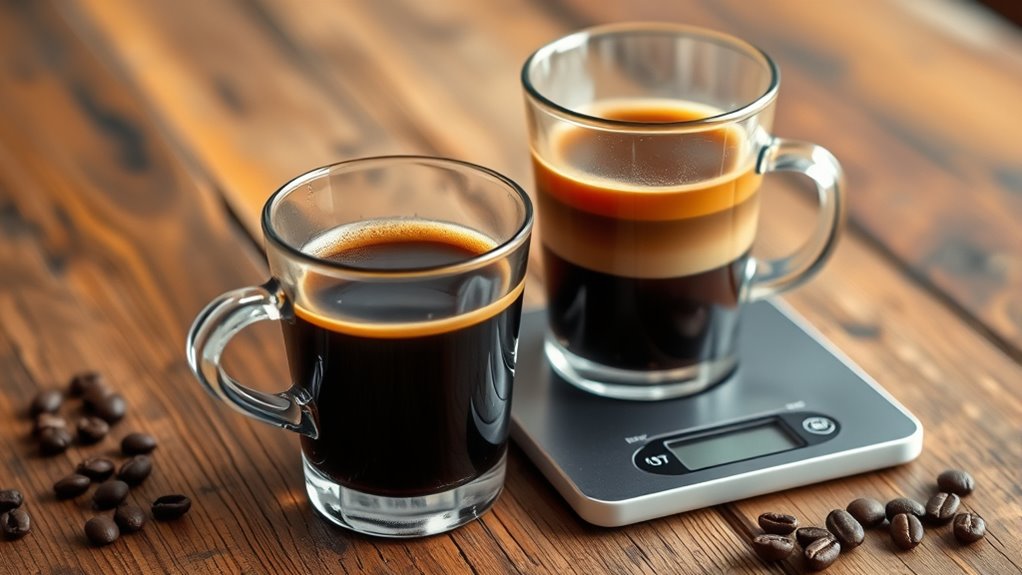
When you compare espresso and drip coffee, the caffeine concentration per ounce reveals a significant difference driven by their brewing methods. Espresso packs roughly 40-80 mg of caffeine per ounce, thanks to its fine grind and high-pressure extraction. This intense brewing process creates a highly concentrated caffeine solution in a small volume.
Drip coffee, on the other hand, contains about 10-15 mg per ounce because it uses a coarser grind and gravity-based extraction, resulting in a less concentrated brew. Despite espresso’s higher caffeine density, its typical 1-2 ounce serving contains less total caffeine than an 8-12 ounce cup of drip coffee. The amount of coffee grounds used also directly impacts the caffeine content in both beverages.
Total Caffeine: Why Serving Size Matters More Than Concentration
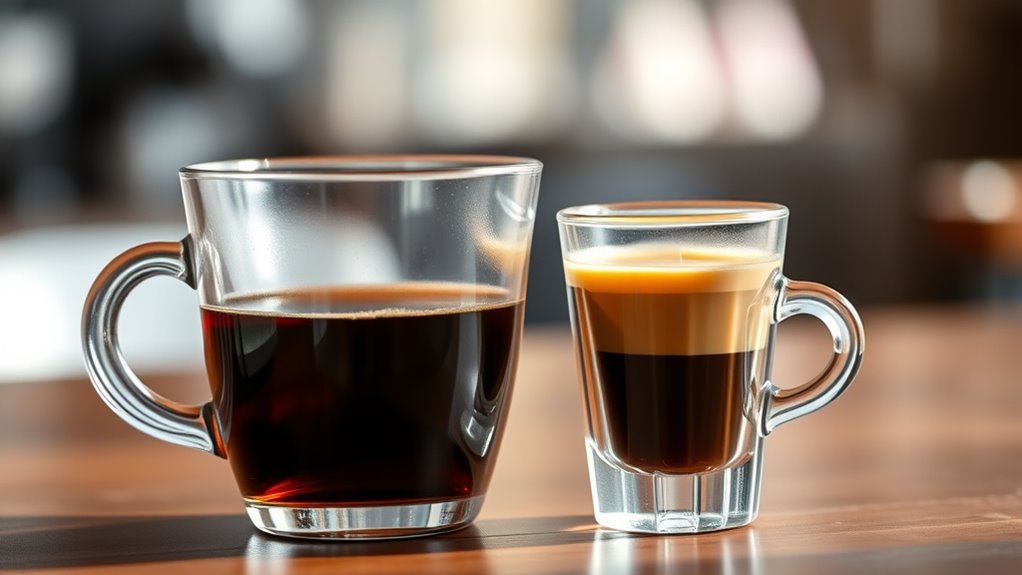
When you’re comparing caffeine content, it’s really important to pay attention to the serving size, not just the concentration.
For example, an 8 oz cup of drip coffee usually has more caffeine overall than a 2 oz shot of espresso. That’s mainly because the drip coffee comes in a larger volume.
So, the key takeaway here is that your total caffeine intake depends on how much you actually drink, not just how strong the coffee is per ounce.
It’s a simple but important distinction to keep in mind when you’re choosing your caffeine fix.
Espresso has a much higher caffeine concentration per milliliter than drip coffee, but the smaller serving size means total caffeine can be less.
Caffeine Content Comparison
Since caffeine concentration varies between espresso and drip coffee, understanding total caffeine intake requires focusing on serving size rather than just strength per ounce. Espresso packs about 60-80 mg of caffeine per ounce, but a typical 2 oz shot delivers roughly 64 mg.
Meanwhile, an 8 oz mug of drip coffee contains about 95-120 mg, often exceeding espresso’s total caffeine despite its lower concentration.
| Coffee Type | Serving Size | Caffeine per Ounce | Total Caffeine | Notes |
|---|---|---|---|---|
| Espresso | 2 oz | 60-80 mg | ~64 mg | Small, concentrated shot |
| Drip Coffee | 8 oz | 12-15 mg | 95-120 mg | Larger volume, less concentrated |
| Espresso | 1 oz | 60-80 mg | 60-80 mg | Single shot caffeine range |
| Drip Coffee | 12 oz | 12-15 mg | 144-180 mg | Higher total caffeine |
| Drip Coffee | 16 oz | 12-15 mg | 192-240 mg | Double serving, more caffeine |
You see, total caffeine depends primarily on how much you drink. So, whether you’re sipping a small espresso or a big mug of drip coffee, it’s the quantity that really counts. Additionally, espresso’s rapid absorption allows for a quicker energy boost compared to drip coffee.
Serving Size Impact
How much caffeine you actually consume depends more on the serving size than on the caffeine concentration per ounce.
While espresso packs about 60-80 mg of caffeine in just 1 ounce, the small volume limits your total intake.
In contrast, an 8-ounce cup of drip coffee contains roughly 95-120 mg of caffeine, thanks to its larger volume.
So, even though espresso is more concentrated, drinking a full cup of drip coffee delivers more total caffeine.
When comparing strength, it’s essential to focus on the total caffeine content rather than concentration alone.
The serving size directly influences how much caffeine enters your system, making drip coffee stronger overall in terms of total caffeine compared to a single espresso shot.
How Brewing Affects Caffeine Extraction in Espresso and Drip Coffee
You’ll notice that brewing time plays a big role in how caffeine gets extracted. Espresso, for example, has a quick 20-30 second pull, which results in a different caffeine profile compared to drip coffee’s longer steep.
Both methods use water that’s almost boiling, but the way temperature works together with pressure and grind size changes how efficiently caffeine dissolves.
When you understand these factors, it’s easier to see why caffeine content can vary so much—and it’s not just about the type of coffee you use.
Water quality and mineral content also influence extraction efficiency, affecting the final caffeine concentration in your cup with proper mineralization.
Brewing Time Impact
Why does brewing time play such a crucial role in caffeine extraction between espresso and drip coffee? The key lies in how long hot water interacts with the coffee grounds.
Espresso’s short brewing time, typically 20 to 30 seconds, limits caffeine extraction despite using pressure to concentrate flavors.
In contrast, drip coffee brews over several minutes, allowing hot water to extract caffeine more fully. This extended contact time means drip coffee usually contains more caffeine per serving than espresso.
Even longer steeping times, like those in cold brew, can extract even higher caffeine levels due to prolonged immersion.
Additionally, factors such as extraction time, pressure, and temperature significantly influence the caffeine concentration in each brewing method.
Water Temperature Role
Although brewing time influences caffeine extraction considerably, water temperature plays an equally critical role in determining how much caffeine your espresso or drip coffee delivers. Hot water near 195-205°F maximizes caffeine solubility, ensuring efficient extraction.
In espresso, the rapid 20-30 second brew at high pressure and temperature extracts caffeine quickly, relying heavily on precise temperature control.
For drip coffee, the longer contact time combined with ideal water temperature allows caffeine to dissolve thoroughly from the grounds.
If your water temperature dips below this range, caffeine extraction suffers regardless of method, producing weaker coffee.
Maintaining stable brew temperature within the ideal range is essential for consistent caffeine extraction and balanced flavor in both brewing methods.
Why Espresso Feels Stronger Despite Less Total Caffeine
Even though espresso contains less total caffeine than drip coffee, its higher caffeine concentration per ounce makes each sip feel much more intense. When you take a small shot, you’re getting a concentrated dose of caffeine and flavor, which hits your palate and your system quickly.
The bold, acidic nature of espresso adds to this sensation, making it seem more potent than the larger, milder drip coffee.
Because you drink espresso in small, rapid sips, the intensity of caffeine and flavor compounds feels amplified. This concentrated delivery creates a sharper perception of strength, even though the total caffeine amount is lower.
A doppio espresso, which doubles the coffee dose and caffeine content while maintaining flavor intensity, provides an even richer and more layered experience than a single shot, enhancing this sensation of strength through its double shot extraction.
How Consumption Speed Affects Espresso and Drip Coffee’s Caffeine Impact
Because espresso is typically consumed quickly, you experience a rapid spike in caffeine levels that contrasts with the slower, steadier absorption you get from sipping drip coffee over time. This immediate influx triggers a quicker onset of alertness and a more intense stimulant effect, even though the total caffeine might be similar.
When you sip drip coffee slowly, caffeine enters your bloodstream gradually, resulting in a prolonged, moderate boost in energy rather than a sharp peak.
The speed at which you ingest caffeine influences not only how fast you feel its effects but also how long they last.
Drinking either espresso or drip coffee rapidly heightens the perceived strength and impact on your central nervous system, intensifying the caffeine’s stimulating properties.
Espresso’s extraction under high pressure contributes to its rich flavor and crema, enhancing the sensory experience alongside its caffeine impact.
Health Effects Linked to Espresso and Drip Coffee Filters
When you choose between espresso and drip coffee, the type of filter used plays a crucial role in their health effects, especially when it comes to cholesterol. Drip coffee uses paper filters that effectively trap oils and diterpenes like cafestol and kahweol. These compounds are known to raise LDL cholesterol.
This filtration helps lower cholesterol levels, making drip coffee a better option for heart health. On the other hand, espresso uses metal filters that let these oils and sediments pass through. This means you end up consuming more cholesterol-raising compounds.
Espresso also has a higher oil content, which can irritate sensitive stomachs because of the concentrated lipids and acids. So, if managing cholesterol is important to you, filtered drip coffee offers a healthier profile compared to unfiltered espresso. It’s all about how well those harmful compounds are removed during brewing.
To maintain the quality and health benefits of your espresso, regular cleaning and maintenance of your machine is essential to prevent buildup of oils and residues that can affect flavor and hygiene.
When to Choose Drip Coffee Over Espresso
Understanding the health implications of espresso and drip coffee filters can guide your brewing choices, but there are additional factors to think about.
Choose drip coffee when you want a larger volume with caffeine releasing steadily over time. It’s perfect if you prefer a gentler, less intense flavor compared to espresso’s boldness.
Opt for drip coffee for a smoother, milder taste and a steady caffeine release over a longer period.
Drip coffee works well for those who enjoy sipping slowly and want a higher total caffeine intake from one serving. If you’re concerned about oils and acids affecting your health, drip coffee’s paper filters help reduce these compounds, making it a smarter pick.
Also, if you like a ritualistic, relaxed caffeine experience and plan to drink multiple cups throughout the day, drip coffee offers a balanced approach. It supports both flavor and health without overwhelming intensity.
High-Caffeine Coffee: Red Eye and Other Blends for Extra Kick
If you’re looking to supercharge your caffeine intake beyond what standard drip coffee or espresso can offer, high-caffeine blends like the Red Eye deliver a powerful boost.
This drink combines a standard drip coffee with a shot of espresso, pushing caffeine content to around 200-300 mg per serving, depending on espresso volume.
For even more intensity, blends like the Black Eye and Dead Eye add two or three espresso shots, markedly raising caffeine levels.
Cold brew paired with espresso shots can exceed 300 mg per large cup, offering a sustained and potent energy surge.
These options are ideal when you need an intense caffeine kick, but be mindful if you’re sensitive.
Such high doses might cause jitters or heighten anxiety.
Choose wisely based on your tolerance and energy needs.
Frequently Asked Questions
Can I Use Espresso Beans for Drip Coffee?
Yes, you can use espresso beans for drip coffee. Just grind them coarser to avoid over-extraction.
Also, consider using a metal filter since their oily surface might clog paper filters. You’ll get a bolder, more intense flavor profile this way.
It’s a simple switch that can give your drip coffee a nice kick!
Does Milk Affect Caffeine Absorption in Espresso or Drip Coffee?
Picture milk swirling gently into your espresso or drip coffee. It slightly slows caffeine absorption by coating your stomach and binding caffeine molecules.
You won’t absorb less caffeine overall, but its energizing kick may take longer to hit. So, if you’re in a hurry for that caffeine boost, keep this in mind!
How Does Grind Size Impact Caffeine Content in Drip Coffee?
You control caffeine content by adjusting grind size. Finer grounds increase extraction speed and caffeine, but they also risk bitterness. On the other hand, coarser grounds slow extraction, which lowers caffeine.
For drip coffee, using a medium grind is usually best. It balances caffeine content and flavor nicely. This way, you get a smooth cup without too much bitterness or too little kick.
Are Espresso Machines More Expensive Than Drip Coffee Makers?
Yes, espresso machines are generally more expensive than drip coffee makers. You’ll pay hundreds to thousands for espresso machines because of their complex parts and precision.
Drip makers are more affordable and simpler, often priced under $200. So, if you’re on a budget, a drip coffee maker might be the way to go. But if you want that rich espresso experience, be ready to spend more.
Can Decaf Espresso Have More Caffeine Than Drip Coffee?
No, decaf espresso usually contains less caffeine than drip coffee. Even though it’s more concentrated, the small serving size means you won’t get more caffeine than from a larger cup of drip coffee.
Drip coffee is typically stronger and served in bigger amounts, so it ends up having more caffeine overall. So if you’re worried about caffeine, decaf espresso is still the lighter choice.
Conclusion
When it comes to strength, espresso is the lightning bolt, intense and quick, while drip coffee is the steady river, flowing with more total caffeine over time. Your choice depends on whether you want a swift jolt or a lingering buzz.
Understanding these differences lets you tailor your caffeine fix like a seasoned barista. It ensures every sip fuels your day just right.
So, pick your potion wisely and savor the power behind every cup.