Espresso beans stay freshest for about 2-3 weeks after roasting if you store them properly. Keep them in airtight, opaque containers away from heat, light, and moisture to prevent flavor loss. Dark roasts, with surface oils, stale faster than lighter roasts.
Avoid freezing and thawing repeatedly, as it harms flavor. Using beans sooner rather than later guarantees vibrant taste and crema.
For deeper insights on maximizing your espresso’s flavor and storage tips, keep exploring.
Why Do Espresso Beans Lose Their Flavor?
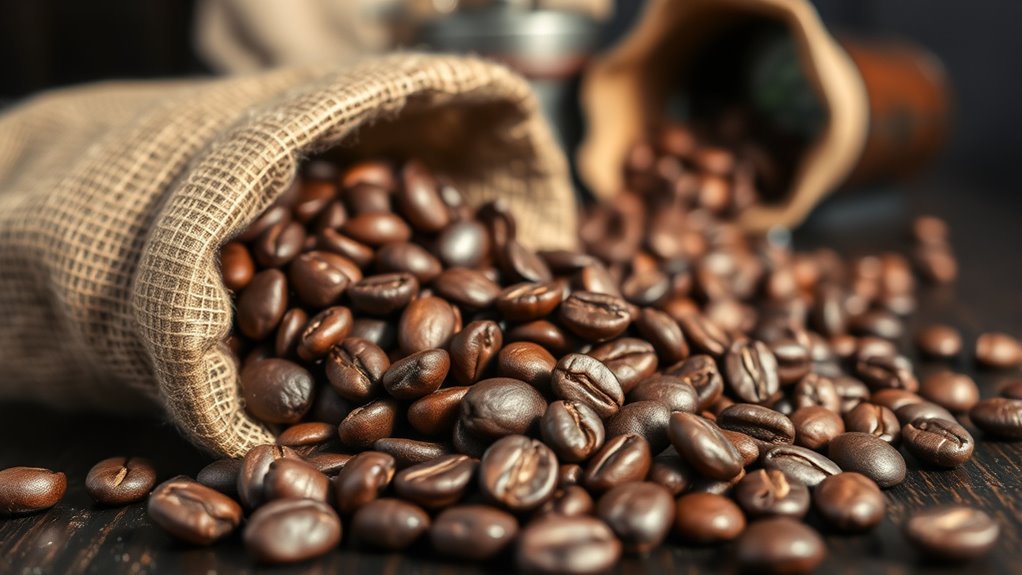
Although espresso beans start fresh and flavorful after roasting, they quickly lose their taste due to oxidation. This process breaks down their aromatic compounds and natural oils. You’ll notice that exposure to light, heat, and moisture speeds up this, causing the beans to stale faster.
Espresso beans lose flavor fast as oxidation breaks down their oils, especially with light, heat, and moisture exposure.
As the beans age, their oils surface and turn rancid. This results in a flat, stale flavor in your espresso.
Also, after roasting, beans release carbon dioxide through degassing. As this gas escapes, the beans lose freshness and flavor intensity.
If you don’t store them properly in airtight, cool, and dark conditions, the delicate flavor notes deteriorate gradually. Understanding these factors helps you see why espresso beans don’t stay flavorful for long. That’s why proper storage is essential.
Additionally, using fresh beans roasted within 2-4 weeks is crucial to preserve aroma, brightness, and crema quality.
How Long Do Espresso Beans Stay Fresh?
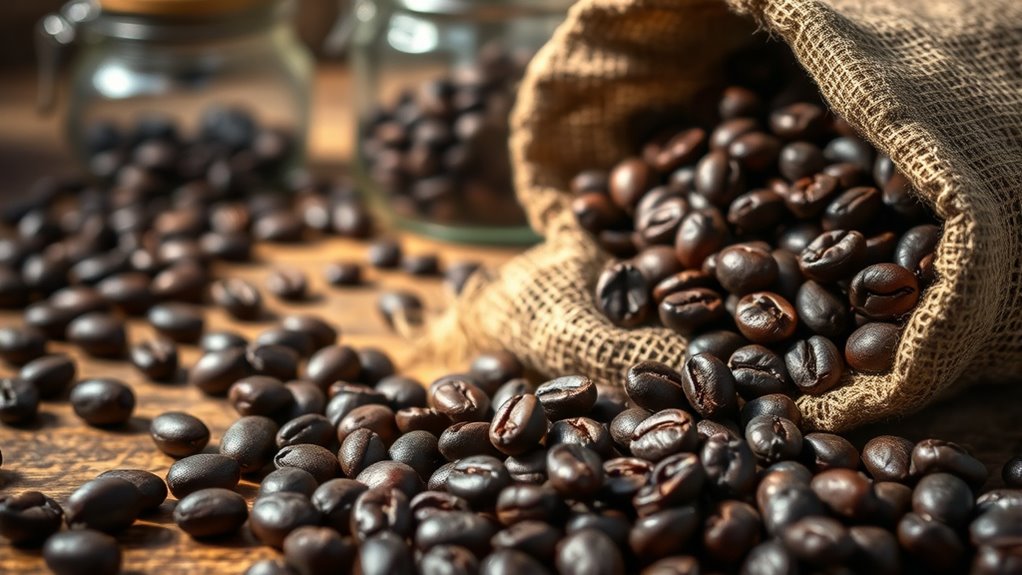
When you want to enjoy the full flavor of your espresso beans, timing is key because their freshness starts to decline soon after roasting.
Unopened, nitrogen-flushed bags keep beans fresh for 3 to 6 months. But once opened, you should use them within 2 to 4 weeks to capture optimal flavor and aroma.
Espresso beans reach their peak flavor roughly 2 to 3 weeks after roasting. After that, the aroma starts to fade noticeably.
To extend freshness, store your beans in an airtight, cool, dark container to minimize oxygen and light exposure.
If you need longer storage, freezing can preserve freshness for 3 to 4 months. Just make sure you reseal the beans tightly each time.
Following these guidelines helps you consistently enjoy espresso at its best.
Additionally, maintaining the proper extraction time during brewing is essential to fully express the beans’ flavor potential.
Signs Your Espresso Beans Are No Longer Fresh
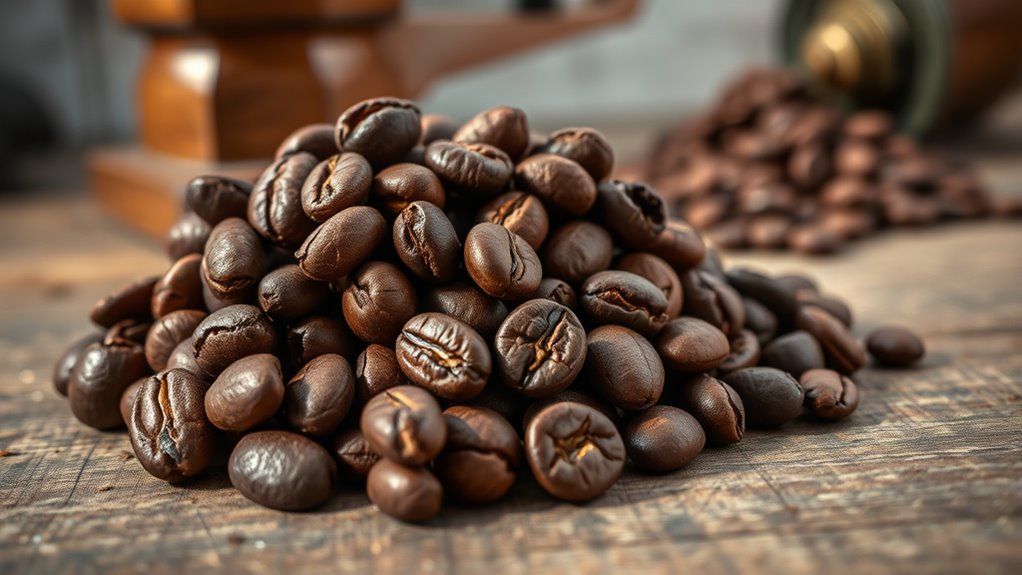
Understanding how to store your espresso beans properly sets the stage for recognizing when they’ve lost their freshness. One key sign is the crema, or lack of it, during brewing. Stale beans produce little to no crema, which means they’re not as fresh.
Proper storage of espresso beans helps you spot freshness by the presence—or absence—of crema during brewing.
You’ll also notice the flavor profile changes. The espresso might taste flat, dull, or just miss that vibrant aroma you get from freshly roasted beans.
Take a look at the beans’ surface too. If they appear shiny or sticky because of oils, it often means they’re aging or going rancid.
Another thing to watch for is the smell. Stale beans give off a sour or off-putting odor, which is a clear sign they’re past their prime.
When you brew them, the flavors are muted and the body is lighter. This usually leads to a pretty disappointing espresso experience.
Proper storage, like keeping beans in an airtight container away from light and heat, helps preserve bean freshness and flavor longer.
How to Store Espresso Beans for Maximum Freshness
To keep your espresso beans fresh, try storing them in an airtight, opaque container. This way, you block out oxygen and light, which can really mess with the flavor.
Then, find a cool, dark spot for the container—somewhere away from heat sources like your stove or oven. Keeping them cool helps slow down the staling process.
With this setup, your beans will hold onto their peak flavor and aroma for as long as possible. It’s a simple trick that makes a big difference! Proper storage involves keeping espresso powder in a cool, dry, dark place away from sunlight to preserve freshness.
Airtight Container Usage
Although many factors affect espresso bean freshness, storing them in an airtight container is one of the most effective ways to preserve their flavor and aroma. You should choose an opaque container with a tight seal to minimize exposure to oxygen and light. Both oxygen and light speed up staling, so keeping them out is key.
Containers with one-way valves are ideal because they let degassing gases escape without letting oxygen in. Always reseal the container promptly after use to keep your beans fresh. Avoid porous or transparent containers since they allow air and light to degrade quality.
| Container Feature | Reason |
|---|---|
| Airtight Seal | Prevents oxygen exposure |
| Opaque Material | Blocks light, preserving flavor |
| One-way Valve | Allows degassing without oxygen entry |
Regular maintenance of storage containers, similar to espresso equipment cleaning routines, ensures no residual oils or moisture affect your beans’ freshness and flavor.
Ideal Storage Environment
When you store espresso beans, creating the ideal environment is essential for preserving their freshness and flavor. You want to keep them in a cool, dark place, away from heat sources like stoves or ovens. These can quickly degrade their taste.
Using an airtight, opaque container blocks oxygen and light. Both of these are major culprits that accelerate staling. After opening the retail packaging, immediately transfer the beans to this container to lock in their aroma.
For longer storage, freezing small portions in sealed, moisture-proof bags works well. Just make sure to only thaw what you’ll use soon.
Remember, your espresso beans deserve protection from light and oxygen to keep their rich flavors vibrant. They also need a stable, cool environment to slow oxidation.
And it’s smart to portion them thoughtfully to avoid repeated thawing and refreezing.
Proper machine maintenance, including descaling, is vital for quality and preserving the espresso flavor.
Freezing and Refrigerating Espresso Beans: Pros and Cons
You can extend your espresso beans’ shelf life by freezing them in airtight, nitrogen-flushed containers. Just keep in mind that if you thaw and refreeze them repeatedly, it can cause moisture buildup and lead to flavor loss.
On the other hand, refrigerating your beans isn’t really a good idea. The humidity and odors inside the fridge can mess with their freshness and taste. It’s best to store espresso beans in airtight containers in a cool, dark place to preserve their quality.
Freezing Benefits And Risks
How can freezing impact the freshness and flavor of your espresso beans? Freezing can extend their shelf life up to 3-4 months if you store them in airtight, moisture-proof containers.
However, repeatedly freezing and thawing beans causes condensation, which introduces moisture that degrades flavor and aroma. To avoid this, freeze only what you’ll use within a week and reseal immediately after each use.
Remember, espresso beans are best enjoyed within 2-4 weeks of roasting, so freezing should be a last resort for long-term storage. Keep these points in mind:
- Protect your beans from moisture to preserve their rich, full-bodied flavor
- Avoid frequent temperature changes because they can mute delicate espresso notes
- Balance convenience with quality so you can enjoy the freshest possible cup every time
Additionally, because caffeine content can slightly decrease in darker roasts due to bean expansion, maintaining freshness helps preserve the optimal flavor and caffeine balance.
Refrigeration Moisture Concerns
Although refrigeration might seem like a convenient option for storing espresso beans, it often introduces moisture that can compromise their quality. When you refrigerate beans without airtight packaging, condensation forms, leading to moisture buildup. This moisture encourages mold growth and accelerates spoilage, degrading flavor and aroma.
Freezing espresso beans can be beneficial if you use airtight, moisture-proof containers to prevent condensation and odor absorption. However, repeated freezing and thawing cycles harm the beans’ texture and flavor integrity.
Generally, keeping espresso beans in the refrigerator is discouraged unless you seal them completely to avoid moisture exposure.
Managing moisture is critical whether you refrigerate or freeze, as excess dampness considerably undermines the beans’ freshness and your espresso’s taste. So, if you do choose to refrigerate or freeze, make sure your beans are well protected to keep that fresh flavor locked in. Proper storage methods are essential to preserve the flavor complexity and oils that define quality espresso beans.
Best Practices For Storage
While freezing espresso beans can extend their freshness for several months, it requires airtight, vacuum-sealed containers to prevent moisture and freezer burn from compromising flavor and aroma.
You should only thaw the amount you plan to use within a week to avoid repeated temperature changes that degrade quality.
Refrigeration, on the other hand, often exposes beans to moisture and odors, which dulls their vibrant profiles.
For short-term storage, a cool, dark pantry remains your best option.
Remember these key points for ideal storage:
- Use vacuum-sealed bags or airtight containers to block moisture and air.
- Portion beans before freezing to minimize thaw cycles and condensation.
- Avoid refrigerating beans to protect their delicate aroma and taste.
Proper storage also helps prevent mineral buildup in grinding equipment, ensuring consistent espresso quality.
Following these best practices keeps your espresso tasting fresh and rich every time.
How Roast Level Affects Espresso Bean Freshness
Because the roast level directly influences the chemical composition and surface characteristics of espresso beans, it plays a crucial role in determining their freshness lifespan.
Dark roast beans contain more surface oils due to the intense roasting process. This causes them to lose peak freshness faster as these oils break down and oxidize.
You’ll notice that medium to dark roasts develop surface oil over time, signaling aging and flavor degradation. Conversely, lighter roast beans are denser and less oily, which helps them retain freshness longer.
Often, they can stay fresh beyond a month when properly stored.
Their structural integrity resists rancidity better than darker roasts. So, if you want espresso beans that maintain ideal flavor for a longer period, lighter roasts generally offer a more extended freshness window compared to darker counterparts.
Tips for Buying Fresh Espresso Beans
Understanding how roast level impacts espresso bean freshness helps you make smarter purchasing decisions. To enjoy the fullest flavor, buy espresso beans within 1-2 weeks of their roast date.
Always choose whole beans rather than pre-ground to lock in aroma and richness longer.
Opt for whole beans over pre-ground to maintain peak aroma and flavor freshness longer.
When shopping, look for clear, recent roast dates on the packaging. Skip any with missing or outdated labels.
Buying from trusted local roasters or reputable suppliers ensures quality and transparency.
Feel the excitement of opening a freshly roasted bag with a clear roast date. Savor the confidence knowing you picked whole beans that preserve peak flavor.
Enjoy the satisfaction of supporting local artisans who care about freshness.
These mindful choices guarantee your espresso beans deliver their best taste and aroma.
Brewing Fresh Espresso Beans for the Best Flavor
If you want to reveal the richest flavor and aroma from your espresso beans, you need to brew them fresh, ideally within 2 to 3 weeks of their roast date.
Store your beans properly in an airtight, opaque container and place it in a cool, dark spot. This helps maintain freshness for up to a month.
Grind your beans immediately before brewing to preserve the volatile oils and aromatic compounds. These start degrading within hours after grinding, so fresh grinding really makes a difference.
Freshly ground beans deliver a vibrant flavor and a rich crema.
Both the flavor and crema noticeably decline beyond two weeks post-roast. Avoid using beans older than four weeks because they produce a duller, less aromatic espresso with poor crema quality.
Frequently Asked Questions
Can Espresso Beans Cause Allergic Reactions?
Espresso beans can absolutely wreak havoc if you’re allergic! If you’re sensitive to coffee proteins, you might face rashes, swelling, or breathing trouble. Roasting doesn’t remove allergens, so steer clear and consult an allergist if needed.
It’s always better to be safe than sorry when it comes to allergies. If you notice any unusual symptoms after having espresso, don’t hesitate to get checked out. Your health is worth it!
How Does Grind Size Affect Espresso Flavor?
Your grind size directly impacts espresso flavor. Finer grinds extract more quickly and intensely, giving you a stronger taste. On the other hand, coarser grinds cause under-extraction, which can make the shot taste sour or weak.
What Equipment Is Best for Grinding Espresso Beans?
Like a sculptor’s chisel, a conical burr grinder shapes your espresso grind with precision. You’ll want a stepless, low-RPM model to guarantee consistent particle size and preserve delicate oils for the best flavor extraction.
It’s all about getting that perfect grind. When your grinder runs slower and with more control, the flavors stay locked in. This means every shot of espresso you pull tastes just right.
Are Organic Espresso Beans Fresher Than Regular Ones?
You won’t always find organic espresso beans fresher than regular ones. Freshness depends more on the roast date and how the beans are stored.
Organic beans often ship faster, but that doesn’t always mean they’re fresher. The key is focusing on proper storage to keep any beans fresh longer.
Can You Reuse Espresso Grounds for Brewing?
You can reuse espresso grounds, but don’t expect rich flavor or caffeine. They lose oils and soluble compounds after one brew, which leads to bitter, flat coffee.
Try to use them within a day to avoid stale taste and bacteria. Otherwise, your coffee might end up tasting pretty off. So, while it’s possible, it’s not the best way to get a good cup.
Conclusion
Now that you know espresso beans start losing flavor within two weeks of roasting, it’s clear why freshness matters so much. In fact, 70% of the aromatic compounds degrade within 14 days, seriously impacting taste.
To enjoy the richest, most balanced espresso, store your beans airtight at room temperature and grind just before brewing. By staying mindful of these details, you’ll consistently pull shots bursting with vibrant, nuanced flavor every time.