If your espresso tastes burnt, it’s often due to over-extraction, too fine a grind, or brewing with water hotter than 205°F. Stale beans and buildup of rancid oils in your machine can also cause that harsh, ashy flavor.
Quick fixes include cleaning your machine thoroughly, adjusting to a coarser grind, and maintaining water temperature around 190°F to 200°F. Fine-tuning these factors will improve your shot’s balance.
Give these a try, and you’ll notice a difference. Exploring these ideas further will really help you up your espresso game.
What Does Burnt Espresso Taste Like?
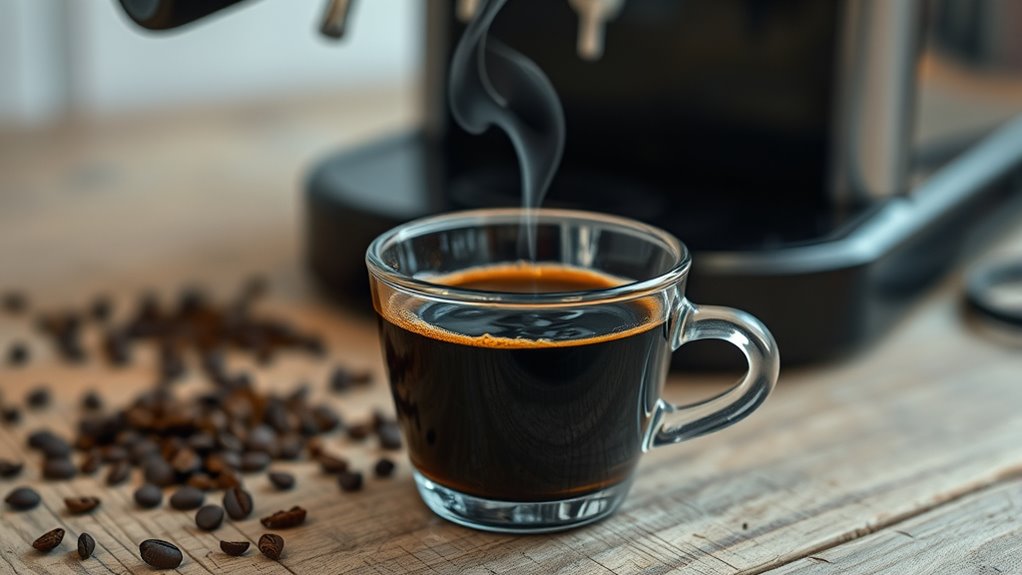
Although you might expect burnt espresso to taste simply bitter, it actually presents a distinct charred, smoky, or ashy flavor that sticks around on your palate. You’ll notice a pale or blonde crema, which signals over-roasted beans or overheating during brewing.
The aroma often smells burnt or acrid, lacking the complex, sweet, and caramel notes you’d find in a well-extracted shot.
This burnt profile isn’t just bitterness. It’s accompanied by a dry, harsh sensation and a lingering ash-like aftertaste. When you encounter these flavors, it usually means there are problems like stale beans, excessive heat, or over-extraction.
Recognizing these specific taste and aroma cues helps you pinpoint the burnt espresso issue accurately. That way, you can take practical steps to improve your shot’s quality. Adjusting the extraction time and temperature can often prevent this burnt taste and enhance the coffee’s flavor profile.
Common Causes of Burnt Espresso
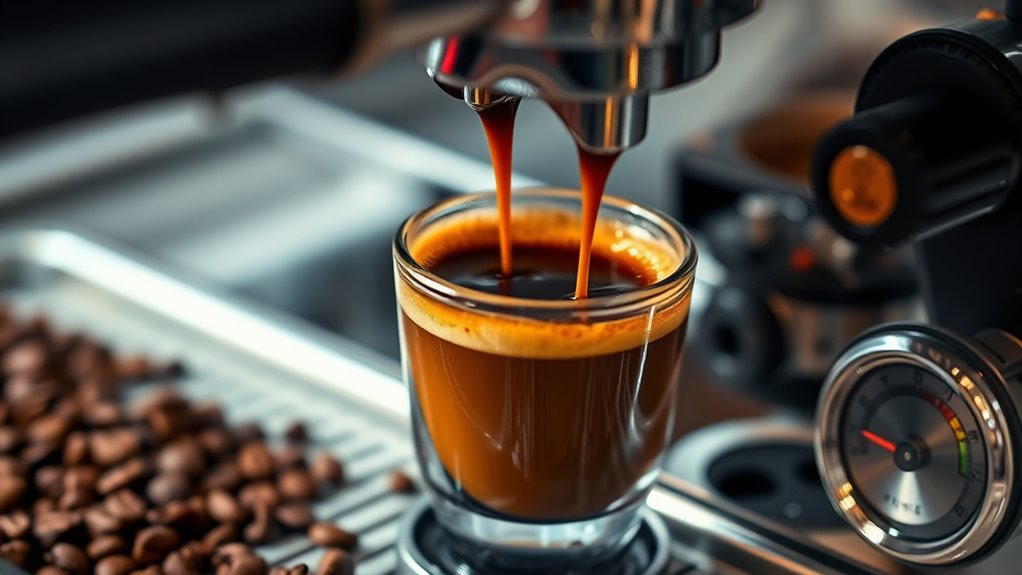
When your espresso tastes burnt, several common factors typically contribute to this issue. Identifying these will help you troubleshoot quickly. Burnt flavors often come from stale beans, overly dark roasts, too fine a grind, high brew temperatures, or a dirty machine.
| Cause | Effect on Flavor | Why It Happens |
|---|---|---|
| Stale Beans | Harsh, ashy | Oils degrade, producing off-flavors |
| Dark Roasts | Bitter, burnt | Sugars carbonize instead of caramelize |
| Too Fine Grind | Over-extraction, bitter | Increased resistance, prolonged brewing |
| High Temp (>205°F) | Scorched, burnt | Grounds get overheated |
| Dirty Machine | Off-flavors, rancid taste | Rancid oils contaminate espresso |
Regular maintenance like descaling the machine is essential to prevent mineral buildup that can negatively affect espresso flavor and machine performance.
Why Fresh Beans Matter for Burnt Espresso
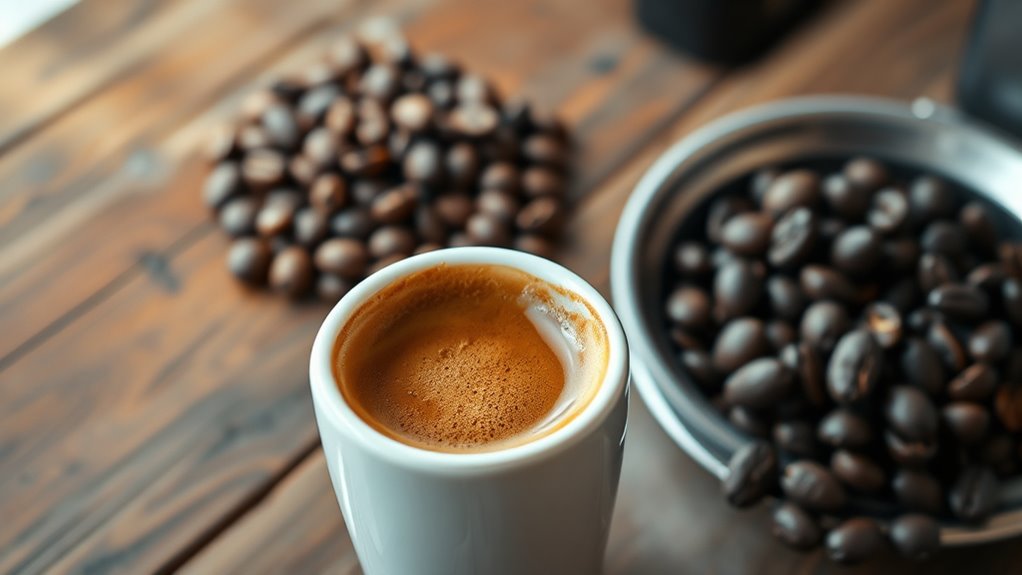
Because fresh beans retain their aromatic oils and complex compounds, using them considerably reduces the risk of burnt or ashy flavors in your espresso. When beans are freshly roasted, ideally within 1 to 2 weeks, you get a balanced, rich extraction.
Stale beans, especially those stored for over a month, lose these oils and develop harsh, flat notes that can mimic a burnt taste.
To keep your beans fresh, store them in an airtight container away from light and heat. Also, be mindful of roast level; medium roasts preserve flavor clarity better than dark roasts, which can taste burnt regardless of freshness.
Additionally, the roast profile adjustments play a crucial role in enhancing flavor and preventing bitterness in espresso.
How Grind Size Affects Burnt Espresso
If your espresso tastes burnt, your grind size might be the culprit. When your grind is too fine, it increases resistance, slowing water flow and extending extraction time. This over-extraction pulls out bitter, charred compounds that create that burnt flavor.
To fix this, try coarsening your grind slightly. This adjustment improves water flow and helps keep extraction within the ideal 25 to 30 seconds. Shots that run longer than this often signal a grind that’s too fine.
Regularly monitor your shot timing and tweak your grind size accordingly to maintain balanced extraction. By dialing in the right grind coarseness, you can prevent burnt flavors and enjoy a cleaner, more flavorful espresso every time. Understanding how grind size influences extraction balance is key to mastering your espresso.
How Brewing Temperature Influences Burnt Espresso
You want to keep your brewing temperature between 190°F and 200°F to avoid burning your espresso.
If the water gets hotter than 205°F, it scorches the grounds and quickly extracts bitter, harsh flavors.
So, it’s a good idea to adjust your machine’s temperature settings or use a thermometer.
That way, you can stay in the ideal range and prevent that burnt taste.
Maintaining temperature stability within ±1°F is key to consistent flavor and avoiding over-extraction from temperature fluctuations.
Ideal Brewing Temperature Range
When brewing espresso, controlling the temperature within the ideal range of 190°F to 200°F (90°C–96°C) is essential to avoid burnt flavors. Staying within this range ensures proper extraction, drawing out the coffee’s full flavor without introducing harsh, burnt notes.
If the temperature climbs above 205°F, it can scorch the coffee grounds, releasing unpleasant burnt compounds.
Many espresso machines run too hot or lack adjustable settings, making it harder to maintain this balance.
By consistently brewing within the perfect temperature window, you prevent over-extraction, which often causes that burnt taste.
Focus on machines with precise temperature control or adjust your current setup to stay within this range, and you’ll maximize flavor extraction while keeping burnt or charred flavors at bay.
Additionally, maintaining water temperature between 195°F and 205°F supports balanced flavor and crema development, helping prevent bitterness or sourness often mistaken for burnt taste.
Effects Of Excess Heat
Although maintaining the right temperature is essential, brewing espresso with water hotter than 205°F (96°C) can quickly scorch the coffee grounds, resulting in burnt flavors.
When the water temperature exceeds the *ideal* range of 190°F to 200°F (88°C–93°C), extraction speeds up too much, pulling out harsh, bitter compounds that taste burnt.
This happens because excessive heat breaks down the coffee’s delicate oils and sugars unevenly.
Many espresso machines don’t offer precise temperature control, which means you might unintentionally brew at too high a temperature.
To avoid that burnt taste, keep your brewing temperature consistent and moderate.
Sticking within the *perfect* temperature window ensures balanced extraction, preserving the coffee’s natural flavors without the unwanted charred notes caused by excess heat.
Using a high-quality espresso machine with precise temperature control can help maintain this optimal range consistently.
Adjusting Machine Temperature
Because brewing temperature directly impacts extraction quality, adjusting your espresso machine’s temperature settings plays a vital role in preventing burnt flavors. Keeping the water temperature between 190–200°F (88–93°C) minimizes the risk of scorching the coffee grounds.
This scorching happens above 205°F (96°C) and produces that harsh burnt taste.
If your machine doesn’t allow temperature adjustments, consider upgrading to one with precise controls.
Dark roasts are especially sensitive to high temperatures because they extract bitter compounds faster.
Regularly check and calibrate your machine’s temperature to maintain consistent brewing conditions.
By controlling heat accurately, you avoid over-extraction and guarantee a balanced, clean espresso shot.
This way, you highlight your coffee’s true character instead of unwanted burnt notes.
Additionally, regular maintenance including descaling your espresso machine helps maintain accurate temperature control and consistent extraction.
How Over-Extraction Makes Espresso Taste Burnt
If water stays in contact with your coffee grounds too long, it pulls out bitter and burnt-tasting compounds that ruin your espresso. This happens when extraction time goes beyond 35 seconds.
At that point, tannins and phenols start seeping into your shot, creating a harsh, burnt flavor.
One common cause is using a grind that’s too fine. That increases resistance and slows water flow, which promotes over-extraction.
To fix this, try adjusting your grind size a bit coarser and aim for an extraction time between 25 and 30 seconds.
Dialing in these parameters helps you pull the good flavors without those unpleasant compounds.
Keep an eye on your shot time and grind consistency. That’s the key to preventing over-extraction and keeping your espresso balanced and smooth.
Also, lowering your brew temperature to between 90°C and 94°C can reduce the risk of scorching and over-extraction.
How a Dirty Machine Causes Burnt Espresso
If you don’t clean your espresso machine regularly, rancid coffee oils can build up in the group head and shower screen. This buildup causes a burnt, charred flavor in your shots.
Basically, these oils overheat during brewing and mess with the taste, making your espresso bitter.
Regular cleaning and descaling are essential to preserve machine efficiency and maintain optimal flavor by preventing coffee oils and residue buildup.
Rancid Oil Buildup
When you neglect regular cleaning, rancid oil buildup quickly forms inside your espresso machine’s group head, shower screen, and portafilter. These oils oxidize and degrade over time, creating a sticky residue. When reheated during brewing, this residue produces a burnt, bitter, or sour taste that contaminates each shot.
You’re basically re-extracting burnt oils with every pull, which ruins the espresso flavor.
| Component | Oil Buildup Effect | Resulting Flavor Impact |
|---|---|---|
| Group Head | Sticky residue accumulation | Bitter, burnt notes |
| Shower Screen | Blocks water dispersion | Uneven extraction |
| Portafilter | Oil contamination | Sour, rancid aftertaste |
| Brewing Temperature | Intensifies oil breakdown | Charred flavor |
| Extraction Time | Prolongs oil exposure | Increased bitterness |
Taking care of rancid oil buildup is key to stopping those burnt espresso flavors from showing up. A little regular cleaning goes a long way.
Regular Cleaning Importance
Because coffee oils and residue build up quickly inside your espresso machine, neglecting regular cleaning lets rancid flavors develop that taint every shot. When these oils and grime accumulate in the group head and shower screen, they not only cause bitter, burnt flavors but also disrupt water flow.
This uneven extraction intensifies off-flavors in your espresso. To prevent this, you need to perform regular maintenance like backflushing and descaling. These processes remove rancid oils and mineral deposits that contaminate subsequent shots.
Quick Cleaning and Simple Tweaks to Fix Burnt Espresso
Although burnt espresso flavors can stem from several causes, quick cleaning and simple adjustments often provide an immediate fix. Start by thoroughly cleaning your group head, portafilter, and shower screen with water and a dedicated espresso machine cleaner to remove oils that cause bitterness. Perform a weekly backflush with water to keep oils from building up.
Thorough cleaning and regular backflushing prevent bitter oils, swiftly improving your espresso’s flavor.
Next, tweak your grind size. Try a coarser grind or reduce your coffee dose slightly to prevent over-extraction, which produces burnt tastes.
Also, verify your brewing water temperature is around 200°F, since hotter water can scorch the grounds.
Finally, consider switching from a dark roast to a medium roast. Darker roasts are more susceptible to burnt flavors if over-extracted.
These targeted steps help restore balance and improve your espresso’s flavor swiftly.
Frequently Asked Questions
Can Water Quality Affect the Burnt Taste in Espresso?
Yes, water quality directly affects your espresso’s taste. Hard water causes mineral buildup and uneven heating, which can lead to burnt flavors.
Using filtered or softened water helps guarantee consistent extraction. It also prevents those harsh, burnt notes in your coffee.
Does the Type of Espresso Machine Influence Burnt Flavors?
If you use an older home machine with poor temperature controls, you’ll likely get burnt flavors. Machines with precise temperature stability, like commercial models, prevent overheating, ensuring your espresso tastes balanced and avoids that harsh, burnt bitterness.
How Does Milk Frothing Impact the Taste of Burnt Espresso?
Milk frothing impacts burnt espresso by either masking or intensifying bitterness depending on temperature. If you overheat or over-froth milk above 150°F, it worsens burnt flavors.
But when you steam milk properly, it balances and smooths the taste. So, getting the temperature right really makes a difference. It’s all about finding that sweet spot to complement your espresso.
Can Storing Espresso Beans Improperly Cause a Burnt Taste?
Think of your espresso beans as delicate treasures. If you leave them exposed to harsh sunlight or open air, they’ll spoil and end up tasting burnt.
Is There a Difference in Burnt Taste Between Single and Double Shots?
Yes, double shots often taste burnt more than singles because they use more coffee and longer extraction, increasing the risk of over-extraction.
You’ll need to fine-tune grind size and timing more carefully to avoid that burnt flavor in doubles. It’s all about finding the right balance so your espresso tastes just right.
Conclusion
So, if you’re craving that smoky, charred espresso flavor, just keep ignoring grind size, water temperature, and cleaning. But if you actually want a smooth, rich shot instead of a burnt disappointment, tweaking these details is your quick fix. Fresh beans, proper grind, and a spotless machine aren’t just coffee snob tips—they’re your best defense against espresso that tastes like it survived a bonfire.
Ironically, less burnt means more brilliance.