To fix sour espresso, start by adjusting your grind size finer to extend extraction and reduce sourness. Optimize your brew time to about 25–30 seconds and guarantee you use fresh, medium to medium-dark roast beans.
Make sure you maintain consistent tamp pressure and dose around 18 grams. Use filtered water with balanced pH (7–8) and keep your machine and grinder clean to avoid flavor contamination.
Master these quick tweaks, and you’ll open a smoother, richer shot every time. There’s more to explore beyond these basics!
Adjust Grind Size to Fix Sour Espresso
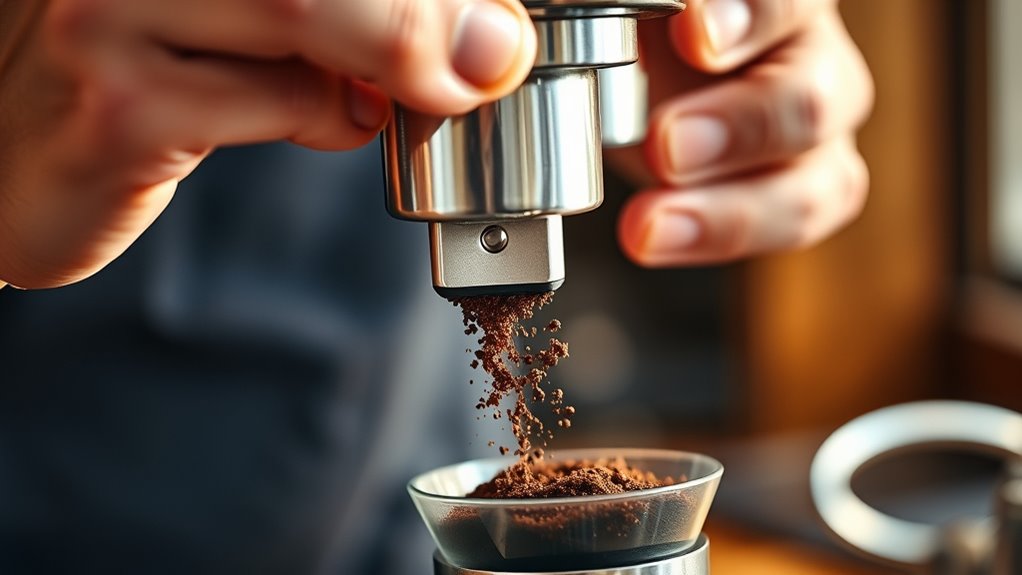
When your espresso tastes sour, adjusting the grind size is often the key to balancing flavor. Grinding finer increases resistance in the coffee puck, slowing water flow and allowing more thorough extraction.
Adjusting to a finer grind boosts extraction by slowing water flow, helping fix sour espresso flavors.
By dialing in a slightly finer grind, you typically extend shot time by a few seconds, which helps reduce sourness caused by under-extraction.
However, be careful not to grind too fine, as that can lead to over-extraction and bitterness. Aim for a balanced, consistent particle size.
Using a burr grinder with precise, incremental adjustments gives you better control over grind size compared to blade grinders.
After each adjustment, taste your shot and observe the flow and extraction time to find the perfect grind that eliminates sourness without sacrificing quality.
It might take a few tries, but once you nail it, your espresso will taste just right.
Remember to make small adjustments of about 1-2 microns to avoid overshooting the ideal grind size and maintain grind consistency.
Optimize Brew Time and Dose for Sour Espresso
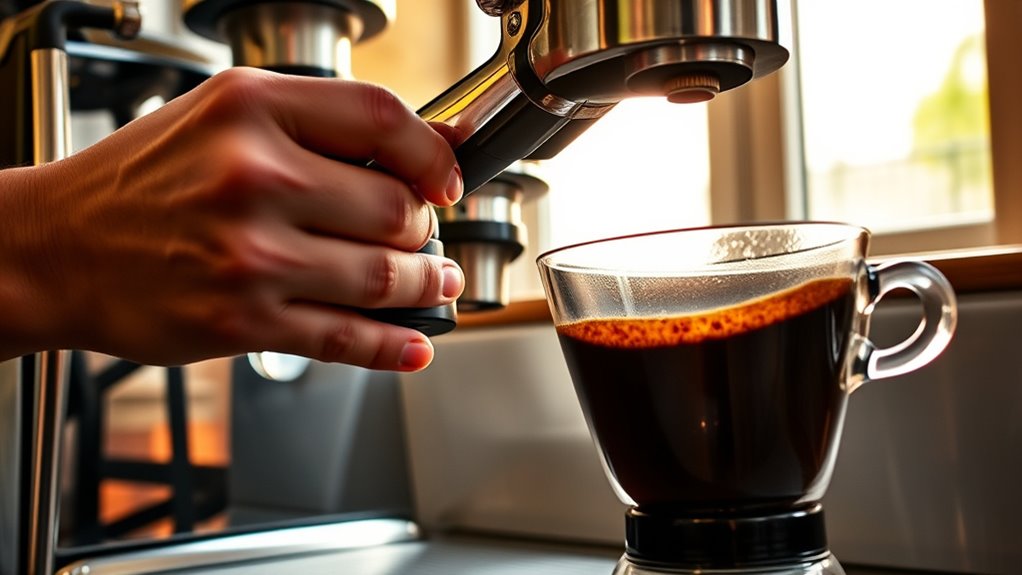
Although adjusting grind size is crucial, optimizing your brew time and dose plays an equally important role in fixing sour espresso.
Start by aiming for a shot time between 25-30 seconds. This signals balanced extraction and helps prevent sourness.
Use about 18 grams of coffee as a standard dose. Make sure the puck is properly compressed to create enough resistance for water flow.
If your shots pull too quickly and taste sour, try slightly increasing the dose to slow the flow and improve extraction.
Keep a close eye on your shot timing. Adjust the dose or grind size in small steps until you hit the target duration.
This methodical approach lets you fine-tune your espresso without overcomplicating things, delivering a smoother, less sour cup every time.
Maintaining a consistent tamping pressure also ensures predictable extraction and helps avoid sour flavors.
Raise Water Temperature to Improve Extraction
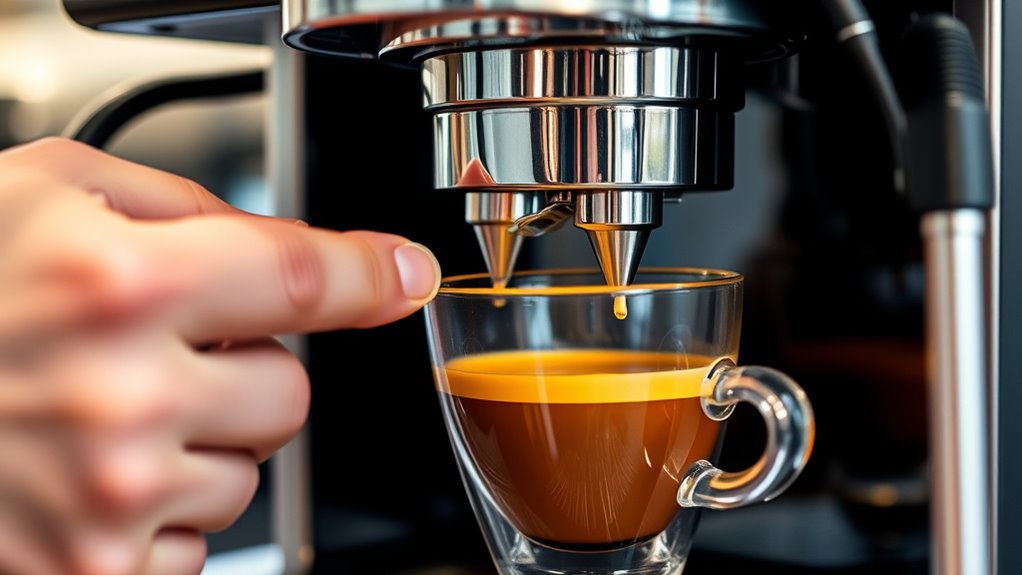
If your espresso tastes sour, try raising the water temperature a bit — somewhere between 92°C and 96°C is ideal.
This small tweak helps pull out more sugars and heavier compounds, which balances the acidity and makes the flavor richer.
Just keep in mind, your machine needs to keep the temperature steady to avoid any inconsistent results.
For best results, aim for a consistent temperature within ±1°F using a PID temperature control system.
Optimal Temperature Range
Because water temperature directly affects extraction, you’ll want to raise it to between 93°C and 96°C to reduce sourness in your espresso. Within this range, you maximize the extraction of acids and sweetness, balancing the flavors effectively.
Temperatures below 90°C often cause under-extraction, leaving your shot tasting sour and thin.
Even a small increase of 1 to 2°C can considerably improve extraction efficiency without pushing your espresso into bitterness. To maintain this ideal temperature, rely on a machine with stable temperature control.
Consistent water temperature ensures proper solubilization of flavor compounds, which is key to fixing sourness. Additionally, balancing extraction temperature is as important as understanding the alcohol content in complementary espresso-based cocktails like the Espresso Martini to ensure a harmonious flavor experience.
Temperature Impact On Flavor
When you raise the water temperature by just a degree or two, you release a more complete extraction of acids and sugars. This helps balance out the sour notes in your espresso. Brewing within the ideal range of 92°C to 96°C boosts the solubility of flavor compounds, giving your shot a fuller, sweeter profile.
If your espresso tastes too sour, incrementally increase the temperature while tasting each adjustment. This method lets you pinpoint the sweet spot without overshooting and causing bitterness.
Keep in mind, water below 90°C often leads to under-extraction, which is the main culprit behind sourness.
By consistently maintaining a stable, slightly higher temperature, you reduce that risk and improve flavor balance. Adjusting temperature precisely is a simple yet powerful way to fix sour espresso.
Give it a try—you might be surprised how much difference a degree or two can make. Proper machine maintenance, including descaling, also plays a vital role in consistent temperature control and quality extraction.
Use Fresh, Quality Beans With the Right Roast
Choosing fresh, quality beans roasted within the last two to four weeks is crucial to avoid sour espresso. Freshly roasted beans keep their ideal flavor compounds, which helps reduce those stale, sour notes you don’t want.
Select fresh beans roasted within 2-4 weeks to preserve flavor and prevent sour espresso notes.
Always get your beans from reputable suppliers to make sure the quality is consistent and the flavor profile stays balanced.
Aim for a medium to medium-dark roast. This roast level usually balances acidity and sweetness, which helps keep sourness in check.
Beans from places like Guatemala or Costa Rica tend to have bright, vibrant flavors without being overwhelmingly sour.
To keep your beans fresh, store them in an airtight container away from light and moisture.
Using the right roast and fresh beans sets you up for a solid foundation, making your espresso shot well-rounded and free from unwanted sourness.
Additionally, understanding how roast level affects acidity can help you select beans that naturally minimize sour notes.
Clean Your Equipment and Check Water Quality
You’ll want to clean your espresso machine and grinder regularly to avoid any residue buildup that can cause sour flavors. It’s a simple step, but it makes a big difference.
Also, don’t forget to check your water’s pH and hardness. Acidic or mineral-heavy water can really throw off the extraction process.
Importance Of Regular Cleaning
Because residue buildup and mineral deposits directly impact your espresso’s flavor, regular cleaning is vital to prevent sour shots. You should descale your machine every three months to remove mineral deposits that can alter water temperature and disrupt extraction quality.
Using clean, sanitized tools and filters is essential to avoid contamination that could introduce unwanted acidity or off-flavors.
Maintaining proper water quality supports stable machine performance, which guarantees consistent flavor in every shot.
By consistently cleaning and testing your equipment, you minimize flavor inconsistencies and extend your machine’s lifespan.
Taking these steps helps you achieve a balanced espresso, free from sourness caused by neglected buildup or compromised water.
Regular cleaning is a simple yet effective way to keep your espresso tasting its best. Just a little effort goes a long way in making sure every cup you pull is delicious and enjoyable.
Additionally, ensuring your machine remains calibrated to maintain accurate brew ratios further prevents sourness by promoting optimal extraction.
Impact Of Water pH
Although regular cleaning is essential, the pH level of your water plays an equally important role in preventing sour espresso. Water that’s too acidic, with a pH below 7, can cause under-extraction and increase sourness in your shot.
To keep acidity in check, regularly test your water’s pH using litmus paper.
If your water falls outside the ideal 7–8 range, consider adjusting it with specialized filters or adding minerals to balance the flavor.
Remember, mineral build-up and residue inside your espresso machine can also alter water chemistry, making sourness worse.
By cleaning your equipment consistently and monitoring your water’s pH, you maintain the right balance for a smoother, less sour espresso every time.
It’s worth the little extra effort to get that perfect cup!
Additionally, understanding the role of espresso extraction can help you optimize flavor and reduce undesirable sour notes.
Preventing Flavor Contamination
When you want to prevent sour flavors from creeping into your espresso, maintaining a clean machine and using quality water are essential steps. Regularly clean your espresso machine’s filters, baskets, and group heads to remove old coffee oils and residue that cause off-flavors.
Descale your machine every three months to eliminate limescale buildup, which affects temperature stability and taste. Always rinse parts thoroughly after cleaning to avoid cross-contamination.
Also, use filtered or bottled water with a balanced pH between 7 and 8. This helps prevent mineral imbalances that can sour your espresso.
Don’t forget to check for mold or spores, since they contribute to undesirable flavors.
Regularly inspecting and cleaning the brew filter and portafilter prevents clogs and ensures consistent extraction quality.
Understand Common Causes of Sour Espresso
If your espresso tastes sour, it usually means the coffee hasn’t been extracted properly. This often happens when the grind is too coarse or the brewing time is too short, causing under-extraction.
Low brew temperatures, below 195°F (90°C), also prevent the full development of acids and sugars, leaving a sharp, sour note.
Using very light or fresh beans with naturally higher acidity can amplify this effect if your technique doesn’t balance it out.
Additionally, inconsistent grind size, common with blade grinders, leads to uneven extraction and sour flavors.
Finally, if your shot flows too quickly, typically under 25 seconds, the coffee doesn’t have enough contact time with water, resulting in that unpleasant sourness.
Adjusting the grind size and flow helps control extraction time and reduces sourness by promoting balanced flavor development.
Frequently Asked Questions
Can Milk Type Affect Espresso Sourness?
Yes, milk type definitely affects espresso sourness. You’ll notice higher pH or fattier milk smooths acidity, while alternatives like almond or oat change the balance differently.
Warmer milk also helps mellow sharp sour notes effectively. It’s pretty interesting how just switching up your milk can change the whole flavor profile of your espresso. So, if you’re finding your espresso too sour, experimenting with different milks might be the way to go!
Does Espresso Machine Pressure Impact Sour Flavor?
Yes, espresso machine pressure directly impacts sour flavor. If the pressure’s too low or inconsistent, you’ll under-extract, causing sourness.
Keeping steady, ideal pressure around 9 bar helps you extract balanced, smooth espresso without that sharp sour note.
How Does Humidity Influence Espresso Taste?
Humidity is the silent sculptor of your espresso’s flavor. When it’s high, beans absorb moisture, which can cause sourness from under-extraction.
Keeping humidity steady helps your grind stay consistent. That way, you get a balanced, bright, and delicious espresso every time. It’s all about finding that perfect moisture level to bring out the best in your beans.
Can Pre-Infusing Espresso Reduce Sourness?
Yes, pre-infusing espresso can reduce sourness by gently saturating the grounds. This helps promote even extraction and prevents under-extraction.
You’ll get a balanced shot with smoother acidity and richer flavor by using pre-infusion effectively. It’s a simple step that makes a noticeable difference in taste.
Is Water pH Level Important for Espresso Flavor?
Absolutely, water pH profoundly impacts your espresso’s profile. You’ll want slightly alkaline water, around 7 to 8, to balance bitterness and brightness. This helps ensure your brew avoids unwanted acidity.
The result? A smooth, satisfying sip every time. It really makes a difference in the flavor you get from your espresso. So, paying attention to water pH is definitely worth it.
Conclusion
If your espresso tastes sour, don’t let it rain on your coffee parade. Tweak your grind size, brew time, and temperature like a maestro fine-tuning an instrument.
Use fresh, quality beans and keep your equipment sparkling clean to hit the perfect harmony. With these quick fixes, you’ll turn that sour note into a rich, balanced symphony of flavors. Every shot deserves to sing.
Keep experimenting, and savor every sip.