Two shots of espresso typically equal about 2 fluid ounces, though this can vary slightly depending on your machine settings, grind size, and extraction time. A single shot usually measures around 1 ounce, using 7 to 9 grams of coffee grounds. A double shot doubles both volume and grounds.
Baristas often measure by weight to maintain consistency since fluid ounces can be unreliable. If you want to understand how shot size influences flavor and preparation methods, keep exploring.
How Many Ounces Are in 2 Shots of Espresso?
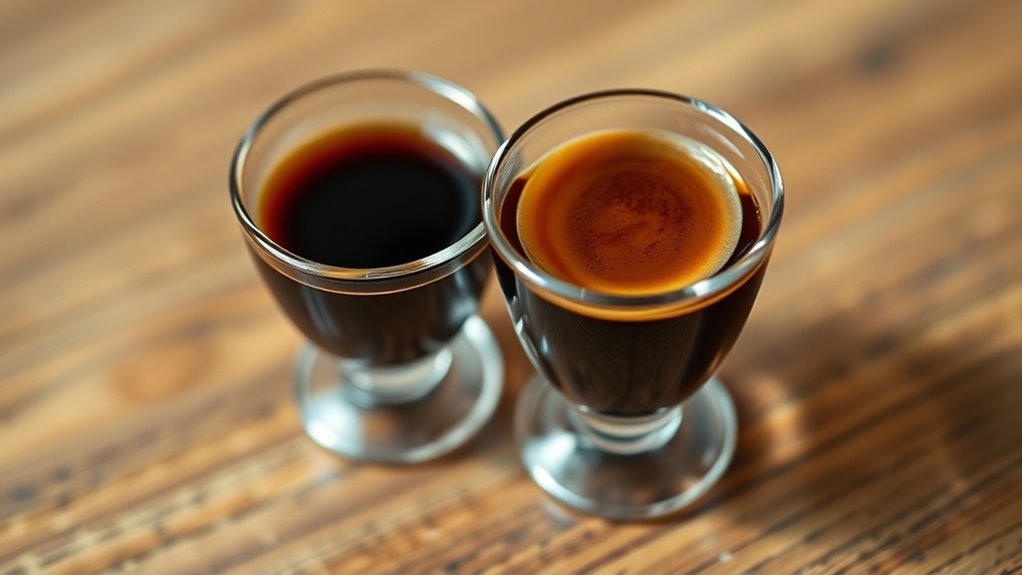
Two shots of espresso typically come to about 2 fluid ounces, or roughly 60 milliliters. Each standard shot measures around 1 ounce, so doubling that naturally brings you to the 2-ounce mark.
However, keep in mind the exact volume can vary slightly. It often ranges between 1.75 and 2.25 ounces depending on the espresso machine and barista’s technique.
When it comes to weight, you’ll use approximately 14 to 18 grams of coffee grounds to produce those two shots, yielding about 36 grams of liquid espresso.
Different shot styles like ristretto or lungo might affect the volume, but the standard double shot stays close to 2 ounces. This gives you a consistent and balanced espresso experience.
Measuring espresso by weight in grams ensures greater precision and consistency in your shots.
What Makes a Single Shot Different From a Double Shot?
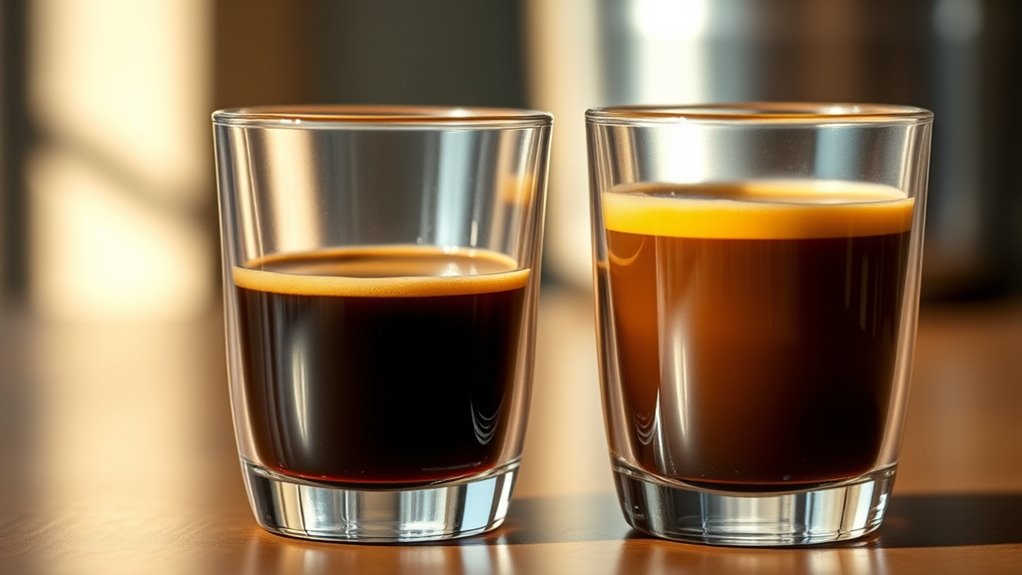
When you order a single shot, you’re getting about 7 to 9 grams of coffee, which makes roughly 1 ounce of espresso. It’s a nice little cup that’s perfect if you want something quick and smooth.
Now, a double shot uses twice the amount of coffee grounds—around 14 to 18 grams—and gives you about 2 ounces of espresso. That means it’s stronger and has a fuller flavor.
Knowing these differences can really help you pick the right intensity and size that suits your taste. Additionally, the caffeine content in each shot can vary slightly depending on factors like roast level and bean density.
Coffee Grounds Quantity
Although a single shot of espresso typically calls for 7 to 9 grams of coffee grounds, a double shot doubles that amount to about 14 to 18 grams. This increase isn’t just about quantity; it’s vital for proper extraction.
When you use the right amount of grounds, you guarantee the espresso brews evenly, delivering a balanced flavor.
Keep in mind, some cafes may adjust these amounts slightly based on their machines or taste preferences, but the principle remains the same.
Using too little coffee can result in a weak shot, while too much can lead to over-extraction and bitterness.
Proper extraction time of 25-30 seconds also plays a crucial role in achieving the ideal espresso flavor and crema quality, as highlighted in the shaken espresso preparation.
Volume And Flavor Differences
Getting the coffee grounds right sets the stage, but the real difference between a single and double shot lies in their volume and flavor. A single shot delivers about 1 ounce, using 7-9 grams of coffee grounds.
A double shot doubles both volume and grounds to roughly 2 ounces and 14-18 grams. This increase means your double shot has a richer, more balanced flavor profile with intensified intensity and concentration.
The extra coffee content in a double shot extracts more oils and compounds, enhancing depth without overwhelming bitterness. While variations like ristretto or lungo change volume and taste, the standard double shot remains consistently around 2 ounces.
That gives you that fuller espresso experience you’re aiming for. Because espresso contains approximately 63 mg of caffeine per ounce, a double shot provides roughly 126 mg of caffeine, delivering a stronger stimulant effect.
Why Does Espresso Shot Size Vary Between Cafés and Machines?
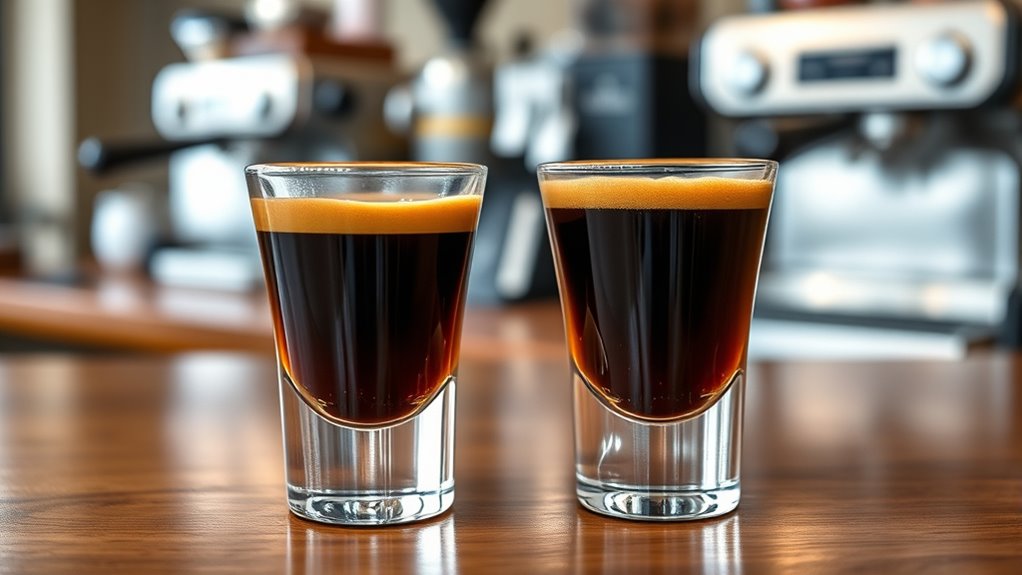
Because cafés and espresso machines follow different standards and calibrations, the size of a single shot can vary considerably, from as little as 0.75 ounces to a full ounce or more. You’ll notice this variance mainly because of machine settings, espresso basket type, and regional taste preferences.
Each café adjusts pressure, extraction time, and grind size, which influences the final shot volume.
| Factor | Impact on Shot Size |
|---|---|
| Machine Calibration | Alters volume and pressure |
| Espresso Basket Type | Determines coffee grounds used |
| Extraction Time | Affects water flow and volume |
| Regional Preferences | Influences serving size choice |
Understanding these variables helps you appreciate why your espresso might differ from place to place. It’s pretty interesting once you realize how much goes into that tiny cup! Proper extraction time management is crucial for balancing flavor and shot volume across different settings.
How Espresso Shot Volume Affects Flavor and Strength
When you order two shots of espresso, you’re usually getting about 2 ounces of liquid. But that volume only tells part of the story. The flavor and strength really depend on how that volume is achieved through grind size, brew time, and extraction quality.
Increasing from a single to a double shot generally balances flavor and softens intensity. Here’s what really shapes your espresso’s character:
- The coffee-to-water ratio. More coffee relative to water means stronger flavor.
- Extraction time. Longer pulls can mellow strength even if volume stays constant.
- Bean origin and grind size. These influence how efficiently flavors and oils are extracted.
Balancing variables like grind size, tamping, and water temperature is essential to achieving a harmonious extraction and optimal flavor.
Why Baristas Measure Espresso by Weight, Not Just Ounces
Although fluid ounces give a rough idea of volume, baristas rely on weight measurements to nail espresso consistency every time. Measuring by grams ensures you use the exact amount of coffee grounds, which directly impacts the shot’s flavor and strength.
Since espresso extraction depends on the coffee-to-water ratio by weight, relying on fluid ounces alone can lead to inconsistencies.
Crema and bubbles can make volume measurements unreliable, but weight cuts through that variability. By weighing shots, you achieve uniformity across different machines and baristas, following professional and specialty coffee standards.
Precise measurements are essential because factors like grind size and extraction time critically affect the espresso’s final taste and quality.
Espresso Variations: Ristretto, Lungo, and Their Volumes
When you order a ristretto, you’re getting a smaller, more concentrated shot — about half the volume of a standard espresso. It’s like a little espresso power punch.
Now, a lungo is kind of the opposite. It stretches the shot out longer, so you end up with nearly double the liquid. The flavor is milder, smoother, less intense.
Knowing these differences in volume can really help you choose the espresso style that suits your taste perfectly. The extraction time and water volume are key factors in defining espresso variations and their unique flavor profiles.
Ristretto Shot Characteristics
Because a ristretto shot uses markedly less water than a standard espresso, you get a smaller volume, about 0.5 to 0.75 ounces, but a much more concentrated, sweeter flavor. This happens because the extraction stops early, capturing only the most flavorful, soluble compounds.
When you pull a double ristretto, expect roughly 1 to 1.5 ounces using the same coffee amount but less water.
Here’s what sets ristretto shots apart:
- Half the volume of a standard espresso shot, emphasizing intensity.
- A richer, thicker crema due to higher dissolved solids.
- A sweeter, less bitter taste by focusing on the coffee’s most desirable flavors.
If you want bold and balanced in a smaller cup, ristretto is your go-to espresso variation.
Lungo Shot Flavor Profile
While ristretto shots concentrate flavor by limiting water, lungo shots take the opposite approach by extending extraction time and increasing volume. This results in about 3 ounces of espresso. The longer extraction yields a milder, less concentrated brew with more bitterness and woody notes.
You’ll notice the flavor is less intense but more complex. It highlights different taste dimensions than a typical espresso.
Here’s a quick comparison to help you grasp the lungo’s flavor profile:
| Attribute | Lungo Shot |
|---|---|
| Volume | Approximately 3 ounces |
| Flavor Notes | Milder, more bitter, woody |
| Caffeine Content | Similar to standard espresso |
Due to the longer extraction and higher water volume, lungo shots typically have slightly higher calories compared to ristretto or standard espresso shots.
Volume Differences Explained
Although espresso shots may seem straightforward, their volume differences have a big impact on flavor and intensity. When you dive into espresso variations like ristretto and lungo, knowing their volume really helps you customize your coffee experience.
Here’s how they differ:
- Ristretto: About 0.5 to 0.75 ounces (15-22 ml). This shot is super concentrated with a bold, intense flavor.
- Standard Double Shot: Typically 2 ounces (60 ml). It balances strength and volume for that classic espresso taste.
- Lungo: Ranges from 1.5 to 3 ounces (45-90 ml). It offers a milder, larger volume shot because of the longer extraction time.
Regular maintenance, such as descaling frequency, helps ensure your espresso machine consistently delivers these precise volumes and flavors.
Tips for Pulling Consistent Double Shots
When you want to pull a consistent double shot, using a calibrated scale to measure 14-18 grams of coffee grounds is vital. This precision guarantees you start with the right amount for ideal flavor.
Next, aim to extract your shot within 20-30 seconds, yielding about 2 ounces of espresso.
Extract your espresso shot in 20-30 seconds for a perfect 2-ounce yield.
Keep your grind size fine and consistent to control water flow, preventing over- or under-extraction.
When tamping, apply roughly 30 pounds of pressure evenly to create a uniform puck, which helps water distribute properly.
Finally, don’t overlook routine cleaning and maintenance of your espresso machine. Regular upkeep prevents clogs and keeps your shot volume steady.
Following these tips will help you pull rich, balanced double shots every time.
Frequently Asked Questions
How Much Caffeine Is in 2 Shots of Espresso?
You’ll get about 128 mg of caffeine in 2 shots of espresso. That said, it can vary between 120 to 200 mg depending on a few things like bean type, roast, and extraction.
It’s a strong, quick caffeine boost. Perfect if you need to get going fast!
Can Espresso Shots Be Measured in Milliliters Instead of Ounces?
You can measure espresso shots in milliliters like measuring drops of rain. It’s precise and consistent.
Most espresso machines use milliliters because it’s the standard metric. This helps you pull perfect shots every time with exact volume control.
What Type of Coffee Beans Are Best for Double Shots?
You’ll want Arabica beans for double shots because they balance flavor and acidity perfectly. Adding a bit of Robusta can boost the crema and caffeine, which is a nice bonus.
For a more complex flavor, try single-origin beans. And remember, always use freshly roasted, finely ground coffee for the best taste.
How Long Should It Take to Pull 2 Shots of Espresso?
You’ll want to aim for a smooth 25 to 30 seconds when pulling two shots of espresso. That sweet spot guarantees balanced flavors without bitterness or sourness. So, keep your grind and pressure just right for perfection.
It’s all about finding that perfect timing. Too fast, and the espresso might taste weak or sour. Too slow, and you’re risking bitterness. Just a little tweak here and there will get you there!
Are There Health Benefits to Drinking Espresso Regularly?
Yes, drinking espresso regularly can boost your brain function, reduce risks of Parkinson’s and Alzheimer’s, and improve insulin sensitivity.
Just don’t overdo it, or you might face anxiety, sleep issues, and a rapid heartbeat. It’s all about finding the right balance for your body.
Conclusion
When you pull two shots of espresso, you’re crafting a tiny storm of bold flavor. It’s usually around 2 ounces, but it can vary a bit depending on the machine or barista. Think of it as a precision pour, where every drop counts.
By understanding shot sizes and weights, you’ll master the art of espresso like a pro. This way, each cup is a perfect, powerful punch. Keep practicing, and your espresso game will shine every time.