To make a double espresso, start by warming your machine and using filtered water at about 200°F. Choose fresh beans roasted within two weeks, grind them finely just before brewing, and measure 18–20 grams precisely.
Distribute grounds evenly, fluff, and tamp with firm, consistent pressure. Lock the portafilter securely and pull a shot aiming for a steady, golden-brown stream lasting 25-30 seconds.
Nail these steps, and you’re set for rich, balanced espresso. Want to get even better? Explore further for expert tips to perfect your shot.
Preheat Your Espresso Machine and Equipment
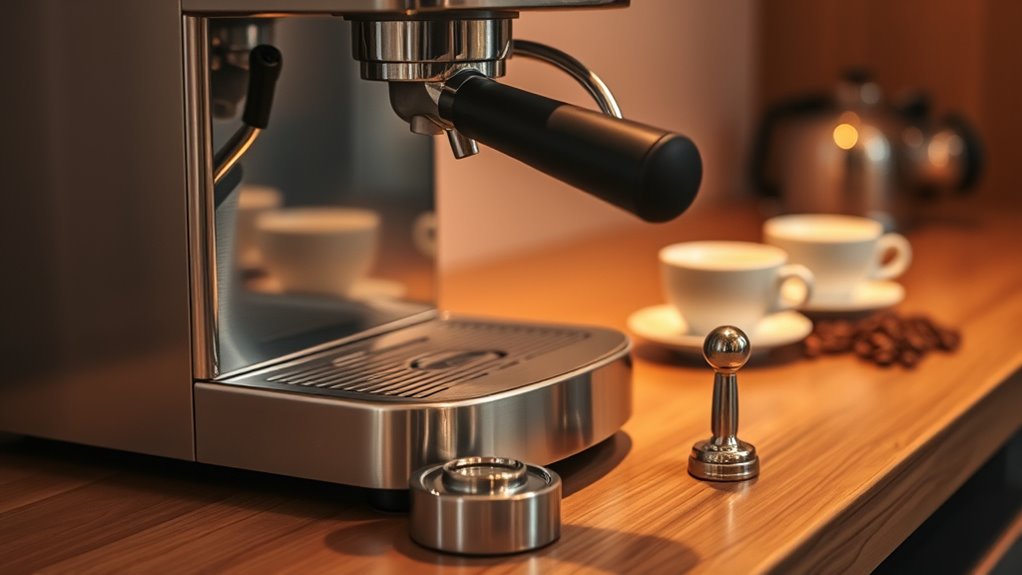
Before you pull your double espresso shot, make sure you preheat your espresso machine and all related equipment. Start by running a blank shot without coffee to warm the internal components and grouphead. This step stabilizes temperature and pressure, which is really important for consistent extraction.
Next, rinse your portafilter and cups with hot water to keep everything at the ideal temperature throughout brewing. Check that your machine reaches its operating temperature, usually around 200°F (93°C), before you move on. You can rely on the machine’s preheat cycle or just run a short shot to get there.
Consistently preheating all your equipment helps preserve the crema, brings out better flavor, and stops temperature swings that might mess with your double espresso’s quality. Taking these steps means you’ll get a balanced, rich shot every time you brew. Using filtered water heated to about 200°F (93°C) ensures optimal extraction and flavor quality in your espresso.
Choose Fresh, Quality Coffee Beans
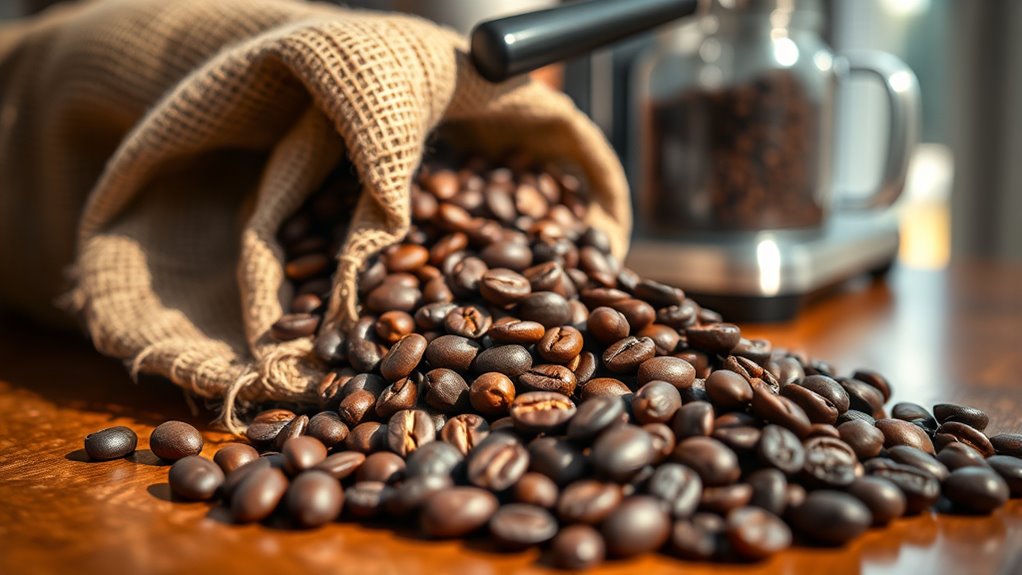
Selecting the right coffee beans is vital for pulling a flavorful double espresso. Use whole beans roasted within the last two weeks to guarantee peak freshness and flavor. Freshly roasted beans hold more aromatic compounds and CO2, which boost the crema and enrich the espresso’s taste.
Choosing whole, freshly roasted beans within two weeks ensures vibrant flavor and a rich, creamy espresso.
Avoid pre-ground coffee since it quickly loses freshness, resulting in dull, flat shots. To maintain quality, store your beans in an airtight container away from light, heat, and moisture. This preserves their freshness longer and protects delicate oils.
While grinding will be discussed later, remember that investing in a good burr grinder is essential for ideal extraction.
Choosing fresh, quality beans sets the foundation for a rich, vibrant double espresso every time. The choice of bean type, such as Arabica versus Robusta, can significantly influence the caffeine content and flavor profile of your espresso.
Grind Coffee to the Right Consistency
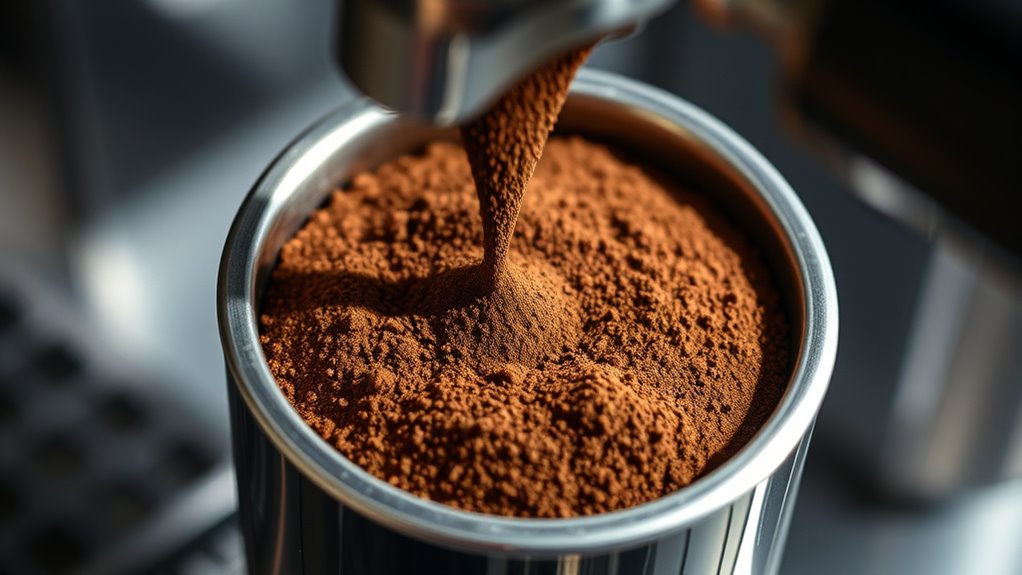
Once you’ve chosen fresh, quality beans, the next step is grinding them to the right consistency. For espresso, aim for a grind texture similar to fine sand or powdered sugar. Uniformity is key for even extraction.
Use a burr grinder set very fine, then adjust gradually as you observe shot flow and timing. Here’s how to perfect your grind:
- Set your burr grinder to a fine setting for espresso.
- Grind just before brewing to preserve the coffee’s aromatic oils.
- Pull a test shot; note if the flow is too fast or slow.
- Adjust grind size finer if the shot runs too quickly, coarser if too slow.
Fine-tuning your grind guarantees balanced extraction and a rich, flavorful double espresso every time. It might take a few tries, but it’s worth it! Regularly recalibrate the grinder when switching beans or roast levels to maintain consistent grind size and optimal flavor.
Measure and Dose 18–20 Grams of Coffee
You’ll want to measure out 18 to 20 grams of coffee grounds using a precise scale. This helps guarantee consistency every time you make a double espresso.
Getting the dose just right is key—it optimizes extraction and balances flavor with strength.
Plus, paying close attention to your measurement helps prevent under- or over-extraction, which can really mess with the taste of your shot.
Adjusting the grind size according to your coffee’s roast level can further refine extraction and enhance flavor.
Ideal Coffee Amount
How much coffee should you use to pull the perfect double espresso? The ideal dose is between 18 and 20 grams of freshly ground coffee. This range ensures a balanced extraction and rich flavor.
To get it right, use a precise coffee scale to measure 18 to 20 grams every time. Grind coffee fresh just before brewing to preserve aroma and taste.
Make sure to distribute the grounds evenly in the portafilter to prevent channeling.
Tamp consistently with about 30 pounds of pressure for a compact puck.
If your shot pulls too fast or too slow, tweak the dose slightly. These steps help you achieve a smooth, flavorful double espresso every time.
Keep experimenting with dose adjustments regularly; each tweak moves closer to the ideal espresso extraction.
Accurate Coffee Measurement
Why does accurate coffee measurement matter so much when making a double espresso? Because dosing 18 to 20 grams of coffee precisely ensures consistency and control over your shot. Use a digital scale and tare it with the portafilter to measure the exact weight.
Relying on a consistent scoop or dosing tool helps maintain uniformity every time. Once you add the grounds, distribute them evenly in the basket. This prevents channeling during extraction and helps your espresso taste better.
If the coffee bed feels too loose or too tight, adjust the dose slightly to achieve ideal tamping pressure. Paying close attention to these details guarantees your espresso starts with the perfect amount of coffee.
That way, you set the foundation for a balanced and enjoyable shot. Maintaining the correct grind size and pressure is equally essential to optimize extraction and develop crema.
Impact On Extraction
What makes dosing 18 to 20 grams of coffee so essential is its direct impact on extraction quality and flavor balance. When you measure precisely, you control how water interacts with the coffee grounds, shaping the espresso’s taste and texture. Using a scale ensures you nail this dose every time, avoiding weak or bitter shots.
Here’s why this matters:
- Consistent dosing guarantees repeatable shot quality.
- Under-dosing results in under-extraction and weak flavor.
- Over-dosing risks over-extraction, causing bitterness.
- Proper dose optimizes water flow, shot timing, and crema.
For best results, always use 100% pure espresso powder made from finely ground, dark roast beans to preserve authentic flavor in your espresso.
Distribute Coffee Evenly in the Portafilter
Where should you start when aiming for an even coffee distribution in the portafilter? Begin by weighing your coffee dose, ideally 18-20 grams for a double shot, to ensure consistency. Next, use a WDT tool or a thin paddle to gently fluff the grounds, breaking up clumps.
After that, tap the portafilter lightly on the counter to settle the grounds evenly. Finally, level the coffee surface with a flat edge or finger, making sure the bed is flat and free of ridges before tamping. This promotes uniform water flow, which really helps with extraction.
Consistent tamp pressure between 20-30 pounds is also essential to promote even extraction and prevent channeling.
| Step | Tool/Method | Purpose |
|---|---|---|
| Weigh | Scale | Consistency in dose |
| Fluff and break clumps | WDT tool/paddle | Even distribution |
| Tap | Counter | Settle grounds evenly |
| Level | Flat edge/finger | Create flat coffee bed |
| Inspect | Visual check | Confirm no uneven areas |
Apply the Weiss Distribution Technique (WDT)
To get the most from your coffee grounds, try using the Weiss Distribution Technique, or WDT. It’s pretty simple — just gently stir them with a thin tool like a needle or a pick.
This helps break up any clumps and creates a nice, even bed.
By doing this, you make sure the water flows evenly through the grounds, which really helps with consistent extraction.
Once you get the hang of WDT, you’ll notice your shot’s flavor becomes more balanced and the crema looks way better.
Give it a shot!
Keep in mind that consistent timing, ideally around 25-30 seconds for a double shot, is crucial to achieve optimal flavor and crema development through proper extraction timing and pre-infusion.
Benefits Of WDT
How exactly does the Weiss Distribution Technique (WDT) elevate your espresso game? By breaking up clumps and evening out the coffee bed before tamping, WDT improves water flow consistency through the puck. This reduces channeling and ensures a more uniform extraction. That translates directly to better espresso.
Here are four key benefits you get from using WDT:
- Enhances crema development for a richer, more appealing shot.
- Promotes balanced flavors by achieving even saturation of coffee grounds.
- Minimizes shot variability by reducing uneven density in the coffee bed.
- Requires minimal extra time but significantly boosts shot quality and consistency.
Incorporating WDT into your routine delivers predictability and refinement. It makes each double espresso more enjoyable. Machines like the Starbucks-exclusive Mastrena espresso machine automate tamping to ensure consistent compression and extraction.
How To Perform
Wondering how to apply the Weiss Distribution Technique effectively? Start with a fine, powdery grind, distributing the coffee evenly in your portafilter basket.
Next, insert your WDT tool gently into the coffee bed. Use small, circular whisking motions to break up any clumps and fluff the grounds, ensuring an even spread.
This step helps create a uniform coffee bed, which is vital for consistent extraction. After you’ve thoroughly whisked the grounds, quickly level the coffee bed to form a flat, even surface.
Finally, tamp the coffee firmly and evenly.
Tamp the Coffee With Even Pressure
Why does tamping with even pressure matter so much when making a double espresso? Because it creates a uniform coffee puck, ensuring an even extraction. Uneven tamping leads to channeling, where water flows too quickly through weak spots, resulting in a bitter or weak espresso.
To tamp properly, follow these steps: Apply about 30 pounds of consistent pressure using a level tamper. Press down evenly and rotate the tamper slightly to distribute pressure uniformly. Avoid tilting or uneven force that causes an inconsistent coffee bed. Check that the coffee surface is smooth and level before proceeding.
Mastering this step guarantees balanced extraction and a richer, fuller espresso flavor every time. It might take a little practice, but once you get the hang of it, your espresso shots will improve big time.
Lock the Espresso Portafilter Securely
Once you’ve tamped the coffee evenly to create a uniform puck, the next step is securing the portafilter to the espresso machine. Start by aligning the portafilter properly with the group head. Insert it and turn clockwise with a firm but gentle twist until it seats snugly.
You’ll know it’s locked in place when the handle is parallel to the machine and you feel a slight click or resistance. Avoid overtightening, as this can damage the gasket or cause difficulties when removing it later.
Make sure the portafilter is level and fully engaged to guarantee even water flow and consistent extraction.
A securely locked portafilter prevents leaks during brewing, setting you up perfectly for a flawless double espresso shot. It’s a simple step, but it makes all the difference in your espresso game.
Pull the Shot and Watch the Espresso Stream
Once you start pulling the shot, keep an eye on the stream flowing from the spout. You want to see a steady, golden-brown flow that moves smoothly. Think slow and syrupy—that’s the goal.
Ideally, it should last around 25 to 30 seconds to make sure your extraction is balanced.
If you notice the stream twirling or breaking up, that’s your cue to make some adjustments. Maybe tweak your tamp pressure or try a different grind size. Small changes here can make a big difference in the final shot.
Espresso Stream Visuals
As you pull the shot, keep your eyes on the espresso stream to gauge its quality. A proper stream offers essential visual cues about extraction and grind consistency. Here’s what to look for:
The stream should start thick and syrupy within the first few seconds, signaling good crema formation. Watch for a steady, thin, golden-brown flow that pours smoothly. Avoid twirling or dancing streams, which suggest uneven tamping or grind.
The pour typically lasts 25-30 seconds, gradually lightening to a blond color as the shot finishes. A smooth, honey-like flow with rich caramel hues means you’re extracting a balanced, flavorful double espresso.
Shot Timing Cues
Although pulling the shot demands your full attention, watching the espresso stream closely provides essential timing cues to perfect your double espresso.
The ideal extraction time is 25 to 30 seconds, during which the stream flows steadily as a thin golden thread that thickens into a syrupy flow.
You want to see a consistent color and flow without dancing or twirling, signaling balanced extraction.
The shot starts with a rich caramel color and gradually lightens to a blond hue near the end.
When you notice this blonding or a change in flow rate, it’s your cue to stop the shot.
Stopping at the right moment prevents under- or over-extraction, ensuring your espresso tastes perfectly balanced every time.
End the Shot at the Right Time for Balance
How do you know exactly when to end your double espresso shot for the perfect balance? Timing and visual cues guide you to stop extraction just right, ensuring rich flavor and crema without bitterness.
Follow these steps:
Follow these steps to master your espresso shot timing for rich flavor and perfect crema every time.
- Aim to end the shot between 25-30 seconds for optimal extraction.
- Watch the flow: a steady, syrupy stream signals good timing. A rapid or erratic flow means over-extraction.
- Look for blonding, the espresso’s color lightening near the last 5 seconds. This indicates it’s time to stop.
- Notice when the flow thins and lightens, signaling you’ve reached the ideal extraction point.
Frequently Asked Questions
What Type of Water Is Best for Espresso Extraction?
You want filtered or purified water with balanced minerals, ideally 75-150 ppm TDS, to guarantee rich extraction and crema.
Avoid hard or overly soft water, as each can negatively impact taste and machine performance. It’s all about finding that sweet spot to get the best flavor and keep your espresso machine happy.
How Often Should I Clean My Espresso Machine?
If you clean your espresso machine daily like Sarah, who brews five shots daily, you’ll prevent buildup and keep flavors fresh. You should clean it at least once a day and descale every 1-3 months, depending on use.
That way, your machine stays in great shape and your coffee tastes amazing every time. Plus, regular cleaning helps avoid any funky flavors or machine issues down the line. It’s definitely worth the little effort!
Can I Use Pre-Ground Coffee for a Double Espresso?
Yes, you can use pre-ground coffee for a double espresso, but you’ll sacrifice some freshness and flavor. Choose espresso-specific grind, dose consistently, and tamp firmly to get a better shot.
That said, freshly ground beans always perform best. If you want the richest taste, grinding just before brewing is the way to go. But if convenience is your priority, pre-ground can still do the job.
What Is the Ideal Water Temperature for Brewing Espresso?
You want water around 200°F (93°C) when brewing espresso. At this temperature, your shot extracts rich flavors without bitterness or sourness.
This gives you that perfect balance every time. It’s like hitting the jackpot on your first sip.
How Do Altitude and Humidity Affect Espresso Brewing?
You’ll need to adjust grind size and water temperature at high altitudes since water boils lower, affecting extraction.
Humidity causes clumping and faster bean moisture absorption, so you must guarantee even tamping and use fresh beans for consistent espresso quality.
Conclusion
Now that you’ve mastered each step, your double espresso will flow like liquid gold. It’s rich, bold, and perfectly balanced. Think of it as your morning magic potion, crafted with care and precision.
Every grind, tamp, and pull shapes a symphony of flavor in your cup. Keep practicing, and soon you’ll pour shots that dance on your tongue and ignite your senses.
Your perfect espresso ritual awaits. Sip, savor, and enjoy the art you’ve created.