You don’t need a traditional espresso machine to make espresso-style coffee at home, but getting that authentic flavor means you have to master pressure, grind, and brew time.
Tools like the AeroPress and Moka pot can create rich, concentrated shots, though they don’t reach the full 9 bars of pressure a machine offers. Using fresh beans and precise technique is key to vibrant espresso.
If you want to perfect your shot, exploring pressure and preparation methods will definitely take you further. It’s all about finding what works best for you and your setup.
What Makes Espresso Different? The Role of Pressure
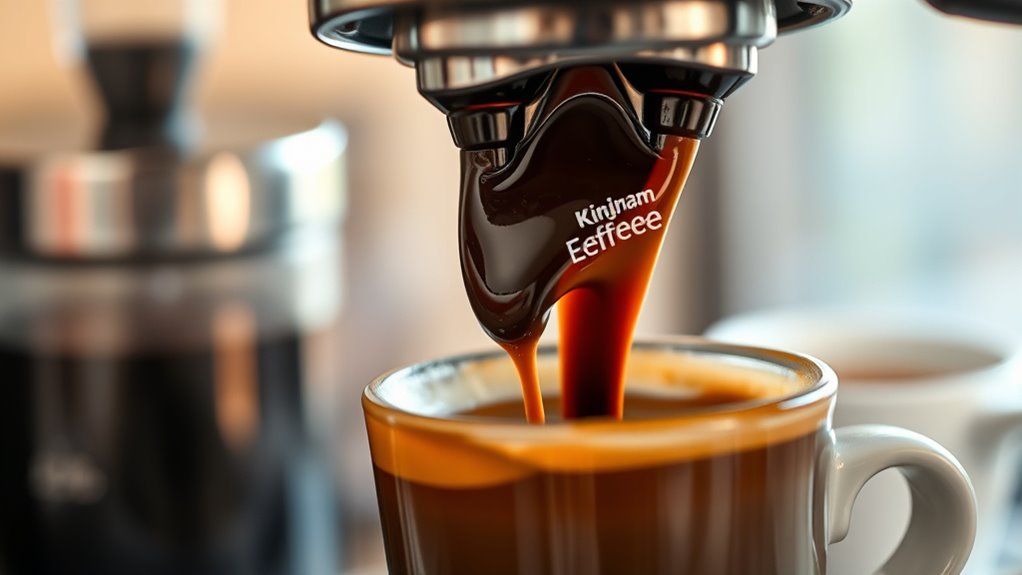
Although many people think espresso is just strong coffee, what truly sets it apart is the high pressure used during brewing.
When you brew espresso, around 9 bars of pressure force hot water through finely-ground coffee, extracting intense flavors and oils quickly. This process creates a concentrated, syrupy shot crowned by a rich layer of crema, distinguishing it from drip coffee.
Without sufficient pressure, your coffee would lack the signature body, richness, and crema that define true espresso.
Whether you use a modern espresso machine or a stovetop device like a moka pot, generating the right pressure is essential.
Understanding this pressure-driven extraction helps you appreciate why espresso delivers such a unique, bold taste experience that other brewing methods can’t replicate.
Mastering variables such as grind size and tamping pressure is key to achieving the ideal extraction and flavor in your espresso.
Can You Make Espresso Without an Espresso Machine?
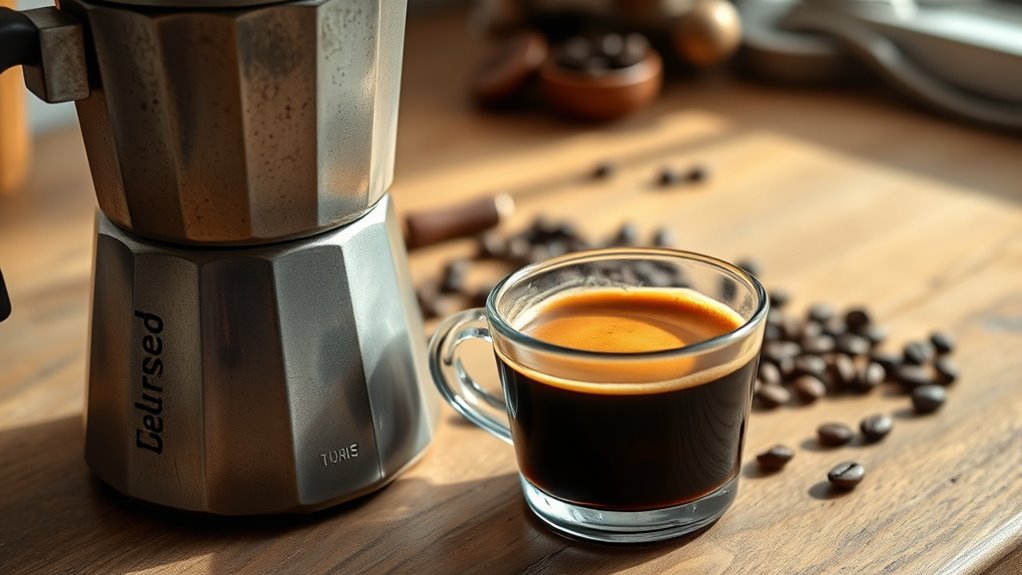
The pressure that defines espresso doesn’t belong exclusively to traditional espresso machines. You can achieve similar results using alternative devices. Tools like the Moka pot and AeroPress let you brew espresso-like coffee by forcing hot water or steam through finely ground coffee under pressure.
While these methods don’t match the 9 bars of commercial espresso machines, they still produce a rich, concentrated shot bursting with flavor. To succeed, focus on using finely ground coffee, maintaining the right water temperature, and applying consistent pressure during extraction. Keep in mind that factors such as grind size and water temperature significantly influence caffeine extraction and the final espresso quality.
How Do AeroPress, Moka Pot, and French Press Compare for Espresso?
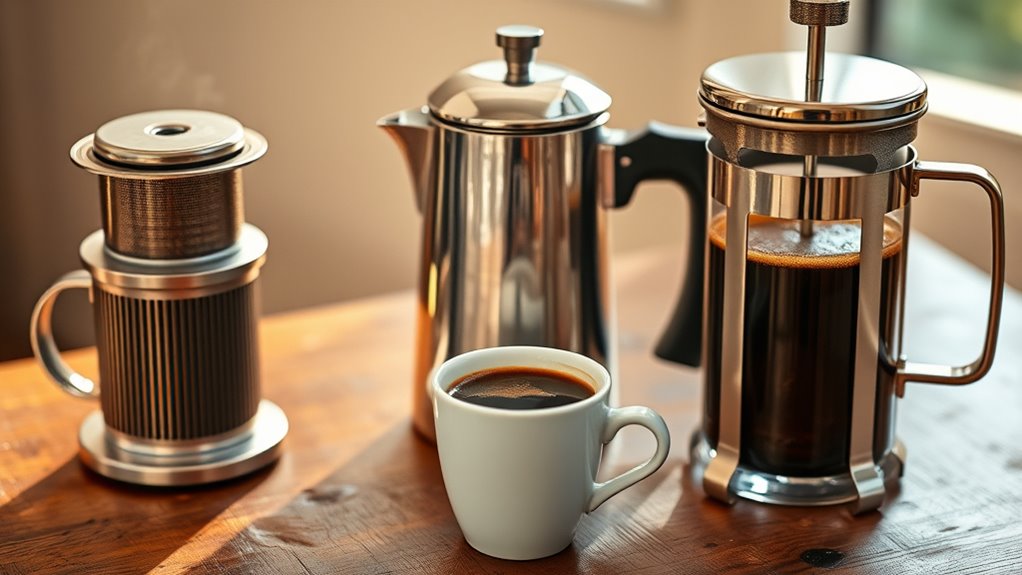
When you’re aiming for an espresso-like experience at home, choosing between the AeroPress, Moka Pot, and French Press means understanding their distinct brewing methods and results.
The AeroPress forces hot water through fine grounds under pressure, producing a concentrated, espresso-like coffee in about two minutes. It gives you excellent control over extraction.
The Moka Pot uses steam pressure to brew a strong, rich coffee with an espresso-like appearance. However, it often lacks consistent extraction and crema compared to a true espresso machine.
The French Press, while accessible and easy, doesn’t generate enough pressure for espresso. This results in a robust but less concentrated, crema-free brew.
For a closer espresso approximation without a machine, the AeroPress and Moka Pot excel. The AeroPress offers superior precision in flavor extraction. Maintaining proper extraction time is essential to achieving balanced flavor and crema, which can be challenging without a dedicated espresso machine.
Tools and Ingredients for Making Espresso Without a Machine
Exploring alternatives like the AeroPress, Moka Pot, and French Press shows you don’t need a traditional espresso machine to make espresso-style coffee at home. You’ll need finely ground coffee, hot water heated between 175 to 200°F, and the right equipment setup to get a rich, concentrated brew.
The AeroPress uses your manual piston pressure to create a bold, espresso-like shot quickly.
The Moka Pot works on the stovetop, using steam pressure to push hot water through the grounds for that signature robust flavor.
While the French Press doesn’t produce pressure, steeping finely ground coffee and pressing still gives you a strong, intense cup—just without the crema.
With these tools and ingredients, you can confidently make espresso-style coffee anytime, no machine needed. It’s important to note that brewing methods can significantly influence the caffeine content and flavor profile of your espresso-style coffee.
Adjust Grind and Brew Time for Better Espresso Shots
You’ll want to fine-tune your grind size because it controls how fast the water flows through the coffee. This directly affects the extraction and flavor.
If your shot pulls too quickly or drags on too long, adjusting both the grind and brew time can help you hit that sweet spot of 25 to 30 seconds.
Getting this balance right is key—it really brings out the espresso’s full body, sweetness, and crema.
Using a consistent, uniform particle size prevents channeling and ensures an even extraction for richer flavor.
Grind Size Importance
Although dialing in your espresso grind size can seem intimidating, mastering it is essential for pulling the perfect shot. Your grind should be very fine, almost like powdered sugar, to build the right pressure and guarantee proper extraction.
If the grind’s too fine, your espresso will extract too slowly, creating bitterness. Too coarse, and your shot will be weak and under-extracted. Adjusting grind size directly controls flow rate, which influences flavor balance and shot duration.
To consistently hit that ideal 25-30 second brew time, you need precise, repeatable adjustments. A high-quality burr grinder is your best ally here, giving you the control necessary to fine-tune grind size and elevate your espresso quality to barista-level standards every time. Regularly cleaning your grinder every 2-3 months helps maintain grind consistency and ensures optimal espresso extraction.
Optimizing Brew Time
When you fine-tune your grind size, you directly control the flow rate and extraction time. This makes it easier to hit that ideal 25-30 second brew window.
If your shot pulls too quickly, coarsen the grind slightly. Too slow? Make it finer.
Overly fine grinds slow extraction, causing bitterness. Coarse grinds rush it, resulting in sour, under-extracted espresso.
Keep a close eye on the shot’s flow and timing. They’re your best guides for adjustments.
Don’t hesitate to experiment with small, incremental changes to your grind and brew time. This methodical tuning helps you balance flavors perfectly.
It ensures each espresso shot delivers the rich, nuanced taste you’re aiming for. Mastering this interplay turns every pull into a consistently excellent espresso experience.
Remember that maintaining approximately 9 bars of pressure during extraction is essential to develop proper crema quality and flavor balance.
When Should You Buy an Espresso Machine?
If you crave consistent, high-quality espresso shots at home and find yourself making espresso-based drinks regularly, investing in an espresso machine makes perfect sense.
You should consider buying one when your current methods, like an AeroPress or moka pot, no longer meet your taste or quality expectations. It’s also worthwhile if you’re enthusiastic to explore advanced features such as precise temperature control and pressure profiling, which can really elevate your espresso experience.
Beyond quality, a good machine saves money over time by reducing café visits.
Just make sure you have the space, budget, and genuine interest to master the craft.
When these things come together, an espresso machine becomes not just a tool but a gateway to professional-level espresso right in your kitchen.
The ability to consistently achieve the ideal 9 bars of pressure is a key reason an espresso machine is essential for true espresso extraction.
How Fresh Beans and Technique Improve Your Espresso Shots
You’ll really notice a big difference when you use freshly roasted beans and grind them just before brewing. This helps preserve those essential oils and aromatics that make your espresso rich and flavorful.
Getting the grind size just right and tamping consistently are super important too. They make sure the extraction is even, so you don’t end up with any bitterness or sourness.
Once you get the hang of these techniques, you’ll be able to unlock the full potential of your espresso—shot after shot. Regularly calibrating your grinder ensures consistent grind size for optimal extraction quality.
Importance Of Freshness
Although having the right equipment matters, the freshness of your coffee beans and your brewing technique play an equally vital role in crafting exceptional espresso shots. Using freshly roasted beans, ideally within two weeks, ensures vibrant flavor and aroma. Grinding right before brewing preserves essential volatile compounds.
Proper storage in airtight containers prevents staling, keeping your shots lively. Your technique, maintaining the right water temperature and timing, maximizes extraction and showcases freshness.
| Factor | Impact on Espresso | Best Practice |
|---|---|---|
| Freshness of Beans | Enhances flavor & aroma | Use beans roasted ≤ 2 weeks ago |
| Grinding Timing | Preserves volatile oils | Grind immediately before brew |
| Storage | Prevents staling | Keep beans airtight |
| Brewing Technique | Maximizes extraction | Control water temp and timing |
| Old Beans | Produces dull, flat shots | Avoid stale beans |
Grind Size Precision
When dialing in your espresso, grind size precision plays a critical role in revealing the full potential of freshly roasted beans. You need a consistent grind to guarantee balanced extraction and rich flavor. Using a conical burr grinder helps you achieve the uniform fineness espresso demands.
Remember, even subtle adjustments can transform your shot’s timing and crema quality. To perfect your grind size, focus on:
- Grinding beans immediately before brewing to lock in freshness
- Using a conical burr grinder for uniform particle size
- Grinding finer to increase extraction and flavor complexity
- Adjusting grind size to control shot time and pressure
- Observing how small changes affect crema and taste intensity
Precision here turns good espresso into exceptional. Regularly cleaning your grinder every 1-2 weeks helps maintain grind consistency and flavor quality.
Mastering Brew Technique
Achieving the perfect espresso shot goes beyond grind size precision. It demands mastering your brewing technique to release the full potential of fresh beans. Using freshly roasted beans preserves essential oils and aromatics, enriching your shot’s flavor.
Grind your beans immediately before brewing to maintain vibrancy and prevent staleness. Apply consistent tamping pressure, about 30 pounds, to guarantee even resistance. This allows water to flow uniformly through the grounds.
Keep your water temperature steady around 200°F and aim for a brew time of 25 to 30 seconds to optimize extraction. Pay close attention to shot flow and taste.
Adjust grind size and tamping as needed to avoid over-extraction or under-extraction.
With disciplined technique and fresh beans, you elevate every espresso shot to its fullest expression. It’s all about practice and tuning your process until it feels just right.
Frequently Asked Questions
What Is the Ideal Water Temperature for Brewing Espresso?
You want to brew espresso with water heated between 195°F and 205°F (90°C to 96°C).
Staying within this range guarantees you extract rich, balanced flavors without bitterness or sourness. It makes every shot perfectly satisfying.
Just keep your water temperature steady, and you’re good to go!
How Does Tamping Pressure Affect Espresso Extraction?
Tamping pressure is the heartbeat of your espresso extraction. If you press too lightly, your shot leaks weak and sour; too hard, it turns bitter.
Consistent, about 30 pounds, guarantees a balanced, rich flavor every time. It’s really about finding that sweet spot so your espresso tastes just right.
Think of tamping as setting the stage for your coffee—get it right, and everything flows perfectly.
Can Decaffeinated Beans Produce Good Espresso?
Yes, you can make great espresso with decaffeinated beans if you adjust your grind finer and extend extraction time. Choosing freshly roasted, high-quality decaf and perfecting your technique helps you achieve rich, flavorful shots with good crema.
It just takes a little tweaking to get it right. Once you dial in the grind and timing, your decaf espresso can be just as satisfying as the regular stuff. So, don’t hesitate to give it a try!
What Maintenance Is Required for Manual Espresso Tools?
You need to regularly clean and disassemble your manual espresso tools. This helps keep everything working smoothly and your espresso tasting fresh.
If you have hard water, be sure to descale them now and then. It prevents buildup that can affect flavor and performance.
Also, keep an eye on the seals. Replace any that look worn out to avoid leaks.
And don’t forget to thoroughly rinse and dry all parts after cleaning. This stops any leftover moisture from causing damage or mold. Taking these steps will keep your espresso equipment in great shape!
How Do Milk Frothing Techniques Influence Espresso Drinks?
Like painting silk on a canvas, your milk frothing technique creates creamy microfoam that balances espresso’s intensity. By steaming milk properly and controlling bubbles, you enhance texture, flavor, and appearance.
This makes every sip velvety and rich. It’s all about getting that smooth, luscious foam that complements the coffee perfectly. When you nail it, your espresso drinks go from good to great!
Conclusion
You don’t always need an espresso machine to savor rich espresso. Like a painter choosing brushes, your tools shape the final art. AeroPress and Moka Pot can craft surprisingly bold shots with the right grind and pressure.
Remember, even a barista’s best machine relies on fresh beans and skillful technique. So, whether you’re starting out or upgrading, focus on quality and practice. Your perfect espresso is a journey, not just a machine.