You’ll find Vietnamese coffee considerably stronger than espresso because it uses Robusta beans, which pack nearly double the caffeine of Arabica beans. The slow drip method with a Phin filter extracts more caffeine and oils over several minutes. This creates a fuller, bolder flavor and caffeine content often three times that of espresso.
Serving size and brewing technique also boost its potency. It’s pretty impressive how these factors come together. Explore how they shape its unique strength and flavor experience.
Why Vietnamese Coffee Is Stronger Than Espresso
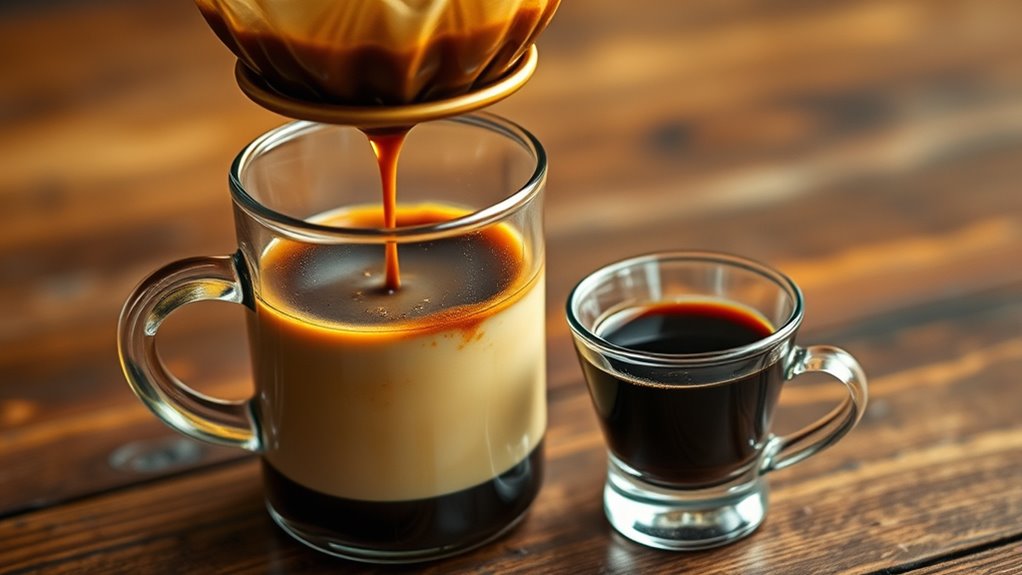
Although both Vietnamese coffee and espresso are beloved for their bold flavors, Vietnamese coffee packs a stronger caffeine punch primarily because it uses Robusta beans. These beans contain nearly double the caffeine of the Arabica beans typical in espresso.
You’ll notice that the traditional Vietnamese phin filter method produces a highly concentrated brew, intensifying the caffeine content per serving beyond that of a standard espresso shot.
The dark roasting process in Vietnam further enhances caffeine retention, which adds to its potency. When you drink a typical Vietnamese iced coffee, you’re consuming 200-300mg of caffeine, which is equivalent to two or three espresso shots.
This combination of bean type, brewing technique, and roasting style makes Vietnamese coffee distinctly stronger in caffeine and fuller in body compared to its espresso counterpart.
It’s no wonder so many people reach for it when they need a serious energy boost! Additionally, using freshly ground coffee from a built-in grinder can maximize the flavor and caffeine extraction in espresso preparation.
How Robusta Beans Make Vietnamese Coffee Stronger

The key factor behind Vietnamese coffee’s heightened strength lies in its use of Robusta beans, which contain about 2.5-3% caffeine, almost double that of the Arabica beans used in espresso. This higher caffeine concentration directly translates into a more potent brew.
When you drink Vietnamese coffee, you’re consuming a bean naturally richer in caffeine, which boosts energy levels more effectively.
Plus, the dark-roasted Robusta beans maintain and intensify caffeine content during roasting.
Typically, a cup contains between 200 to 300mg of caffeine, exceeding most espresso shots.
The roast level of Robusta beans also plays a crucial role in preserving and enhancing caffeine concentration during brewing.
Why The Phin Filter Brewing Method Intensifies Flavor
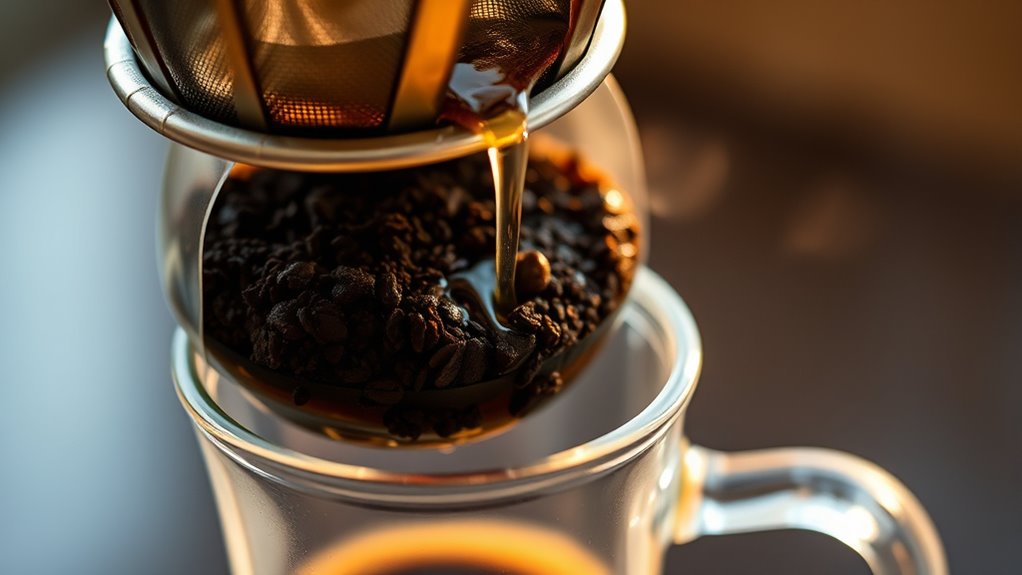
You get a richer, more intense flavor with the Phin filter because its slow drip extraction lets the coffee compounds develop fully over several minutes. It’s like giving the coffee time to really open up and show all its layers.
Also, since it doesn’t use paper filters, it keeps the coffee’s natural oils intact. That’s what helps preserve the brew’s depth and complexity, making each sip more flavorful.
On top of that, the controlled pressure during brewing ensures the flavors are extracted just right. So, every cup you make with the Phin filter ends up being distinctly robust and satisfying.
This slow extraction contrasts with espresso’s much shorter extraction time, which is typically 25-30 seconds to achieve its characteristic flavor profile.
Slow Drip Extraction
When you brew Vietnamese coffee using a phin filter, the slow drip extraction process plays a crucial role in intensifying its flavor. This method allows hot water to linger over the coffee grounds for 4 to 7 minutes, extracting a concentrated, complex profile without pressure.
Because the water drips gradually, it draws out a fuller range of flavors, oils, and caffeine, especially from robust Robusta beans.
This slow extraction enhances flavor intensity and richness by prolonged contact. It also prevents over-extraction, which helps preserve those subtle coffee nuances you love.
Plus, it maximizes caffeine solubility, making the coffee particularly stronger and more energizing.
Unlike espresso, which uses pressure and rapid extraction, Vietnamese coffee’s slow drip method creates a uniquely bold and flavorful brew with less bitterness, similar to the careful preparation of shaken espresso that highlights texture and flavor through gentle aeration.
Full Oil Retention
How does the Phin filter brewing method intensify the flavor of Vietnamese coffee? By using metal perforations instead of paper filters, the Phin allows full oil retention. These essential oils and compounds pass directly into your cup, enhancing richness and aroma.
The slow drip process further extracts concentrated oils, creating a thicker, more complex brew. Unlike typical drip makers that trap oils, the Phin’s design maximizes their presence, amplifying boldness and mouthfeel.
| Feature | Impact on Flavor |
|---|---|
| Metal perforations | Allows oils through, no absorption |
| No paper filter | Preserves natural coffee oils |
| Slow drip extraction | Extracts concentrated oils |
| Full oil retention | Enhances richness and intensity |
This oil retention makes Vietnamese coffee particularly richer and more intense than many other methods. Additionally, understanding the extraction process helps optimize flavor while managing caffeine levels in your brew.
Controlled Brew Pressure
Although the Phin filter doesn’t use the high pressure typical of espresso machines, its reliance on gravity creates a slow, controlled brew that intensifies flavor extraction.
This method really brings out the unique characteristics of Vietnamese Robusta beans, producing a brew that’s richer and more robust.
You’ll notice that extraction takes 4-6 minutes, allowing full solubilization of oils and compounds.
Since there’s no forced pressure, it preserves a syrupy, full-bodied texture.
The gravity-driven drip also enhances earthy, bold flavors that often get muted in quick espresso shots.
How Brewing Time Influences Vietnamese Coffee Strength
Since brewing time directly controls the extraction process, you can tailor the strength of Vietnamese coffee by adjusting how long the phin filter drips. Typically, brewing between 4 to 7 minutes allows more caffeine and soluble solids to be extracted, resulting in a richer, more concentrated cup.
The slow drip maximizes the infusion of caffeine from robusta beans, known for their higher caffeine content, enhancing the coffee’s potency. If you shorten the brewing time, the coffee becomes lighter and less intense, but extending it boosts boldness and caffeine density.
This prolonged extraction can push caffeine concentration to 200-300mg per cup. By precisely controlling brewing duration, you influence the coffee’s strength, allowing you to craft a robust, espresso-like intensity suited to your preference.
For an espresso-like experience, using a high-quality espresso machine can further enrich the coffee’s flavor and crema.
Comparing Caffeine Levels: Vietnamese Coffee Vs Espresso
You’ll notice that Vietnamese coffee usually has more caffeine than espresso. That’s mainly because it uses Robusta beans, which naturally have higher caffeine content, and the slow drip brewing method extracts a lot of that caffeine.
Now, a single shot of espresso typically contains about 60-80mg of caffeine.
But when you look at a typical serving of Vietnamese coffee, it can deliver anywhere from 200 to 300mg.
The difference in caffeine levels is also influenced by the coffee bean type, as Robusta beans contain about twice the caffeine of Arabica beans.
Caffeine Content Comparison
How much caffeine does Vietnamese coffee pack compared to espresso? Vietnamese coffee, brewed with Robusta beans, contains about 200-300 mg of caffeine per cup. That’s roughly two to three times the caffeine in a single espresso shot. Espresso typically has 80-100 mg of caffeine. This difference hinges on the bean type and extraction method.
Consider these points:
Robusta beans used in Vietnamese coffee have nearly double the caffeine of Arabica beans used in espresso. The slow drip method of Vietnamese coffee extracts more caffeine than the quick espresso extraction. So, a typical Vietnamese iced coffee delivers a stronger caffeine hit compared to a single espresso shot. Additionally, the roast level and grind size play a crucial role in influencing the caffeine extraction and flavor profile in espresso.
Brewing Methods Impact
Although espresso delivers caffeine in a highly concentrated form, the brewing method behind Vietnamese coffee plays a crucial role in extracting a larger total caffeine content.
Vietnamese coffee uses Robusta beans, which naturally contain more caffeine, and the slow drip process via the phin filter allows extended extraction time.
This slow brewing dissolves more caffeine into the cup than espresso’s rapid pressure-based method.
While espresso packs 60-80mg of caffeine per shot, the prolonged steeping of Vietnamese coffee yields 200-300mg per serving.
You’ll find that the brewing technique amplifies caffeine extraction, making Vietnamese coffee potentially stronger overall.
Understanding how extraction time influences caffeine dissolution helps explain these differences in strength.
Serving Size Differences
Beyond brewing methods, the serving size plays a significant role in the caffeine comparison between Vietnamese coffee and espresso. When you consider the volume and coffee grounds used, you’ll see why Vietnamese coffee often packs a bigger caffeine punch per serving.
Vietnamese coffee typically contains 200-300mg of caffeine per cup, compared to 60-80mg in a single espresso shot. It uses about 14-20g of coffee grounds, which is double the amount in an espresso shot.
The larger serving size combined with Robusta beans and slow drip extraction results in 2-3 times more caffeine than espresso. Additionally, fresh espresso provides essential oils and crema that contribute to its rich flavor and texture, distinguishing it from other brewing methods.
How Vietnamese Coffee’s Flavor Profile Differs From Espresso
When you compare Vietnamese coffee to espresso, you’ll notice that the use of Robusta beans and the slow-drip phin filter creates a brew that’s especially more concentrated and fuller-bodied.
Robusta beans contain nearly double the caffeine of Arabica beans usually found in espresso, which gives it a stronger, more intense flavor.
The dark roasting process deepens its bold, earthy notes, producing a thick, syrupy coffee with low acidity.
This is quite different from espresso’s typically brighter, more acidic, and complex flavor profile.
Vietnamese coffee really emphasizes richness and intensity, focusing on robustness rather than delicate nuances.
Can You Adjust The Strength Of Vietnamese Coffee At Home?
Understanding the distinctive strength and intensity of Vietnamese coffee naturally leads to the question of how you can tailor its bold character to your preference at home. You have several effective ways to adjust the coffee’s strength precisely.
You can increase the coffee-to-water ratio or use a finer grind and tighter tamping in the phin filter to slow extraction, which intensifies the brew. Shortening drip time by tweaking grind size or water temperature helps concentrate flavors.
Modifying dilution by adding more water or ice can soften the strength, or you can reduce dilution to preserve boldness.
Additionally, choosing darker roasted Robusta beans and adjusting the amount of condensed milk can amplify richness and strength.
These methods let you control Vietnamese coffee’s potency, matching your desired intensity with scientific precision. So, you can easily enjoy your perfect cup right at home.
How To Enjoy Strong Vietnamese Coffee Without Overdoing It
Although Vietnamese coffee boasts a bold and intense flavor, you can enjoy its strength without overwhelming your palate or caffeine tolerance by controlling portion size and balancing taste elements. Start with smaller servings, around 60-80ml, to moderate caffeine intake effectively.
Adjust the intensity by adding sweetened condensed milk or ice, which softens bitterness and tempers perceived strength. Choosing black or lightly sweetened versions lets you appreciate the robust flavor while avoiding excess sugar and cream.
Limit yourself to one or two cups daily, especially when using Robusta beans, known for higher caffeine content.
For a milder brew, use a slightly coarser grind and shorten drip time to reduce extraction and caffeine concentration.
This way, you maintain flavor without excess potency.
This approach guarantees you enjoy strong Vietnamese coffee responsibly and satisfyingly.
Best Places To Try Authentic Vietnamese Coffee
To fully appreciate the unique character of Vietnamese coffee, you’ll want to experience it where tradition and quality come together. Start your journey in historic cafes like Hanoi’s Cafe Giang or Saigon’s Cheo Leo Cafe. These spots use the phin drip method, which really preserves those authentic flavors.
Specialty shops like The Workshop in Saigon and Local Beans Roastery in Hanoi offer a more refined, modern take using premium Vietnamese beans.
If you want to soak in the culture as you sip, head to vibrant districts known for their coffee scenes. Check out Hanoi’s Old Quarter and Saigon’s District 1 for rich street-side coffee experiences.
Little Saigon in Orange County is a great place to explore Vietnamese coffee if you’re abroad. Don’t miss cafes that focus on Robusta beans and traditional recipes like cà phê sữa đá and cà phê trứng.
These venues really highlight Vietnam’s strong coffee heritage through expert brewing and quality ingredients. It’s all about savoring the deep flavors and unique brewing styles that make Vietnamese coffee so special.
Frequently Asked Questions
What Is the History of Vietnamese Coffee Culture?
You’ll find Vietnamese coffee culture started during French colonial times with Arabica beans. Over time, it shifted to the more robust Robusta variety.
Along the way, unique brewing methods like the phin filter came about. Plus, sweetened condensed milk became a staple, adding a special touch to the coffee.
All these elements combined to make coffee an essential social and cultural ritual in Vietnam. It’s more than just a drink—it’s a way people connect and enjoy life together.
How Do Vietnamese Coffee Desserts Complement the Coffee?
Vietnamese coffee desserts complement your coffee by balancing its boldness with creamy, sweet layers like condensed milk or egg foam. These elements soften bitterness, enhance aroma, and create a harmonious, rich experience that highlights the coffee’s natural depth.
It’s like the dessert and coffee work together to bring out the best in each other. The sweetness and creaminess make each sip smoother and more enjoyable. You get this perfect blend of strong coffee flavor and indulgent texture every time.
What Equipment Is Needed Besides a Phin Filter?
Like a maestro needs a baton, you’ll need freshly ground Robusta beans, hot water at 93°C, a sturdy mug, and a tamper for even extraction. Optional tools include a timer and stir stick to perfect your brew.
It’s all about making sure each cup hits the right notes. Having these on hand will really up your coffee game.
Can Vietnamese Coffee Be Made With Arabica Beans?
Yes, you can make Vietnamese coffee with Arabica beans, but expect a milder, fruitier taste and lower caffeine. It’s less traditional but offers a smoother profile.
This is ideal if you prefer less bitterness than typical Robusta brews.
How Does Sweetened Condensed Milk Affect the Taste?
Sweetened condensed milk is like a silk cloak draping your Vietnamese coffee, softening bitterness and enriching flavor. It balances robust earthiness with creamy sweetness, creating a smooth, caramelized profile.
This combo enhances every bold, roasted note you taste, making each sip a little more comforting and indulgent. It’s what turns a strong coffee into something velvety and special.
Conclusion
Vietnamese coffee stands as a bold wave crashing against espresso’s shore, fueled by robusta beans and the slow drip of the phin filter. You’ll find its caffeine punch and intense flavor sharper, yet adjustable to your taste.
Understanding its brewing nuances lets you savor strength without bitterness. So, whether you want a powerful morning jolt or a rich afternoon treat, Vietnamese coffee offers a complex, invigorating experience worth exploring.