If you’re wondering whether ristretto is stronger than espresso, it depends on what you mean by “stronger.” Ristretto tastes more intense and concentrated because it uses less water and a shorter extraction time. This highlights sweeter and fruitier flavors while limiting bitterness.
However, it actually has less caffeine, around 40-50mg compared to espresso’s 63mg. So, the difference lies in flavor concentration, not caffeine content.
To understand what affects taste and strength, keep exploring the extraction process and ratios. There’s more to it than just how much caffeine is in your cup!
What Does “Stronger” Really Mean: Flavor or Caffeine?
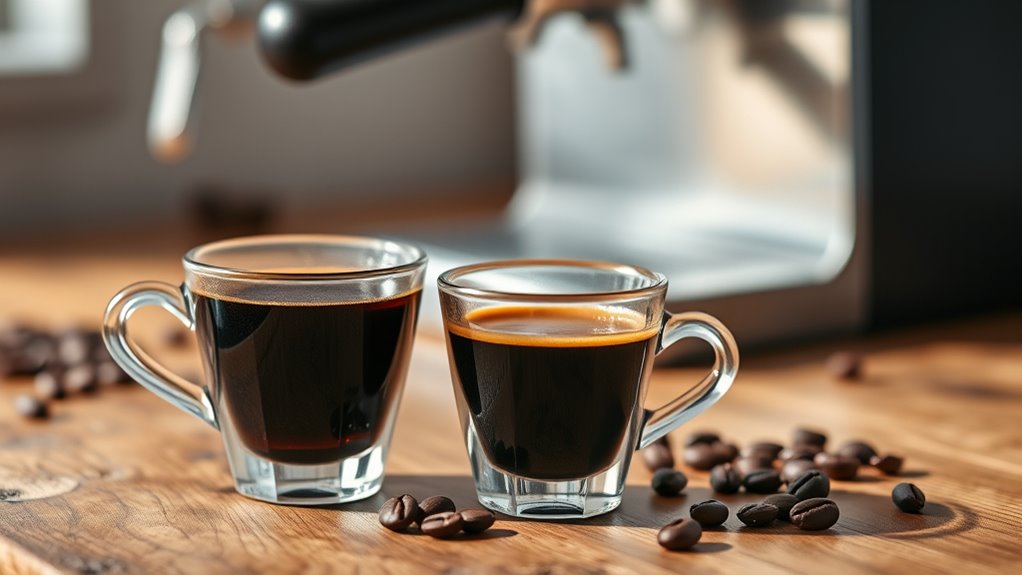
How do you define “stronger” when it comes to coffee? It can mean either a more intense flavor or a higher caffeine content, and these two don’t always align.
Take ristretto, for example: its shorter extraction time produces a denser, more concentrated flavor, making it taste stronger.
Yet, despite this intensity, ristretto usually contains less caffeine per shot than a standard espresso because you’re extracting less liquid overall.
Caffeine levels depend more on extraction time and volume than on how bold the flavor seems.
So, when you say “stronger,” it’s essential to specify whether you mean flavor or caffeine.
Understanding this distinction helps you appreciate what you’re actually getting from your coffee shot.
For a rich and balanced coffee experience, consider using freshly brewed espresso with rich crema as recommended for espresso-based drinks.
How Ristretto Extraction Creates Intense Espresso Flavor
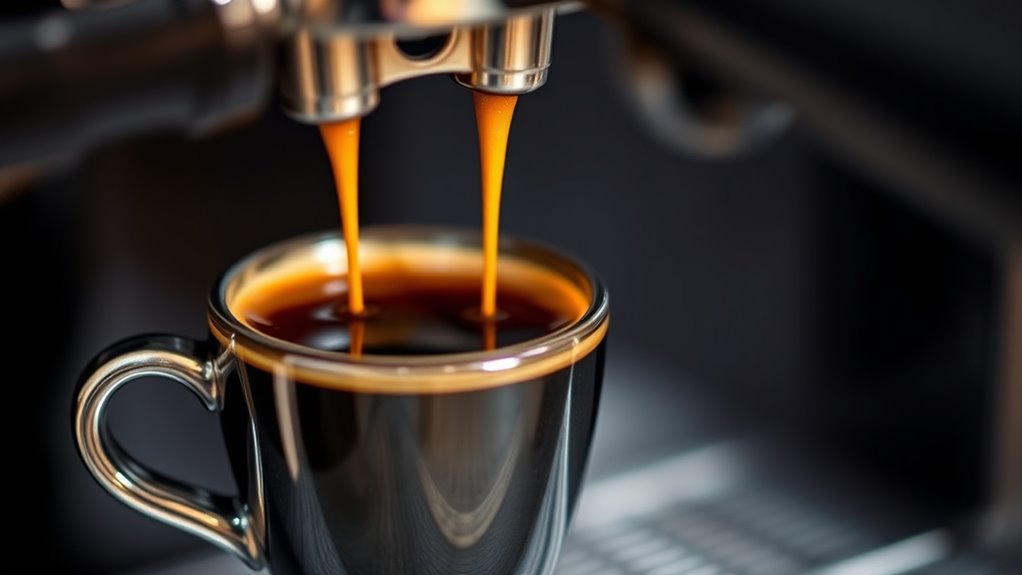
When you pull a ristretto, you’re using less water and stopping the extraction early. This means you’re capturing only the first, lighter flavor compounds.
Because of this concentrated process, you skip many of the bitter elements that can come through in a regular shot.
The result? A smoother, sweeter espresso that lets the coffee’s aromatic oils really shine. It makes the flavor feel more intense, but without any added harshness.
This method relies on a finer grind and precise pressure to optimize extraction quality and emphasize the sweeter notes.
Concentrated Extraction Process
Why does ristretto deliver such an intense flavor punch compared to a regular espresso? It’s all about the concentrated extraction process. By using less water, around 15-20ml from an 18g coffee dose, you extract fewer bitter compounds and more of the sweet, acidic, and fruity notes.
The shorter extraction time captures lighter compounds, creating a denser, richer shot. Even though caffeine levels might be similar or slightly less, the high concentration of dissolved solids gives ristretto a thicker, more intense mouthfeel and flavor. This balance is achieved by carefully controlling extraction time and water volume to enhance the desirable flavors while minimizing over-extraction.
| Aspect | Ristretto |
|---|---|
| Water Volume | 15-20ml |
| Extraction Time | Shorter |
| Flavor Profile | Sweet, acidic, fruity |
| Bitterness | Reduced |
| Mouthfeel | Thicker, more intense |
Flavor Compound Sequence
The intense flavor of ristretto comes from the specific sequence of compounds extracted during brewing. When you pull a ristretto shot, you capture the early, lighter flavor compounds like acids and aromatic oils. These create a concentrated and vibrant profile.
Here’s how the sequence shapes the taste:
- Early Extraction: You get bright, sweet, and fruity notes preserved by stopping the shot before bitter compounds emerge.
- Concentration of Solids: The shorter brew time yields fewer caffeine molecules but more dissolved solids, which intensifies richness.
- Flavor Emphasis: The balance favors aromatic oils and sugars, delivering a perception of strength and complexity beyond caffeine content.
Despite having fewer caffeine molecules per shot, ristretto still delivers a potent dose of caffeine concentration due to its rich extraction.
Reduced Bitterness Profile
Because ristretto extraction uses less water and a shorter brewing time, it captures a concentrated flavor profile that emphasizes sweetness and vibrant fruit notes. When you pull a ristretto, you’re extracting the early, lighter compounds first. These carry the coffee’s natural sugars and bright acidity.
This means you avoid many of the bitter, harsh flavors that develop later in a standard espresso shot. The limited contact time between water and grounds prevents heavier, more astringent compounds from appearing.
The result is a smoother, richer taste.
You get an intense espresso experience with a denser body and reduced bitterness, allowing the coffee’s nuanced flavors to shine without markedly increasing caffeine content. This precise control makes ristretto a favorite for those seeking bold yet balanced espresso. Fresh espresso’s essential oils and crema also contribute to the richness and texture prized in quality espresso drinks like the Espresso Martini.
Caffeine Content: Ristretto vs. Espresso vs. Lungo
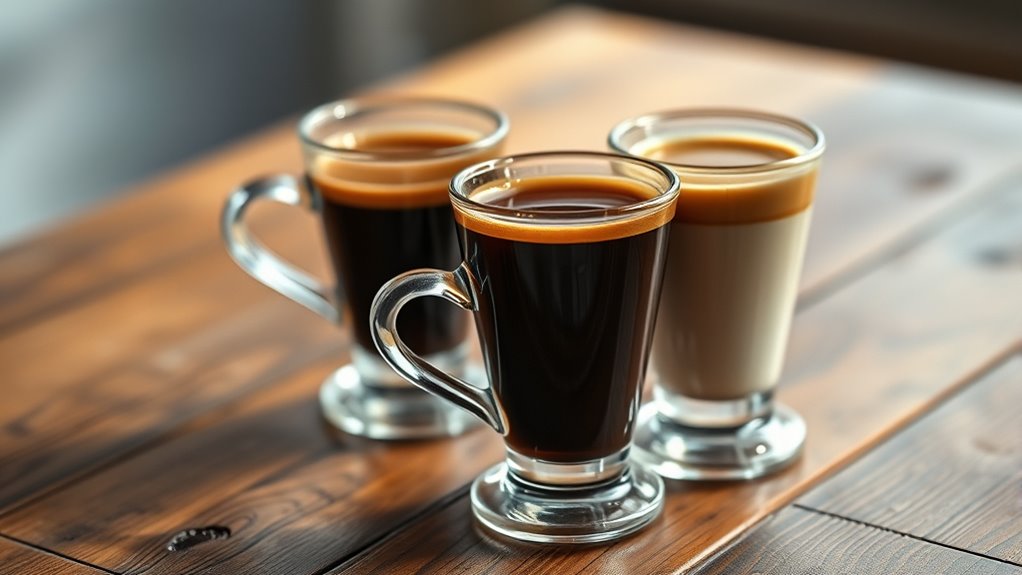
When you compare caffeine levels, you’ll notice that ristretto actually has less caffeine than a standard espresso shot, even though it packs a more intense flavor. It might seem surprising at first, but the key things to keep in mind are extraction time and water volume.
Longer brews, like a lungo, pull more caffeine overall because the water is in contact with the coffee grounds for a longer period. So, even though ristretto tastes bolder, it’s not necessarily stronger in caffeine.
Understanding these little details really helps make sense of why that is. The differences in extraction time, typically shorter for ristretto, play a crucial role in determining the caffeine content.
Caffeine Levels Comparison
Although ristretto offers a richer, more concentrated flavor, it actually contains less caffeine per shot, around 40-50 mg, compared to a standard espresso’s roughly 63 mg. This difference comes from the shorter extraction time and smaller volume used in ristretto preparation.
Here’s how the caffeine levels compare:
- Ristretto: 40-50 mg per shot, with intense flavor but less caffeine.
- Espresso: About 63 mg per shot, balancing flavor and caffeine content.
- Lungo: Ranges from 60-75 mg per shot, due to longer extraction pulling more caffeine.
The total caffeine content depends largely on the extraction time and the volume of coffee extracted during brewing.
Extraction Impact on Caffeine
How does extraction time influence the caffeine content in your coffee shot? Shorter extraction, like in ristretto, yields less caffeine, around 40-50mg, because less water passes through the grounds.
Espresso’s standard 30ml shot extracts more caffeine, about 63mg, because of the longer contact time. Lungo, with its extended extraction, pulls even more caffeine. This intensifies the caffeine content but dilutes the flavor concentration.
| Coffee Type | Approximate Caffeine (mg) |
|---|---|
| Ristretto | 40-50 |
| Espresso | 63 |
| Lungo | 70+ |
Shot Volume and Brew Ratios: Impact on Flavor and Strength
Because ristretto uses a markedly lower brew ratio, typically between 1:1 and 1:1.5, you get a smaller shot volume packed with more dissolved solids per milliliter than a standard espresso’s 1:2 ratio. This difference directly impacts flavor intensity and perceived strength.
Here’s how shot volume and brew ratios affect your coffee:
- Concentration: Ristretto’s smaller 15-20ml shot yields a denser, richer flavor due to higher solids concentration.
- Flavor Profile: Lower water volume emphasizes sweetness and body, while espresso’s higher ratio balances brightness and bitterness.
- Strength Perception: Despite similar caffeine levels, ristretto tastes stronger because its intensities are compacted into less liquid.
Proper preparation, including even distribution and tamping of coffee grounds, is essential to fully realize ristretto’s concentrated flavors and avoid uneven extraction.
Why Lungo Tastes More Bitter Than Ristretto or Espresso
When you pull a lungo shot, the longer extraction time draws out more bitter compounds from the coffee grounds, making its taste noticeably harsher than ristretto or espresso. The increased water volume extracts tannins and other harsh flavors that shorter shots avoid. This over-extraction leads to a less balanced profile, where bitterness overshadows the sweeter, fruity notes you get in ristretto or espresso.
| Shot Type | Flavor Profile |
|---|---|
| Ristretto | Sweet, fruity |
| Espresso | Balanced, rich |
| Lungo | Bitter, harsh |
| Extraction Time | Short to long |
| Water Volume | Low to high |
Understanding these differences helps explain why lungo stands out with its pronounced bitterness. It’s pretty clear why many people find lungo a bit too intense compared to its shorter counterparts.
Choosing Ristretto, Espresso, or Lungo Shots at Home
Although each shot style offers distinct flavors and strengths, choosing between ristretto, espresso, or lungo at home hinges on mastering grind size, extraction time, and water volume. To get the perfect shot, focus on these key factors:
- Grind Size: Use a finer grind for ristretto to slow water flow and increase concentration. For lungo, a coarser grind helps prevent over-extraction.
- Extraction Time: A shorter extraction (about 15-20 seconds) yields ristretto’s rich, sweet profile, while espresso averages 25-30 seconds. Lungo extends beyond that for a milder taste.
- Water Volume: Ristretto uses roughly half the water of espresso, intensifying flavor. Lungo uses more water, diluting strength but extracting additional caffeine.
Adjusting these variables lets you tailor your shot to your taste preferences with precision. It’s all about finding the right balance that works for you. Regularly calibrating your grinder ensures consistent extraction and flavor when switching between shot types.
How to Measure and Pull Consistent Shots Every Time
To pull consistent espresso shots every time, you need to control several key variables with precision. Start by using a calibrated scale to dose about 18 grams of coffee. Adjust grind size to hit an extraction time near 25-30 seconds, maintaining uniformity.
Apply consistent tamping pressure around 30 pounds to ensure even water flow. Measure the shot volume carefully—30ml for espresso, 15-20ml for ristretto. Record these parameters to replicate your ideal shot reliably.
Using a digital scale to measure within 0.1 grams improves dosing accuracy and consistency.
| Variable | Target Measurement |
|---|---|
| Coffee Dose | 18 grams |
| Extraction Time | 25-30 seconds |
| Shot Volume | 30ml (espresso), 15-20ml (ristretto) |
| Tamping Pressure | ~30 pounds |
Precision in these steps guarantees balanced, repeatable espresso or ristretto shots every time. Keep these consistent, and you’ll nail your shot every time!
Frequently Asked Questions
Can I Use Ristretto Coffee Grounds for Regular Drip Brewing?
You can use ristretto coffee grounds for drip brewing, but you’ll want to adjust to a slightly coarser grind to avoid clogging and bitterness.
Try experimenting with grind size and brewing time to find that perfect balance. It’s all about getting a rich, smooth cup that suits your taste. Give it a few tries and see what works best for you!
Does Water Temperature Affect Ristretto Extraction Differently Than Espresso?
Water temperature is the maestro of your ristretto, conducting extraction more delicately than espresso. Its shorter brew time means even slight temperature shifts can dramatically change flavor.
How Does Grind Size Influence Ristretto Shot Quality?
Your grind size directly impacts ristretto quality by controlling extraction. Too fine, and you risk bitterness and clogging. Too coarse, and you end up with weak, sour shots.
You’ll want a precise, fine grind to get that rich, syrupy intensity. It also helps bring out balanced sweetness. Finding the right grind is key to nailing the perfect ristretto.
Are Certain Coffee Bean Varieties Better for Ristretto?
When it comes to ristretto, certain beans shine brighter. You’ll want dense, dark roasts or balanced Arabica for rich, concentrated flavors.
Single-origin beans like Ethiopian ones add bright, unique notes that make your shot sing perfectly. It’s all about finding that perfect balance to suit your taste. Keep experimenting, and you’ll discover what works best for your ristretto.
Can I Make Iced Coffee Using Ristretto Shots?
Yes, you can make iced coffee using ristretto shots. Their concentrated flavor holds up well over ice, giving your drink a bold, rich taste without getting diluted.
You can brew the shots hot and then chill them, or brew directly over ice for the best results. Either way, you’ll end up with a tasty, refreshing coffee. It’s a great way to enjoy a strong coffee flavor on a hot day.
Conclusion
Choosing between ristretto, espresso, or lungo is like selecting the perfect key to open your coffee’s story. Ristretto, with its concentrated essence, symbolizes intensity and boldness. Espresso balances strength and depth.
Lungo, longer and more bitter, represents complexity. Understanding their nuances lets you craft your ideal brew, revealing flavors and caffeine just the way you like. So, trust your taste buds. They’re the compass guiding you through this rich, aromatic journey.