You can safely eat about 50 to 80 espresso beans daily, which gives you roughly 250 to 400 mg of caffeine without side effects. Eating more than this may cause jitters, anxiety, or rapid heartbeat.
Keep in mind, individual tolerance varies based on factors like body weight and metabolism. Chocolate-covered beans add caffeine too, so count those in.
Understanding how caffeine works in your body and different consumption methods helps you enjoy beans safely and effectively.
How Much Caffeine Is in a Single Espresso Bean?
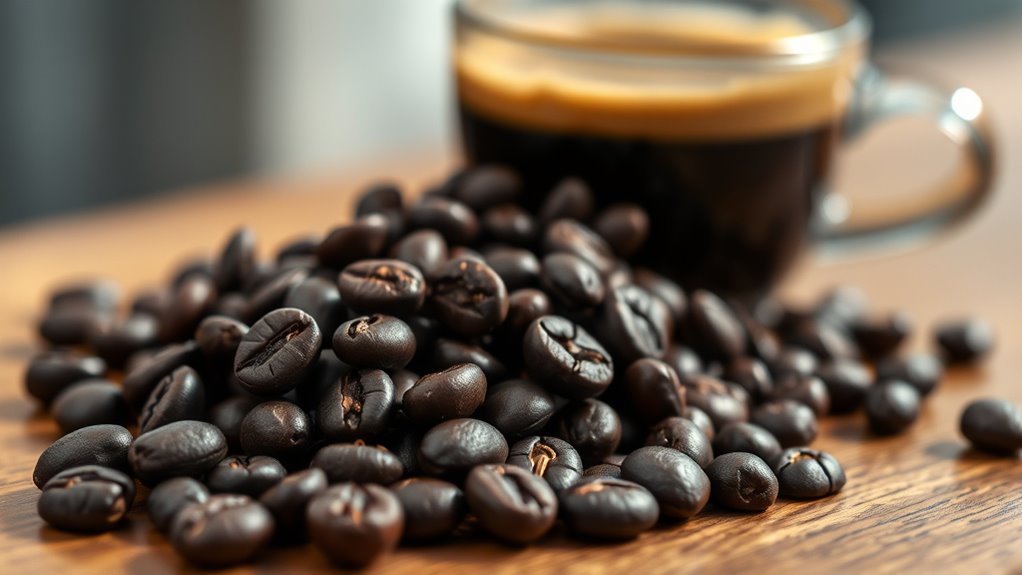
A single espresso bean contains about 5 to 8 milligrams of caffeine, depending on its type and roasting process. This variability means the exact caffeine content can shift slightly from one bean to another.
If you eat around 20 beans, you’d typically consume between 100 to 160 milligrams of caffeine.
For most people, eating a small handful of espresso beans won’t cause adverse effects and can provide a quicker caffeine boost than brewed coffee. This is because chewing releases caffeine faster than drinking espresso, which requires digestion.
Still, keep in mind that individual sensitivity to caffeine varies.
Understanding how much caffeine each bean contains helps you gauge your intake safely and avoid overconsumption, especially if you’re monitoring your caffeine levels closely.
It’s always good to know what you’re getting so you can enjoy your coffee treats without any surprises.
Remember that factors like coffee origin and roast level can also influence caffeine content and how your body responds.
How Many Espresso Beans Equal One Espresso Shot?
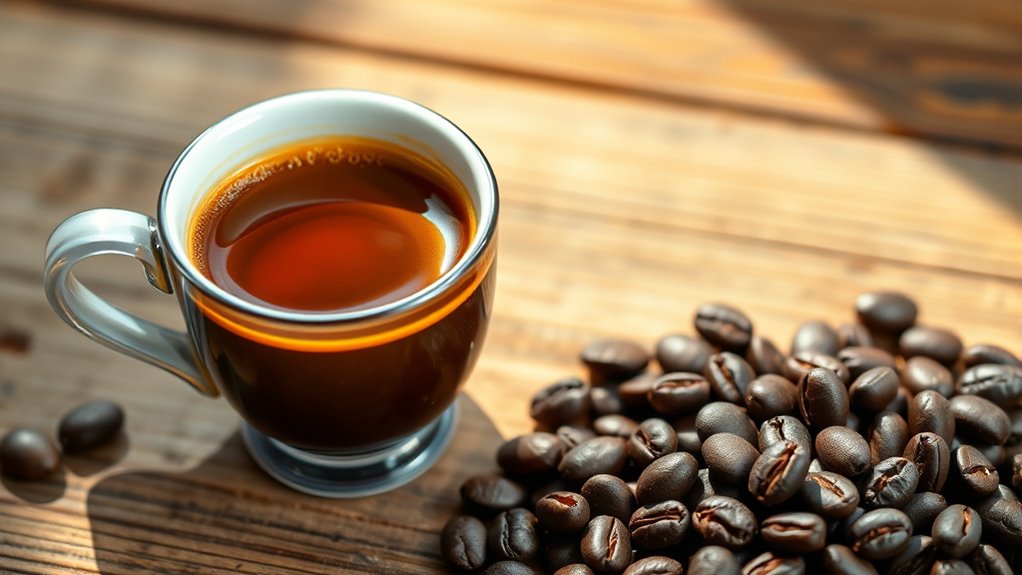
You’ll need about 5 to 8 espresso beans to match the caffeine content of a standard 1-ounce espresso shot. It might sound surprising, but that’s roughly how much caffeine is packed into those little beans.
Of course, this number can vary depending on the size and type of the bean. Some beans actually deliver more caffeine per bean than others.
Keep in mind that Robusta beans contain nearly twice as much caffeine as Arabica, which can affect the total caffeine intake.
Beans Per Espresso Shot
Although the exact number can vary based on bean size and grind, about 5 to 7 espresso beans usually make up a single shot of espresso, delivering roughly 60 to 80 mg of caffeine. Each bean contains approximately 5 to 8 mg of caffeine, so 5 beans provide about 25 to 40 mg before extraction concentrates the caffeine in the shot.
For a double shot, you’d use around 10 to 14 beans, which doubles the caffeine content to roughly 120 to 160 mg. Keep in mind that bean size and grind coarseness can influence how many beans are needed.
Understanding this helps you gauge your caffeine intake if you’re eating beans instead of drinking espresso. It also highlights why eating 20 beans roughly equals the caffeine in a double shot.
The caffeine content and flavor can also be influenced by the roast level of the beans, with darker roasts typically providing a richer experience.
Caffeine Content Comparison
When comparing caffeine content, eating about 10 to 16 espresso beans delivers roughly the same amount of caffeine, 60 to 80 mg, as one standard espresso shot. Each bean contains 5 to 8 mg of caffeine, so 5 beans provide around 25 to 40 mg. That’s roughly equivalent to a small portion of espresso’s caffeine.
If you consume 20 beans, you’re taking in about 100 to 160 mg, similar to a double shot of espresso. Keep in mind, caffeine content varies slightly by bean type and roast, but these averages give you a reliable comparison.
Understanding this helps you gauge your caffeine intake whether you prefer sipping espresso or snacking on beans. It’s a good way to make sure you stay within safe and effective limits. The caffeine content in espresso is concentrated but depends on serving size and extraction method, so moderation is key.
What’s a Safe Daily Limit for Eating Espresso Beans?
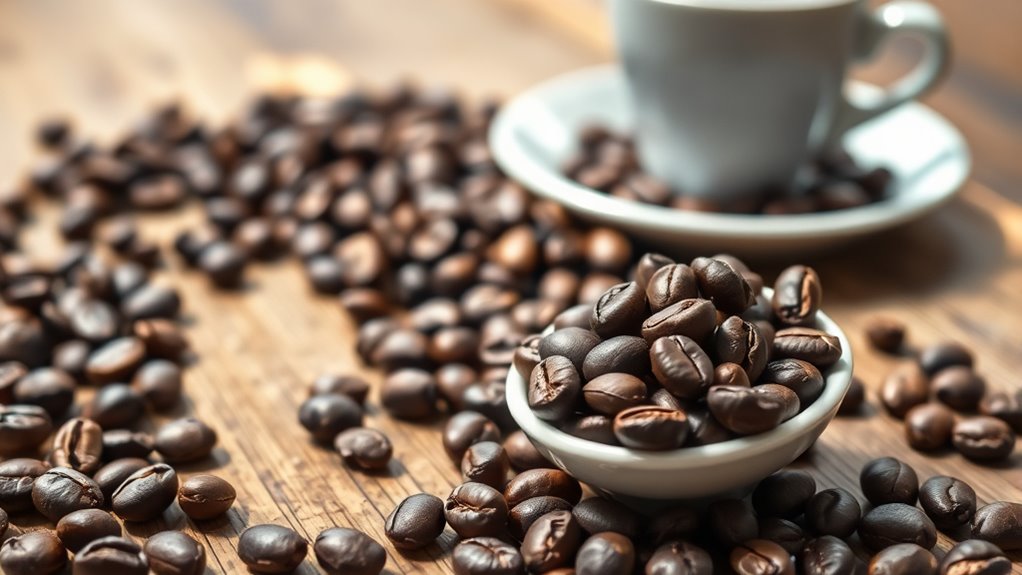
Because caffeine content varies, it’s important to keep your intake from espresso beans within safe limits to avoid side effects like jitters or anxiety.
Generally, a daily caffeine limit of about 400 mg is considered safe for most adults, which roughly equals 50 to 80 espresso beans.
To help you stay within this boundary, consider these points: Eating 20 beans provides around 100–160 mg of caffeine.
Consuming more than 80 beans may lead to excessive caffeine intake.
Individual tolerance varies, so adjust according to how you feel.
Also, remember to account for all caffeine sources throughout the day, not just espresso beans.
Maintaining a steady extraction time during espresso preparation helps ensure consistent caffeine content in your beans.
Signs You’re Eating Too Many Espresso Beans
If you start feeling jittery, anxious, or notice your heart racing after eating espresso beans, these are clear signs you’re consuming too many. Typically, eating more than 50–80 beans, which equals about 250–400 mg of caffeine, can trigger symptoms of caffeine overdose.
You might also feel restless, nervous, or have trouble sleeping.
Pay attention if you experience stomach upset or nausea. That often means you’ve surpassed your caffeine tolerance.
Persistent headaches or dizziness after snacking on espresso beans also indicate excessive intake.
Increased heart rate or palpitations are other warning signs that you should cut back.
Recognizing these symptoms early helps prevent more serious effects and guarantees you enjoy espresso beans safely without compromising your well-being.
For consistent caffeine intake, understanding the precise measurement of espresso yield used in machines like Starbucks’ Mastrena can help manage your consumption effectively.
How Your Body Affects Your Safe Espresso Bean Limit
Understanding the signs of overconsumption is just one part of managing your espresso bean intake effectively. Your body plays a crucial role in determining how many beans you can safely eat.
Individual factors influence your caffeine tolerance, so it’s important to take into account:
- Body weight, age, and overall health impact how your body handles caffeine.
- Sensitivity to caffeine varies; some feel jitters or an increased heart rate with fewer beans.
- Metabolism speed affects how quickly caffeine is processed and eliminated.
- Pregnant individuals or those with health conditions should limit intake to avoid risks.
Eating espresso beans with food and staying within recommended caffeine limits can help prevent adverse effects.
Additionally, understanding the espresso extraction ratio can provide insights into caffeine concentration in beans and how it may affect your tolerance.
This way, you can enjoy them safely without worrying too much. Just listen to your body, and you’ll be good to go!
Why Eating Espresso Beans Feels Different Than Drinking Coffee
When you eat espresso beans, the caffeine hits your system faster because it’s absorbed right through your mouth and digestive tract. That means you get a quicker energy boost compared to just drinking coffee.
This rapid absorption often makes you feel more alert, and the effect can be pretty intense and immediate.
Plus, the energy you get tends to last longer since the concentrated dose keeps caffeine levels steady in your body, which is a bit different from sipping on brewed coffee.
Eating espresso beans can lead to a higher caffeine concentration per ounce since you consume the whole bean with its full caffeine content.
Faster Caffeine Absorption
Because you’re consuming the caffeine directly from the beans, your body absorbs it faster than when you drink brewed coffee. When you chew espresso beans, the caffeine bypasses brewing delays and enters your system almost immediately. Here’s why this happens:
- Chewing breaks down the beans’ cell walls, releasing caffeine quickly.
- Increased saliva production helps dissolve caffeine, speeding absorption.
- Caffeine absorbs partially through your oral mucosa, entering your bloodstream faster.
- Unlike brewed coffee, there’s no waiting for extraction time, so effects hit you sooner.
This rapid absorption causes a sudden spike in alertness and energy, making eating espresso beans feel noticeably different from sipping coffee. Understanding this helps you gauge how much caffeine your body is getting at once and manage your intake safely. It is also important to be aware of how caffeine affects extraction to avoid overstimulation or adverse effects.
Prolonged Energy Effects
Although espresso beans deliver caffeine more rapidly than brewed coffee, the energy effects you feel tend to last longer and feel different. Chewing beans releases caffeine quickly through the oral mucosa, causing a more intense and immediate boost. The fiber in the beans slows digestion, extending the caffeine’s impact.
Plus, the bitterness and texture create a unique sensory experience, which changes how you perceive the energy surge.
| Factor | Eating Espresso Beans | Drinking Coffee |
|---|---|---|
| Caffeine Absorption | Rapid via oral mucosa | Slower, through digestion |
| Energy Onset | Immediate and intense | Gradual |
| Duration | Prolonged and sustained | Shorter |
| Sensory Experience | Bitter, textured, chewed | Liquid, aromatic |
| Digestion Impact | Slowed by fiber | Minimal |
It is important to note that grind size and preparation methods significantly influence the caffeine release and flavor profile in espresso beans.
Chocolate-Covered Espresso Beans and Your Caffeine Intake
Since chocolate-covered espresso beans combine caffeine from both the bean and the chocolate coating, you can quickly consume a significant amount of caffeine without realizing it.
Each bean typically contains 6–12 mg of caffeine, so eating several adds up fast.
To keep your intake in check, consider this: 10 beans can provide 60–120 mg of caffeine. This amount may approach or even exceed daily caffeine limits for sensitive individuals.
The combination of caffeine sources increases the stimulant effect.
It’s a good idea to monitor how many you eat to avoid unpleasant side effects like jitteriness or insomnia. Just a little awareness can help you enjoy them without overdoing it.
Comparing Trader Joe’s Espresso Beans to Other Brands
When you compare Trader Joe’s espresso beans to other popular brands like Starbucks and Lavazza, you’ll find their caffeine content per bean falls within a similar range of 5 to 8 milligrams.
This means a typical serving of 20 beans from any of these brands delivers roughly 100 to 160 mg of caffeine.
The caffeine level depends more on the type of beans, Arabica or Robusta, and the roast than on the brand itself.
Robusta blends usually have slightly higher caffeine content, but Trader Joe’s offerings align closely with industry standards.
So, when considering how many espresso beans you can safely eat, focus less on the brand and more on the caffeine per bean and your total intake.
Safety limits remain consistent across these premium options.
How Brewing Methods Affect Caffeine in Your Espresso Drink
Because brewing methods vary in grind size, water temperature, and contact time, the caffeine content in your espresso drink can differ considerably. Understanding these factors helps you anticipate how much caffeine you’re consuming.
Brewing variables like grind size, temperature, and contact time greatly affect your espresso’s caffeine content.
Here’s how brewing affects caffeine levels:
- Espresso machines use fine grinds and short extraction times, producing concentrated shots with high caffeine per ounce.
- Cold brew and French press methods involve longer contact times, resulting in greater total caffeine content.
- Increasing the coffee dose or using a finer grind boosts caffeine extraction across all methods.
- Water temperature and pressure also influence caffeine release, with hotter water and higher pressure generally extracting more.
Knowing these variables lets you better control your caffeine intake based on your preferred brewing style.
Tips for Enjoying Espresso Beans Without Overdoing It
Although espresso beans offer a convenient caffeine boost, you should monitor how many you consume to avoid negative effects. Typically, eating 5-8 beans delivers about 25-40 mg of caffeine, which is safe for most people.
To stay within a healthy range, keep your total caffeine intake below 400 mg daily, which is roughly 50-80 beans. You can enjoy espresso beans more safely by pairing them with food and spacing out consumption. This helps prevent jitters or sleep disturbances.
Pay attention to your personal tolerance. If you notice symptoms like anxiety or a rapid heartbeat, reduce your intake. Being mindful of these factors lets you enjoy espresso beans without overdoing it or risking unpleasant side effects.
Frequently Asked Questions
Can Espresso Beans Cause Allergic Reactions?
Yes, espresso beans can cause allergic reactions, especially if you’re sensitive to coffee proteins. You might experience symptoms like itching, rashes, or breathing issues.
If you suspect allergies, it’s best to avoid them and consult a healthcare professional. Better to be safe and get checked out, right?
How Should Espresso Beans Be Stored for Freshness?
You should store espresso beans in an airtight container, away from light, heat, and moisture. Keep them in a cool, dark place like a pantry.
Try to grind only right before brewing. This way, you’ll keep the beans fresh and flavorful for longer. It really makes a difference in the taste!
Are Espresso Beans Safe for Children or Pregnant Women?
You shouldn’t let espresso beans dance too freely in your child’s or your pregnant belly. Their high caffeine can spark jitters or heartbeats, so it’s best to avoid or limit them carefully, prioritizing safety first.
Better safe than sorry, right? It’s all about keeping those little tummies calm and steady.
Do Flavored Espresso Beans Have Different Caffeine Levels?
No, flavored espresso beans don’t have different caffeine levels than unflavored ones. The flavorings are added after roasting and don’t change caffeine content.
Caffeine mainly depends on the bean’s type, origin, and roast. So, whether you choose flavored or plain, the caffeine kick is pretty much the same.
Can Eating Espresso Beans Affect Dental Health?
Eating espresso beans can chip away at your dental health like a slow drip. They expose your teeth to acids, caffeine, and sugars, increasing erosion, sensitivity, and cavities.
Brushing afterward helps protect your smile effectively. It’s a simple step that can make a big difference. So, enjoy your espresso beans, but take care of your teeth too!
Conclusion
When it comes to eating espresso beans, remember that moderation is key. Too much caffeine can quickly add up. Just like “don’t put all your eggs in one basket,” spreading out your caffeine intake helps avoid jitters or sleep troubles.
Stick to a safe daily limit based on your body’s tolerance. Also, keep an eye on chocolate coatings, which add sugar. Enjoy your espresso beans mindfully to savor the boost without overdoing it.