You can definitely use espresso beans for drip coffee by adjusting your grind size to medium-coarse. This helps prevent over-extraction and bitterness that usually come with finer espresso grinds. Expect a bold, full-bodied flavor with rich chocolate notes.
Though, keep in mind that darker roasts might mask some of the delicate fruitiness you’d get from lighter beans. It’s a good idea to tweak your brewing time and temperature to find that perfect balance in your cup. Different roast levels and blends will also change the flavor intensity.
So, keep experimenting with these variables to discover the best drip coffee you can make from espresso beans. It’s all about finding what works best for your taste!
How Espresso Beans Differ in Roast and Use
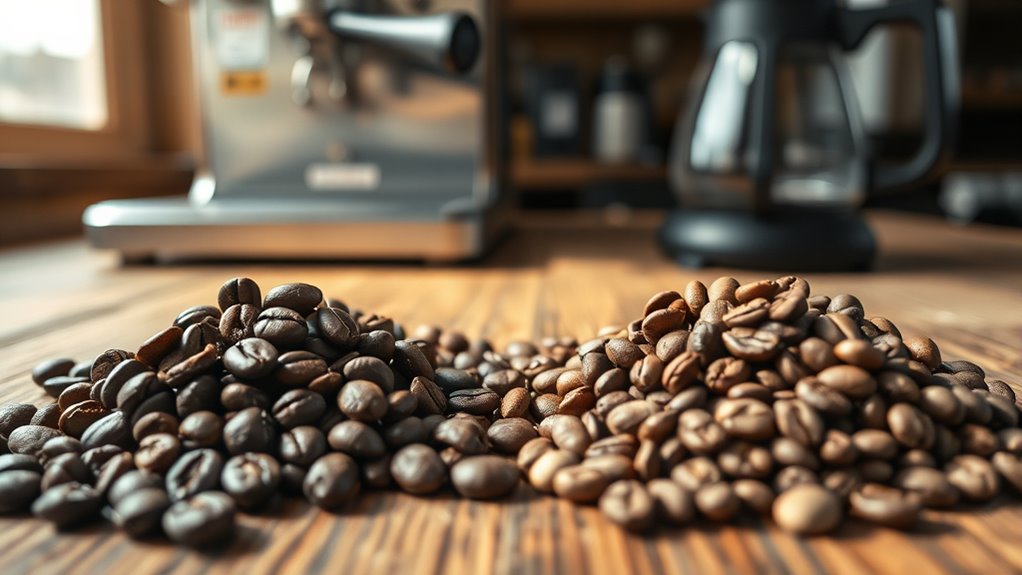
Although espresso beans are often roasted darker than typical drip coffee beans, the roast level primarily shapes their flavor rather than restricting their use. You’ll find that darker roasts highlight bold notes like chocolate and caramel, delivering a fuller-bodied, less acidic taste.
Medium roasts, on the other hand, balance acidity and richness, offering a more nuanced flavor profile.
Importantly, the roast level doesn’t dictate whether a bean is exclusive to espresso or drip brewing. Both methods can utilize any roast level depending on the desired flavor and strength.
So, while espresso beans tend to be darker to enhance intensity and aroma, this doesn’t limit their versatility.
Understanding how roast impacts taste helps you choose beans that suit your brewing preference without being confined to one method. It’s really about what you enjoy and how you like your coffee.
Additionally, using freshly ground coffee ensures optimal extraction and flavor, whether brewing espresso or drip coffee.
Using Espresso Beans in a Drip Coffee Maker
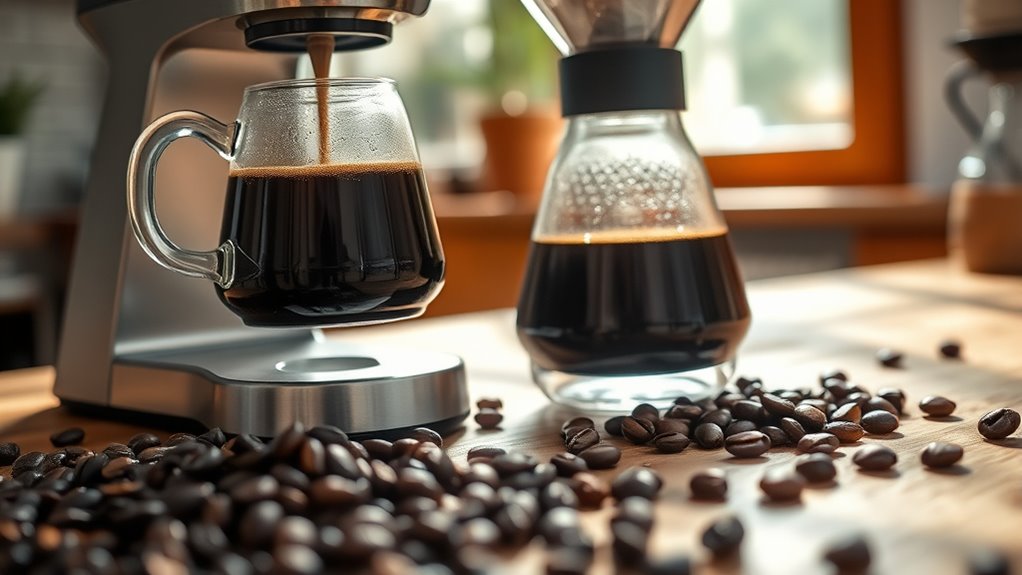
When you use espresso beans in a drip coffee maker, the roast profile really shapes the flavor. Darker roasts tend to give you that bold, rich taste you’re after.
But here’s the thing—you’ll want to adjust the grind size to something a bit coarser than usual. This helps prevent over-extraction and keeps bitterness at bay.
Getting this balance just right means your drip brew will bring out the espresso beans’ intensity without overpowering your palate. It’s all about finding that sweet spot so every cup tastes just how you like it.
Keep in mind that grind size consistency plays a crucial role in preventing channeling and achieving an even extraction in your drip coffee.
Roast Profile Impact
Because espresso beans are roasted darker than typical drip coffee beans, using them in a drip coffee maker considerably changes the flavor profile you’ll experience. The darker roast brings out bolder, more intense flavors, often emphasizing chocolate and caramel notes.
But it also introduces a smoky bitterness that you don’t usually get with lighter drip roasts.
This roast profile really boosts aroma and flavor development, creating a robust brew. However, that intensity can be a bit much if you’re not careful.
The dark roast’s characteristics tend to take over the cup, covering up the subtle nuances you’d find in lighter roasts.
Even though the caffeine content stays about the same, the flavor impact is pretty significant.
Knowing this helps you expect a drip coffee that’s stronger and more robust, with a taste that’s distinctly shaped by the espresso beans’ dark roast level.
Adjusting factors like extraction time can help balance the intensity when brewing espresso beans in a drip coffee maker.
Grind Size Considerations
The bold flavors brought out by espresso beans’ dark roast demand careful adjustment in grind size to avoid overpowering bitterness. Since espresso beans are ground very finely for espresso machines, using that same grind in a drip coffee maker can cause over-extraction and clog the filter.
To brew a balanced cup, you’ll want to coarsen the grind to a medium or coarse consistency. This adjustment allows water to flow through properly, preventing extended brewing times and excessive bitterness.
By grinding espresso beans coarser, you guarantee a smoother, less harsh flavor profile in your drip coffee.
In short, matching the grind size to your drip brewer’s requirements is essential for optimizing flavor extraction and avoiding the pitfalls of using espresso beans in a drip setup.
Keep in mind that espresso extraction requires high pressure which drip coffee makers do not provide, so grind size plays a critical role in compensating for this difference.
How Grind Size Affects Drip Brewing of Espresso Beans
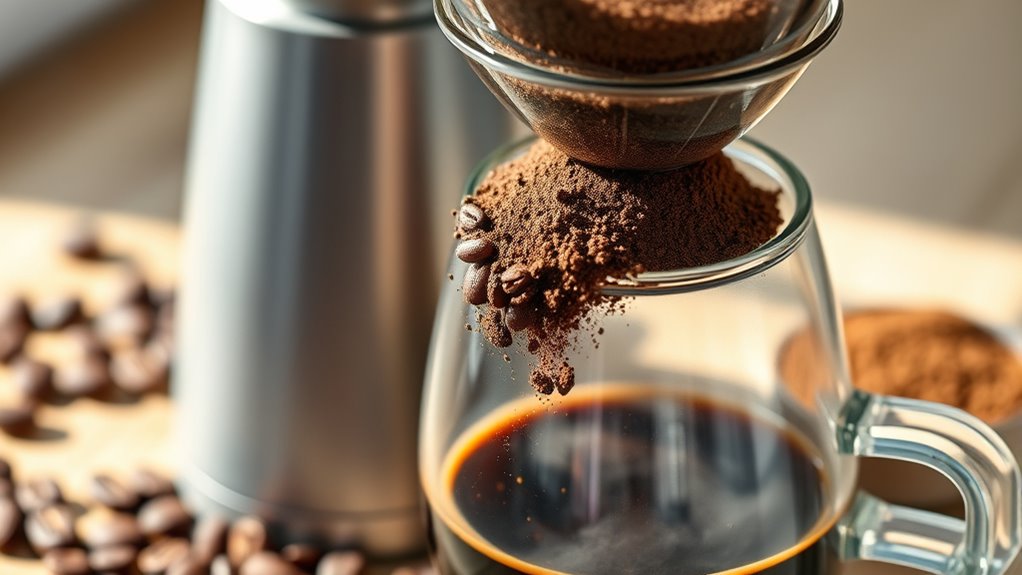
Although espresso beans are designed for fine grinding, using them too finely in drip coffee makers can cause over-extraction and bitterness by slowing water flow.
Espresso beans ground too fine in drip makers slow water flow, causing over-extraction and bitterness.
When water struggles to pass through densely packed, fine grounds, it extracts excessive compounds, resulting in a harsh taste.
You’ll want to adjust the grind to a medium or medium-coarse size, similar to standard drip coffee. This allows water to flow evenly and extract balanced flavors.
Too fine a grind may also clog your filter, producing a muddy brew and frustrating cleanup.
Managing grind size is essential when brewing espresso beans in a drip machine. You need to prevent slow water movement and uneven extraction to enjoy a smooth, flavorful cup without bitterness or sediment.
Because drip coffee uses gravity rather than pressure, it requires coarser grounds to ensure proper extraction and avoid clogging.
How to Grind Espresso Beans for the Best Drip Coffee Flavor
When you grind espresso beans for drip coffee, you’ll want to aim for a medium-coarse texture, similar to sea salt. This helps water flow evenly and extracts balanced flavors.
Using a burr grinder is ideal because it creates a uniform grind size, which prevents over-extraction or under-extraction.
Avoid grinding too fine since espresso grounds can clog drip machines and make the coffee taste bitter.
Here’s how to get the best flavor:
- Use a burr grinder set to medium-coarse for consistency.
- Adjust the grind slightly finer than regular drip coffee but coarser than espresso.
- Experiment with grind size based on your drip machine’s brewing time to optimize taste.
This way, you’ll get balanced extraction and a smooth flavor. Plus, you’ll avoid the bitterness that usually comes from using espresso’s fine grind in drip brewers.
Keep in mind that espresso machines like the Mastrena’s automated tamping ensure consistent pressure, which is difficult to replicate in drip coffee brewing.
Adjusting Roast Levels for Drip Coffee
Since roast level shapes the coffee’s flavor profile, choosing the right roast can really enhance your drip coffee experience.
For drip brewing, lighter roasts are often preferred because they keep acidity and bring out nuanced fruity and bright flavors.
Medium roasts, like Cafe Espresso, offer a balanced profile with moderate acidity and sweetness. This makes them super versatile for drip methods.
Darker roasts highlight bold chocolate and caramel notes but can introduce bitterness, which might overpower drip coffee’s delicate extraction.
Your personal taste should guide your choice. If you enjoy brightness, go for lighter roasts. If you want richness, medium roasts might suit you better.
Try experimenting with different roast levels to tailor the flavor to your liking and brewing conditions. This way, you can really unlock the full potential of espresso beans in drip coffee.
Using freshly ground beans can significantly improve the flavor complexity and overall experience of your drip coffee.
Brewing Tips for Dark Roasted Espresso Beans
When you’re brewing dark roasted espresso beans for drip coffee, you’ll want to make the grind size a bit coarser than what you’d use for espresso. This helps prevent over-extraction and keeps bitterness at bay.
It’s all about balancing the flavor, so play around with your brew time and grind size to soften those smoky, intense notes.
Making these small tweaks lets you bring out that bold character without it overpowering your cup.
Keep in mind that dark roasts develop surface oils that contribute to rich flavor profiles even in drip brewing.
Grind Size Adjustment
Although espresso beans are typically ground very fine for espresso machines, you’ll need to adjust the grind size considerably if you want to use them in a drip coffee maker.
Finely ground espresso beans can cause over-extraction and bitterness in drip brewing. Instead, aim for a medium to medium-coarse grind to guarantee ideal extraction.
To adjust your grind size effectively, start by coarsening the grind to medium or medium-coarse. This helps with better water flow and reduces clogging.
Using a burr grinder is a smart move because it gives you a consistent grind size, which is especially important for dark roasted beans.
Keep an eye on your brewing time and water flow as you make these adjustments. This way, you can fine-tune the extraction with the coarser grounds.
Following this approach helps you avoid bitterness and brings out the best flavor clarity in your drip coffee.
Remember, using freshly roasted beans stored airtight and used within one month will maximize flavor in your drip brew.
Flavor Balance Techniques
To balance the intense, bold flavors of dark roasted espresso beans in drip coffee, you’ll want to adjust several brewing variables carefully.
Start by using a coarser grind to prevent over-extraction, which can amplify bitterness. Lower your brewing temperature slightly or shorten the brew time to avoid pulling excessive bitter compounds.
Adding a pinch of salt or a splash of milk can soften harshness and enhance flavor complexity. You might also blend dark espresso beans with lighter roasts to create a more nuanced profile.
For an added dimension, incorporate spices like cinnamon or cardamom during grinding. These can offset robustness and introduce pleasant aromatic notes.
Using these techniques guarantees a balanced, flavorful drip coffee with dark roasted espresso beans. It’s all about finding the right mix that suits your taste.
Keep in mind that water temperature between 195°F and 205°F is crucial to optimize extraction and flavor balance.
Give it a try and see how these tweaks transform your cup!
Flavor Profiles of Drip Coffee Made With Espresso Beans
Because espresso beans undergo a darker roast and finer grind, drip coffee made from them delivers a bolder, more intense flavor than typical drip brews. When you use espresso beans, expect a full-bodied, rich cup with distinct chocolate and roasted notes.
However, the fine grind can cause over-extraction, which might lead to bitterness or an overly robust taste. Also, darker roasts may overshadow the subtle fruity or delicate flavors you usually get from lighter roasts.
Here are three key flavor profile characteristics you’ll notice:
- Intensified richness and depth with strong roasted undertones
- Pronounced chocolate notes enhancing the overall complexity
- Potential bitterness if brewing parameters aren’t carefully managed
Knowing these points helps you tailor your drip coffee experience when using espresso beans. It’s all about finding the right balance to enjoy that bold flavor without the bitterness.
Caffeine Content in Drip Coffee From Espresso Beans
When you brew drip coffee with espresso beans, you might assume it packs more caffeine, but the darker roast actually reduces caffeine content slightly. Dark roasting breaks down caffeine molecules, so espresso beans often contain less caffeine than lighter roasts.
The grind size also matters.
Espresso beans ground finely for drip can cause over-extraction, leading to bitterness without increasing caffeine. The perceived strength of your coffee depends more on brew concentration than the caffeine per bean.
Recommended Espresso Bean Types for Drip Coffee
Although espresso beans are primarily designed for espresso machines, you can use a variety of espresso roasts for drip coffee by adjusting the grind size accordingly.
To optimize your drip coffee experience, consider these recommended espresso bean types:
- Dark Roasts (Italian or French): These offer a bold, full-bodied flavor. They’re ideal if you prefer a rich, intense cup.
- Light Roasts: They provide a brighter, more acidic profile with nuanced flavors. Perfect for a complex and lively brew.
- Specialty Blends (e.g., Mississippi Mud Coffee, Downtown Blend): These guarantee high-quality, freshly roasted beans that deliver rich flavor regardless of the brewing method.
Just remember to adjust your grind to a coarser setting for drip coffee since espresso grinds are typically finer. This helps prevent over-extraction and bitterness.
Frequently Asked Questions
Can Espresso Beans Be Used for Cold Brew Coffee?
Yes, you can use espresso beans for cold brew, but grind them coarsely to avoid bitterness. Expect a strong, rich, smoky flavor.
You might want to adjust the brewing time to balance the bold, dark roast profile effectively. It’s all about finding what works best for your taste.
How Long Do Espresso Beans Stay Fresh After Roasting?
You’ll find espresso beans stay fresh for about 2 to 3 weeks after roasting. Keep them in an airtight container away from heat and light to maintain ideal flavor and prevent staling during that period.
It really helps to store them properly because exposure to air and light can quickly dull their taste. So, just a little care goes a long way in keeping your espresso tasting great!
Are Espresso Beans More Expensive Than Regular Coffee Beans?
Yes, espresso beans often cost more due to darker roasting and specialized blends, but prices vary widely.
You’ll find some premium drip coffee beans can be just as expensive, depending on quality, origin, and brand.
It really comes down to what you’re looking for in your coffee and where you buy it from.
Can I Mix Espresso Beans With Other Coffee Beans?
Yes, you can mix espresso beans with other coffee beans to create unique flavor profiles. Just adjust the grind size for your brewing method, and experiment to balance richness and brightness according to your taste preferences.
It’s all about finding what works best for you. Try different combinations and see which blend makes your perfect cup. Have fun with it!
What Equipment Is Best for Grinding Espresso Beans at Home?
Think of a conical burr grinder as a sculptor’s chisel, shaping your espresso’s flavor. You’ll want it for consistent, precise, and cool grinding. This helps preserve the beans’ essence and ensures the perfect fine texture every time.
It really makes a difference when you want that rich, balanced shot of espresso. Plus, it’s a great way to get more control over your grind size compared to other grinders. So, if you’re serious about your espresso, this is the way to go.
Conclusion
You can definitely use espresso beans for drip coffee, but keep in mind their darker roast and finer grind are key factors. Interestingly, studies show dark roasts often have slightly less caffeine than lighter ones, which affects your cup’s strength.
By adjusting your grind size and brewing technique, you can reveal rich flavors unique to espresso beans in your drip maker. With these tweaks, you’ll enjoy a bold, balanced coffee that’s both satisfying and complex.