You’ll notice Blonde espresso features a lighter roast with matte, light brown beans and a bright, citrusy flavor that’s slightly higher in caffeine. Signature espresso is darker, with oily, glossy beans, offering bold, nutty, and chocolatey notes and a thicker crema.
Brewing adjustments like grind size and temperature differ to highlight these traits. If you want to fine-tune your espresso experience, exploring these distinctions further reveals how each roast suits specific drinks and preferences.
What Is Blonde Espresso and How Is It Roasted?
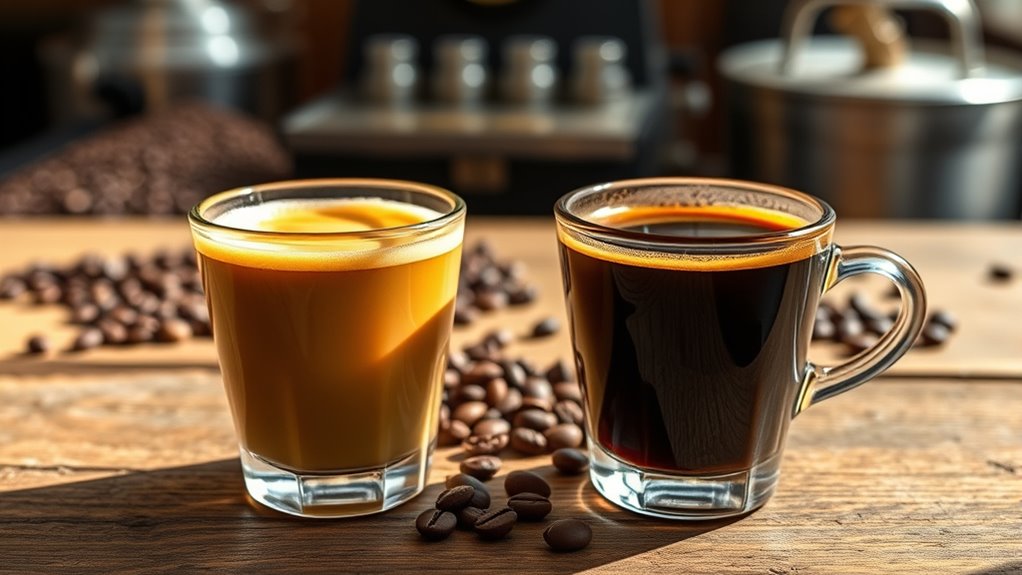
Although you might associate espresso with dark, intense flavors, blonde espresso offers a distinct experience by using light-roasted beans. These beans undergo a roasting process lasting under ten minutes at temperatures between 355-400°F, carefully halted before the first crack.
This early stop preserves natural sugars and moisture, resulting in matte, light brown beans with minimal surface oil. You’ll notice that the light roast retains more of the bean’s original characteristics, which brings out brighter acidity and a smoother, less bitter profile.
Typically sourced from Central American and East African regions, these beans highlight citrus and floral notes. By roasting lightly, you preserve delicate flavors that would otherwise diminish in darker roasts. Adjusting grind size and machine settings is essential to optimize flavor extraction and crema when brewing lighter roasts like blonde espresso.
What Makes Starbucks’ Signature Espresso Special?
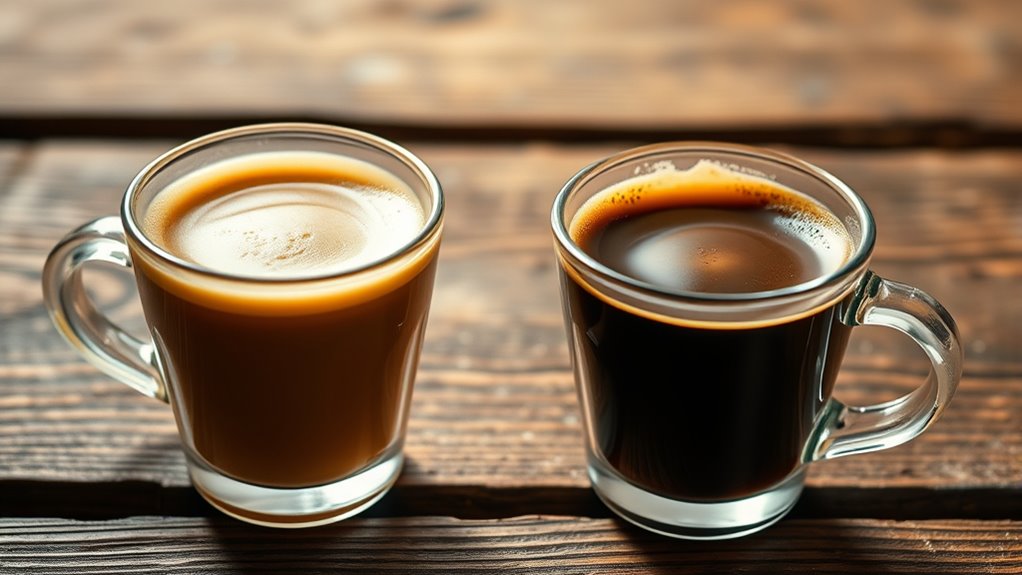
When you choose Starbucks’ Signature Espresso, you’re experiencing a carefully crafted dark roast blend that delivers a rich, bold flavor with distinct caramel and nutty undertones.
This espresso blend combines multiple beans roasted longer at higher temperatures, producing oily, dark brown beans. The extended roasting creates a thick crema and an intense, roasted aroma that defines its character.
Multiple beans roasted longer at higher temperatures yield oily, dark brown beans with thick crema and intense aroma.
You’ll notice its full-bodied, complex taste stands out, especially when paired with milk-based drinks like lattes and cappuccinos. Despite its boldness, it contains slightly less caffeine, around 75 mg per shot, due to the longer roasting.
Starbucks guarantees consistent quality and robust flavor in every shot.
That’s why Signature Espresso remains a core, popular choice globally for espresso lovers seeking depth and balance. It’s all about delivering a great espresso experience every time.
Its preparation involves precise grind size and extraction pressure to ensure optimal flavor and crema quality, key factors in authentic espresso quality.
How Blonde and Signature Roasts Affect Espresso Flavor
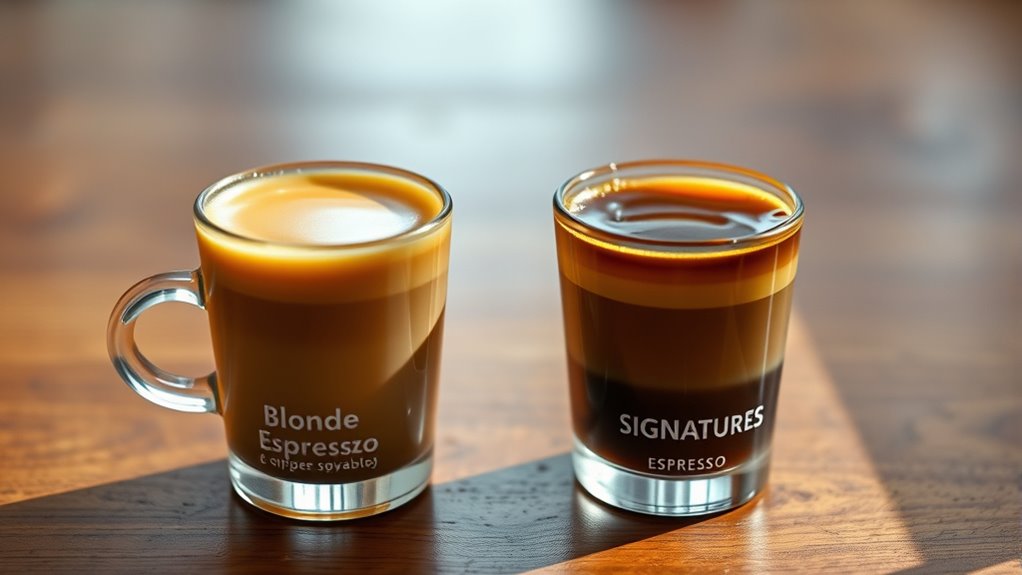
You’ll notice that the roast level really shapes the espresso’s flavor profile. Blonde espresso, for example, brings out bright, citrusy, and floral notes thanks to its lighter roast.
On the other hand, signature espresso delivers bold, nutty, and chocolatey flavors because it’s roasted darker and longer.
Knowing these differences helps you appreciate how roasting time and temperature control the balance between acidity and body in each shot.
Darker roasts also create a thicker, more persistent crema and a fuller body, enhancing the espresso’s texture and richness.
Roast Level Impact
Because the roast level fundamentally shapes espresso’s flavor profile, understanding the differences between blonde and signature roasts is essential for discerning coffee enthusiasts.
Blonde espresso uses lightly roasted beans, stopped just before the first crack, preserving natural acidity and delicate fruit and floral notes. This approach results in a lighter color and a milder, more nuanced espresso with bright and crisp characteristics.
In contrast, signature espresso employs a darker roast, extending roasting time and temperature to develop oils on the bean surface, intensifying body and producing richer, bolder flavors. This roast level emphasizes smoky, chocolatey, and caramelized notes, often with a heavier mouthfeel and subtle bitterness.
Recognizing how these roast levels transform the beans helps you appreciate the structural and sensory distinctions in espresso preparation. Additionally, the higher caffeine content in blonde espresso beans provides an energizing boost while maintaining a clean, crisp finish.
Flavor Profile Differences
Roast level sets the stage for the distinct flavor profiles that define blonde and signature espressos. Blonde espresso, roasted before the first crack, preserves natural fruit and floral notes, delivering a bright, citrusy, and sweet flavor. You’ll notice its higher acidity and crisp aromatics, paired with a thinner, tea-like body and a delicate finish.
In contrast, signature espresso undergoes longer roasting, developing bold, caramelized flavors with chocolate, smoky, and nutty undertones. This roast creates a richer, full-bodied cup with deeper intensity and a more lingering finish.
Understanding these differences helps you appreciate how roast level directly influences espresso’s taste, aroma, and mouthfeel. That way, you can choose based on whether you prefer a vibrant, light experience or a robust, hearty one. Additionally, adjusting extraction time according to roast profile is crucial, with lighter roasts benefiting from longer extraction times to develop their full flavor complexity.
Comparing the Taste of Blonde and Signature Espresso
When comparing blonde and signature espresso, you’ll notice how their distinct roast levels shape their flavor profiles. Blonde espresso, roasted before the first crack, delivers a lighter, brighter taste marked by citrus and floral notes. You’ll find its natural sweetness and acidity create a crisp, clean finish, with a smooth, subtle, almost tea-like quality.
In contrast, signature espresso undergoes a darker roast, developing richer, more roasted flavors with chocolate and nutty undertones. It offers bold caramelized notes and a fuller body, accompanied by a deeper, roasted bitterness.
As you taste, the blonde espresso feels delicate and less bitter, while the signature espresso presents an intense, complex profile.
These contrasts clearly reflect how roast levels influence the espresso’s sensory experience. It’s pretty interesting how just a difference in roasting can change everything about the flavor, right? Blonde espresso also generally contains slightly more caffeine due to lighter roast preservation, enhancing its appeal to those seeking a mild but potent coffee option.
Caffeine Differences in Blonde vs. Signature Espresso
While the flavor differences between blonde and signature espresso are quite pronounced, their caffeine content varies more subtly.
Blonde espresso typically contains around 85 mg of caffeine per shot, slightly more than the 75 mg found in signature, or darker roast, espresso. This difference arises because the lighter roast beans in blonde espresso are denser and retain more caffeine during roasting.
When measured by volume, blonde espresso beans hold more caffeine due to less degradation of their natural caffeine content. However, by weight, caffeine levels between the two are nearly identical since caffeine remains stable through roasting.
Ultimately, while blonde espresso is marginally stronger in caffeine, both types deliver a comparable caffeine effect per shot, making the difference minimal in practical terms. Factors such as dose size and brewing method influence caffeine content more significantly than roast level.
Visual Differences Between Blonde and Signature Espresso Beans
Because the roasting process affects the beans’ appearance, you can easily distinguish blonde espresso beans from signature espresso beans by their color and surface texture. Blonde beans have a matte, light brown finish akin to cinnamon bark, signaling a lighter roast.
Signature espresso beans, on the other hand, are darker, resembling dark chocolate or roasted nuts, with a glossy, oilier surface due to extended roasting.
Here’s how to differentiate them visually:
- Color: Blonde beans are light brown; signature beans are dark brown to nearly black.
- Surface Texture: Blonde beans have a uniform matte finish; signature beans show visible oil spots and a shiny sheen.
- Oil Presence: Oils are minimal in blonde beans but prominent in signature beans, reflecting roast intensity.
These traits allow you to identify each espresso type at a glance. It’s pretty simple once you get the hang of it! Additionally, the extraction time and temperature used during brewing can also influence the final flavor profile of these espresso types.
Brewing Tips for Blonde and Signature Espresso
When brewing blonde espresso, you’ll want to adjust your grind size to be a bit finer to make sure you get the best extraction from its lighter roast.
On the other hand, a coarser grind works better for the signature espresso because of its darker profile.
Keep the water temperature between 94-96°C for blonde espresso to really bring out those bright, vibrant notes.
For the signature blend, lower the temperature to around 88°C to enhance the rich caramel flavors.
It’s also important to control your extraction time carefully.
Aim for about 20-25 seconds with blonde espresso to balance its acidity, while around 25 seconds works well for the signature to achieve the perfect richness.
Adjusting these variables helps optimize the caffeine extraction and flavor profile in each espresso type.
Grind Size Adjustments
Adjusting grind size plays a critical role in brewing both blonde and signature espresso, as it directly affects extraction quality and flavor balance. Blonde espresso demands a finer grind to offset its denser, lighter beans, ensuring you achieve proper extraction without sourness or bitterness.
Conversely, signature espresso, with darker roasted beans, requires a slightly coarser grind to avoid over-extraction and maintain flavor balance. Focus on these key points:
- Start blonde espresso with a fine grind and adjust based on shot timing, aiming for a 25-30 second extraction.
- Use a coarser grind for signature espresso to regulate water flow and prevent excessive bitterness.
- Fine-tune grind size for both types to highlight their distinct flavor profiles through balanced extraction.
Proper grind size is essential for optimal flavor and extraction time, especially in espresso brewing where precision impacts taste and mouthfeel.
Water Temperature Settings
When dialing in your espresso shot, controlling water temperature is essential for revealing the distinct flavors of blonde and signature espresso.
For blonde espresso, set your machine between 94-96°C (201-205°F) to extract its delicate citrus and floral notes effectively without causing sourness.
Conversely, signature espresso, crafted from darker roasts, thrives at slightly cooler temperatures around 90°C (194°F) to avoid over-extraction and bitterness.
Precise temperature control, often managed via PID settings, ensures each roast profile achieves ideal flavor balance and enhances crema quality.
By fine-tuning water temperature within these specific ranges, you’ll highlight the unique characteristics of both blonde and signature espresso.
This way, you maximize the clarity and complexity each shot offers.
Extraction Time Control
Although water temperature plays a critical role, controlling extraction time is equally essential to revealing the full spectrum of flavors in both blonde and signature espresso. You’ll want to aim for an extraction window of 20-25 seconds, but subtle adjustments are necessary depending on the roast.
For blonde espresso, the finer grind and hotter water can lead to under-extraction, so you must carefully extend brewing time to avoid sourness.
Conversely, signature espresso risks bitterness from over-extraction, so slightly shorter extraction times help maintain balance.
Here’s how to manage it:
- For blonde espresso, increase extraction time if the shot tastes thin or sour, paired with a fine grind.
- For signature espresso, reduce extraction time to prevent harsh bitterness.
- Consistently monitor and adjust grind size alongside time for ideal flavor clarity.
Choosing Blonde or Signature Espresso for Your Routine
How do you decide between blonde and signature espresso for your daily coffee routine? Start by thinking about your flavor preference. Blonde espresso offers a lighter roast with bright citrus and floral notes. It delivers a smooth, sweet, and less bitter profile.
Signature espresso, on the other hand, presents a darker, bolder roast with rich chocolatey and nutty flavors. It’s ideal if you want depth and intensity in your cup.
You should also consider the caffeine content. Blonde espresso contains slightly more caffeine per shot, about 85 mg versus signature’s 75 mg.
Think about how you usually enjoy your coffee. If you lean toward lighter milk drinks or iced beverages, blonde espresso complements them well. For traditional espresso-based drinks that need a robust base, signature espresso fits better.
Your choice really comes down to whether you prefer brightness and subtle sweetness or bold richness.
Which Espresso Works Best for Your Favorite Drinks?
Why choose one espresso over the other for your favorite coffee drinks? The decision hinges on the flavor profile you want to highlight. Blonde espresso offers a brighter, citrusy character, making it perfect for milk-based drinks that benefit from a lighter, sweeter taste.
Choosing your espresso depends on the flavor you want—blonde brings brightness and sweetness to milk-based drinks.
Signature espresso delivers bold, chocolatey notes ideal for robust, traditional beverages.
Consider these points:
- Blonde espresso suits lattes, cortados, and iced drinks, emphasizing floral aromas and natural sweetness.
- Signature espresso excels in cappuccinos, mochas, and Americanos, offering a rich, caramelized depth.
- For espresso shots, choose signature for a strong, full-bodied experience. Or, opt for blonde if you want a smooth, mellow sip.
Match the espresso to your preferred flavor intensity and drink style for the best results.
Frequently Asked Questions
Can Blonde and Signature Espresso Be Blended Together?
Yes, you can blend blonde and signature espresso to create a balanced flavor. By adjusting their ratios, you control acidity, sweetness, caffeine content, and intensity. This way, you can tailor the blend to your preferred taste.
Blending also helps enhance complexity in your drinks. So, feel free to experiment and find the perfect mix that suits your palate. It’s a great way to enjoy the best of both worlds!
How Do Blonde and Signature Espresso Impact Milk Frothing?
Think of blonde espresso as a delicate ballet. Its finer grind and hotter water create smooth, silky microfoam.
Signature espresso, like jazz, uses a coarser grind and cooler water. It produces rich, bold foam that sings through your milk.
Are There Seasonal Variations in Blonde and Signature Espresso Beans?
Yes, Starbucks offers seasonal variations in both blonde and signature espresso beans. They adjust regional origins and roast profiles to highlight fresh, unique flavors like summer brightness or holiday spices.
This means you can enjoy distinct tastes throughout the year, keeping your coffee experience exciting and new every season.
What Equipment Is Best for Brewing Blonde Versus Signature Espresso?
You’ll need a high-precision machine with PID control for blonde espresso’s delicate extraction. Signature espresso works well with standard machines.
Use a burr grinder fine enough for blonde’s light roast, and coarser for signature’s darker beans. It really helps to adjust your grind depending on the roast to get the best flavor out of your coffee.
How Should Blonde and Signature Espresso Be Stored for Freshness?
You should store both blonde and signature espresso beans in airtight containers, away from light, heat, and moisture. Keep whole beans fresh by consuming them within weeks.
Grind just before brewing to get the best flavor. Also, try to avoid strong odors or sudden temperature changes around your beans. It really helps keep them tasting great!
Conclusion
When choosing between Blonde and Signature Espresso, you’re not just picking a roast. You’re defining your coffee experience. Blonde’s lighter roast offers brighter, fruitier notes with a subtle caffeine kick.
Signature’s darker profile delivers bold, rich flavors and a traditional espresso punch. Think of it as a flavor duel where your palate is the judge. So, which espresso will you crown your favorite?
The answer shapes every sip you savor.