You get bitterness in espresso mainly because of improper extraction. This happens when you brew too long or use a grind that’s too fine, which releases harsh compounds. Poor bean quality, like old or defective beans, and dark roasting also boost bitterness.
Water temperature and mineral content play big roles too. If the water is too hot or too hard, it makes the bitterness worse. Neglecting equipment cleaning lets rancid oils spoil the flavor.
Master these factors, and your espresso will taste balanced and clean. There’s more to uncover for perfecting your shot, so keep experimenting and learning!
What Causes Espresso to Taste Bitter
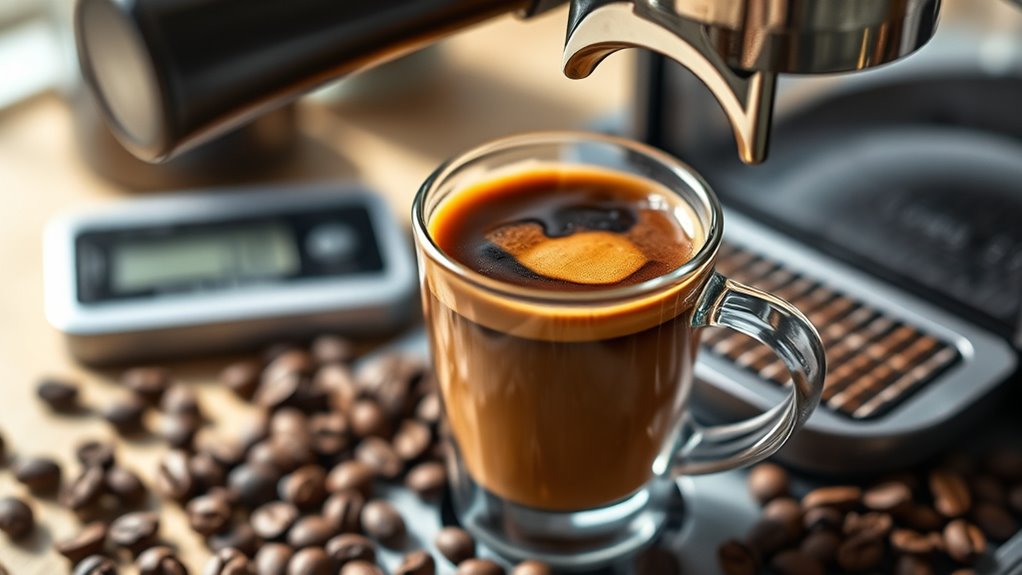
When you pull a shot of espresso, bitterness usually signals over-extraction. That means too many harsh compounds are leaching from the coffee grounds. This often happens if your extraction time goes over about 30 seconds, letting too many bitter elements dissolve.
Using brewing water hotter than 96°C also makes bitterness worse. Hotter water extracts unwanted compounds faster, which can ruin the flavor.
Brewing with water above 96°C speeds up extraction, pulling bitter, unwanted flavors into your espresso.
Plus, neglecting your equipment can make things worse. Dirty group heads, portafilters, or grinders introduce off-flavors that throw off the espresso’s balance.
Grind size does play a role, but the main things to watch for are prolonged extraction, high water temperatures, and poor equipment hygiene. If you keep these under control, you can avoid that sharp, unpleasant bitterness.
That way, you’ll enjoy a clean, rich espresso shot every time.
How Grind Size Affects Espresso Bitterness
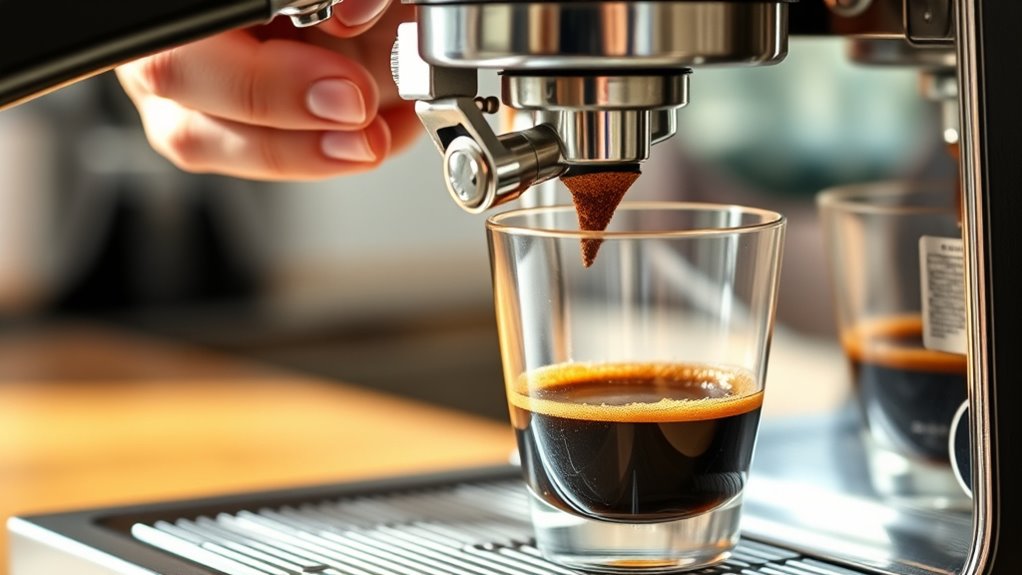
You’ll find that grind size plays a vital role in espresso bitterness. If your grind is too fine, you risk over-extraction, which brings out harsh, bitter flavors.
On the other hand, adjusting your grind to be a bit coarser can actually speed up extraction and help you avoid that unpleasant bite.
Mastering this balance lets you pull shots that bring out espresso’s rich, complex notes without any unwanted bitterness.
Regularly calibrating your grinder ensures consistent grind particle size and helps maintain the ideal extraction profile.
Grind Size Impact
Although espresso bitterness often traces back to several factors, grind size plays a critical role you can control directly. When your grind is too fine, it increases resistance during extraction, causing over-extraction. This releases excessive bitter compounds, making your espresso harsh and unpleasant.
Fine grinds dissolve faster and more completely, pushing bitterness to the forefront. Finding the sweet spot, typically a medium-fine grind, is essential. It balances extraction speed, flavor clarity, and bitterness, giving you a smooth, rich shot.
Even slight adjustments matter. A tiny shift toward finer grounds can quickly turn your espresso bitter. By mastering your grind size, you hold the key to managing bitterness right at the source.
This ensures every shot captures the full, harmonious flavor you crave without unwanted bitterness overpowering your brew. Adjusting grind size also helps maintain the recommended extraction time, which is critical for balanced flavor and bitterness control.
Adjusting For Bitterness
Since grind size directly controls extraction speed and resistance, adjusting it’s your most effective tool for managing espresso bitterness.
If your espresso tastes too bitter, it’s often a sign your grind is too fine. This causes over-extraction and prolongs shot time.
Here’s how to adjust: coarsen your grind slightly to reduce water resistance. This speeds up extraction and helps prevent bitterness.
Aim for a shot time between 20-30 seconds. This balance minimizes bitter compounds and preserves flavor clarity.
Also, keep an eye on your pour speed. If it’s too slow, your grind is likely too fine, which increases bitterness. Adjust accordingly to get the best taste.
Remember, consistent tamping pressure also influences flow rate and extraction balance, complementing grind size adjustments for optimal flavor. Tamping techniques
Why Extraction Time Matters for Espresso Flavor
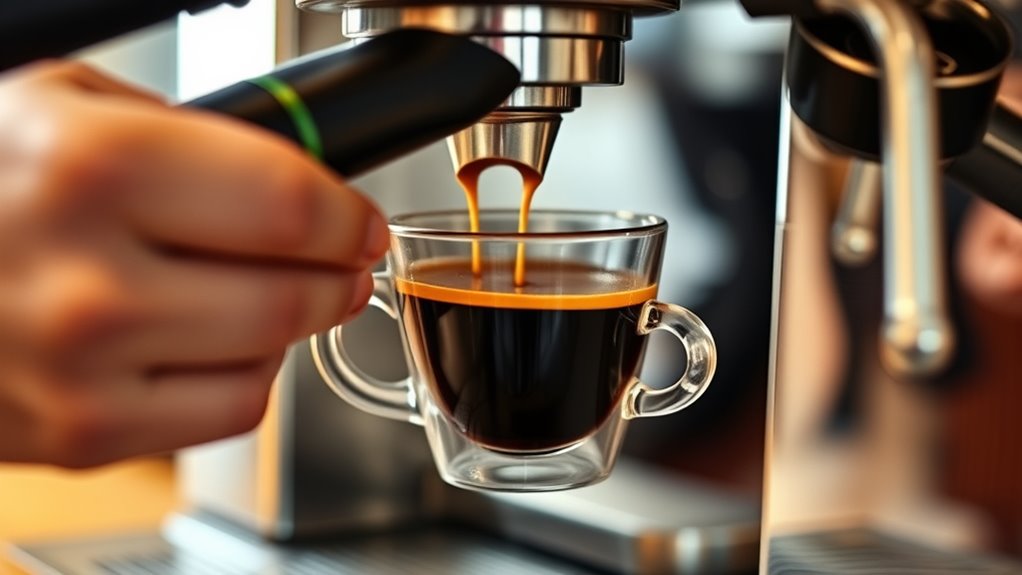
When you control extraction time carefully, you unleash the true potential of your espresso’s flavor. Extraction time directly shapes the balance between sweet, sour, and bitter notes. Aim for 25-30 seconds. That’s the sweet spot where your espresso delivers rich, full-bodied flavor.
If you go beyond 30 seconds, over-extraction kicks in, pulling out bitter, undesirable compounds that spoil your shot.
On the flip side, under-extracting by stopping before 20 seconds leaves your espresso sour and thin.
You can manage extraction time by adjusting grind size and tamping pressure. This helps you dial in a consistent shot every time.
Maintaining brew time within this range is essential to achieve the ideal espresso extraction ratio and flavor balance.
How Water Temperature Affects Espresso Bitterness
You want to keep your water temperature between 92°C and 96°C. That way, you avoid pulling too many bitter compounds from the coffee grounds.
If the water gets hotter than 96°C, it speeds up extraction and brings out those harsh, bitter flavors you definitely don’t want.
Maintaining temperature stability within this range is crucial because even minor fluctuations can significantly affect the flavor balance of your espresso.
Optimal Brewing Temperature
How does water temperature shape the bitterness of your espresso? Getting the temperature right is essential for controlling bitter flavors. Water hotter than 96°C (205°F) extracts more bitter compounds, overpowering your shot.
Keeping it between 92°C (198°F) and 96°C (205°F) helps maintain a balanced taste without harshness.
Here’s why optimal brewing temperature matters:
- Temperatures above 96°C speed up solubilization of bitter compounds, making your espresso taste sharp and unpleasant.
- Small temperature changes—even a few degrees—can drastically alter bitterness, so precision matters.
- Consistent temperature ensures quality extraction and prevents over-extraction that leads to bitterness.
Maintaining water temperature within this range also supports the development of crema, which contributes to the espresso’s rich texture and flavor.
Temperature Impact On Extraction
Although it might seem subtle, even slight shifts in water temperature dramatically impact espresso extraction, directly influencing bitterness. When your water temperature exceeds 96°C (205°F), you risk extracting excessive bitter compounds, including harsh tannins and phenols.
This over-extraction often leads to a burnt, unpleasant taste.
Keeping your brewing temperature between 92°C and 96°C is crucial to balance flavor extraction and avoid bitterness.
Consistency matters here. Fluctuations can throw off the delicate equilibrium, turning a smooth, rich espresso into a bitter, uneven shot.
By controlling temperature precisely, you guarantee the coffee grounds release their ideal flavors without the bitterness that ruins the experience.
Mastering temperature control is key to transforming your espresso from bitter to beautifully balanced.
Additionally, maintaining optimal machine pressure around 9 bars ensures balanced extraction that complements temperature control for the best espresso quality.
How Brew Ratio Shapes Espresso Bitterness
When you adjust the brew ratio, you directly influence the balance of flavors in your espresso, especially bitterness. If you use too much water relative to coffee, you risk over-extraction, which amps up bitter notes.
To keep bitterness in check, aim for a water-to-coffee ratio around 1:2. Here’s what you should focus on:
- Use a higher coffee dose with less water (e.g., 18g in, 36g out) to encourage balanced extraction.
- Keep extraction time between 20-30 seconds to minimize bitter compounds.
- Avoid overly long extractions (above 30 seconds), since they often cause excessive bitterness.
Mastering your brew ratio helps you pull shots that are balanced and smooth. It’s the key to avoiding harsh bitterness that can spoil espresso’s complex flavor. Understanding the extraction process is essential to managing flavor intensity and bitterness effectively.
Why Dirty Equipment Makes Espresso Bitter
If you want to avoid bitter espresso, you have to keep your equipment spotless. Residual coffee oils and mineral deposits build up on shower screens, portafilters, and brew baskets. This causes uneven extraction and channeling.
That leads to over-extraction of bitter compounds, harsh flavors, and an inconsistent shot. When old oils turn rancid, they taint your espresso with unpleasant bitterness. No amount of fresh coffee can mask that.
Regular backflushing with a dedicated cleaner like Cafiza removes these residues. It helps your machine function properly and delivers balanced flavors.
Neglecting cleaning only increases mineral buildup and rancid oils. Both of those are culprits in bitter espresso. Proper maintenance also preserves the crema quality that contributes to a smooth and balanced espresso experience.
How Roast Level Changes Espresso Bitterness
Because roast level profoundly influences espresso’s flavor, understanding its impact on bitterness is essential for crafting your perfect shot. When you choose your roast, remember these key points:
Darker roasts create more bitter compounds through extensive roasting. This results in a smoky, burnt taste that some people love but others might find overpowering.
Light roasts retain the beans’ natural acidity and fruity notes. This offers a brighter, less bitter espresso that highlights the original flavors of the bean.
The roasting process breaks down sugars and acids differently. Darker roasts convert sugars into bitter-tasting compounds, which intensifies the bitterness you taste in the cup.
Additionally, darker roasts develop oily surfaces that contribute to a fuller body and richer mouthfeel, which can balance out some of the bitterness.
How Water Quality Impacts Espresso Flavor
Although many focus on beans and roast, the quality of water you use plays a crucial role in shaping espresso’s flavor profile.
Hard water, rich in minerals like calcium, can extract excessive bitter compounds, making your espresso harsh and unpleasant. To avoid this, use filtered or softened water that maintains mineral hardness around 5° dH. This balance ensures ideal extraction without bitterness.
Hard water with high minerals extracts bitterness; use filtered water at 5° dH for smooth, balanced espresso.
Overly mineralized water causes over-extraction, amplifying unwanted bitterness and masking the espresso’s nuanced flavors. Regularly changing your water filters and testing your water quality are essential steps you shouldn’t overlook.
By controlling mineral content precisely, you prevent bitterness caused by water issues and allow your espresso’s true character to shine through.
This way, you get a balanced, flavorful shot every time. It really makes a difference, so paying attention to your water quality is just as important as picking the right beans.
How Bean Defects Cause Bitter Espresso
You’ll notice that defective beans really mess with your espresso’s bitterness by bringing in off-flavors and causing uneven roasting. So, sorting and grading your beans carefully is key—it helps you catch and remove those flaws before they even get to your grinder.
When you pick high-quality, defect-free beans and handle them the right way, you can seriously cut down on bitterness and make your espresso taste way better.
Defective Beans Impact
How do defective beans influence the bitterness of your espresso? Defective beans introduce unwanted flavors that directly affect your espresso’s taste profile. When you use beans with mold, insect damage, or inconsistent ripening, they release bitter and off-flavors during extraction.
Here are three key ways defective beans impact bitterness:
- Unripe or green beans produce harsh, astringent bitterness because their compounds aren’t fully developed.
- Rancid or old beans develop stale, bitter notes as oxidation breaks down their oils.
- Foreign objects or uneven roasting from defective beans cause flavor inconsistencies, intensifying bitterness.
Sorting And Grading
When defective beans slip through poor sorting and grading processes, they introduce bitter flavors that can ruin your espresso. Black, broken, or insect-damaged beans contain compounds that, once roasted, amplify bitterness and off-flavors in your cup.
If rancid or moldy beans aren’t removed due to inadequate grading, they further taint the espresso with unpleasant, harsh notes.
Your espresso’s quality depends heavily on how meticulously the batch is sorted before roasting. High-quality grading eliminates these defective beans, ensuring only healthy, uniform beans make it into your grinder.
This careful selection reduces bitterness and delivers a cleaner, more balanced extraction.
Mitigating Defect Bitterness
Although bean defects can considerably affect your espresso’s flavor, you can reduce bitterness by carefully managing the quality of your green beans before roasting. Defects like mold, insect damage, or fermentation issues introduce bitter compounds that throw off your espresso’s balance.
To prevent this, focus on thoroughly inspecting and grading beans to remove those with visible damage or uneven moisture. Also, sort out broken or internally defective beans since they release bitter compounds during extraction.
Make sure you maintain consistent bean quality. This helps promote even roasting and uniform extraction, which ultimately cuts down on bitterness.
Taking these steps will really improve the taste of your espresso.
How to Fix Bitter Espresso Shots
If your espresso shots taste bitter, adjusting the grind size to be coarser can considerably reduce over-extraction and harsh flavors. Next, aim for an extraction time between 20 to 30 seconds. Longer pulls often bring out unwanted bitterness.
Keep your water temperature steady around 92-96°C (198-205°F) to avoid scorching the coffee grounds. Use a calibrated tamper to apply roughly 30 pounds of even pressure, ensuring consistent extraction and preventing channeling.
Don’t overlook equipment cleanliness. Regularly cleaning your grinder, portafilter, and machine helps avoid flavor contamination that contributes to bitterness.
Frequently Asked Questions
Can Adding Milk Reduce Espresso Bitterness?
Yes, adding milk reduces espresso bitterness by binding bitter compounds with its proteins and fats while introducing natural sweetness.
You’ll notice a smoother, more balanced flavor, especially if you use warm milk to enhance sweetness further. It really softens the edge of the espresso.
Does Espresso Bitterness Vary by Coffee Origin?
Yes, espresso bitterness varies by coffee origin. You’ll notice Indonesian or South American beans often taste more bitter.
On the other hand, East African coffees bring brighter, fruitier notes with less bitterness. This lets you tailor your espresso’s flavor precisely.
How Does Espresso Bitterness Affect Caffeine Content?
Espresso bitterness doesn’t increase caffeine content. You’ll find caffeine dissolves early, so over-extracted, bitter shots may taste stronger but don’t contain more caffeine.
Focus on dose and bean type to control caffeine levels accurately. That’s really the key to getting the caffeine amount you want. So don’t let bitterness fool you!
Is Bitterness in Espresso the Same as Acidity?
Bitterness and acidity in espresso aren’t twins. Bitterness hits like a harsh shadow, while acidity dances like bright sunlight.
You’ll find bitterness dulls your palate. Acidity sparks lively, fruity notes. Each plays a distinct role in flavor harmony.
Can Espresso Bitterness Change After Brewing?
Yes, espresso bitterness can change after brewing. If you leave it on heat or let it sit, over-extraction and oxidation intensify bitterness.
Reheating also breaks down compounds, making your espresso taste more bitter over time. So, it’s best to enjoy it fresh for the best flavor.
Conclusion
Now that you know why espresso turns bitter, from grind size to water quality, you’re ready to craft that perfect shot. Don’t let bitterness ruin your morning ritual like a dial phone in a smartphone era.
Adjust your grind, watch extraction time, and choose the right roast to reveal espresso’s true flavor. With attention to detail and a little practice, you’ll savor every sip.
You’ll be turning bitter into brilliance every single time.