Yes, a latte is built on espresso, combining one or two intense shots with steamed milk to create a creamy, mild coffee experience. You get the bold, rich flavor of espresso softened by about two-thirds steamed milk, topped with a thin layer of foam for smooth texture.
While the caffeine mainly comes from the espresso shots, milk balances the taste and body. If you want to understand how milk, caffeine, and preparation shape your latte, keep exploring further.
What Is a Latte? Understanding Its Composition and Flavor
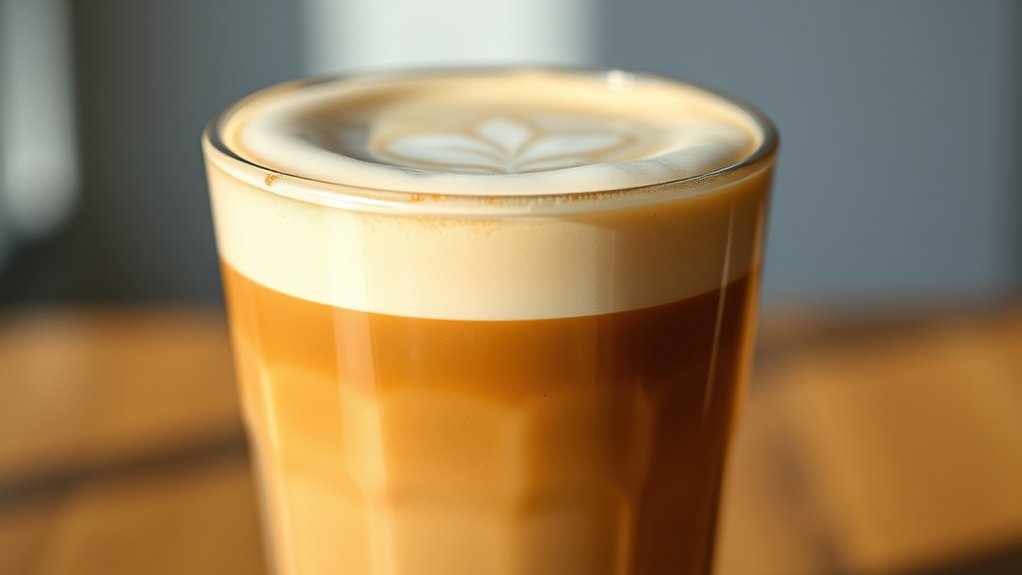
What makes a latte stand out in the coffee world? It’s the unique blend of espresso and steamed milk that creates a creamy, mild flavor you can’t miss. When you order a latte, you’re getting one or two shots of espresso combined with about two-thirds steamed milk, topped with a thin layer of milk foam.
This ratio softens the intensity of espresso, giving you a smooth, milky drink with subtle coffee notes. Despite the large milk content, a latte still packs around 63 mg of caffeine per espresso shot, making it milder than black coffee of the same size. The espresso in a latte is brewed under high pressure, which enhances its rich aroma and flavor before being combined with milk.
What Is Espresso? How It’s Made and Why It Matters
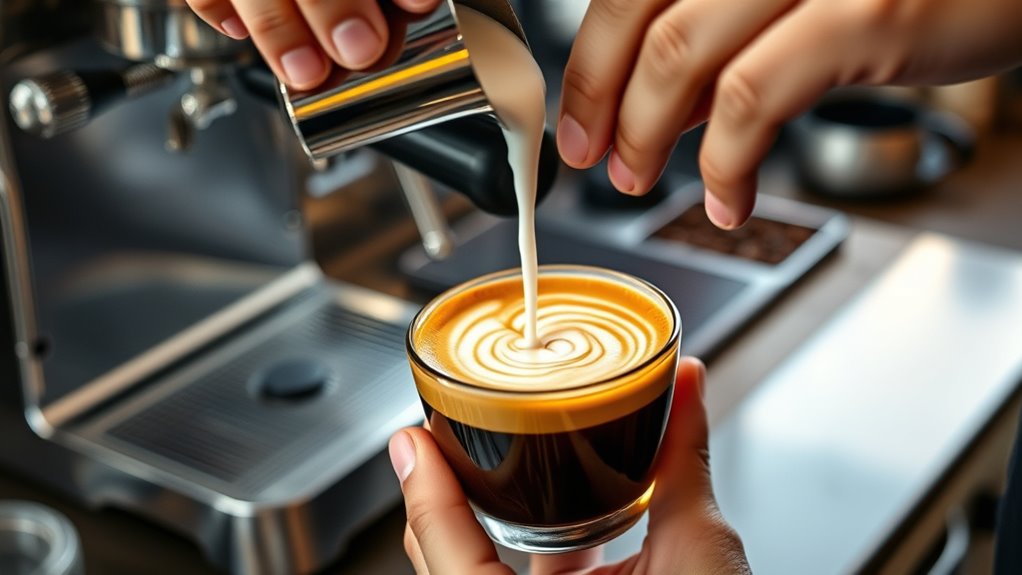
Since espresso forms the foundation of many beloved coffee drinks, understanding how it’s made is vital for appreciating its unique qualities. Espresso is a concentrated coffee brewed by forcing hot water under high pressure through finely-ground beans.
This quick 25-30 second extraction pulls oils, solids, and flavors, creating a rich, full-bodied shot topped with a creamy layer called crema.
You’ll find about 63 mg of caffeine in a standard shot. The quality hinges on precise control of grind size, water temperature, pressure, and extraction time.
Each element influences the final flavor and texture.
Knowing this process helps you grasp why espresso delivers such an intense, complex taste. It sets espresso apart from other brewing methods and makes it a key component in many coffee beverages. The caffeine content in espresso can vary depending on factors like bean type and roast level, affecting both its strength and flavor.
How Espresso Forms the Base of Every Latte
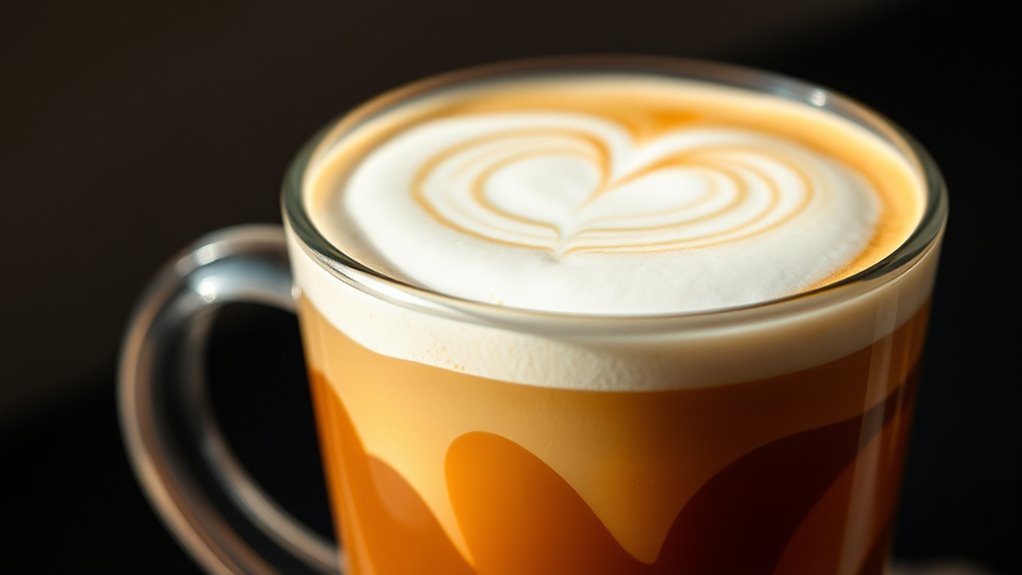
How does espresso shape the character of every latte you enjoy? It forms the essential base by providing a concentrated, rich coffee flavor that defines the drink. When hot water is forced under high pressure through finely ground coffee, it extracts oils and solids that create espresso’s intense taste and fuller body.
This process yields a thicker, more robust coffee base than drip coffee, which directly influences your latte’s flavor profile. The strength and quality of the espresso shot determine how well the coffee’s aroma and taste carry through the milk, giving each latte its distinctive richness and balance. The roast level and grind size of the espresso beans play a crucial role in shaping the final flavor and crema of the latte.
Key Differences Between Espresso, Latte, and Black Coffee
While espresso, latte, and black coffee all start with coffee grounds, they differ quite a bit in brewing methods, composition, and flavor profiles. Espresso is a concentrated shot brewed under high pressure, delivering an intense, full-bodied taste.
A latte combines this espresso base with steamed milk, creating a creamier, milder drink. Black coffee is brewed by water filtering through grounds without milk or pressure, offering a straightforward, robust flavor.
Consider these key differences:
Espresso’s rich, bold intensity contrasts with black coffee’s lighter, more diluted strength. The creamy texture of a latte softens espresso’s intensity, making it more approachable.
Caffeine levels vary too: espresso packs a punch per ounce, while black coffee provides more caffeine in a larger volume.
Understanding these distinctions helps you pick the perfect coffee to suit your mood and taste. Mastery of espresso extraction ratios allows baristas to tailor the strength and flavor of espresso to different preferences.
How Milk Changes the Flavor and Texture of Espresso and Latte
When you add milk to espresso, it softens the bold flavors and creates a creamier, smoother texture. The proteins in milk interact with the espresso’s acids and oils, which helps reduce bitterness and makes the overall taste more balanced. Pouring milk gently over a shaken espresso mixture also helps preserve the frothy texture and enhances the drink’s velvety finish, a technique often used in making brown sugar shaken espresso.
Milk’s Impact On Flavor
Why does adding milk transform your espresso into a latte with a completely different flavor experience? When you add milk, it softens the sharp, intense notes of espresso, making the taste smoother and creamier. Milk’s proteins bind to espresso’s oils and acids, cutting down bitterness and acidity, while diluting the strength and intensity of the coffee.
The temperature of steamed milk, typically 140–155°F, also plays an essential role in blending flavors harmoniously.
When you savor a latte, you’ll notice a balanced, mellow flavor that soothes rather than jolts. There’s a gentle sweetness that naturally emerges from milk’s interaction with espresso. Plus, an inviting creaminess makes each sip comforting and satisfying.
Milk doesn’t just change texture. It reshapes your entire flavor experience.
Additionally, since a double shot of espresso contains a concentrated caffeine content ranging from 70 to 120 mg, adding milk helps moderate the intensity of both flavor and caffeine impact in a latte.
Texture Differences Explained
Milk doesn’t just soften the flavor of espresso, it completely transforms its texture and shapes your entire drinking experience. When you sip a latte, the creamy, smooth milk cushions espresso’s boldness, making it gentler.
In contrast, the microfoam in a flat white gives a velvety richness that feels lush without overpowering. Cappuccinos surprise you with airy, frothy foam, creating a light contrast to the denser microfoam of lattes. Plus, steamed milk warms and thickens the texture more than frothed milk does.
Here’s how these textures can affect what you feel:
| Drink | Texture Feel |
|---|---|
| Espresso | Intense, concentrated |
| Latte | Creamy, smooth |
| Flat White | Velvety, rich |
| Cappuccino | Frothy, airy |
| Milk Type | Steamed = Creamier |
Additionally, understanding the caffeine content in espresso can help you better manage your intake depending on your preference for milk-based drinks.
How Much Caffeine Is in a Latte vs. Espresso?
You might think a latte always has more caffeine than an espresso, but it really depends on how many shots you get. A single shot has about 63 mg of caffeine, whether it’s just straight espresso or mixed into your latte.
If you go for a double shot, you’re basically doubling that amount.
Also, keep in mind that an 8 oz black coffee often has more caffeine than a standard single-shot latte.
A doppio espresso contains roughly 150 mg of caffeine, making it a potent caffeine source.
Caffeine Content Comparison
Although a latte contains more liquid overall, its caffeine content depends almost entirely on the number of espresso shots it includes. A single shot of espresso packs about 63 mg of caffeine, which means your 8 oz latte with one shot has less caffeine than a standard 8 oz black drip coffee. The black drip usually contains around 95 mg.
If you double up the shots in your latte, the caffeine content jumps to roughly 126 mg, surpassing regular black coffee.
Consider these points when choosing your caffeine fix:
- One shot in a latte offers a gentler caffeine boost than black coffee.
- Double shots give you the strong kick espresso lovers crave.
- The milk volume won’t affect caffeine, so focus on shot count.
Basically, your caffeine buzz hinges on shots, not size. To ensure the best flavor and machine performance for your espresso shots, regular cleaning and maintenance of your espresso machine is essential.
Shot Size Impact
Caffeine content in your latte depends heavily on the number of espresso shots it contains, so understanding shot size is key when comparing it to a straight espresso. A single espresso shot delivers about 63 mg of caffeine, no matter the cup size.
Most lattes, even large ones, usually have one or two shots, so their caffeine often falls below that of an 8 oz black coffee, which averages 95 mg.
For example, a 16 oz latte with one shot still contains roughly 63 mg caffeine.
However, if you add a double shot, caffeine climbs to about 126 mg, surpassing standard black coffee.
Proper preparation, including measuring about 2 tablespoons of coffee per shot, ensures consistent caffeine content and flavor.
Latte Versus Black Coffee
When comparing your latte to a cup of black coffee, it’s important to focus on the caffeine content rather than just the drink size.
A single espresso shot packs about 63 mg of caffeine, while an 8 oz black coffee delivers roughly 95 mg, making black coffee stronger in caffeine by volume.
However, your latte’s caffeine depends on how many espresso shots it contains, not its overall size. A standard 16 oz latte with one shot often has less caffeine than black coffee, but larger lattes with multiple shots can surpass it.
Consider this: Espresso offers a concentrated caffeine punch per ounce. Black coffee generally contains more caffeine per serving.
Your latte’s caffeine can vary markedly depending on shots.
Understanding this helps you choose your perfect caffeine boost.
Frequently Asked Questions
Can I Make a Latte Without an Espresso Machine?
Yes, you can make a latte without an espresso machine by using strong brewed coffee or concentrated coffee from an AeroPress or moka pot.
Just heat and froth your milk well to get that creamy latte texture. It’s easier than you might think!
Give it a try, and enjoy your homemade latte.
What Types of Milk Can Be Used in a Latte?
Think of milk as the paintbrush for your latte canvas. You can use dairy, almond, soy, oat, or coconut milk. Each type offers a unique flavor and froth.
How Do Latte Art Designs Affect the Drink?
Latte art designs enhance your drink’s visual appeal, making it more inviting and enjoyable. They showcase the barista’s skill and influence your perception of quality.
Plus, they can even encourage slower sipping for a richer, more mindful tasting experience. It’s like the art invites you to pause and appreciate every sip.
Are Lattes Traditionally Served Hot or Iced?
Lattes are traditionally served hot, with steamed milk creating a creamy texture that really brings out the espresso’s flavor.
You’ll find iced lattes popular too, especially when the weather’s warm. They offer a refreshing, cold alternative made with chilled espresso and milk.
Both versions are great, depending on what you’re in the mood for!
Can Lattes Be Flavored With Syrups or Spices?
Of course, you wouldn’t want a latte without syrups or spices. Vanilla, caramel, cinnamon, or nutmeg add flavor without changing its espresso-milk balance.
You can easily customize your latte to fit your unique taste perfectly. It’s all about making it just right for you. Give it a try and see what you like best!
Conclusion
You might think a latte and an espresso are worlds apart, but they’re actually two sides of the same coin. Espresso’s bold, intense shot becomes smooth and creamy once milk joins the mix, transforming your experience.
Understanding this contrast helps you appreciate how a simple addition changes flavor, texture, and caffeine impact. So next time you order, remember your latte is espresso’s softer, milder alter ego, crafted just for you.