A shaken espresso contains about 63 mg of caffeine per espresso shot, and the total caffeine scales up with the number of shots you use. For example, a Starbucks grande with two shots has roughly 126 mg, while larger sizes like Venti include more shots and more caffeine.
Adding milk or sweeteners won’t change the caffeine amount much, since it depends mainly on the espresso shots. Keep in mind how shot count and bean type can affect your caffeine. There’s more to explore on customizing your drink and managing intake.
What Is a Shaken Espresso and Its Caffeine Content
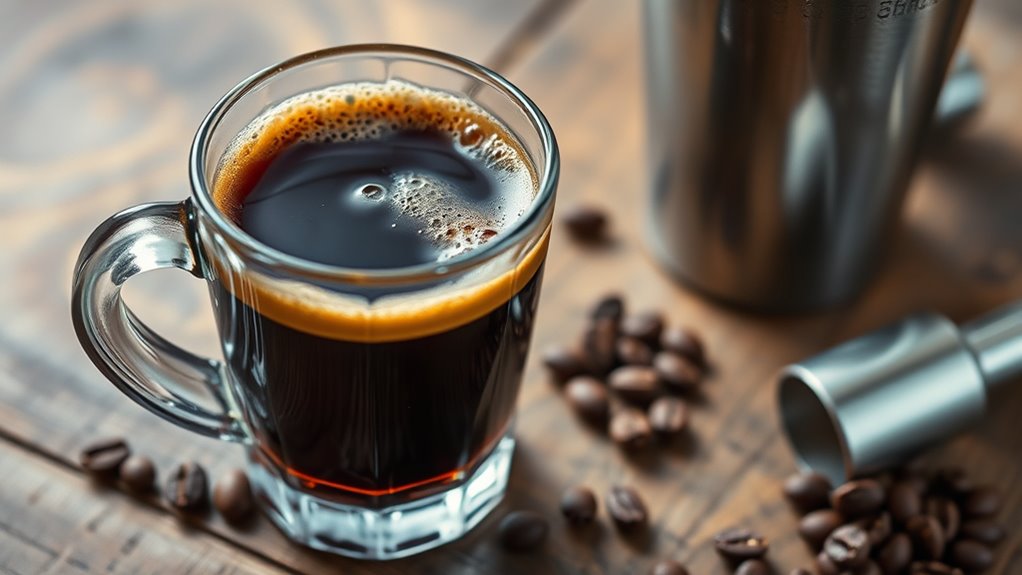
What makes a shaken espresso unique is how it’s prepared: hot espresso is vigorously shaken with ice to create a frothy, chilled coffee drink.
When it comes to caffeine content, the number of espresso shots you use is the key factor. Each shot typically contains about 63 mg of caffeine, and shaking it with ice doesn’t markedly reduce that amount.
So, the caffeine level stays nearly the same as the espresso shots themselves. For example, a standard grande shaken espresso from Starbucks, which has two shots, packs roughly 126 mg of caffeine.
While the caffeine content can vary depending on the espresso type and quantity, a shaken espresso generally gives you a strong caffeine boost, comparable to other espresso-based beverages.
The caffeine content can also be influenced by factors such as bean type, grind size, and extraction time, which affect the final caffeine yield.
How Coffee Beans and Roasting Affect Caffeine Levels
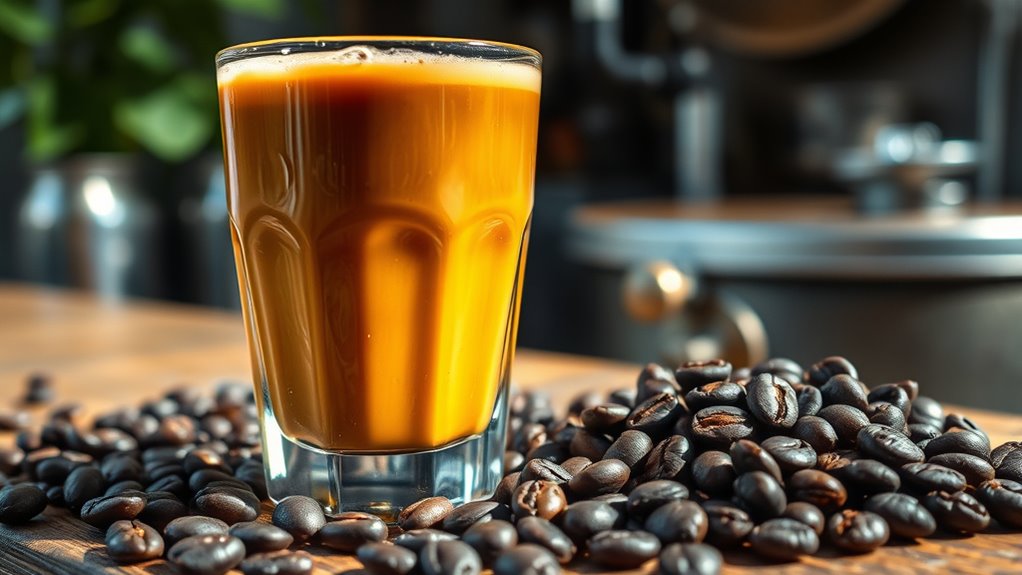
Although the caffeine content in your shaken espresso largely depends on the number of espresso shots, the type of coffee beans and their roast level also play crucial roles. Arabica beans generally contain less caffeine than Robusta beans, so choosing your bean type directly impacts caffeine levels.
Caffeine in your shaken espresso varies with shot count, bean type, and roast level.
When it comes to roasting, lighter roasts tend to have slightly more caffeine because caffeine diminishes a bit during roasting. However, the difference isn’t huge since caffeine is relatively stable chemically.
Keep in mind that grind size and the amount of coffee used affect how efficiently caffeine is extracted during brewing.
Ultimately, the beans’ origin and roast level set the caffeine baseline before your espresso is even prepared. The extraction process can further influence the strength and flavor intensity of the final espresso shot.
How Espresso Shots and Serving Size Change Caffeine Amount
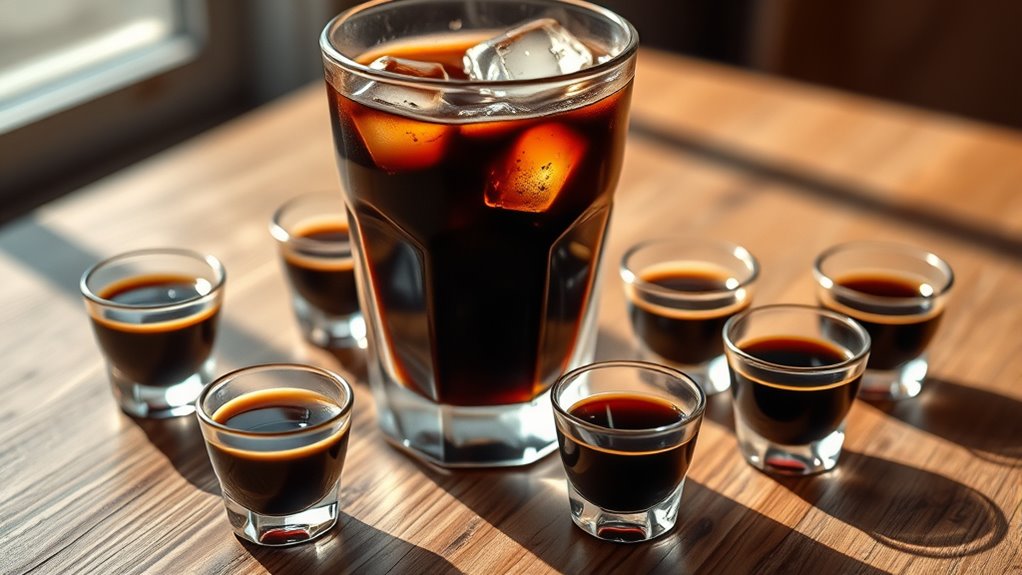
You’ll notice that the caffeine content in a shaken espresso really depends on how many espresso shots it has. Each shot adds about 63 mg of caffeine.
So, if you go for a larger serving with more shots, it’s only natural that the caffeine level will be higher.
Knowing how the serving size and shot count change the caffeine concentration can help you pick just the right amount for what you need.
Extraction time and grind size play a crucial role in the consistency of caffeine and flavor in each shot.
Espresso Shots Impact
Since caffeine content hinges on the number of espresso shots, each shot contributes about 63 mg of caffeine to your shaken espresso. As you add more shots, the caffeine amount increases proportionally, making shot count the key factor in caffeine levels. Serving size alone doesn’t alter caffeine if the shot number stays constant.
Here’s a quick look:
| Number of Shots | Caffeine per Shot (mg) | Total Caffeine (mg) |
|---|---|---|
| 1 | 63 | 63 |
| 2 | 63 | 126 |
| 3 | 63 | 189 |
For example, a Starbucks grande with two shots has about 126 mg, while a venti with three shots contains roughly 189 mg. This linear scaling shows how you can control caffeine intake by adjusting espresso shots. Adjusting the grind size can also impact extraction efficiency, subtly influencing the caffeine content per shot.
Serving Size Variations
Understanding how serving size impacts caffeine in a shaken espresso starts with recognizing how espresso shots factor into the equation. Each shot contains a set amount of caffeine, about 63 mg for a single and 126 mg for a double.
When you choose a larger serving size like a Venti at Starbucks, you’re often getting more espresso shots, which raises the total caffeine content. It’s important to note that the caffeine increase is proportional to the number of shots, not just the volume of the drink.
Even if the serving size remains the same, adding or reducing espresso shots changes the caffeine level considerably. Regular maintenance such as descaling espresso machines ensures consistent extraction and caffeine content in every shot.
Caffeine Concentration Levels
Although the caffeine concentration in each espresso shot stays fairly consistent at about 63 mg, your total caffeine intake rises as you add more shots to your shaken espresso. Each additional shot directly increases the caffeine content.
For instance, a grande (16 oz) with two shots delivers around 126 mg, while a Venti (20 oz) with three shots contains roughly 189 mg.
Variations in brewing method, bean type, and roast level can slightly affect caffeine levels, but these differences are minor compared to the impact of shot quantity.
So, when you opt for a larger serving size with more shots, you’re substantially increasing your caffeine consumption.
Understanding this helps you make informed choices about how much caffeine you’re getting in your shaken espresso. It’s all about knowing what’s in your cup and how it adds up.
Because espresso extraction is done under high pressure, it enhances the concentration and richness of the caffeine in each shot.
Does Adding Sweeteners or Milk Affect Caffeine?
Even if you add sweeteners or milk to your shaken espresso, the caffeine content stays largely the same. Caffeine depends primarily on the number and strength of espresso shots used, not on what you add afterward.
Whether you include sugar, flavored syrups, or milk, these ingredients don’t change the actual caffeine amount.
Milk or cream might slightly dilute the coffee’s flavor, but they don’t reduce caffeine concentration per ounce. Sweeteners and milk are there to enhance taste and texture, not caffeine levels.
The caffeine content can vary based on the bean type and roast level used in the espresso shots.
Comparing Starbucks Shaken Espresso Caffeine by Size
When you order a Starbucks shaken espresso, the caffeine content varies mainly based on the size you choose. A tall size contains about 150 mg of caffeine, while a grande offers around 225 mg. If you go for a venti, expect roughly 300 mg of caffeine.
This increase directly relates to the number of espresso shots: typically two shots in a grande and three in a venti.
Although factors like espresso bean type and brewing methods can cause slight variations, size remains the key determinant.
For context, a standard grande shaken espresso’s caffeine is roughly equivalent to a double shot of espresso’s 126 mg.
Larger sizes are designed to hold more espresso shots, so you get a stronger caffeine kick with each increase in size.
Consuming multiple shots in a short period can approach the recommended daily caffeine limit, so moderation is important.
Tips for Managing Your Caffeine Intake With Shaken Espresso
Since caffeine affects everyone differently, managing your intake with a shaken espresso is important to avoid overconsumption.
A standard shaken espresso with two shots contains about 126 mg of caffeine, so you can adjust the number of shots to control how much caffeine you consume.
If you want less caffeine, try a single shot or dilute your espresso with more milk or water.
Keep in mind that a Starbucks grande shaken espresso has roughly 225 mg of caffeine, which might be too much if you’re sensitive.
Using decaffeinated espresso shots is another effective way to enjoy the drink with minimal caffeine.
Always monitor your total daily caffeine intake from all sources to prevent potential health issues related to excessive caffeine consumption.
Remember that most adults have a safe daily caffeine limit of up to 400 mg, which is roughly equivalent to 6-7 shots of espresso.
How to Make a Shaken Espresso at Home (Optional Bonus)
Although making a shaken espresso at home might seem complex, you can easily brew a strong shot using a portable espresso maker or another method. Once you have your espresso ready, the shaking process is key to achieving that invigorating, frothy texture.
Follow these steps to make a shaken espresso at home:
- Brew a hot, strong shot of espresso with your preferred method.
- Pour the espresso into a shaker or jar with ice and optional sweeteners like brown sugar syrup. Shake vigorously until well chilled and frothy.
- Strain the mixture over fresh ice in a glass, then add milk or a milk alternative if you like.
Using a tight lid ensures proper mixing and creates the creamy foam characteristic of a shaken espresso. Give it a good shake, and you’re all set!
Frequently Asked Questions
Can I Drink a Shaken Espresso While Pregnant?
You can drink a shaken espresso while pregnant, but you should limit caffeine to 200 mg daily. Since a shaken espresso has about 126 mg, check your total intake and talk with your healthcare provider first.
It’s a good idea to keep an eye on how much caffeine you’re getting from all sources. That way, you can enjoy your coffee without worrying too much. Just remember, when in doubt, your healthcare provider is the best person to ask.
How Long Does Caffeine From a Shaken Espresso Stay in Your System?
Caffeine from a shaken espresso lingers like a shadow, staying in your system for about 3 to 7 hours. Its effects usually fade within 4 to 6 hours, but traces might stick around longer depending on your metabolism.
Everyone’s body handles caffeine a bit differently, so you might feel the buzz for a shorter or longer time. It’s pretty normal for some traces to hang out in your system even after you stop feeling the main effects. Just something to keep in mind if you’re sensitive to caffeine or trying to cut back.
Does Shaking Espresso Change Its Antioxidant Properties?
No, shaking espresso doesn’t change its antioxidant properties. You’ll find antioxidants remain stable despite agitation, with factors like bean type and roast level affecting them more.
Are There Any Health Risks of Drinking Shaken Espresso Daily?
You might feel jittery or restless after drinking shaken espresso every day. Too much caffeine can raise your heart rate and cause insomnia.
It can also lead to dependence, which isn’t great. So, it’s smart to keep an eye on how much you’re having.
If you’re worried or notice any health issues, it’s a good idea to chat with your doctor.
Can a Shaken Espresso Replace My Morning Coffee Routine?
Yes, a shaken espresso can replace your morning coffee routine. It delivers a concentrated caffeine boost similar to brewed coffee but in a smaller volume. This makes it an effective and invigorating alternative to jump-start your day.
If you’re looking for something quick and strong, this might be just the thing. Plus, it’s easy to customize with flavors or milk if you want to mix things up. Give it a try and see how it fits your morning vibe!
Conclusion
You might be surprised to find that your favorite shaken espresso packs a caffeine punch similar to other espresso drinks, depending on size and beans used.
Coincidentally, adding milk or sweeteners doesn’t change the caffeine much, so you can enjoy your drink just the way you like. Knowing these details helps you manage your intake smartly.
So next time you order or make one at home, you’ll sip with confidence and control.