To fix bitter espresso, start by coarsening your grind slightly and using fresh beans roasted within the last 2-4 weeks. Measure 16-18 grams per shot for the best results. Tamp evenly with about 30 pounds of pressure and aim for a shot time between 25-30 seconds.
Lower your water temperature to 92-95°C, and clean your machine and grinder regularly to prevent off-flavors. These quick adjustments can balance bitterness and improve taste. You can explore how to refine each step even further.
Adjust Grind Size to Fix Bitter Espresso
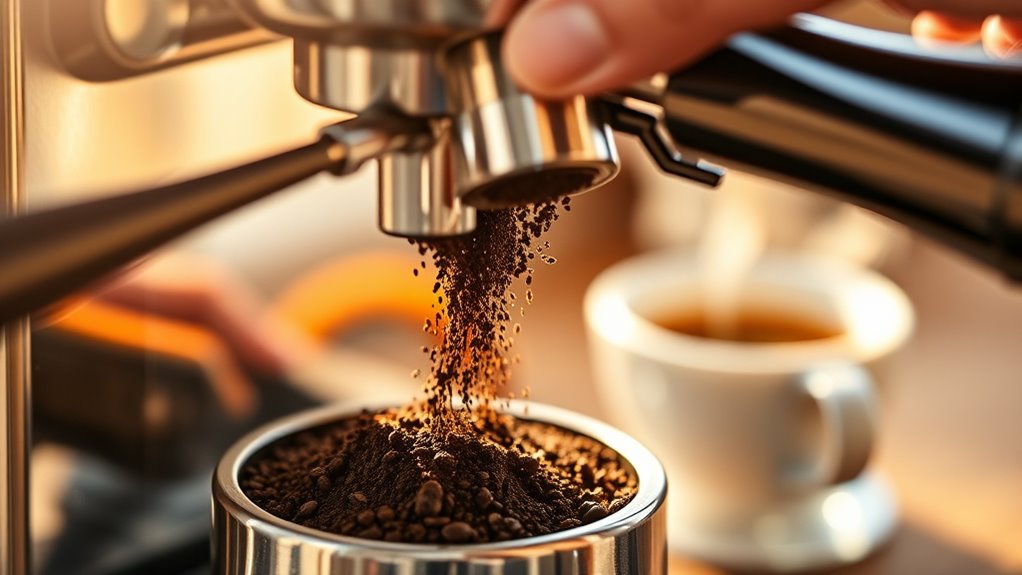
Although it might seem minor, adjusting your grind size plays a crucial role in fixing a bitter espresso. When your grind is too fine, water extracts compounds too quickly, releasing bitter flavors.
By coarsening the grind slightly, you allow water to flow more freely, reducing over-extraction and bitterness.
Aim for an extraction time between 20 to 30 seconds for a balanced shot. A properly calibrated grind size ensures consistent puck resistance, preventing excessive pressure buildup that intensifies bitterness.
To get it right, regularly tweak your grind based on shot timing and taste feedback.
This practical, precise adjustment helps you dial in a smoother, less bitter espresso without changing other variables.
Just keep tasting and adjusting until it feels just right!
Remember, maintaining a consistent, uniform particle size is key to preventing channeling and achieving even extraction for better flavor.
Use Fresh Beans and Correct Dose to Avoid Bitterness
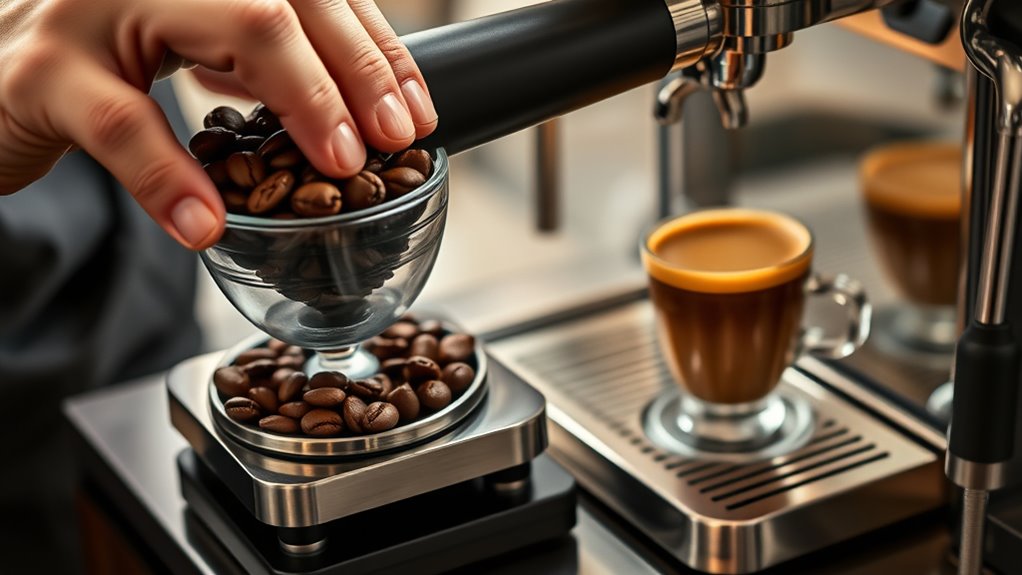
Since bitterness often comes from over-extraction, it’s really important to use fresh beans roasted within the last 2 to 4 weeks. Fresh beans keep their aromatic oils and balanced flavors, which helps avoid that harsh bitterness you get from stale or oxidized coffee.
You should also measure your coffee dose precisely. Usually, 16 to 18 grams for a double shot works best to get the ideal extraction. If you use too much coffee, it restricts water flow, which makes the extraction take longer and taste bitter.
On the other hand, using too little coffee results in a weak, under-extracted shot.
Picking high-quality, specialty beans with balanced roast profiles can also help cut down on those harsh notes. When you combine fresh beans with the right dose, you get much better control over extraction.
This way, your espresso comes out smoother and less bitter every time.
Additionally, maintaining a consistent grind size is crucial because it affects shot timing, flavor, and crema quality, helping to prevent bitterness.
Tamp Evenly for a Better Shot
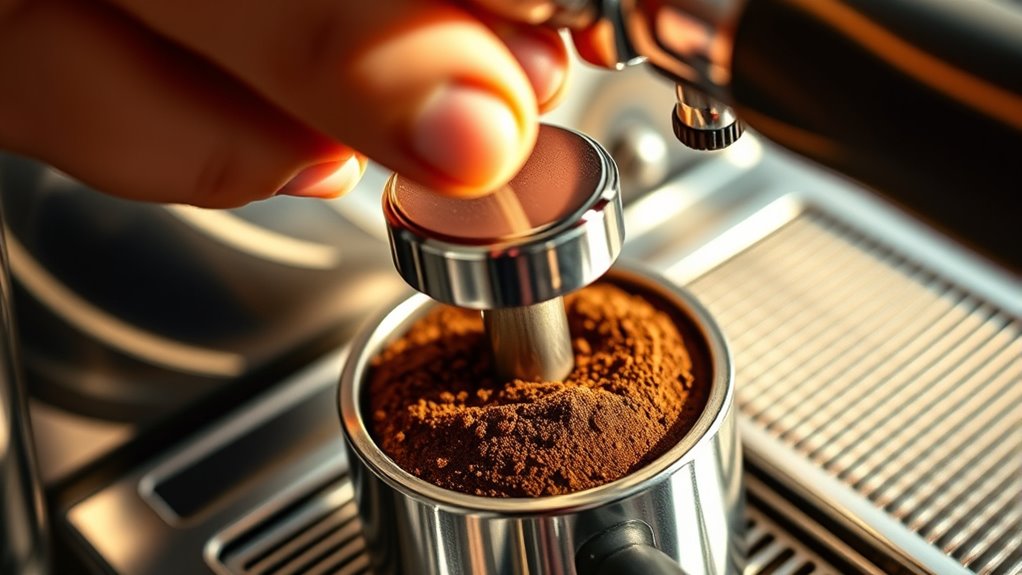
When you tamp evenly with about 30 pounds of pressure, you create a uniform coffee bed that promotes consistent water flow through the grounds.
Before tamping, make sure to evenly distribute your coffee grounds in the portafilter to prevent channeling. Channeling causes uneven extraction and bitterness, so it’s something you want to avoid.
Evenly distribute coffee grounds before tamping to prevent channeling and avoid bitter, uneven extraction.
Using a calibrated tamper helps you keep consistent pressure shot after shot, which means more reliable results.
Apply firm, level pressure to compress the grounds uniformly. This reduces over-extraction in some areas and under-extraction in others.
A level tamp minimizes the risk of bitter flavors by enabling balanced extraction and stable shot timing.
When you master even tamping, you set a solid foundation for a smooth, well-balanced espresso. This way, you avoid harsh bitterness and enhance the overall flavor and shot quality.
Regular practice with a scale helps improve consistency and reproducibility of tamping pressure.
Keep Bitter Espresso Shot Time Between 25 and 30 Seconds
You want to keep your espresso shot time between 25 and 30 seconds to avoid over-extraction because that’s what causes bitterness.
If your shots run longer than 30 seconds, try adjusting your grind to a slightly coarser setting.
Using a timer is a great way to consistently hit this ideal extraction window. That way, you get a balanced, smooth flavor every time.
Achieving this requires a fine, consistent grind to ensure even water flow and proper extraction.
Ideal Extraction Duration
Although dialing in your espresso shot involves several variables, keeping the extraction time between 25 and 30 seconds is essential to avoid bitterness. This window guarantees you extract the right balance of flavors without pulling harsh, burnt compounds that appear after 30 seconds.
If your shot runs shorter than 20 seconds, you risk under-extraction, resulting in sour or weak espresso. To hit this ideal extraction duration, closely monitor your shot timing and adjust your grind size, tamping pressure, and dose accordingly.
Finer grinds or firmer tamping slow extraction, while coarser grinds or lighter tamping speed it up. By consistently maintaining extraction within this range, you’ll achieve a clean, balanced espresso free from bitter overtones.
Additionally, understanding how grind size influences extraction speed is crucial for precise adjustments and avoiding over- or under-extraction.
Effects Of Over-Extraction
Keeping your espresso shot time between 25 and 30 seconds prevents over-extraction, which happens when the water extracts too many compounds from the coffee grounds.
When your shot exceeds 30 seconds, it pulls excessive tannins and chlorogenic acids, resulting in a harsh, bitter taste.
This bitterness can overpower the espresso’s natural flavors, making your shot unpleasant. To guarantee this, maintain consistent grind size and tamping pressure, as these factors directly influence extraction time.
Monitoring your shot time closely ensures you catch any drift before bitterness sets in.
By controlling extraction, you preserve a balanced flavor profile, highlighting the coffee’s sweetness and complexity.
Staying within the ideal shot duration is essential to producing smooth, well-rounded espresso without unwanted bitterness.
It’s all about keeping things balanced so your espresso tastes just right.
Regular grind size calibration helps maintain this balance and prevents extraction issues over time.
Adjust Grind For Timing
When your espresso shot runs longer than 30 seconds, adjust the grind size to be slightly coarser to reduce extraction and bitterness. A grind that’s too fine slows water flow, causing over-extraction and bitter flavors.
By coarsening the grind incrementally, you’ll speed up the shot, bringing the extraction time back within the ideal 25-30 second window.
Use a timer to monitor each shot carefully, making small adjustments until you consistently hit this range. This precision prevents over-extraction and balances flavor.
Remember, dialing in your grind size isn’t a one-time task. It’s an ongoing process to guarantee your espresso stays smooth and enjoyable.
Keep testing and tweaking until your shots pull clean, flavorful, and never bitter due to excessive extraction. Just take it step by step, and you’ll get there!
Consistent timing and adjustments in grind size are essential for reproducible extraction and maintaining flavor balance.
Lower Water Temperature to Prevent Bitter Espresso
If your espresso tastes bitter, you might be using water that’s too hot during extraction. Brewing water should stay between 92°C and 95°C (198°F to 203°F) to avoid over-extraction and bitterness.
Temperatures over 96°C (205°F) can scorch the coffee grounds, releasing burnt, unpleasant flavors.
To fix this, try lowering your water temperature a bit if it’s set too high. Using a temperature-controlled espresso machine or a reliable thermometer can help you keep the heat consistent and just right.
It’s also a good idea to regularly check and calibrate your machine’s temperature settings to make sure they’re accurate.
Commercial espresso machines like the Starbucks Mastrena feature precise temperature controls to maintain optimal heat for balanced flavor extraction.
Clean Equipment Regularly to Preserve Flavor
Although dialing in your espresso technique is essential, neglecting regular equipment cleaning can quickly undermine your efforts. Backflush your espresso machine weekly with Cafiza or a similar cleaner to remove coffee oils and residues that cause bitterness. Don’t forget to scrub the shower screen and portafilter with a brush to eliminate old grounds and oils contaminating your shots.
Descale your machine periodically based on your water hardness to prevent mineral buildup, which affects temperature and flavor. Also, clean your grinder chambers and burrs every few months to avoid rancid oils tainting fresh coffee.
Keeping on top of this cleaning routine helps your equipment perform at its best. This way, every shot stays clean and flavorful. You’ll avoid that bitter taste and enjoy better espresso every time. It really makes a difference when you keep things fresh! Additionally, understanding the caffeine content in espresso can help you adjust your shot volume to maintain a balanced flavor and safe consumption.
Frequently Asked Questions
Can the Type of Coffee Bean Affect Bitterness?
Yes, the type of coffee bean affects bitterness. You’ll find Arabica beans milder and less bitter than Robusta. Choosing lighter roasts and fresher, well-processed beans can also help you enjoy a smoother, less bitter espresso.
It really comes down to what you prefer. If you want something gentle on the palate, Arabica is usually the way to go. Plus, fresh beans make a noticeable difference in taste.
Does Water Quality Impact Espresso Bitterness?
Yes, water quality directly impacts espresso bitterness. You’ll want to use clean, filtered water with balanced minerals and proper pH to avoid over-extraction and unwanted flavors. This helps ensure a smoother, less bitter espresso shot every time.
It’s pretty simple—good water makes a big difference. So, next time you brew, pay attention to what’s in your water. Your taste buds will thank you!
How Does Milk Influence Bitter Espresso Taste?
Milk softens bitter espresso by binding bitter compounds with its fats and proteins. You’ll notice its natural sweetness balances sharpness, while warm milk adds creaminess. This makes the espresso smoother and more enjoyable without masking its essential flavors.
It’s pretty neat how just a splash of milk can change the whole experience. Instead of that harsh bitterness, you get a more mellow, rounded taste that’s easier to sip. So, if you find your espresso too intense, adding milk might be just what you need.
Can Altitude Affect Espresso Extraction and Bitterness?
Yes, altitude affects espresso extraction and bitterness. You’ll need to adjust your machine’s pressure and temperature settings because lower atmospheric pressure changes boiling points and extraction dynamics.
If you don’t recalibrate properly, it can make the espresso taste more bitter. So, paying attention to these adjustments is key to getting the best flavor. It might take a little trial and error, but it’s worth it!
Is Bitterness Affected by Espresso Machine Pressure Settings?
Yes, bitterness increases if your espresso machine’s pressure goes above the ideal 9-10 bar range.
You’ll want to calibrate the pressure carefully to avoid over-extraction. This helps ensure a balanced, smooth espresso without harsh, bitter flavors.
It’s all about finding that sweet spot so your coffee tastes just right.
Conclusion
If your espresso still tastes bitter after all these tweaks, don’t give up just yet. The secret might be hiding in one small detail you’ve overlooked. Adjust your grind size, check your shot time, or maybe your water’s just a bit too hot.
With a little patience and these precise steps, you’ll reveal that smooth, rich flavor you’re craving. Keep experimenting. You’re closer to espresso perfection than you think.