You should drink espresso within minutes of brewing to enjoy its full flavor and aroma. It stays fresh for about 30 seconds to 2 minutes before oxidation and temperature changes start degrading its quality.
At room temperature, espresso remains safe for up to 1 to 2 hours but loses flavor quickly. If you want to keep it fresh longer, refrigerate it in an airtight container. This can extend freshness to 24 hours, or you can freeze it for even longer storage.
Knowing these factors helps you preserve espresso’s ideal taste and aroma. So, try to enjoy it soon after brewing for the best experience!
How Long Does Espresso Stay Fresh After Brewing?
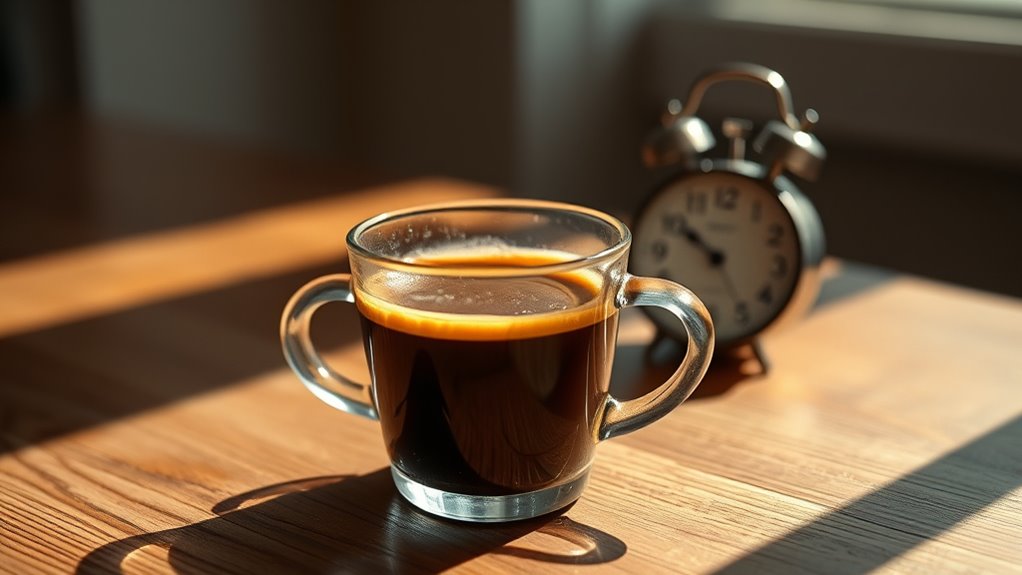
How long does espresso stay fresh after brewing? Espresso reaches its peak flavor within 30 seconds to 2 minutes after extraction because the crema and aroma fade quickly.
Espresso’s flavor peaks within 30 seconds to 2 minutes as crema and aroma fade rapidly.
At room temperature, you can safely drink espresso for up to 1 to 2 hours, but the flavor noticeably drops after about 10 minutes. To enjoy the best taste, try to drink it immediately or within 30 minutes, especially if you’re having it black.
If you refrigerate your espresso, it can last up to 24 hours, although some freshness and aroma will decrease.
For longer storage, freezing espresso in ice cube trays can keep it usable for about 3 months. This is great for iced drinks or recipes that call for espresso.
Proper storage and handling are important because espresso’s crema and aroma are key to its rich flavor and quality.
What Causes Espresso to Lose Flavor?
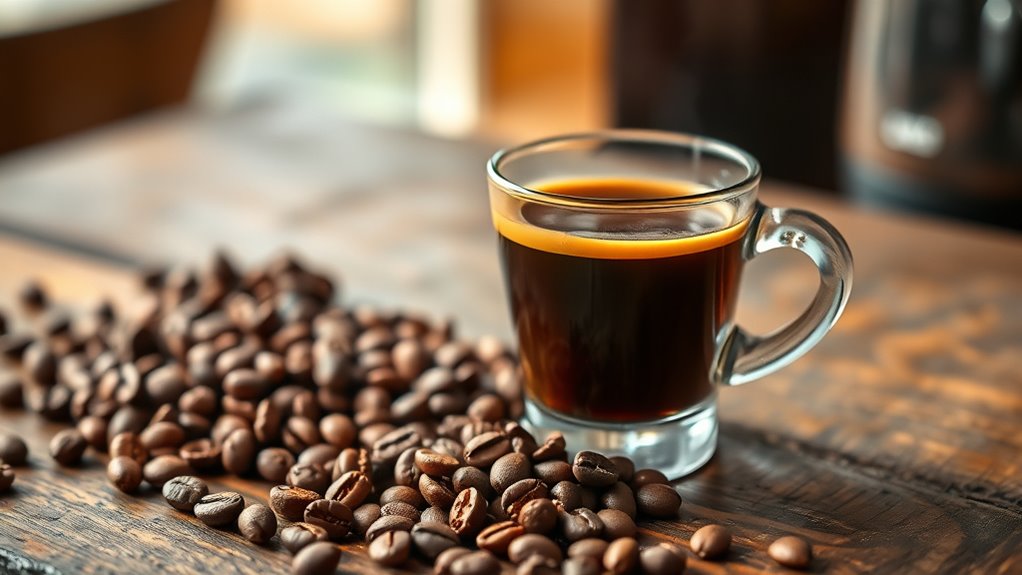
Although espresso starts to lose its flavor immediately after brewing, the primary cause is oxidation. This process rapidly degrades the aromatic compounds responsible for its distinctive taste and aroma.
When espresso is exposed to air, volatile oils and CO₂ break down swiftly, causing a decline in freshness and complexity.
Oxidation evaporates key aromatic compounds and diminishes the crema within minutes. Temperature fluctuations and prolonged exposure to oxygen speed up chemical reactions, leading to flat, dull flavors that lack vibrancy.
Since these changes begin almost instantly, you’ll notice significant flavor loss within the first 10 minutes after brewing.
Proper extraction timing during brewing is essential to maximize the initial flavor profile before oxidation begins.
How Long Does Espresso Last at Room Temperature?
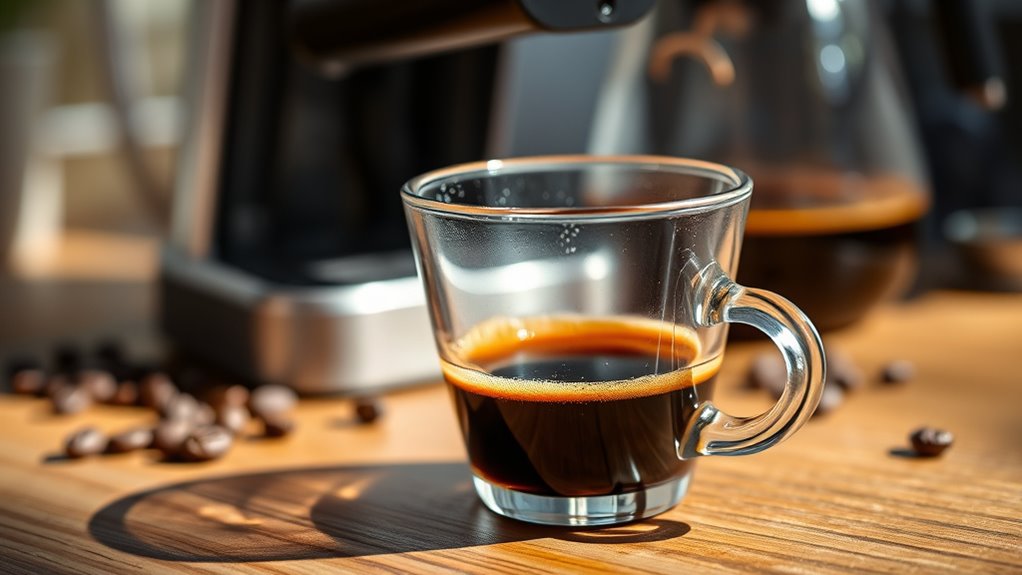
Espresso’s flavor rapidly declines once brewed, especially at room temperature where oxidation speeds up the loss of those aromatic compounds. You should really try to drink espresso within 30 seconds to 2 minutes to enjoy its full flavor profile. After all, that’s when it tastes the best.
At room temperature, espresso stays safe to drink for up to 1 to 2 hours. But be prepared—the taste takes a big hit just after a few minutes. The crema, which is a key sign of freshness, starts to break down between 30 and 90 seconds. That’s when the aroma begins to fade.
After about 2 hours, espresso can start to smell sour or stale, which means it’s spoiled. Covering it or using an airtight container might slow down the flavor loss a little, but it won’t stop oxidation. For preserving espresso’s complex aroma and flavor longer, methods like dehydration are used to create espresso powder, which retains oils and acids better than brewed espresso left at room temperature.
How Long Does Brewed Espresso Last in the Fridge?
When you store brewed espresso in the fridge, it can keep a good flavor for up to 24 hours if you use an airtight container. This helps stop the espresso from soaking up other odors and slows down the flavor from fading.
After 24 hours, the acidity and aromatic compounds start to break down, which you’ll definitely notice in the taste.
By 48 hours, the flavor takes a bigger hit because of ongoing chemical changes. To get the best flavor, try to drink refrigerated espresso within 1-2 days.
If you keep it longer, the risk of spoilage goes up and the taste won’t be as good.
Because blonde espresso contains more organic acids, its flavor may degrade more quickly when stored.
How to Store Brewed Espresso for Later Use
To keep your brewed espresso tasting great, pop it into an airtight container and stash it in the fridge. Just make sure to use it within 24 hours for the best flavor.
If you want to hang on to it a bit longer, try freezing your espresso. Pour it into ice cube trays, freeze, and then transfer the cubes into airtight bags. This way, it can stay fresh for up to three months.
Just a heads up—don’t leave your espresso sitting out at room temperature for more than two hours. Beyond that, the flavor starts to go downhill, and there’s a risk of bacteria growing.
For optimal taste, always use freshly brewed espresso and avoid prolonged storage to maintain proper flavor extraction.
Airtight Container Storage
Although brewed espresso is best enjoyed fresh, storing it properly in an airtight container can preserve its flavor for up to 24 hours in the refrigerator. To minimize oxidation, choose containers with tight-fitting lids that limit air exposure. Avoid clear or porous materials, as they allow light and moisture to speed up flavor degradation.
Before sealing, let your espresso cool slightly to prevent condensation inside the container. This moisture can dilute and spoil the taste, so it’s worth the wait.
For longer storage, freezing espresso works well. Pour it into ice cube trays, freeze, then transfer the cubes to airtight bags to keep the quality up to three months.
Using airtight containers properly helps your brewed espresso keep as much of its original flavor and aroma as possible during short-term storage. It’s a simple trick that makes a big difference!
Additionally, understanding the caffeine content in espresso shots can help you manage your intake even when consuming stored espresso.
Refrigeration Time Limits
How long can you keep brewed espresso in the fridge without sacrificing quality? You can store it up to 24 hours to preserve its best flavor. Beyond 48 hours, expect a marked decline in taste and aroma.
To maintain freshness, follow these guidelines: Use airtight, sealed containers to minimize oxidation and prevent odor absorption. Choose opaque containers to protect espresso from light-induced spoilage. Store espresso in the coldest part of the refrigerator, not the door.
Avoid reheating as it alters flavor. It’s best to consume it cold or use it in recipes within 24 hours.
Also, label containers with the brewing date to track freshness precisely. For the best flavor and crema, always start with fresh espresso when making coffee-based cocktails.
Freezing Espresso Tips
When you want to extend the shelf life of your brewed espresso beyond refrigeration limits, freezing offers an effective solution. To preserve flavor and aroma for up to three months, freeze espresso in airtight containers or ice cube trays.
Portion it into small, single-serving sizes to prevent quality degradation from repeated thawing and refreezing.
Make sure the espresso cools completely before freezing to avoid condensation and moisture buildup inside the container.
When you’re ready to use it, thaw the espresso cubes in the refrigerator or at room temperature. Avoid microwave heating, as it can compromise the flavor integrity.
You can reheat the thawed espresso or use the frozen cubes directly in iced drinks or recipes with minimal flavor loss if stored properly.
This method keeps your espresso fresh and ready for later use without any hassle.
Keep in mind that factors like extraction variables such as grind size and pressure initially influence the espresso’s flavor stability even after freezing.
Shelf Life of Espresso Coffee Beans and Grounds
You can expect unopened espresso beans in airtight packaging to stay fresh for about 6 to 9 months after the roast date.
Once you open the bag, though, it’s best to use whole beans within 2 to 4 weeks to keep that ideal flavor.
Ground espresso, on the other hand, doesn’t last as long. After opening, try to consume it within 1 to 2 weeks.
Just make sure to store it in a cool, dark, airtight container to help slow down oxidation and preserve the taste.
Additionally, the roast level can affect how long the beans retain their optimal flavor and caffeine content.
Espresso Beans Shelf Life
Although espresso beans can remain usable for several weeks, their best freshness depends heavily on storage conditions and packaging. To maximize shelf life, consider these factors:
Unopened beans in airtight packaging last 3-4 weeks past the roast date if kept cool and dark. Once opened, consume beans within 2-4 weeks for ideal flavor. Freshness peaks in the first two weeks after roasting.
Use airtight, opaque containers to protect beans from air, moisture, and light. Avoid heat exposure to prevent accelerated staling and flavor degradation.
The roast level of the beans also plays a crucial role in how long freshness and flavor can be maintained.
Taking these steps really helps keep your espresso tasting great.
Ground Espresso Freshness
While whole espresso beans can maintain quality for several weeks under proper storage, ground espresso demands more immediate use to preserve its flavor profile.
Once opened, ground espresso remains fresh for only 1-2 weeks if you store it in an airtight, opaque container away from heat, light, and moisture.
Pre-ground espresso in unopened packaging can last 3-5 months but loses flavor rapidly after opening due to oxygen exposure.
Grinding coffee just before brewing is ideal since ground coffee begins to lose aroma and flavor within 15-30 minutes.
The increased surface area of grounds accelerates staling, making prompt use essential.
To maximize freshness, keep your grounds in a cool, dark place, sealed tightly, and avoid prolonged exposure to air.
This helps slow degradation and maintain the espresso’s characteristic taste and aroma.
How to Use Leftover Espresso Without Losing Flavor
When preserving leftover espresso, storing it in an airtight container inside the refrigerator for up to 24 hours effectively maintains its flavor integrity.
To use leftover espresso without losing flavor, consider these techniques:
Try freezing, gentle reheating, or mixing leftover espresso into recipes to preserve its rich flavor.
Freeze espresso in ice cube trays to portion and preserve its taste. Reheat gently, avoiding high heat to protect delicate aromatics. Incorporate espresso into smoothies, sauces, or baked goods to retain richness.
Consume refrigerated espresso within 24 hours to prevent flavor degradation. Also, try to minimize exposure to air and light to keep it fresh.
These simple steps can help you enjoy your espresso without wasting any of that great flavor.
Frequently Asked Questions
Can Espresso Be Frozen to Extend Its Shelf Life?
Yes, you can freeze espresso to extend its shelf life up to three months. Just make sure to freeze it quickly in airtight containers. Portion it out to avoid refreezing.
This way, you’ll preserve the flavor best for iced drinks or baking applications. Keep in mind, there might be slight texture changes, but overall it works well.
Does Espresso Caffeine Content Change Over Time?
You won’t see any change in espresso’s caffeine content over time; it remains chemically stable for hours after brewing.
However, the perceived caffeine effect might fade as flavor and aroma deteriorate, not the caffeine itself.
How Does Water Quality Affect Espresso Freshness?
You’ll notice water quality affects espresso freshness by influencing extraction, flavor, and aroma. Using purified water helps you avoid off-flavors and scale buildup.
This preserves ideal extraction conditions and keeps your espresso’s vibrant, fresh taste longer. So, paying attention to water quality really makes a difference in every cup.
Are Espresso Capsules or Pods More Shelf-Stable?
You’ll find espresso capsules more shelf-stable than pods due to their airtight, hermetically sealed packaging. This kind of packaging better prevents oxygen and moisture exposure.
Because of that, they preserve freshness and flavor considerably longer under ideal storage conditions. It’s pretty clear why many people prefer capsules if they want their coffee to stay fresh for a while.
Can Flavored Espresso Maintain Its Taste After Storage?
Flavored espresso rarely maintains its full taste beyond one to two weeks, even with refrigeration. To preserve flavors longer, you’ll need airtight storage or vacuum-sealing. Otherwise, exposure to air and heat will quickly degrade flavor compounds.
Conclusion
So, you want to savor espresso like a pro? Remember, your freshly brewed shot is a fleeting masterpiece. Drink it within 20 minutes unless you enjoy flavorless sadness.
Room temperature? That’s a flavor death sentence after an hour. In the fridge, you get a brief reprieve—up to 24 hours of mediocre joy.
Store beans airtight or face bitter disappointment. Leftover espresso? Use it creatively or just accept your taste buds’ betrayal.
Precision matters, even in caffeine rituals.