Yes, espresso K-Cups are designed to deliver authentic, concentrated shots using finely ground dark roasted Arabica or blended beans. They brew under higher pressure to create a rich crema and bold flavor. You’ll find options that balance smoky, bitter, and caramel notes.
Caffeine levels typically range between 60 to 120 mg per serving. Top brands like Lavazza, Illy, and Starbucks offer distinct profiles tailored to your taste and machine compatibility. It’s pretty cool how each brand brings something unique to the table.
If you dig a little deeper, you’ll see how factors like roast, bean type, and sustainability all play a role in finding your perfect espresso choice. It’s worth exploring these to get the best cup for you.
Espresso K-Cups Explained
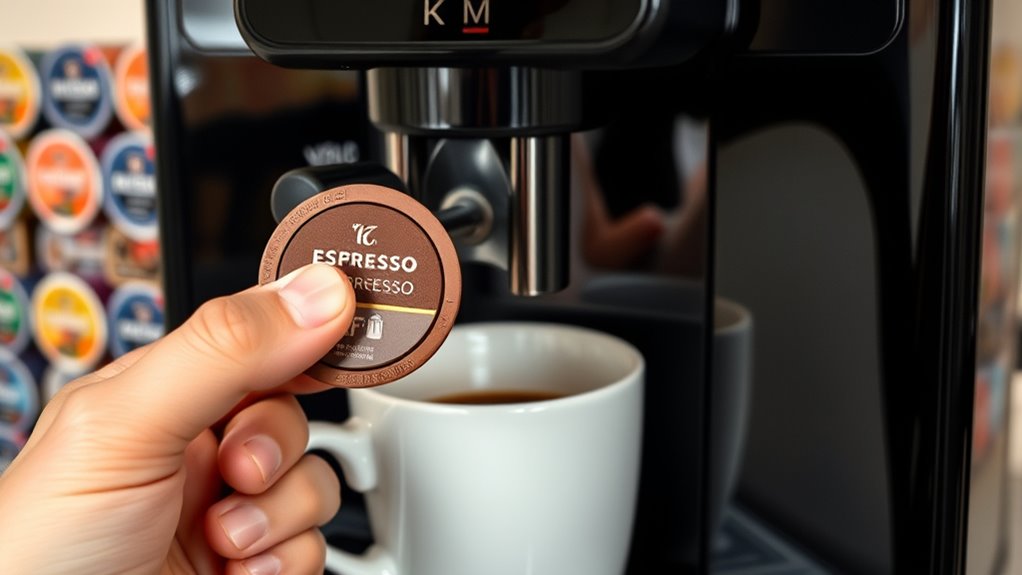
What sets espresso K-Cups apart from regular coffee pods is their precise formulation and brewing method designed to replicate traditional espresso. You’ll find these pods typically use dark roasted 100% Arabica beans, sometimes blended with Robusta to boost strength and enhance crema.
The brewing process operates at higher pressure with shorter extraction times, essential for producing that concentrated, bold shot with a thick, velvety crema on top.
Flavor-wise, you can expect smoky, bitter, and spicy notes, paired with aromas resembling burnt caramel and dark chocolate. While many brands focus on dark roasts, options range from medium to dark to suit different intensity preferences.
If you want authentic espresso from a K-Cup machine, understanding these technical details guarantees you pick the right pod for a genuine espresso experience. It really helps to know what goes into these pods so you get that true espresso taste every time. Maintaining the correct grind size and pressure is crucial to achieving the optimal espresso extraction even with K-Cups.
How Roast Level and Bean Type Shape Flavor
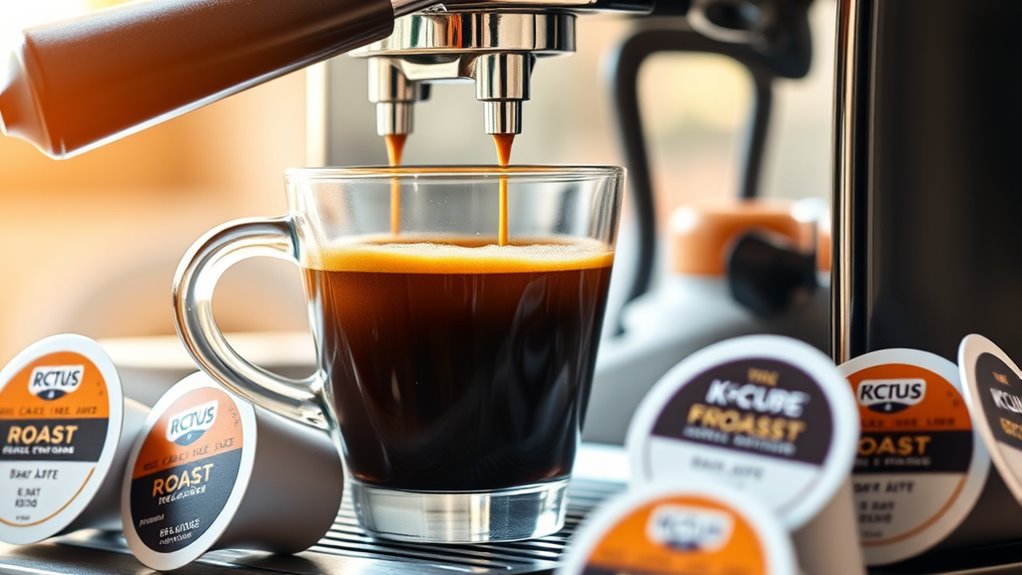
You’ll notice that the roast level really changes espresso’s flavor. Darker roasts bring out smoky, bold notes, while lighter roasts keep those bright, acidic nuances intact.
Then, when you pick between Arabica and Robusta beans, you’re adding another layer to the flavor profile. Arabica tends to be smooth and complex, whereas Robusta gives you a bit more bitterness and a stronger caffeine kick.
For consistent quality and flavor extraction, many cafés rely on precise brewing systems that regulate temperature and pressure throughout the process.
Roast Levels Explained
How does the roast level combined with bean type shape the distinct flavor profile of your espresso K cup? Dark roasts, roasted longer, develop bold, smoky notes and a bitter edge. These are essential for that classic espresso richness and velvety crema.
Medium roasts strike a balance, preserving brighter acidity with fruity and floral nuances. Arabica beans contribute smoothness and complexity, while Robusta beans add bitterness and a caffeine punch.
The extended roasting of dark beans caramelizes sugars, deepening body and aroma. Lighter roasts retain original fruit and floral traits but rarely define authentic espresso.
Your choice in roast level intricately affects acidity, body, and flavor complexity. These are key factors tailoring your espresso’s sensory impact.
Understanding these dynamics lets you select K cups that precisely match your flavor preferences. Additionally, the caffeine content in your espresso K cup will vary based on bean type and roast, influencing both flavor and stimulant effect.
Bean Varieties Impact
Why do certain espresso K cups deliver a velvety smoothness while others pack an intense, bold punch? It all comes down to the bean variety and roast level.
Dark roasts like French or Italian develop smoky, robust flavors with notes of burnt caramel and dark chocolate, giving espresso K cups a powerful profile.
Medium roasts, by contrast, reveal brighter, balanced nuances.
Arabica beans dominate espresso K cups for their smooth, complex flavor, while Robusta adds bitterness, higher caffeine, and thicker crema.
Traditional Italian blends combine both, balancing Arabica’s subtlety with Robusta’s intensity.
So when you choose an espresso K cup, consider how the bean type and roast interplay to shape aroma and taste.
This decides whether your espresso feels mellow or hits with bold, vigorous depth.
Additionally, understanding the caffeine content per shot helps you select a K cup that matches your desired caffeine strength and effect.
Understanding Caffeine Content in Espresso K-Cups
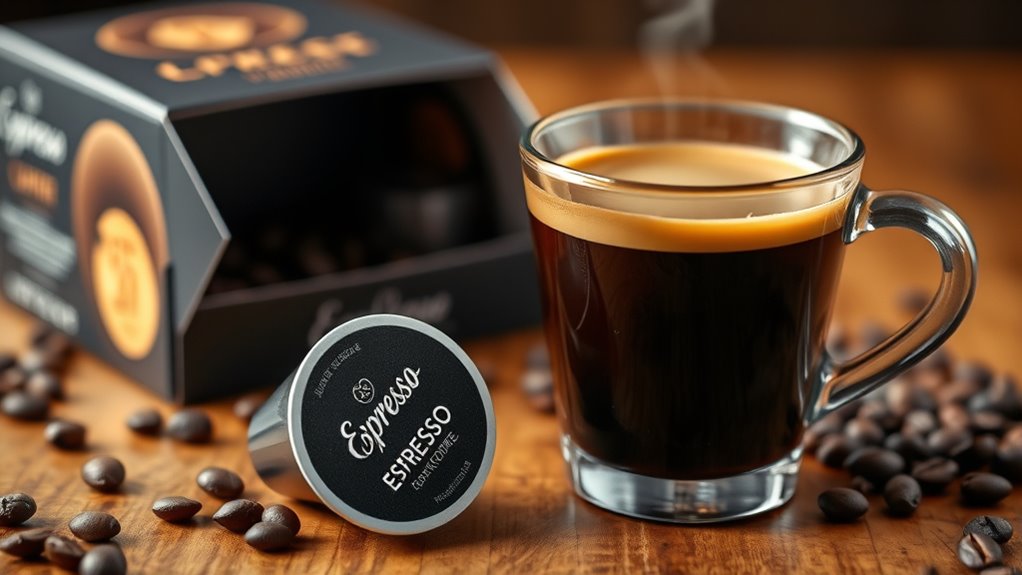
What determines the caffeine punch in your espresso K-Cup? Primarily, it’s the bean blend, roast level, and serving size.
Espresso K-Cups usually pack between 60 to 120 milligrams of caffeine per serving, but some high-caffeine options reach the upper end.
Notably, darker roasts lose some caffeine through roasting, so they contain slightly less caffeine than lighter roasts of equal size, even though they taste bolder.
For example, Cuban-style and Cafe Bustelo K-Cups often approach or exceed 100 mg per cup due to their robust blends.
To know exactly how much caffeine you’re getting, always check the packaging or product details.
Since caffeine content varies considerably by brand and blend, informed choices help you hit your desired caffeine level every time.
Keep in mind that the blend and pod specifics directly influence caffeine content, so choosing your K-Cup carefully can tailor your caffeine boost.
Top Espresso K-Cup Brands to Try in 2024
You’ll find that Lavazza, Starbucks Verismo, and Illy lead the pack when it comes to espresso K-Cups. They really deliver distinct, high-quality flavor profiles.
Each brand offers carefully crafted blends made with 100% Arabica beans and dark roasts. It’s a great balance of intensity with nuanced notes like caramel and floral hints.
When picking the right K-Cup, it’s important to think about more than just taste. You’ll want to consider if it’s compatible with your machine, too.
And of course, the flavor complexity you prefer plays a big role in your choice.
Keep in mind that the caffeine content in espresso K-Cups can vary based on bean type and roast level, impacting your overall caffeine intake.
Leading Espresso Brands
Four standout espresso K-Cup brands dominate the market in 2024, each offering distinct flavor profiles and meticulously sourced beans to satisfy discerning coffee enthusiasts.
Lavazza excels with its Italian espresso, boasting a velvety texture and aromatic complexity from African and South American beans.
Illy delivers a consistently smooth, well-rounded espresso, highlighting a balanced roast that preserves nuanced acidity and sweetness.
Starbucks’ Verismo pods target bold flavor seekers, featuring a dark roast layered with burnt caramel and dark chocolate notes. It’s perfect for intense espresso lovers.
Peet’s Coffee stands out for its deep, smoky character and complex flavor dimensions, providing a rich, full-bodied experience.
When you choose from these brands, you tap into expertly crafted espresso profiles designed to elevate your K-Cup brewing experience. Additionally, understanding the differences from regular espresso can help you appreciate the unique flavor and caffeine content variations these K-Cup options offer.
Popular K-Cup Selections
Although espresso lovers often gravitate toward premium brands, several popular K-Cup selections offer exceptional quality and complexity for 2024. McCafe Premium Roast delivers a full-bodied, smooth, and nutty profile at an affordable 46 cents per pod, ideal for daily use.
Kahawa 1893 Safari Blend stands out with its deep roast, caramel, and chocolate nuances, priced around $21 for a 12-pack.
Newman’s Own Organic Special Blend features Indonesian beans, providing a rich, organic-certified medium roast at about 59 cents per pod.
Caribou Coffee Daybreak Blend offers bright, toasted, and citrusy notes with a full-bodied profile for roughly 62 cents per pod.
For the best flavor, it’s essential to note that even with K-Cups, maintaining proper extraction time can significantly enhance the espresso experience.
Brewing Tips for the Best Espresso
When aiming for the perfect espresso using K cups, selecting a dark roast specifically designed for espresso is essential to achieve that rich, full-bodied flavor and authentic crema.
To extract the best intensity, brew at the highest appropriate setting, usually 8 oz or an espresso shot size.
Brew at the highest suitable setting, typically 8 oz or espresso shot size, for optimal intensity.
Pre-wetting the K cup with hot water before brewing enhances extraction by saturating the grounds evenly, improving flavor clarity.
After brewing, allow the espresso to rest briefly. This pause lets nuanced flavors settle and develop fully.
You can further elevate your espresso by adjusting texture and strength with additions like frothed milk or hot water.
- Use dark roast espresso K cups for depth
- Brew with maximum extraction volume
- Pre-wet grounds for even saturation
- Rest espresso before tasting for flavor development
For a rich and frothy texture, it is important to use fresh espresso as it provides essential oils and crema that enhance the overall experience.
Compatibility of Espresso K-Cups With Different Brewers
How do you guarantee your espresso K-Cups work seamlessly with your coffee brewer? Start by identifying your machine model. Most espresso K-Cups fit Keurig 2.0 and classic Keurig brewers, but exceptions exist.
For example, Starbucks Verismo pods only function with Verismo brewers. They aren’t compatible with standard Keurig machines. Many third-party K-Cup brands aim for broad compatibility, yet verifying packaging details remains essential.
If you prefer flexibility, reusable K-Cup filters let you use your favorite espresso-ground beans across various Keurig machines. This way, you can bypass brand restrictions.
Since compatibility varies widely, always cross-check product specifications before buying.
Making sure everything lines up prevents brewing issues. It also guarantees ideal extraction pressure and flavor. That way, your espresso experience stays top quality and consistent.
Additionally, using finely ground espresso ensures a smoother and more nuanced coffee flavor, enhancing your espresso K-Cup brewing results with espresso powder quality.
Environmental Impact of Popular Espresso K-Cups
Ensuring your espresso K-Cups fit your machine well sets the stage for an ideal brewing experience. But it’s equally important to think about what happens after you finish that perfect cup.
Many espresso K-Cup brands now address environmental concerns by offering compostable, biodegradable, or recyclable options.
You should consider the entire lifecycle—from bean sourcing to pod disposal—to minimize your ecological footprint. For example, compostable pods by San Francisco Bay reduce landfill waste through biodegradation.
Recyclable pods from Timothys and Brooklyn Bean Roastery encourage responsible recycling habits. Plus, Arabica beans are often sourced via ethical, sustainable farming methods.
That said, the prevalent use of plastic in pod production still contributes to persistent environmental waste. So, it’s good to stay aware of these factors when choosing your espresso pods.
Choosing the Right Espresso K-Cup for You
What factors should you weigh to find the perfect espresso K-Cup tailored to your taste and machine? Start by identifying your roast preference. Dark roasts deliver bold, smoky flavors, while medium roasts highlight brighter, fruitier notes.
Next, take a look at the bean composition. 100% Arabica ensures smoothness, but blends with Robusta offer heightened caffeine and a denser crema. It’s worth knowing what you’re getting.
Consider bean composition: 100% Arabica for smoothness, or blends with Robusta for stronger caffeine and richer crema.
Also, check pod compatibility. Some espresso K-Cups are made specifically for Keurig or Verismo systems, so matching your brewer is really important.
Think about flavor nuances too. Spicy or rich profiles usually come with darker roasts, while floral hints tend to appear in medium options.
Finally, balance price against quality and sourcing. Premium K-Cups often cost more, but they reward you with superior flavor, ethical sourcing, and authenticity.
For espresso lovers who care about quality, it’s definitely a worthwhile investment.
Frequently Asked Questions About Espresso K-Cups
When selecting espresso K-Cups, you might wonder which factors most influence the intensity and authenticity of your shot. The foundation lies in the bean quality and roast level. 100% Arabica beans with a dark roast deliver richer, more concentrated flavors and crema.
Compatibility is essential, as not all pods fit every machine. Keurig machines handle most, but specialty blends like Verismo require specific brewers.
Caffeine content varies, so consider your desired strength, with some pods providing up to 120 mg per serving.
Key considerations include bean origin and roast profile for flavor complexity, machine compatibility to guarantee proper extraction, caffeine levels tailored to your energy needs, and brand reputation emphasizing quality and sustainability.
These nuances guarantee a superior espresso experience from your K-Cup. So, keep these tips in mind to enjoy the perfect shot every time.
Frequently Asked Questions
Can I Mix Espresso K-Cups With Other Coffee Flavors?
Yes, you can mix espresso K-Cups with other flavors. You’ll just need to adjust the brewing strength and size to balance the boldness. This helps create a nuanced blend that enhances aroma and complexity.
Just make sure it doesn’t overpower the milder coffee notes. A little tweaking goes a long way when combining different flavors. It’s all about finding the right balance for your taste.
How Long Do Espresso K-Cups Stay Fresh After Opening?
Once you pop open an espresso K-Cup, imagine its rich aroma fading like morning mist. Use it within 1 to 2 weeks.
Store it airtight to slow oxidation. This helps preserve the complex oils and bold espresso flavors longer.
Are Espresso K-Cups Suitable for Iced Coffee Drinks?
Yes, espresso K-Cups suit iced coffee perfectly. You’ll want to brew a strong or double shot to keep bold flavors intact over ice, avoiding dilution.
Choose balanced blends to prevent bitterness when chilled. This way, your iced coffee stays smooth and delicious every time. Give it a try and see how much better your iced coffee can taste!
Can Espresso K-Cups Be Used in Non-Keurig Machines?
You can’t use espresso K-Cups in non-Keurig machines directly. You won’t get the proper pressure without adapters, and you can’t replicate Keurig’s extraction process.
If you want to use pods, you’ll need ones that are compatible with your machine. Another option is reusable pods designed specifically for your system. That way, you can still enjoy espresso without any hassle.
Do Espresso K-Cups Come in Decaffeinated Options?
Yes, you’ll find decaffeinated espresso K-Cups using water or chemical caffeine extraction. Brands like Lavazza and Café Bustelo preserve rich espresso flavor with less than 5 mg caffeine.
It’s perfect for those who are sensitive to caffeine or prefer a late-night cup without the jitters. So, if you want the taste of espresso without the buzz, decaf K-Cups are definitely an option to consider.
Conclusion
If you’re worried espresso K-Cups can’t match traditional espresso’s rich crema and intensity, rest assured they’re engineered for bold flavor and ideal extraction in compatible brewers. By selecting the right roast and bean type, you’ll enjoy a nuanced, robust shot every time, with convenient ease.
Plus, with growing eco-friendly options, you can savor your espresso guilt-free. Trust these technical insights to elevate your coffee experience without sacrificing quality or convenience.