You get between 133 and 150 mg of caffeine in a Nespresso Double Espresso, which is nearly double a single shot and more than regular brewed coffee. The caffeine level depends mainly on the pod size and coffee blend. Robusta-based pods have higher caffeine than Arabica.
Intensity ratings don’t indicate caffeine content but flavor strength. Decaf versions contain only 3–5 mg per serving. If you want to understand how pod choices and daily limits affect your caffeine intake, keep exploring.
How Much Caffeine Is in a Nespresso Double Espresso?
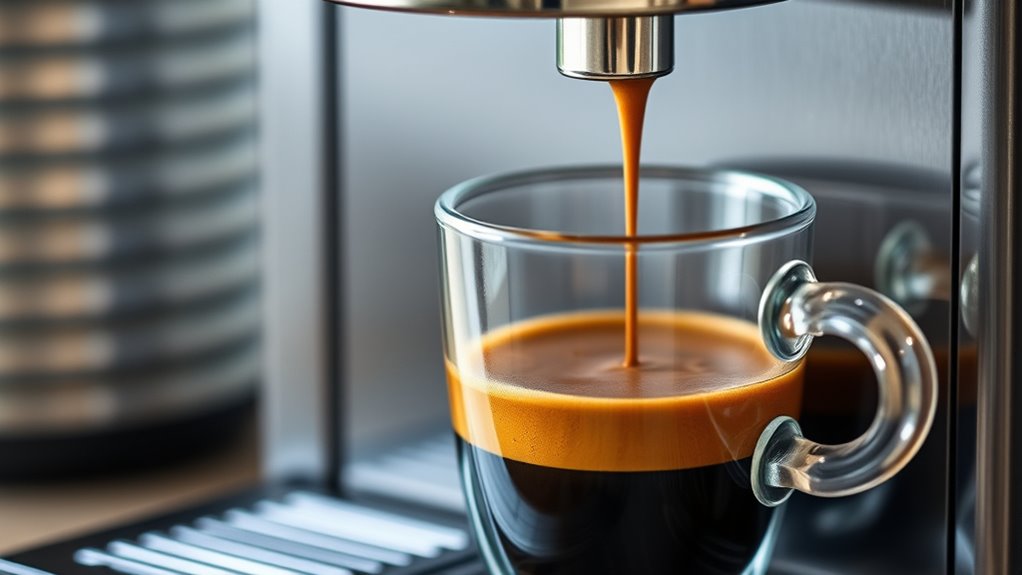
Although the caffeine content varies by blend, a Nespresso Double Espresso typically contains between 133 and 150 mg of caffeine per 2.7 oz (80 ml) serving.
Nespresso Double Espresso delivers 133 to 150 mg of caffeine per 2.7 oz serving, varying by blend.
This amount markedly exceeds the roughly 60 mg found in a standard single espresso.
When you choose a Double Espresso capsule, you get a concentrated caffeine boost comparable to a small cup of brewed coffee.
The exact caffeine level depends on the specific pod and blend, but generally, you can expect it to fall within this range.
Understanding this helps you better manage your caffeine intake, especially if you rely on Nespresso for your daily coffee.
A Nespresso Double Espresso delivers a caffeine content similar to a doppio espresso, which uses about double the coffee grounds for a richer, more intense experience.
Impact of Pod Size and Coffee Blend on Double Espresso Caffeine
Because the caffeine content in Nespresso double espresso depends heavily on both pod size and coffee blend, understanding these factors can help you better gauge your caffeine intake. Here’s what you need to know:
Double espresso capsules typically contain 133-150 mg of caffeine, depending on the blend. Darker blends with higher robusta content, like Kazaar, pack more punch, with over 125 mg per double shot.
Pod size matters too. Double espresso pods (2.7 oz) deliver more caffeine than smaller capsules because they’ve a greater coffee volume. Larger blends, such as Gran Lungo, can contain up to 195 mg, but these are usually not classified as double espresso pods.
The extraction time of the espresso shot can also influence the caffeine concentration and overall flavor profile of your double espresso.
Key Factors Causing Caffeine Variation in Double Espresso Pods
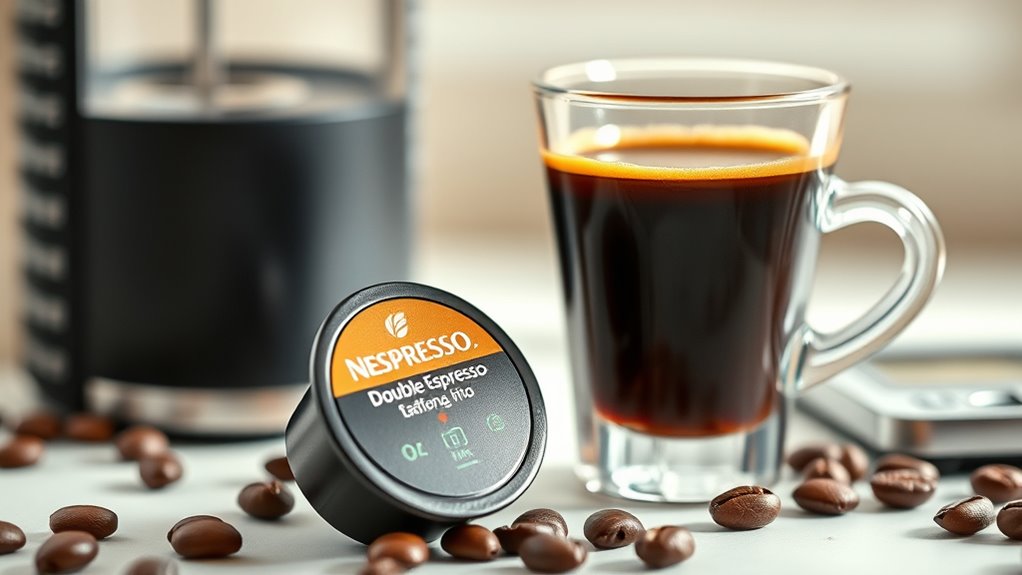
You’ll notice that caffeine levels in Nespresso Double Espresso pods can vary quite a bit. This mainly comes down to two things: the size of the pod and the type of coffee bean inside.
Larger pods naturally hold more coffee, which means they usually have more caffeine.
On the other hand, the kind of bean matters too. Robusta beans tend to have more caffeine compared to Arabica beans.
So, when you’re wondering why the caffeine amount isn’t the same in every double espresso pod, it’s really about these factors working together.
Once you get this, it’s easier to understand the differences you taste and feel.
Commercial espresso machines like the Mastrena used by Starbucks automate many brewing parameters that can also influence caffeine extraction levels.
Pod Size Impact
How does the size of a Nespresso double espresso pod affect its caffeine content? Simply put, larger pods contain more coffee grounds, which means higher caffeine levels. Here’s how pod size impacts caffeine:
Double espresso pods typically hold around 2.7 oz, increasing volume and caffeine compared to single shots. Bigger capsules extract more coffee, boosting caffeine concentration per serving (usually 133-150 mg).
Vertuo’s barcode technology adjusts caffeine amounts by recognizing pod size and blend, ensuring consistency.
The pod’s size directly correlates with caffeine content because larger pods contain more coffee grounds. So, the bigger the pod, the more caffeine you’re likely to get in your cup.
Additionally, dose adjustment plays a key role in balancing extraction and caffeine levels in espresso pods.
Bean Type Influence
When selecting a Nespresso Double Espresso pod, the type of bean used plays a crucial role in determining caffeine content. Robusta beans generally contain more caffeine than Arabica.
For example, pods like Kazaar made from Robusta can deliver up to 150 mg of caffeine.
In contrast, Arabica-based pods usually have less caffeine. The roasting level also affects caffeine. Darker roasts typically have slightly reduced caffeine because longer roasting times degrade some of it.
Additionally, the specific blend and bean origin influence caffeine levels. Some blends are tailored for higher caffeine content.
Minor variations in caffeine can also happen due to batch differences and regional sourcing, even within the same bean type and blend.
Understanding these factors helps you choose a Double Espresso pod that meets your caffeine preference. So, it’s worth paying attention to what’s inside the pod when making your choice.
The quality of water used in brewing also impacts the extraction and can subtly influence the perceived caffeine strength and flavor of the espresso, highlighting the importance of water quality in the process.
Decaf Nespresso Double Espresso Pods: How Much Caffeine?
Although decaf Nespresso Double Espresso pods contain considerably less caffeine than their regular counterparts, they still deliver a small amount, typically between 3 to 5 mg per serving. This makes them ideal if you want to reduce caffeine intake but not eliminate it entirely.
Here’s what you should know:
Decaf pods like Ristretto Decaffeinato have about 2 mg of caffeine per shot, so a double shot totals roughly 4 mg.
Regular double espressos contain 133-150 mg, highlighting the drastic caffeine reduction in decaf options.
The caffeine content in decaf pods isn’t zero but remains minimal, suitable for sensitive individuals.
Exact caffeine amounts can vary slightly depending on blend and batch, so consider this a general guideline.
Decaf Nespresso double espressos offer a low-caffeine alternative without sacrificing the espresso experience.
Despite the lower caffeine levels, decaf espresso still maintains the rich, aromatic experience characteristic of traditional espresso.
Does Intensity Level Mean More Caffeine in Double Espressos?
You might think that a higher intensity means more caffeine, but that’s not really the case with Nespresso. Their intensity rating actually measures the flavor strength, not how much caffeine is in the coffee.
Intensity looks at things like the roast level and the type of beans used, which affect the taste but don’t necessarily change the caffeine content. The total caffeine depends more on factors like serving size and extraction method than the intensity level.
Intensity Versus Caffeine
Since the intensity level of a Nespresso double espresso reflects its flavor profile rather than caffeine content, you shouldn’t assume a higher intensity means more caffeine.
Here’s what you need to know:
Intensity primarily indicates flavor strength and bitterness, often linked to darker roasts. Caffeine content varies by blend and capsule size, not intensity rating alone. Double espresso caffeine typically ranges from about 133 mg to 150 mg across all intensity levels.
High-intensity pods like Diavolitto, with over 150 mg caffeine, are exceptions, not the rule.
Additionally, the roast level does not significantly affect caffeine content since caffeine remains chemically stable unless exposed to extremely high temperatures.
Flavor Strength Explained
When exploring Nespresso double espressos, it’s important to recognize that intensity levels describe flavor boldness rather than caffeine content. The intensity rating reflects the strength and robustness of the coffee’s flavor profile, not how much caffeine it contains.
You might find a double espresso with a high intensity rating tastes stronger and more complex, but its caffeine amount can be similar to one with a lower rating.
Caffeine content varies more with the blend and serving size than the intensity level. Understanding this distinction helps you choose a coffee based on your flavor preference without mistakenly assuming that higher intensity means more caffeine.
For example, blonde espresso typically contains slightly more caffeine per shot than regular espresso despite its lighter roast.
How Nespresso Double Espresso Caffeine Compares to Regular Coffee
Although many assume regular coffee always delivers more caffeine, a Nespresso Double Espresso actually contains between 133 to 150 mg of caffeine. This surpasses the typical 80 to 100 mg found in an 8 oz cup of brewed coffee.
Here’s how they compare:
- A Nespresso Double Espresso’s caffeine content ranges from 133 to 150 mg, depending on the blend.
- Regular 8 oz brewed coffee provides about 80 to 100 mg of caffeine.
- A standard single espresso shot averages roughly 60 mg, less than a Double Espresso.
- Due to its size and concentration, the Double Espresso offers a stronger caffeine boost than most regular coffees.
The caffeine concentration in espresso is much higher than in drip coffee, with espresso averaging about 2.1 mg/mL compared to drip coffee’s 0.4 mg/mL.
Daily Caffeine Limits for Double Espresso Drinkers
Understanding how much caffeine is in a Nespresso Double Espresso helps you gauge how it fits into your daily intake. Each serving contains between 133 mg and 150 mg of caffeine, which is about one-third of the 400 mg daily limit recommended for most adults.
A Nespresso Double Espresso contains 133-150 mg of caffeine, roughly one-third of the daily recommended limit.
If you drink more than two double espressos a day, you risk exceeding this safe threshold. That could lead to side effects like insomnia or an increased heart rate.
So, if you’re sensitive to caffeine, it’s wise to limit yourself to one or two servings daily.
Keep in mind that different Nespresso blends vary in caffeine content. Choosing lower-caffeine options can help you manage your daily intake effectively and stay within safe consumption guidelines.
How to Choose a Double Espresso Pod Based on Caffeine Content
Since caffeine levels vary among Nespresso Double Espresso pods, selecting the right one depends on your desired strength and tolerance. Here’s how to choose:
- Check the caffeine content: Double Espresso Chiaro has about 135 mg, while Double Espresso Scuro reaches 150 mg.
- Consider your caffeine tolerance: Opt for higher caffeine pods if you need a stronger stimulant effect.
- Know your roast preference: Lighter roasts tend to have slightly more caffeine than darker roasts, which lose caffeine during longer roasting.
- Review blend specifics: Each Nespresso pod has unique caffeine levels, so always verify the exact amount before purchase.
Comparing Caffeine in Nespresso Double Espresso vs. Single Espresso
When you compare Nespresso Double Espresso to a single espresso, you’ll notice the caffeine content nearly doubles, ranging from 133 mg to 150 mg per double shot versus about 85 mg in a single. This difference results from the larger volume of the double shot (2.7 oz) compared to the single (1.35 oz), even though both use the same coffee bean blends.
Basically, the double espresso gives you more caffeine per serving because it’s bigger, not because the beans are different. So if you’re looking for a bigger caffeine kick, the double shot is the way to go.
| Coffee Type | Caffeine Content (mg) |
|---|---|
| Single Espresso | 85 |
| Double Espresso (low) | 133 |
| Double Espresso (high) | 150 |
| Volume (oz) Single | 1.35 |
| Volume (oz) Double | 2.7 |
Frequently Asked Questions
Can Nespresso Double Espresso Caffeine Affect Sleep Quality?
Yes, Nespresso Double Espresso caffeine can affect your sleep quality. Its stimulant effects may delay sleep onset, especially if you’re sensitive or consume it within six hours of bedtime.
How Long Does Caffeine From a Double Espresso Stay in Your System?
You might wish caffeine vanished instantly, but it sticks around 8 to 14 hours in your system. Its effects peak in an hour and taper off over 3 to 5 hours.
That’s your body’s slow, steady caffeine dance. It doesn’t just disappear quickly, so you’ll feel it lingering for quite a while.
Are There Health Risks of Drinking Multiple Double Espressos Daily?
Yes, drinking multiple double espressos daily can increase your caffeine intake beyond safe limits. This might put you at risk for insomnia, anxiety, heart issues, and dependence.
It’s a good idea to keep an eye on how much you’re consuming. Especially if you’re sensitive to caffeine or have existing health conditions, you want to be careful.
Does Adding Milk or Cream Change Caffeine Absorption in Double Espresso?
Adding milk or cream doesn’t change the total caffeine amount you absorb from a double espresso.
But it can slow absorption slightly, making the caffeine’s effects kick in more gradually.
This happens without reducing your overall caffeine intake. So, you still get the same boost, just a bit gentler on how quickly it hits.
Can Caffeine Sensitivity Vary Between Different Nespresso Double Espresso Drinkers?
Yes, your caffeine sensitivity can vary widely due to genetics, metabolism speed, tolerance, age, and health. Even with the same Nespresso double espresso, you might feel alert, jittery, or barely notice its effects.
It really depends on how your body processes caffeine. So, two people drinking the exact same espresso can have totally different experiences. Some might get a quick energy boost, while others hardly feel anything at all.
Conclusion
Now that you know a Nespresso double espresso typically packs around 120 mg of caffeine, isn’t it important to choose your pod wisely?
Factors like pod size, blend, and intensity all impact caffeine levels, so understanding these can help you hit your daily limit without overdoing it.
Whether you prefer a bold punch or a gentler sip, being informed lets you enjoy your double espresso confidently and safely every time.