Espresso isn’t supposed to be overwhelmingly bitter; bitterness usually means something’s off with your extraction, grind, or bean quality. You want a balanced shot where grind size, brew temperature, and dose are dialed in to avoid over-extraction that pulls harsh compounds.
While darker roasts naturally have some bitterness, it should add depth, not dominate. If you want to master the nuances behind espresso’s bitterness and how to control it, let’s explore what really makes your shot taste right.
Why Extraction: Not Roast: Mostly Causes Espresso Bitterness
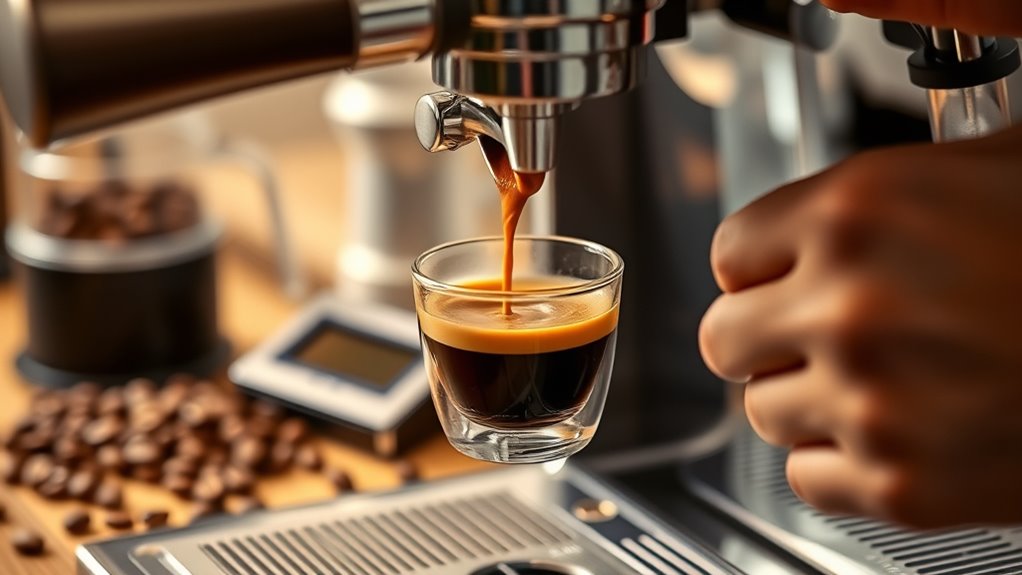
Although many assume roast level dictates espresso’s bitterness, it’s actually the extraction process that plays the dominant role. You might think dark roasts cause bitterness, but even light roasts can taste harsh if you overextract.
This happens when water stays too long or runs too hot, pulling out bitter compounds like chlorogenic acids. Roast level shapes flavor notes but doesn’t directly cause bitterness. Instead, controlling extraction parameters like grind size, shot time, and temperature is what really matters.
When you fine-tune these variables, you prevent overextraction and keep your espresso balanced. So, don’t blame the roast alone. Focus on mastering your brewing technique to avoid that unpleasant, bitter taste in your shot. Maintaining proper extraction timing is key to achieving a balanced, flavorful espresso.
How Grind Size and Shot Time Cause Bitter Espresso
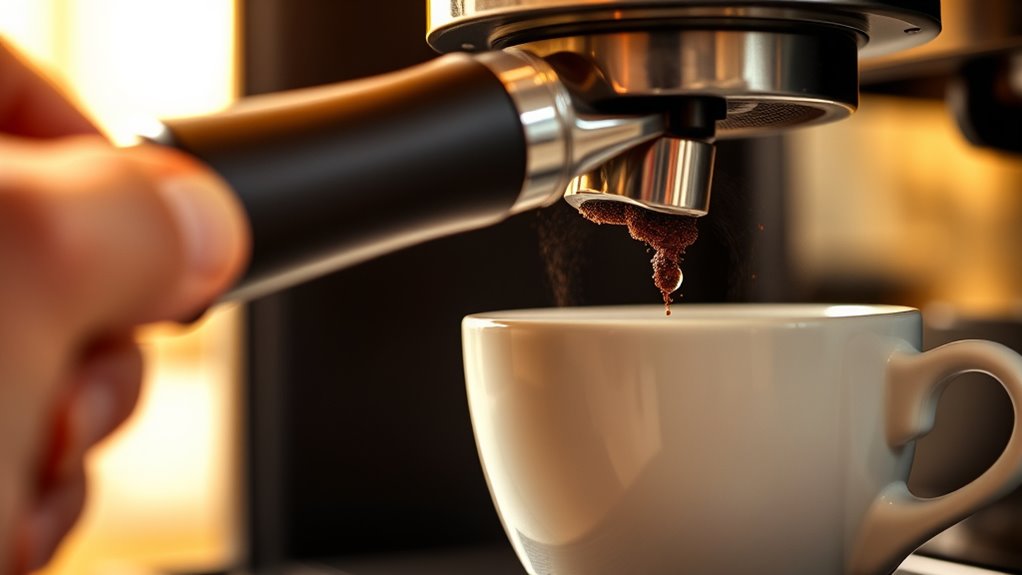
You’ll notice that the grind size really changes how fast the water passes through your coffee. This, in turn, affects your shot time and the flavor you get.
So, if your grind is too fine, the extraction takes longer than it should. And that’s when bitter compounds start to sneak in, messing up the balance.
The trick is to find the right grind and aim to keep your shot time between 25 and 30 seconds. That way, you avoid that harsh bitterness and get a smoother espresso.
Adjusting grind size provides precise control over taste and flow, helping to prevent over-extraction and bitterness.
Grind Size Impact
When you grind your coffee too fine, water struggles to flow through quickly, extending the extraction time and pulling out bitter, harsh compounds that ruin your espresso’s flavor. Your grind size directly controls how fast water moves through the coffee bed, impacting taste.
Too fine, and you risk over-extraction; too coarse, and your shot might taste weak. To avoid bitterness, aim for a grind that balances extraction.
Keep these in mind:
- A finer grind increases contact time, causing bitterness.
- Coarser grinds reduce bitterness by shortening extraction.
- Adjust grind size precisely to maintain suitable shot duration around 25-30 seconds.
Mastering grind size is essential for controlling bitterness and achieving a smooth, balanced espresso. It really makes a difference in your cup. The consistent 9 bars pressure used during espresso extraction also plays a critical role in ensuring optimal flavor and minimizing bitterness through proper pressure extraction.
Shot Time Effects
Grind size directly influences shot time, which plays a major role in the espresso’s bitterness. When your grind is too fine, extraction slows down, pushing shot times beyond 35 seconds. This over-extraction pulls bitter compounds from the coffee, spoiling your espresso’s balance.
On the other hand, a coarser grind speeds up extraction, causing under-extraction and sour flavors rather than bitterness.
To avoid these extremes, aim for a shot time between 25 and 30 seconds by adjusting your grind size accordingly. This window helps you extract flavorful oils and sugars without harsh bitterness.
Monitoring how grind size affects your shot duration lets you prevent bitterness effectively. That way, you can consistently brew a smooth, balanced espresso every time.
Proper extraction time is crucial for optimal flavor and crema quality, enhancing the espresso’s rich and complex character that is essential for drinks like the Espresso Martini.
Balancing Extraction Duration
Although the grind size might seem like a small detail, it plays a crucial role in balancing your espresso’s extraction duration and bitterness. If your grind is too fine, water meets too much resistance, stretching the extraction time and pulling out bitter compounds like quinic acid and caffeine.
Conversely, a coarser grind speeds up extraction, helping you avoid over-extraction’s harsh flavors. Your goal is to keep shot time between 25-30 seconds with the right grind size to achieve a smooth, balanced espresso.
Fine grind means longer extraction and increased bitterness. Over 35 seconds shot time extracts bitter compounds.
Coarser grind shortens extraction, reducing bitterness.
Mastering this balance ensures you brew espresso that’s flavorful without the unpleasant bitterness. It’s all about finding that sweet spot!
Additionally, using freshly ground coffee just before brewing preserves the oils and aromas that contribute to a balanced flavor profile.
How Brew Temperature and Dose Affect Espresso Bitterness
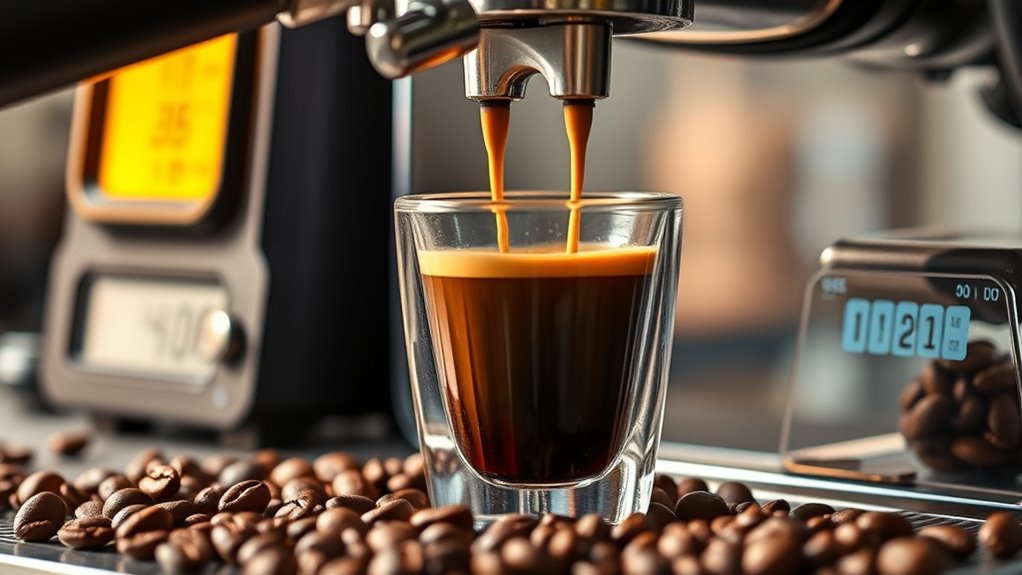
Because brew temperature directly influences extraction speed, dialing it in is crucial to controlling espresso bitterness. Higher temperatures above 205°F (96°C) speed up extracting bitter compounds, so lowering the temperature by 2-3°F often reduces bitterness.
Similarly, dose affects bitterness. Too much coffee creates excess resistance, which prolongs extraction and increases bitterness. Sticking to an ideal dose of 16-18g ensures proper resistance and avoids uneven extraction.
| Factor | Effect on Bitterness | Recommendation |
|---|---|---|
| Brew Temperature | Higher temps increase bitterness | Lower by 2-3°F if needed |
| Dose | Overdosing causes over-extraction | Use 16-18g for standard baskets |
| Extraction Time | Longer time worsens bitterness | Maintain proper dosing and temp |
Mastering these variables helps you brew balanced, less bitter espresso. The extraction process also influences caffeine yield, so controlling brewing parameters can optimize both flavor and stimulant effects.
Why Stale or Over-Roasted Beans Increase Espresso Bitterness
You’ll notice that over-roasted beans bring out a harsh, burnt bitterness because they break down complex carbs into bitter compounds.
On the other hand, when beans get stale, they lose their natural sugars and aromatic oils. These components usually help balance bitterness and add a bit of sweetness.
Proper grind size and maintaining consistent pressure during extraction are essential to avoid additional bitterness in espresso.
Impact of Over-Roasting
When beans get over-roasted or start to go stale, they develop carbon compounds that sharply increase espresso’s bitterness. Over-roasting breaks down sugars and acids, replacing balanced flavors with harsh, bitter notes.
You’ll notice darker roasts, especially those beyond their ideal roast point, yield a more bitter espresso due to these chemical changes.
Using beans that have passed their prime or roast level robs your espresso of natural sweetness and smoothness.
Keep in mind:
- Over-roasting creates bitter-tasting carbon compounds.
- Sugars and acids degrade into compounds that heighten bitterness.
- Darker, over-roasted beans lack balance and sweetness.
To avoid this, choose beans roasted to the right level and consume them fresh. That way, you get a well-rounded, less bitter espresso experience.
Effects of Bean Staleness
If you’ve ever pulled a shot using beans that have been sitting too long, you know the bitterness can quickly overpower the espresso’s natural flavors. As beans age beyond 4-6 weeks, they lose their natural sweetness, allowing bitter carbon compounds to dominate. This staling process changes the chemical makeup of the beans, producing harsher, more astringent notes.
Over-roasted beans make this worse by creating excessive dark, smoky, and burnt flavors, which further increase bitterness.
To enjoy a balanced espresso with minimal bitterness, choose beans roasted within the last 2-4 weeks. Freshly roasted beans retain their nuanced flavors, offering a smoother, sweeter shot.
Understanding how staleness impacts bitterness helps you appreciate why freshness is key to a delicious espresso experience. It really makes a difference when you want that perfect cup every time.
Additionally, using a medium-fine grind similar to table salt ensures proper extraction and can prevent unwanted bitterness caused by over-extraction.
How to Adjust Your Technique to Reduce Espresso Bitterness
Although bitterness in espresso can be stubborn, adjusting your technique offers effective ways to tame it. Start by dialing in your grind size slightly coarser to reduce contact time and prevent over-extraction, a primary cause of bitterness.
Lower your brew temperature by 2-3°F to slow the extraction of harsh compounds. Also, consider stopping your shot earlier, around 25-30 seconds, to avoid pulling excessive bitter flavors.
Maintaining an appropriate dose (16-18g) with a 1:2 ratio ensures balanced extraction. Plus, even puck distribution prevents channeling and uneven bitterness.
Key adjustments to reduce espresso bitterness:
- Coarsen grind for shorter extraction
- Reduce brew temperature slightly
- Stop shot between 25-30 seconds
These precise tweaks help you craft a smoother, less bitter espresso every time. Additionally, consuming espresso during optimal timing can enhance its flavor perception and reduce harshness.
When Espresso Bitterness Is Intentional or Desirable
Since bitterness can add depth and complexity, skilled baristas often embrace it by selecting dark roast beans or extending extraction times slightly. When done intentionally, bitterness balances espresso’s flavor, enhancing body and offering a satisfying, lingering aftertaste.
In traditional Italian styles, a mild bitterness is a hallmark, contributing to a harmonious shot without overpowering other notes. You’ll find that controlled bitterness highlights espresso’s robust character, making it appealing for those who enjoy a stronger, fuller flavor.
| Aspect | Purpose | Result |
|---|---|---|
| Dark Roast Beans | Develop rich, bitter compounds | Robust, full-bodied flavor |
| Longer Extraction | Emphasize bitter notes | Adds depth and complexity |
| Balanced Bitterness | Harmonizes with other flavors | Smooth, satisfying finish |
Embracing bitterness intentionally can really elevate your espresso experience.
Frequently Asked Questions
Does Milk Reduce the Bitterness of Espresso?
Yes, milk reduces espresso’s bitterness by binding bitter compounds with its fats and proteins. When you add milk, it mellows the sharpness, creating a creamier, smoother taste. It also slightly changes the espresso’s original flavor profile.
Can Water Quality Affect Espresso Bitterness?
Water quality can make or break your espresso’s bitterness. Using hard or mineral-heavy water pulls out harsh flavors, while filtered water keeps extraction smooth.
That way, your shot dances with balanced, pleasant notes instead of biting bitterness. It’s all about letting the good flavors shine through without any unwanted edge.
How Does Espresso Bitterness Compare to Other Coffee Types?
Espresso’s bitterness stands out more than in drip or cold brew because of its pressure, fine grind, and high temperature. You’ll notice it’s sharper but balanced, unlike the smoother, less intense bitterness in other coffee types.
It’s kind of like the difference between a bold statement and a gentle whisper. Espresso hits you with a punch, but it’s still got that harmony going on. Other brews tend to be easier on the palate, with bitterness that’s more subtle and mellow.
Is Bitterness in Espresso Linked to Caffeine Content?
Bitterness in espresso isn’t linked directly to caffeine, like how thunder doesn’t cause rain.
You’ll find bitterness mainly comes from over-extraction of other compounds. Caffeine plays only a minor, barely noticeable role in flavor.
Do Different Espresso Machines Impact Bitterness Levels?
Yes, different espresso machines impact bitterness because their temperature control, pressure stability, and design affect extraction.
You’ll find higher-end machines help avoid over-extraction, which reduces bitterness. Cheaper ones often cause inconsistent, bitter shots.
Conclusion
Espresso bitterness isn’t always the villain. It’s often a sign that your extraction needs tweaking, not that the roast is to blame. By dialing in your grind size, shot time, temperature, and dose, you can avoid that harsh bite.
Remember, stale or over-roasted beans only add fuel to the fire. With a little practice, you’ll turn bitterness from a nuisance into a nuanced note. It just goes to show that every cloud has a silver lining in your espresso journey.