You don’t have to worry about dairy in a traditional espresso martini since its core ingredients, vodka, coffee liqueur, and freshly brewed espresso, are naturally dairy-free. While some variations include cream for texture, classic recipes keep it clean.
If you want a creamy feel without dairy, plant-based milks like coconut or oat can be used. Just make sure to always check for hidden dairy in mixers or liqueurs to be safe.
Keep exploring to discover how to customize your dairy-free espresso martini perfectly. It’s easier than you think!
Does an Espresso Martini Traditionally Contain Dairy?
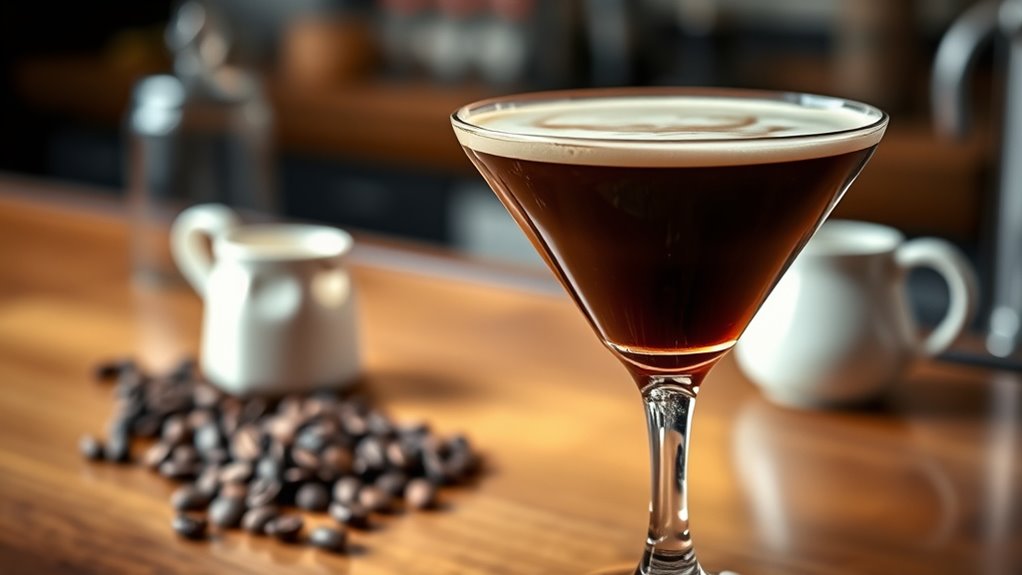
Although some modern variations include cream or milk, an espresso martini traditionally contains no dairy. You’ll find the classic cocktail is made simply with vodka, coffee liqueur, and freshly brewed espresso. These ingredients combine to create a naturally dairy-free drink without the need for milk or cream.
If you’re concerned about dairy content, rest assured the original recipe doesn’t call for any dairy components. Some contemporary recipes add cream or milk to introduce a creamier texture, but these adaptations stray from the traditional formula.
When preparing or ordering an espresso martini, you can confidently expect it to be dairy-free unless specifically altered. This makes it an excellent choice if you’re avoiding dairy for dietary or allergy reasons. Additionally, the espresso used in the cocktail is made by forcing hot water through finely ground coffee under high pressure extraction, which contributes to its rich flavor without added ingredients.
What Ingredients Are in a Classic Espresso Martini?
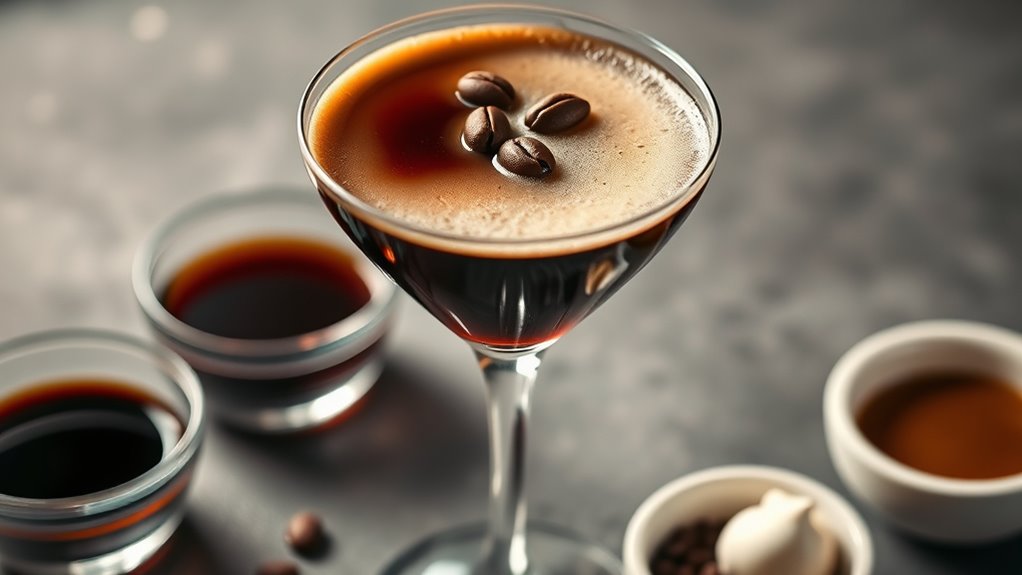
You’ll find that a classic Espresso Martini includes vodka, freshly brewed espresso, and coffee liqueur like Kahlua as its core ingredients.
Now, while the traditional recipe is dairy-free, some people like to add a splash of cream or milk to give it a bit more richness.
Knowing these ingredients really helps you understand how the alcohol and coffee flavors come together to create that perfect balance in the cocktail.
For the best flavor, using espresso extracted within the ideal 25-30 second timing ensures a rich and balanced coffee base for your cocktail.
Core Espresso Martini Ingredients
When you make a classic Espresso Martini, you’ll rely on just three core ingredients: vodka, freshly brewed espresso, and coffee liqueur like Kahlúa. These components come together to create a smooth, rich cocktail with robust coffee flavor and a subtle sweetness from the liqueur.
The freshly brewed espresso provides the distinctive coffee taste and the characteristic crema on top, essential for an authentic experience.
Vodka serves as a neutral spirit base, allowing the espresso and coffee liqueur to shine without overpowering them.
Importantly, the original recipe contains no dairy, making it naturally dairy-free. While some variations introduce cream or milk, these aren’t part of the traditional formulation.
Sticking to these core ingredients guarantees you enjoy a classic, dairy-free Espresso Martini.
Common Dairy Additions
While the classic Espresso Martini relies on vodka, espresso, and coffee liqueur without any dairy, many variations introduce cream or milk to change up the texture and flavor.
You’ll find these common dairy additions in some recipes:
- Cream adds a rich, velvety mouthfeel, making the cocktail smoother.
- Milk lightens the drink’s intensity and softens the bitterness of espresso.
- Cream-based liqueurs combine dairy with alcohol, enhancing sweetness and creaminess.
Alcohol and Flavor Components
Although many variations exist, a classic Espresso Martini contains just three key ingredients: vodka, coffee liqueur such as Kahlúa, and freshly brewed espresso. These components create a balanced cocktail with a robust coffee flavor, subtle sweetness, and a clean alcoholic finish.
Vodka provides a neutral base, allowing the rich coffee notes to shine, while the coffee liqueur adds both sweetness and depth.
Fresh espresso delivers a bold, aromatic punch without any dairy, as it’s brewed black. Although some recipes call for cream or milk to add creaminess, the traditional Espresso Martini remains dairy-free.
If you want a smoother texture without dairy, non-dairy alternatives like coconut or almond milk can be used instead, preserving the cocktail’s classic flavor profile without compromising its essence.
Using freshly pulled espresso shots made with the proper extraction time ensures the cocktail has optimal flavor and crema quality.
How to Identify Hidden Dairy in Espresso Martini Ingredients
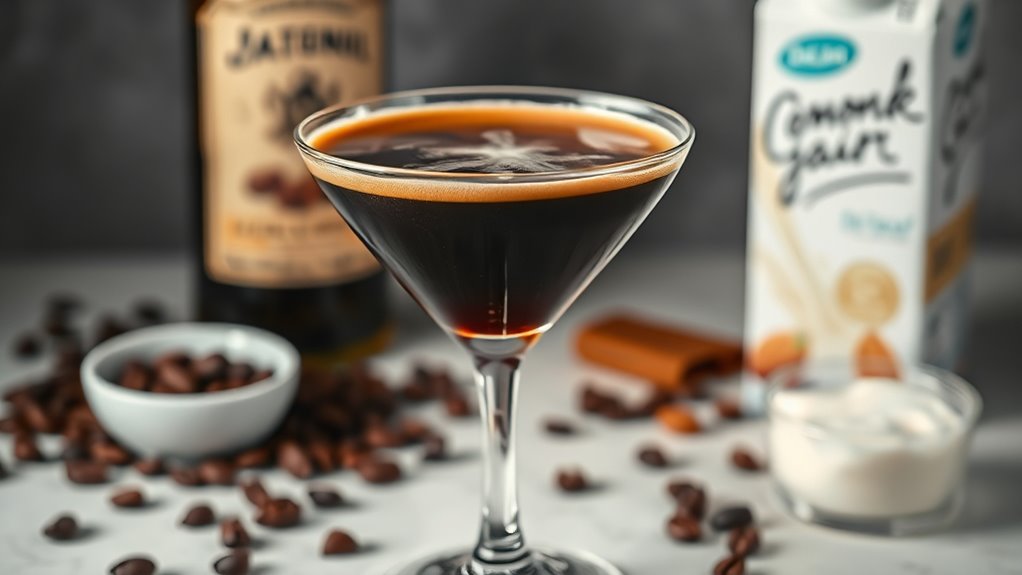
Because many pre-made coffee liqueurs and flavored syrups may contain hidden dairy, you need to carefully check ingredient labels before using them in your Espresso Martini.
Even if the espresso itself is dairy-free, additives in mixers can introduce milk-derived components.
To identify hidden dairy, follow these steps:
- Examine ingredient lists for terms like milk solids, casein, whey, or lactose.
- Avoid flavored syrups or creamers that don’t explicitly state they’re dairy-free.
- Be cautious with garnishes such as commercially prepared whipped cream, which often contains dairy.
How to Make a Dairy-Free Espresso Martini at Home
To make a dairy-free espresso martini at home, start by picking your favorite plant-based milk—coconut or almond milk works great for that creamy texture and rich flavor.
Then, grab some freshly brewed espresso, vodka, and a natural sweetener like maple syrup to bring it all together.
It’s pretty straightforward from there. Just combine all those ingredients, shake them up well, and you’ll have a smooth, dairy-free cocktail ready to enjoy every time.
Easy and delicious!
Dairy-Free Ingredient Options
When crafting a dairy-free espresso martini at home, you can easily swap traditional cream and dairy-based liqueurs with plant-based alternatives like coconut milk, almond milk, or cashew cream. These options maintain the cocktail’s creamy texture and complement the rich coffee flavors without dairy.
To ensure a fully dairy-free espresso martini, consider these key ingredient substitutions:
- Use coconut milk for a smooth, rich creaminess that pairs well with espresso.
- Replace dairy cream with almond or cashew milk to keep the drink light yet flavorful.
- Opt for dairy-free coffee liqueurs made from plant-based ingredients to maintain vegan integrity.
Step-By-Step Preparation
Although espresso martinis traditionally rely on dairy cream, you can easily create a smooth, dairy-free version by selecting the right plant-based ingredients. Start by brewing fresh espresso or strong coffee and chilling it.
Next, choose a dairy-free milk like coconut or almond for creaminess. In a shaker, combine the chilled espresso, your chosen dairy-free milk, a natural sweetener such as maple syrup or agave, and optional spirits.
Add ice, then shake vigorously until frothy.
For an elegant touch, rim your glass with a cocoa powder and sea salt blend. Finally, strain the cocktail into the chilled glass, garnish as preferred, and serve immediately.
This method guarantees a rich, creamy, and dairy-free espresso martini experience you’ll enjoy at home. Incorporating the shaking process also helps to aerate the espresso, enhancing smoothness and creating a light, frothy texture that elevates the drink’s overall mouthfeel.
Using Coconut Milk and Other Dairy Alternatives
Since traditional Espresso Martinis are naturally dairy-free, incorporating coconut milk or other plant-based alternatives offers a way to add creaminess without compromising this characteristic. You can enhance your cocktail with these options while keeping it suitable for vegans and those with dairy allergies.
Here’s what to take into account when using dairy alternatives: Choose unsweetened coconut, almond, oat, or cashew milk to maintain control over sweetness and flavor balance. Coconut milk lends a rich, slightly sweet taste that complements espresso’s boldness.
Feel free to experiment with proportions to achieve the desired texture without overpowering the coffee notes. It’s all about finding the right balance that works for your taste buds.
Using filtered water when brewing espresso ensures the best flavor, which is important when mixing cocktails like Espresso Martinis.
How Espresso Martinis Get Creamy Without Dairy
To achieve a creamy texture in Espresso Martinis without using dairy, you can rely on several effective techniques and ingredients. Using plant-based milks like coconut or almond milk adds natural creaminess. Incorporating coconut cream or non-dairy whipped toppings further enhances richness.
Chilled, freshly brewed espresso paired with a touch of sweetener helps create a smooth, frothy base. Vigorously shaking the cocktail with ice traps air, producing a thick, frothy surface that mimics dairy’s texture.
Some recipes also use aquafaba or vegan creamers to replicate the velvety mouthfeel typical of traditional versions.
By combining these methods, you can craft a luscious, dairy-free Espresso Martini that maintains both flavor and the signature creamy consistency bartenders and enthusiasts expect. It’s really about mixing the right ingredients and shaking it up just right.
You’ll get that classic creamy feel without any dairy at all.
Tips for Ordering a Vegan Espresso Martini at Bars
When ordering a vegan Espresso Martini at bars, you’ll want to clearly specify that you need a dairy-free version to avoid any misunderstandings. Many bars use dairy-based milk or creamer, so asking about plant-based alternatives like almond, soy, or coconut milk is essential.
You should also confirm that any syrups or flavorings are vegan and free from dairy.
To guarantee your vegan cocktail is made correctly, clearly state you want a vegan Espresso Martini. Ask if they use dairy-free milk alternatives. And request the omission of any non-vegan syrups or creamers.
Some bars have vegan-friendly recipes or can customize your drink upon request, so don’t hesitate to communicate your needs precisely. It’s always better to be clear upfront to get exactly what you want.
Customizing Your Espresso Martini for Different Dietary Needs
Although espresso martinis traditionally exclude dairy, customizing them to suit different dietary needs guarantees everyone can enjoy this popular cocktail.
To adapt for dairy-free or vegan diets, swap any cream or milk-based ingredients with plant-based alternatives like coconut, almond, or oat milk.
For dairy-free or vegan options, replace cream or milk with plant-based milks like coconut, almond, or oat.
Coconut milk, in particular, offers a creamy texture that closely mimics dairy, enhancing the cocktail’s richness without compromising dietary restrictions.
Also, make sure to check that coffee liqueurs or flavored spirits don’t contain hidden dairy components, especially if you have strict allergies or intolerances.
By making these simple substitutions and ingredient checks, you can confidently tailor your espresso martini to accommodate vegan, lactose-intolerant, or dairy-sensitive guests without sacrificing flavor or quality.
It’s easier than you think!
Additionally, ensuring the coffee quality is high and free of defects can enhance the overall flavor experience of your espresso martini.
Frequently Asked Questions
Can Espresso Martinis Be Made With Decaffeinated Coffee?
Yes, you can make espresso martinis with decaffeinated coffee. It preserves the rich flavor while eliminating caffeine, letting you enjoy the classic cocktail’s taste anytime without the stimulating effects of regular espresso.
What Is the Best Coffee Liqueur Substitute for Espresso Martinis?
The best coffee liqueur substitute for espresso martinis is Mr. Black, a vegan, dairy-free option. It’s a great choice if you’re looking for something that’s both rich and authentic. Plus, it keeps things simple without any dairy.
You can also use homemade coffee extract with vodka or coffee-flavored syrup. These alternatives help you achieve that deep coffee taste you want in your cocktail. It’s all about finding what suits your palate best.
How Long Does an Espresso Martini Stay Fresh After Mixing?
You should drink your espresso martini immediately after mixing for the best flavor and texture. If you must store it, refrigerate it and consume within 24 hours to avoid spoilage.
After that, the froth and freshness start to fade, and the taste won’t be as good. So, it’s really best enjoyed right away. But if you’re planning ahead, just keep it cold and don’t wait too long.
Are Espresso Martinis Safe During Pregnancy?
You shouldn’t drink espresso martinis during pregnancy because they contain alcohol. Alcohol can harm fetal development, so it’s best to avoid it altogether.
But don’t worry, you can still enjoy the flavor! Try non-alcoholic versions made with coffee and dairy-free milk instead. That way, you stay safe and get to enjoy a tasty treat responsibly.
Can Espresso Martinis Be Served Hot Instead of Cold?
You can serve Espresso Martinis hot, but you shouldn’t. You lose the froth, you lose the chill, you lose the balance.
The classic experience demands cold, so stick to shaking it with ice for best results. Trust me, it just works better that way.
Conclusion
Exploring the world of espresso martinis without dairy is like steering a sleek boat through clear waters. You know exactly where you’re headed. Classic recipes don’t include dairy, but hidden ingredients can sneak in.
By choosing coconut milk or other plant-based alternatives, you can enjoy that creamy texture guilt-free. Whether making one at home or ordering out, customizing your espresso martini guarantees it suits your dietary needs perfectly. It keeps every sip smooth and satisfying.