You shouldn’t assume espresso means dark roast, since espresso roast refers to beans prepared specifically for pressure extraction and can range from light to dark. Dark roasts are popular because they extract quickly, deliver bold smoky flavors, and create thick crema.
But lighter roasts can offer brighter, more complex notes with proper technique. Understanding how roast level influences flavor, extraction, and brewing method will clarify why espresso isn’t limited to just dark roast beans. It’s really about what you prefer and how you brew it.
What Is Espresso Roast Coffee?
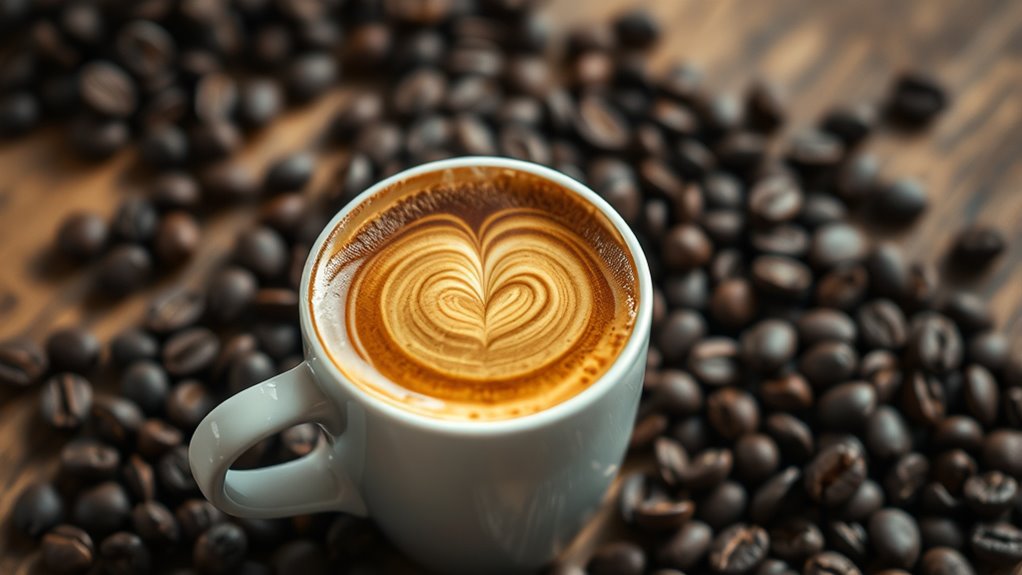
Although many assume espresso roast refers to a specific dark roast level, it actually designates coffee beans tailored for espresso brewing. It focuses on flavor traits like sweetness, body, and crema that excel under high-pressure extraction.
When you choose espresso roast coffee, you’re selecting beans optimized for how they perform in an espresso machine rather than their color on the roast spectrum. These beans can range from light to dark roast, though many traditional blends lean toward medium to dark to develop richer flavors.
The key is how the roasting process enhances qualities that hold up under intense pressure, producing a balanced, full-bodied shot. This development often entails longer roasting to deepen flavor profiles, especially when combined with milk-based espresso drinks. Proper extraction timing and temperature play a crucial role in achieving the best flavor from these specially roasted beans, ensuring a balanced, flavorful espresso.
How Does Dark Roast Differ From Espresso Roast?
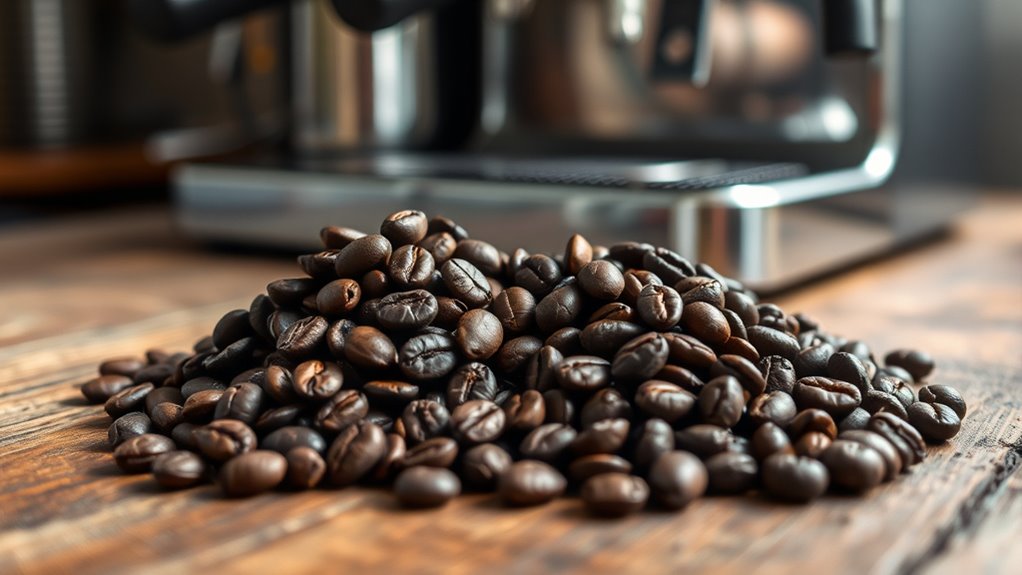
When comparing dark roast and espresso roast, it’s important to understand that dark roast refers specifically to the degree of roasting. It’s characterized by longer roasting times and higher temperatures that produce a shiny, oily bean with deep, smoky flavors.
Espresso roast, on the other hand, is a designation based on the intended brewing method rather than roast level. It indicates beans optimized to perform well when brewed as espresso, and these beans can range from light to dark roasts.
The key difference lies in purpose: dark roast defines how the beans are roasted, while espresso roast defines how the beans are best utilized. Not all dark roasts are espresso roasts, but many espresso roasts tend to be medium to dark to complement espresso extraction dynamics.
Additionally, espresso beans are often blended and roasted specifically to enhance crema development and flavor intensity under high-pressure extraction.
How Roast Level Affects Espresso Flavor and Extraction
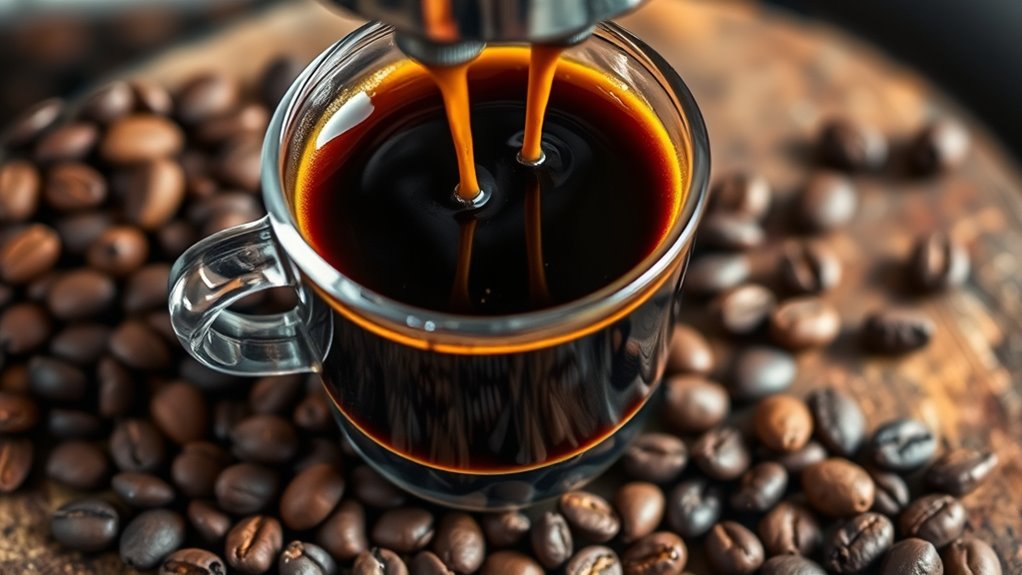
You’ll notice that the roast level really shapes the flavor of your espresso. Lighter roasts tend to bring out a bright acidity, while darker roasts lean more towards smoky bitterness. It’s pretty interesting how that works.
Plus, the roast level affects how quickly the coffee extracts. Darker beans extract faster, which means if you’re not careful, you might end up over-extracting and getting a bitter shot.
So, it’s all about finding the right balance.
At the end of the day, balancing acidity and bitterness comes down to picking the roast that fits the espresso flavor profile you want. It’s a bit of an art, but once you get it, your espresso will taste just right.
Dark roasts also produce a thicker, more stable crema, which enhances the texture and visual appeal of your espresso.
Roast Level Flavor Profiles
Because roast level directly influences the chemical composition and physical structure of coffee beans, it plays a critical role in shaping espresso flavor and extraction.
Lighter roasts reveal bright, fruity, and floral notes, preserving the beans’ origin characteristics. Meanwhile, darker roasts emphasize deep chocolate, smoky, and caramelized flavors.
As beans darken, they become more porous, which speeds up extraction and can lead to over-extraction if you don’t adjust carefully.
Dark roasts produce a fuller body and thicker crema, but they might mask some of the nuanced flavors you find in lighter profiles.
Medium roasts strike a balance between complexity and smoothness. They offer versatility in espresso flavor.
Understanding these flavor profiles helps you tweak grind size and brewing parameters to get the extraction just right and achieve your ideal espresso character.
Using a machine with precise temperature control can help manage these adjustments for optimal extraction and flavor balance.
Extraction Impact By Roast
Although roast level greatly influences espresso flavor, it also directly impacts extraction dynamics during brewing. Darker roasts, with their porous, oil-rich structure, extract more rapidly because they release soluble compounds more readily under pressure. This means you’ll need shorter extraction times and potentially coarser grinds to avoid over-extraction, which causes bitterness.
Conversely, light and medium roasts have denser beans that require longer extraction times and finer grinds to fully develop their flavors. If you under-extract these, the result tends toward sourness.
To optimize your shot, you must adjust grind size, dose, and extraction time in accordance with roast level.
Understanding these nuances ensures you extract the best flavor profile possible, highlighting the roast’s unique characteristics without compromising balance or clarity. It’s all about tuning your approach to bring out the best in each roast.
Balancing Acidity And Bitterness
When you adjust the roast level, you directly influence the balance between acidity and bitterness in your espresso. Dark roasts have reduced acidity because prolonged roasting breaks down acidic compounds, making bitterness more pronounced. This shift can mask the espresso’s natural sweetness if not managed carefully.
To achieve a balanced flavor, you need to control extraction variables like grind size and brewing time. Over-extraction increases bitterness, while under-extraction may leave undesirable sourness.
Light and medium roasts retain more acidity, offering brighter, more complex profiles, but they may lack the smoothness that dark roasts provide.
Additionally, the roast level influences oil content, which plays a crucial role in crema formation and flavor intensity.
Can Light or Medium Roasts Work for Espresso?
If you want to explore espresso beyond traditional dark roasts, light and medium roasts can definitely work. But they demand careful control over grind size, dose, and extraction time.
These roasts yield brighter, fruitier, and floral shots with higher acidity. That’s quite different from the heavier profile of dark roasts.
Because light and medium beans are denser and less roasted, they resist extraction. You’ll need to grind finer and shorten brew times to avoid sourness and under-extraction.
This precision makes brewing more challenging but also rewarding. It reveals complex, nuanced flavors that highlight the coffee’s origin characteristics.
Mastering these adjustments lets you diversify your espresso experience and appreciate flavors often muted in traditional dark roasts. Give it a try—you might be surprised by what you discover!
Also, keep in mind that factors like grind size and extraction time significantly influence the caffeine content and flavor of your espresso shot.
Why Are Dark Roasts Popular for Espresso Brewing?
Many espresso enthusiasts prefer dark roasts because their bold, smoky flavors hold up well under the high pressure and short extraction times characteristic of espresso brewing. The extended roasting process develops oils and deep flavors, creating a rich, full-bodied espresso profile. Dark roasts also feature lower acidity, resulting in a smoother, more forgiving shot.
Their porous bean structure allows faster extraction, which is ideal for espresso’s quick brew. Plus, traditional European preferences for intense, robust flavor and creamy crema also play a role.
Additionally, the roasting process produces oily, dark brown beans that contribute to the signature espresso’s thick crema and complex aroma.
| Key Feature | Benefit for Espresso |
|---|---|
| Bold, smoky flavors | Stand out under high pressure |
| Lower acidity | Smoother, less bitter shots |
| Porous bean structure | Faster, efficient extraction |
Is There More Caffeine in Dark Roast Espresso?
Although dark roast beans undergo longer roasting that slightly reduces their density, this process doesn’t markedly alter their caffeine content. You won’t find more caffeine in dark roast espresso compared to medium or light roasts. The roasting level has minimal impact on caffeine concentration.
Instead, caffeine variation depends largely on brewing methods and the coffee-to-water ratio you use. When measured by volume, dark roast beans may seem less caffeinated because they’re larger and more porous. But per ounce, caffeine levels are quite similar across roasts.
Best Brewing Methods for Espresso Dark Roast Coffee
Understanding the caffeine content across roast levels helps clarify that flavor, rather than caffeine strength, defines your espresso experience.
Flavor, not caffeine content, is what truly shapes your espresso experience across different roast levels.
To release the bold, smoky notes of dark roast espresso beans, pressure-based methods like espresso machines and Moka pots work best. These techniques efficiently extract rich flavors without overwhelming bitterness.
You can also use pour-over or AeroPress, but you’ll need to adjust grind size and brew time carefully to avoid over-extraction.
The French press’s full immersion style complements dark roast’s robust profile, highlighting its body. Since dark roasts extract more quickly, reducing grind size or brew time is essential to prevent harshness.
Maintaining a consistent brewing temperature between 195–205°F ensures you avoid scorched flavors and achieve a balanced, flavorful espresso.
For optimal extraction and consistency, many professionals rely on commercial espresso machines that precisely control pressure and temperature.
It’s all about finding the right balance to get the most from those dark roast beans.
How to Choose Between Espresso and Dark Roast Coffee
When you’re deciding between espresso and dark roast coffee, it’s helpful to think about how the roast levels affect flavor and extraction.
You see, dark roast coffee has those bold, smoky notes that really stand out. And with espresso, the high-pressure brewing method brings out a whole different set of flavors.
Roast level influences flavor more than caffeine strength, so understanding roast and extraction helps you make the best choice.
Roast Level Differences
Since espresso refers primarily to a brewing method rather than a specific roast level, it’s important to recognize that espresso beans can range from medium to dark roast. Dark roast coffee beans, roasted longer, tend to develop bold, smoky flavors with chocolate and caramel notes.
However, not all espresso beans are dark roast; some are medium roast, carefully optimized to balance brightness and acidity under espresso extraction.
When choosing between espresso and dark roast coffee, consider that roast level alone doesn’t define the experience. Your choice depends on how you want your coffee to taste and how the roast interacts with the espresso brewing process.
Understanding these roast level differences helps you select beans that best match your flavor preferences and brewing style.
Flavor Profile Considerations
Although espresso can be crafted from any roast level, your choice between espresso and dark roast coffee hinges on the flavor profile you prefer.
If you lean toward bold, smoky, and caramel-rich notes, dark roast coffee aligns with traditional espresso characteristics.
However, if you seek a more balanced or origin-specific taste, lighter roasts used for espresso reveal bright, fruity, and floral nuances that dark roasts typically mask.
It’s important to recognize that the term “espresso” refers to a brewing style rather than a roast level.
So, the distinct flavors you experience depend more on the roast degree and bean origin than the espresso or dark roast label.
Understanding these factors will help you select coffee that suits your palate with precision and depth.
Brewing Method Compatibility
Because espresso brewing demands specific parameters, your choice between dark roast and other roast levels hinges on how well you adjust grind size, extraction time, and pressure to the beans’ characteristics. Dark roast beans extract faster and yield richer crema, which suits traditional espresso.
On the other hand, lighter roasts require a finer grind and longer extraction to balance acidity and complexity. So, your brewing method compatibility really depends on precision.
| Roast Level | Extraction Speed | Flavor Notes |
|---|---|---|
| Dark | Fast | Bold, smoky, rich |
| Medium | Moderate | Balanced, nuanced |
| Light | Slow | Bright, complex |
Adjusting these parameters lets you tailor espresso beyond just the roast level. This way, you ensure the desired flavor and body in every shot.
Frequently Asked Questions
Can I Use Espresso Dark Roast for Cold Brew Coffee?
Yes, you can use espresso dark roast for cold brew. You’ll get a bold, smoky flavor with lower acidity.
Just adjust the grind size and steeping time to avoid over-extraction. This will help balance the intense, full-bodied profile.
How Does Grind Size Differ for Espresso Dark Roast?
Like tuning a fine instrument, you’ll grind espresso dark roast very fine, almost powdered sugar, to balance its porous nature. Precision matters. Too coarse makes it sour, too fine pulls bitterness.
What Are Common Flavor Notes in Espresso Dark Roast?
You’ll find espresso dark roast bursting with dark chocolate, roasted nuts, caramelized sugar, and smoky, toasted flavors. Sometimes, you’ll notice subtle spice or molasses.
It all comes together to create a bold, rich, and less acidic coffee experience.
Does Espresso Dark Roast Require Special Storage Methods?
Yes, you need to store espresso dark roast beans in airtight, opaque containers away from light, heat, and moisture. This helps keep the beans fresh and flavorful for longer.
Avoid refrigeration because it can cause rancidity and flavor loss. Instead, keep them at a stable, cool room temperature. That way, your espresso will taste just right every time.
Can Espresso Dark Roast Be Blended With Other Roasts?
Yes, you can blend espresso dark roast with lighter roasts to balance acidity, body, and sweetness. By adjusting grind size and extraction time, you’ll release complex, nuanced flavors that pure dark roast alone might not reveal.
It’s a great way to experiment and find a flavor profile that suits your taste. Mixing roasts can bring out the best of both worlds—richness from the dark roast and brightness from the lighter ones. Give it a try and see what unique blends you can create!
Conclusion
Choosing between espresso and dark roast coffee isn’t black and white. Like a well-tuned instrument, each roast level shapes your espresso’s flavor and extraction differently. Dark roasts bring boldness and body, while espresso roasts balance intensity and brightness.
Understanding these nuances lets you tailor your brew to your taste and method. So, trust your palate and experiment. Your perfect espresso is a blend of knowledge and personal preference.