You’re drinking espresso, but once you add hot water, it’s no longer straight espresso. It becomes an Americano. This milder, larger coffee keeps the caffeine but softens the bold flavor and thick texture of espresso by dilution.
While it starts with an espresso shot, an Americano is classified as a different beverage because the added water changes its taste and body. Curious about how water changes the flavor and common myths? There’s more to discover.
What Exactly Is an Americano Coffee
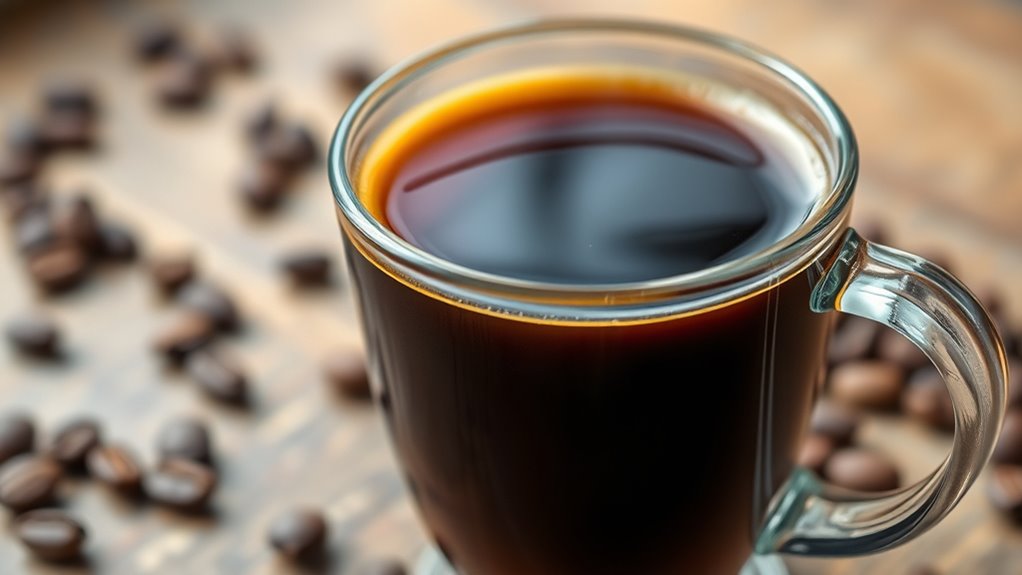
What makes an Americano coffee unique? You start with a shot of espresso and dilute it with hot water, creating a 150-300ml drink that’s smoother and less intense than straight espresso.
The term “Americano” literally means “American” in Italian, hinting at its origin as a coffee style favored by Americans who preferred a milder brew.
When you prepare it, you typically pour hot water first, then add espresso, though some reverse the order.
Despite its larger volume and diluted taste, an Americano holds about the same caffeine content as a single espresso shot.
This balance lets you enjoy a longer coffee experience without sacrificing the bold espresso essence.
It’s a clever way to savor espresso with a gentler flavor and a more extended drink.
The quality of the espresso shot itself, including factors like extraction time and grind size, plays a crucial role in the final flavor of an Americano.
How Americano Differs From Straight Espresso
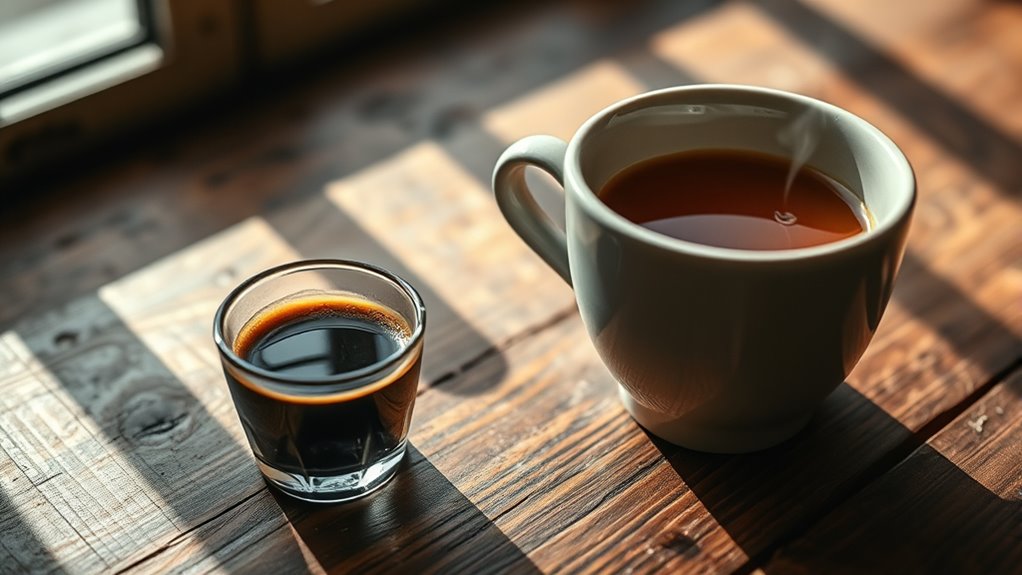
You’ll notice that an Americano gives you a bigger cup with a smoother, lighter taste compared to the strong, bold flavor of straight espresso.
Even though both drinks usually have about the same amount of caffeine, the Americano is diluted with water, which changes its texture and makes it less bitter.
Knowing these differences helps you appreciate how volume, flavor, and concentration come together to shape your coffee experience.
Additionally, the Americano lacks the characteristic crema found in a straight espresso shot, which contributes to its lighter texture and appearance.
Volume And Concentration
Although both Americano and straight espresso start with the same concentrated shot, the addition of hot water in an Americano increases its volume dramatically. It typically ranges from 150 to 300 ml compared to espresso’s 30 to 60 ml. This dilution lowers the concentration considerably.
Americano’s total dissolved solids (TDS) are around 1.2-1.5%, whereas espresso’s TDS sits much higher at 8-12%. Even though you get a milder, more diluted drink with an Americano, the caffeine content can be similar if both use the same number of espresso shots.
The main distinction lies in the coffee-to-water ratio.
Espresso delivers a thick, syrupy experience, while an Americano offers a longer, less intense cup due to its larger volume and lower concentration.
Flavor And Texture
How does an Americano’s flavor and texture set it apart from straight espresso? When you sip an Americano, you’ll notice its lighter, more diluted flavor compared to espresso’s concentrated intensity. Adding hot water softens the bitterness and acidity, giving the Americano a milder, more mellow mouthfeel.
Unlike espresso’s thick crema and syrupy body, an Americano feels smoother and lighter on your palate. Its texture is closer to tea than coffee. This dilution allows the underlying coffee notes to shine subtly, without the bold punch espresso delivers. Choosing decaf espresso processed through methods like the Swiss Water Process can further reduce caffeine while preserving flavor in your Americano.
Caffeine Content Comparison
Wondering if an Americano packs less caffeine than a straight espresso? It doesn’t. A single shot of espresso contains about 60-70mg of caffeine, whether you drink it straight or diluted as an Americano.
The hot water added to an Americano changes the taste and volume but doesn’t reduce caffeine.
If your Americano uses a double shot, expect roughly 120-140mg of caffeine, just like having two straight espresso shots.
The caffeine content depends primarily on how many espresso shots you use, not the added water.
Keep in mind that espresso’s caffeine content can vary due to factors like bean type and roast level, which influence the final caffeine amount.
The Role of Crema and Pouring Order in Americano vs Espresso
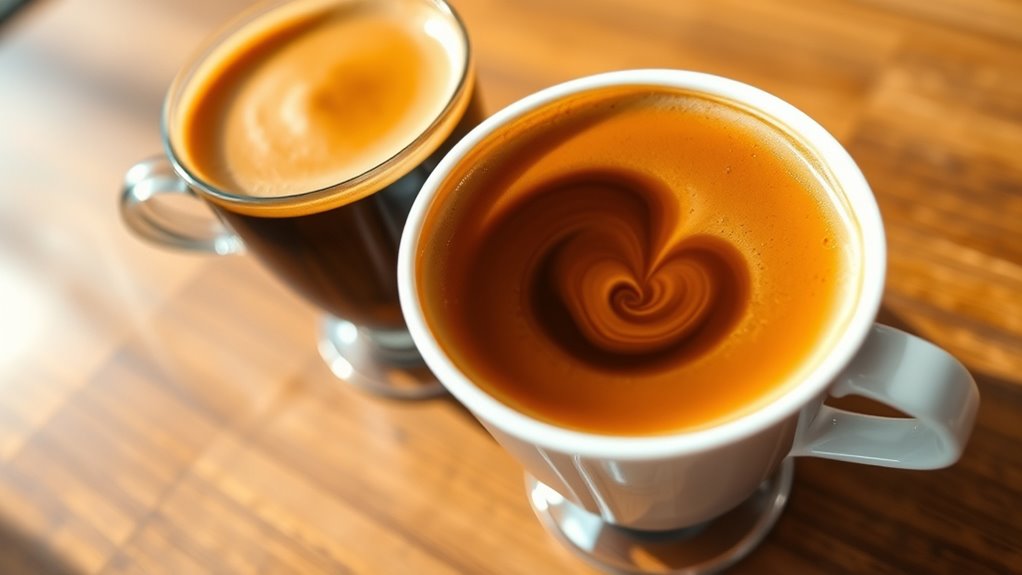
Because the crema plays a crucial role in the flavor and texture of espresso-based drinks, understanding how pouring order affects it can really elevate your coffee experience. When making an Americano or comparing it to espresso, the way you combine water and coffee makes a big difference.
Pouring hot water over espresso thins and lightens the crema, which diminishes its richness.
Adding hot water atop espresso weakens the crema, reducing its depth and flavorful richness.
On the other hand, adding espresso to hot water, like in a long black, helps preserve the crema’s thickness and aroma.
That intact crema holds emulsified oils and aromatic compounds that boost flavor and mouthfeel.
But once the crema breaks, you end up with a flatter, less complex drink that reduces sensory enjoyment.
Additionally, factors such as brew pressure and extraction time influence the crema’s stability and overall acidity profile.
Caffeine Content: Americano vs Espresso?
Although an Americano might seem milder because of the added water, its caffeine content closely matches that of a straight espresso shot since both rely on the same espresso base. A single shot of espresso typically contains about 60-70mg of caffeine.
When you add hot water to make an Americano with one shot, the caffeine amount stays roughly the same.
If you choose a double shot in your Americano, expect the caffeine content to double too, reaching around 120-140mg.
The key here is the number of espresso shots used, not whether you drink it straight or diluted. So, when it comes to caffeine, an Americano delivers just as much kick as a pure espresso shot.
Regular maintenance, including descaling your espresso machine, helps ensure consistent extraction and caffeine content.
How Water Dilution Changes Americano’s Flavor
When you add hot water to espresso, you’re actually changing its flavor, texture, and intensity in some pretty noticeable ways. Dilution helps soften that strong body espresso has and cuts down on bitterness, which makes for a smoother mouthfeel.
How much water you add really makes a difference—it’s what decides if your Americano tastes bold and punchy or more mild and mellow. So, it’s all about finding the right balance that suits your mood or preference.
Using filtered water is important to ensure the best taste and prevent any unwanted flavors or machine issues.
Dilution Impact On Taste
As you add water to espresso to create an Americano, you change its flavor by reducing the intensity and bitterness. This dilution alters the taste in several key ways:
- It lowers the concentration of solubles, making the flavor milder and more balanced.
- The bitterness softens as the sharp acidity and harsh notes are toned down.
- The total dissolved solids (TDS) decrease, lightening the drink’s strength and shifting it toward a tea-like profile.
- Over-dilution can strip away the espresso’s rich, syrupy body, markedly changing its characteristic depth.
Because espresso flavor declines rapidly due to oxidation, the timing of dilution and consumption is crucial to preserving taste.
Texture And Mouthfeel
Because adding hot water lowers the total dissolved solids (TDS) in your Americano, you’ll notice a lighter, less viscous texture compared to straight espresso. The syrupy, coating mouthfeel of espresso softens into a smoother, tea-like experience. However, over-dilution can make the texture thin and weak.
Crema, which adds a velvety sensation, becomes less stable with added water, reducing that creamy layer. Temperature also plays a role: hotter Americanos feel more robust, while cooler ones can seem watery and less creamy.
Adjusting the coffee-to-water ratio is essential to maintain flavor balance and avoid a diluted taste in your Americano, as highlighted in brewing techniques for espresso-style drinks with a coffee-to-water ratio.
| Aspect | Effect in Americano |
|---|---|
| TDS | Reduced, lighter texture |
| Syrupy Coating | Diminished, smoother feel |
| Crema | Less prominent, less velvety |
| Temperature | Hot = robust; Cool = diluted |
Flavor Intensity Changes
Although espresso packs an intense flavor punch, adding hot water to create an Americano considerably softens that intensity by lowering the concentration of dissolved solids. When you dilute espresso, you’ll notice several changes:
The flavor intensity drops as the TDS falls from 8-12% in espresso to about 1.2-1.5% in an Americano. Bitterness and acidity become less pronounced, making the taste smoother and more balanced.
The syrupy texture and rich aroma weaken, giving you a lighter, more tea-like mouthfeel.
The more water you add, the milder the coffee experience becomes, allowing you to tailor strength to your preference.
Understanding these effects helps you appreciate how water dilution transforms espresso into a gentler, more nuanced Americano.
Drinking an Americano still benefits from observing the crema and aroma to gauge quality before enjoying the milder flavor.
Is an Americano Considered a Type of Espresso?
How do you distinguish an Americano from an espresso? While an Americano starts with a shot of espresso, it’s not considered a type of espresso itself.
Espresso refers to a brewing method that produces a concentrated, intense coffee shot.
In contrast, an Americano is a diluted beverage made by adding hot water to that espresso shot, creating a lighter, longer drink. This dilution changes its classification.
Though it uses espresso as a base, an Americano stands apart as a different coffee drink.
So, when you order an Americano, you’re getting a prepared beverage that includes espresso but isn’t itself an espresso shot.
Understanding this distinction helps you appreciate the unique role each plays in the coffee world.
How to Make a Perfect Americano Coffee at Home
When you want to craft a perfect Americano coffee at home, starting with a well-extracted espresso shot is essential. Follow these steps to get it just right:
Brew a single or double espresso shot using an espresso machine or AeroPress for authentic flavor.
Heat water to 75-80°C (167-176°F). This is hot enough to dilute but won’t scald the espresso.
Pour the hot water over the espresso in a 1:2 to 1:3 ratio, adjusting for your preferred strength.
Use a tall, heat-safe glass to mix and fully enjoy the aroma and color of your Americano.
Common Myths About Americano Coffee
Now that you know how to make a perfect Americano at home, it’s worth clearing up some common misconceptions about this popular coffee.
One widespread myth claims WWII soldiers diluted espresso with hot water to mimic American drip coffee. But here’s the thing—coffee was actually banned in Italy during the war, so that story doesn’t really hold up.
The term “Caffè Americano” actually predates WWII and reflects American influence on Italian coffee culture rather than some wartime necessity.
Historical evidence shows American soldiers didn’t create the Americano by adding water to espresso; the concept existed well before the conflict.
So, the Americano’s origin isn’t a wartime invention. Instead, it’s a product of evolving coffee preferences on both sides of the Atlantic, blending tradition with innovation.
Pretty cool how coffee history connects cultures, right?
Frequently Asked Questions
Can I Use Instant Espresso to Make an Americano?
Yes, you can use instant espresso to make an Americano by dissolving it in hot water. It won’t have the same rich flavor or crema as fresh espresso, but choosing high-quality powder improves the taste markedly.
Just mix the powder with hot water, and you’re good to go. It’s a quick and convenient way to enjoy an Americano without needing an espresso machine. While the flavor might be a bit different, it’s still a nice alternative when you’re short on time.
What’s the Best Water Temperature for an Americano?
Picture steam swirling gently as you pour water heated to 75-80°C over your espresso. You’ll reveal a smooth, balanced Americano, preserving aroma and crema without bitterness or dullness.
It’s perfectly crafted with precise, controlled warmth every time. This temperature really brings out the best in your coffee, making each sip enjoyable and satisfying. Give it a try and taste the difference!
How Long Can I Store an Americano Before It Tastes Bad?
You can store an Americano in the fridge for up to 12 hours. But honestly, it’s best to drink it within 15 to 30 minutes to enjoy the peak flavor.
After 24 hours, it’ll taste flat and bitter because of oxidation. So, if you want the best taste, try not to wait too long before sipping.
Are There Any Popular Americano Variations Worldwide?
You’ll find popular Americano variations like the Long Black in Australia. It’s all about preserving that crema by adding espresso to hot water first.
In South Korea, Iced Americanos are a big hit. They mix espresso with ice and cold water for a refreshing sip. These variations show how the Americano adapts worldwide.
Can I Add Milk or Cream to an Americano?
Yes, you can add milk or cream to an Americano to soften its strong espresso flavor. It changes the texture and taste, making it creamier.
Just keep in mind, it does alter the original profile and will increase the calories a bit. But if you like a smoother, richer drink, go for it!
Conclusion
Now that you’ve navigated the nuances of Americano and espresso, you clearly grasp their distinct dynamics. Whether you’re craving creamy crema or a watered-down wake-up, you’ll appreciate Americano’s artful alteration of espresso essence.
Remember, mastering the making means mixing method meets meticulous measurement. So, savor each sip, skillfully steeped to satisfy your coffee cravings with confidence and clarity.
Keep exploring, experimenting, and enjoying every espresso evolution!