To work an espresso machine, start by filling the reservoir with fresh water and preheating the machine for 15-30 minutes. Grind fresh beans finely, measure 18-20 grams, and tamp firmly. Lock the portafilter in place, then extract your shot within 25-30 seconds, aiming for a rich, caramel-colored flow.
Steam milk by introducing air, creating smooth microfoam. Keep your machine clean and gauges stable for best results. Ready to master every step and perfect your espresso craft?
What Is an Espresso Machine and How Does It Work?
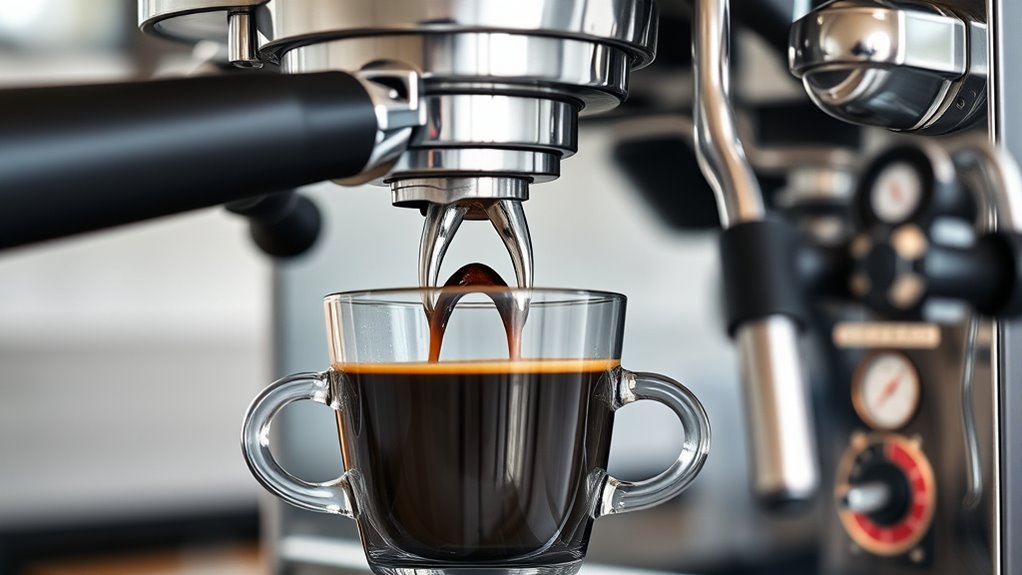
Although espresso machines come in various designs, they all work by forcing hot water through finely-ground coffee under high pressure, usually around 9 bars. This extracts a rich, concentrated shot topped with crema.
You start by grinding fresh coffee beans to a fine consistency, then dose and tamp the grounds firmly into the portafilter.
Once locked into place, the machine heats water close to boiling and uses a pump to push it through the compacted coffee. This precise combination of temperature, pressure, and grind size guarantees ideal extraction of flavor and oils. Advanced boilers equipped with digital or PID systems regulate heat to optimize extraction.
Espresso Machine Parts You Need to Know
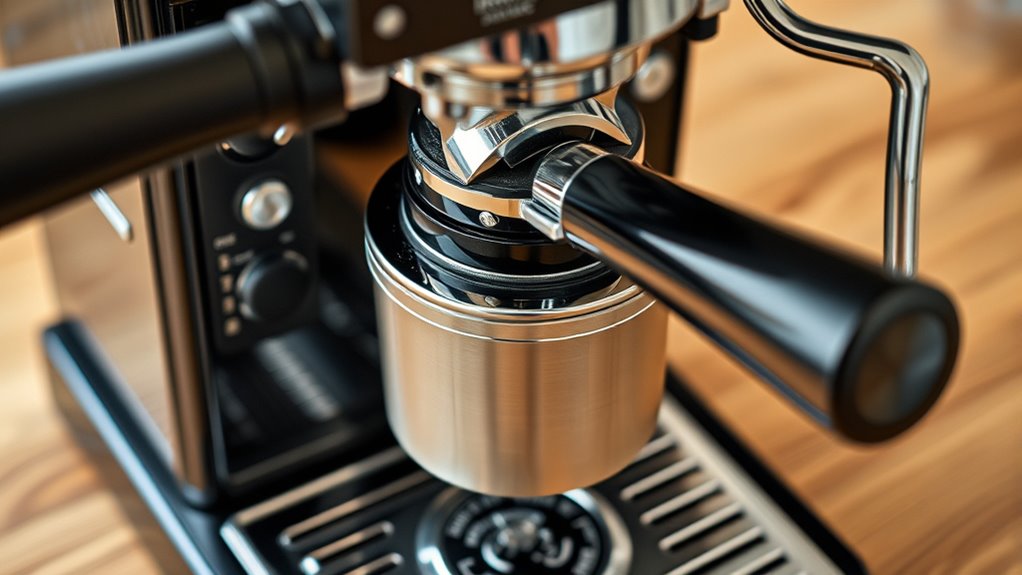
To master your espresso machine, you need to understand its key components and how they work together. The portafilter is your primary tool. It’s a handle with a metal basket that holds the coffee grounds and locks into the grouphead.
The grouphead is where hot water passes through the coffee, extracting rich flavors. You’ll also find the steam wand, a tube controlled by a lever or knob that releases steam for frothing milk.
For making Americanos or pre-wetting grounds, the hot water spigot provides boiling water on demand.
Finally, the pressure and temperature dial lets you monitor and adjust brewing conditions, ensuring you get the perfect espresso shot every time.
Knowing these parts lets you operate your machine confidently and efficiently. The pump generates the necessary pressure to force hot water through the coffee grounds, which is essential for creating a rich and balanced espresso.
How to Preheat and Ready Your Espresso Machine
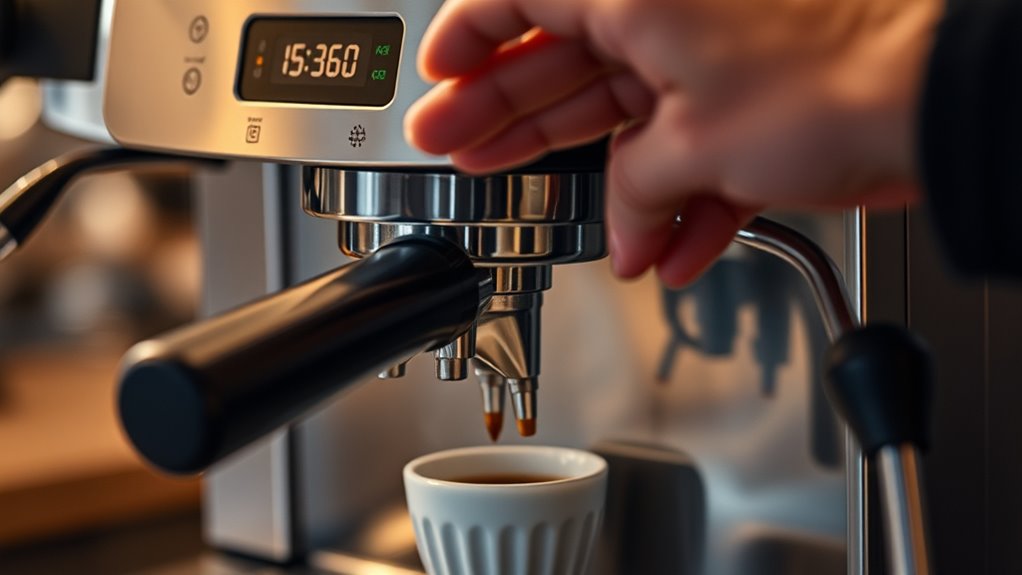
Start by filling the water reservoir with fresh, filtered water to guarantee quality extraction.
Then, power on your espresso machine and give it about 15 to 30 minutes to fully warm up. This lets the internal temperature stabilize, which is super important.
Taking this warm-up time ensures you get consistent, flavorful shots every time you brew.
Maintaining a stable water temperature between 195°F and 205°F during warm-up is essential for optimal espresso extraction.
Filling Water Reservoir
How do you guarantee your espresso machine is ready to deliver the perfect shot? Start by filling the water reservoir with fresh, cold water. Be sure not to exceed the maximum level indicated. This step ensures your machine has enough water for brewing without risking overflow or damage.
Once it’s filled, go ahead and turn on the machine. Let it preheat to the ideal brewing temperature. Keep an eye on the indicator lights or display that show when preheating is complete.
Some machines even recommend running a quick empty shot or steam cycle after preheating to help stabilize the temperature further.
And don’t forget to regularly check and top up the water reservoir. That way, you’ll keep water levels consistent and your machine running smoothly every time you brew.
Maintaining proper brew temperature between 195°F and 205°F during preheating is key to achieving optimal extraction.
Powering On Machine
Once you’ve filled the water reservoir and powered on the machine, give it 15 to 20 minutes to preheat to the ideal brewing temperature, typically around 200°F (93°C). Make sure the power switch is fully engaged, then watch for indicator lights or temperature gauges signaling readiness.
Before pulling your first shot, flush hot water through the grouphead to stabilize temperature and clear residual water. This step guarantees consistent extraction.
Also, check that the steam wand and other components heat up properly so they’re prepared for steaming milk or other tasks.
Taking these steps assures your machine is primed for top-notch performance, setting the foundation for a perfect espresso every time. Proper machine maintenance, including descaling, is vital for maintaining the quality of your espresso and the longevity of your machine.
Allowing Warm-Up Time
Although it might seem tempting to rush into brewing, allowing your espresso machine ample warm-up time guarantees consistent temperature and pressure, which are essential for a quality shot. Turn your machine on at least 15-30 minutes before brewing to let the boiler reach its ideal temperature.
Run hot water through the group head without coffee to warm the brew pathway and stabilize temperature.
Use the steam wand or hot water spout briefly to heat internal components.
Wait for pressure and temperature gauges to stabilize, usually 10-15 minutes after preheating, before pulling your shot.
Don’t forget to preheat your cups and portafilter consistently. This helps maintain temperature stability, improving extraction and crema quality.
Proper warm-up sets the foundation for a flawless espresso every time. So, take a little extra time—it really pays off in the cup!
Ensuring your machine reaches and maintains 9 bars pressure is crucial for authentic espresso extraction and optimal flavor.
Grind and Measure Coffee for Espresso Shots
Since the quality of your espresso starts with the grind, you’ll want to use a high-quality espresso-capable grinder to achieve a consistent, fine texture similar to sand or powder. Freshly grind your beans right before brewing to lock in maximum flavor and crema.
A fine, consistent grind from a quality espresso grinder ensures maximum flavor and rich crema.
Next, measure about 18-20 grams of grounds for a double shot, using a digital scale to guarantee precision. After grinding, evenly distribute the coffee in the portafilter, either with a distribution tool or by gently tapping it, to avoid uneven extraction.
Proper grind size and accurate measurement are vital for balanced flavor and ideal extraction.
Mastering this step sets a solid foundation for pulling the perfect espresso shot every time. Adjusting the grind size precisely also helps control acidity levels in your espresso.
Tamp and Load the Espresso Machine Portafilter
After grinding and measuring your coffee grounds for a double shot, the next step is to tamp and load the portafilter properly. This guarantees even extraction and a balanced espresso. Here’s how to do it right:
Fill the portafilter basket evenly with 18-20 grams of ground coffee, using a scale for accuracy. Level the grounds with a distribution tool or your finger to create a flat surface.
Hold the tamper flat and apply about 30 pounds of steady pressure to compress the coffee puck.
Give the tamper a slight twist to smooth and seal the surface, which helps prevent channeling.
Don’t forget to wipe off any excess grounds from the rim before locking the portafilter into the machine’s grouphead.
Maintaining a consistent tamping pressure for every shot promotes uniform extraction and improves espresso quality.
Following these steps sets you up for a perfect espresso shot every time. It’s pretty simple once you get the hang of it!
Pull Your First Espresso Shot
Now that your portafilter is properly loaded and tamped, it’s time to secure it tightly into the machine’s grouphead.
Go ahead and place your cup right beneath the spout.
Then, start the extraction and keep an eye out for that smooth, caramel-colored stream.
Try to aim for a shot that lasts about 25 to 30 seconds—that’s the sweet spot to capture the perfect balance of flavor and crema.
Maintaining a stable temperature during extraction is crucial for consistency and optimal crema quality.
Preparing The Portafilter
Before you pull your first espresso shot, you’ll want to prepare the portafilter carefully to guarantee the best extraction. Start by removing it from the machine and making sure it’s clean and dry.
Then, follow these key steps:
Fill the brew basket with 18-20 grams of finely ground coffee. Distribute the grounds evenly with a tool or gentle tapping. Tamp firmly with about 30 pounds of pressure to create a flat, compact surface.
Wipe any loose grounds from the edges to prevent leaks. Lock the portafilter securely into the grouphead for a proper seal.
Taking these steps ensures even water flow through the coffee. This sets you up for a balanced and flavorful espresso shot. For a consistent extraction, it’s important to use water heated to the optimal temperature range of 93–96°C.
Extracting The Espresso Shot
How do you know when your espresso shot is just right? Start by guaranteeing your portafilter holds evenly tamped coffee grounds—about 18-20 grams for a double shot. Lock it securely into the grouphead to prevent leaks.
Begin your timer and press brew, aiming for an extraction time between 25 and 30 seconds. Watch the espresso flow; it should start as a thin, steady stream and develop into a rich, caramel-colored crema.
Stop the shot once you reach 1 to 2 ounces or hit the 30-second mark. Pulling your first shot is a balance of timing, volume, and visual cues.
Mastering this ensures a flavorful, perfectly extracted espresso every time.
Steam Milk Like a Pro
Since the quality of your steamed milk can make or break your espresso drink, mastering the steaming process is essential. Here’s how you can Steam Milk Like a Pro:
Mastering steamed milk is key to perfect espresso drinks—here’s how to steam milk like a pro.
Purge the steam wand briefly to clear water and guarantee dry steam. Fill a cold stainless steel pitcher about 2/3 full to allow milk expansion.
Submerge the wand just below the surface to introduce air, then lower it to heat evenly.
Keep the pitcher angled and create a vortex for smooth, velvety microfoam. Stop steaming when the pitcher feels hot, around 150°F.
Then immediately wipe and purge the wand to prevent residue buildup.
Follow these steps to achieve perfectly textured milk that elevates your espresso experience every time. It’s easier than you think once you get the hang of it!
Clean and Maintain Your Espresso Machine
Though brewing a great espresso is rewarding, maintaining your machine guarantees it keeps performing at its finest. Wipe down the grouphead, portafilter, and steam wand with a damp cloth after each use to prevent coffee residue buildup.
Backflush your machine weekly using a manufacturer-approved cleaning solution to remove oils and internal deposits.
Descale every 1-3 months, depending on your water hardness, to prevent mineral buildup that can harm performance.
Replace water filters as recommended to ensure clean water flow and superior taste.
Don’t forget to clean the drip tray and removable parts weekly by soaking them in warm, soapy water to avoid mold and bacteria.
Following these steps consistently will keep your espresso machine running smoothly and your coffee tasting fantastic. It’s really worth the effort to keep your machine in top shape!
Frequently Asked Questions
Can I Use Pre-Ground Coffee for Espresso Shots?
You can use pre-ground coffee for espresso shots, but expect less consistency and flavor. Choose espresso-specific grounds, use them quickly, and store airtight to keep freshness.
Grinding fresh beans still delivers the best crema and taste. So, if you want that rich, full flavor, it’s worth grinding your beans right before brewing. It really makes a difference!
How Do Water Quality and Type Affect Espresso Taste?
Think of water as your espresso’s canvas. Without the right minerals, your shot’s flavor turns flat, like a painting without color.
You’ll want filtered water with balanced minerals to extract rich crema and vibrant taste every time. It really makes a difference in how your espresso comes out.
What Are the Common Troubleshooting Tips for Weak Espresso?
If your espresso tastes weak, check your grind size. Too coarse can cause under-extraction.
Make sure you tamp firmly with about 30 pounds of pressure. Also, ensure your machine hits 9 bars. Using fresh beans and the proper dose really helps too.
Don’t forget to confirm your water temperature is between 195°F and 205°F. These little things can make a big difference!
How Long Does an Espresso Machine Typically Last?
Your espresso machine typically lasts 5 to 10 years, like a trusty knight’s sword. With proper cleaning, descaling, and using quality water, you’ll enjoy consistent, rich espresso for a long time.
Before you need major repairs or a replacement, just keep it sharp! Taking care of it regularly really makes a difference.
Can I Make Other Coffee Drinks With an Espresso Machine?
Yes, you can make various coffee drinks with an espresso machine. Froth milk for lattes or cappuccinos, add syrups for mochas, and adjust shot volumes to create macchiatos or flat whites. This way, you can expand your coffee options effortlessly.
It’s pretty simple once you get the hang of it. Just play around with the ingredients and techniques, and you’ll be whipping up all sorts of delicious drinks in no time.
Conclusion
Mastering your espresso machine transforms simple coffee grounds into rich, velvety shots, blending science with art. While the machine relies on precise mechanics and consistent technique, your personal touch brings warmth and creativity to each cup.
Though it may seem complex at first, with practice, pulling espresso becomes second nature. Embrace the contrast between machine precision and human passion. This balance is what turns your coffee ritual into a truly exceptional experience.