To make your Espresso Martini frothy, start with fresh, hot espresso for rich crema and stable foam. Use the right ingredient ratios: vodka, coffee liqueur, espresso, and a touch of simple syrup.
Master the dry shake by shaking ingredients without ice. Then add ice for a second vigorous shake.
Pour gently into a chilled glass and garnish quickly to keep that velvety foam intact. Stick with these tricks, and you’ll discover even creamier, bar-quality results.
Using Fresh Espresso for Better Foam
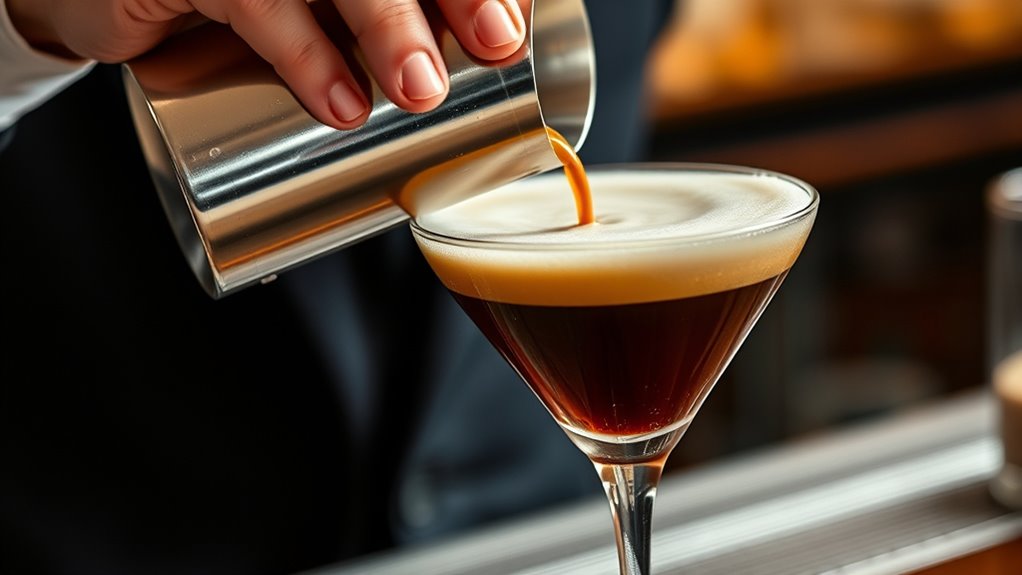
When you use fresh espresso for your espresso martini, you get a richer, more stable foam thanks to the crema that forms naturally. This crema contains oils and air bubbles that boost the frothy top’s texture and durability.
Freshly brewed espresso also has natural emulsifiers that help the foam hold together longer, giving your drink a velvety feel.
Natural emulsifiers in fresh espresso keep the foam stable, creating a smooth, velvety texture in your drink.
Just make sure the espresso cools slightly before you shake it. It prevents the foam from collapsing during mixing.
Using pre-made coffee just won’t cut it because it lacks those essential oils and bubbles.
For consistently high-quality espresso, consider the precision and automation behind machines like Starbucks’ Mastrena.
Choosing Ingredients for a Frothy Espresso Martini

To get that perfect frothy top, you need fresh espresso with a rich crema and the right balance of ingredients.
Coffee liqueurs like Kahlúa play a key role in stabilizing the foam, so don’t skimp on them.
Keeping your ratios in check will help you craft a smooth, velvety espresso martini every time.
It’s all about finding that sweet spot where everything comes together just right.
Using espresso extracted under high pressure ensures maximum crema and flavor, essential for a frothy cocktail.
Fresh Espresso Importance
Why does fresh espresso matter so much for your espresso martini’s froth? It’s all about the crema, the rich, velvety layer on top that gives your martini its signature frothy finish. Fresh espresso delivers the perfect balance of oils and tiny air bubbles, which are essential for creating and stabilizing that foam.
Here’s why you should always use fresh espresso: Crema forms best with high-quality, freshly ground coffee beans. Brewing espresso immediately before mixing preserves the crema’s texture.
Fresh espresso’s natural oils help emulsify the cocktail for a smooth froth.
Cold, freshly brewed espresso enhances foam stability better than cooled or pre-made coffee. Delaying the brew risks dilution, which weakens both the crema and froth quality.
Additionally, using beans with the right coffee-to-water ratio during brewing maximizes caffeine extraction and crema quality, enhancing the froth’s texture and stability.
Ingredient Ratios Balance
Although the perfect espresso martini depends on fresh espresso, nailing the right ingredient ratios is just as essential for that frothy top.
Typically, you’ll work with 20 ml vodka, 10 ml coffee liqueur, 30 ml espresso, and 10 ml simple syrup, but tweaking these amounts can make a big difference.
Increasing espresso relative to other ingredients boosts frothiness and creates a richer foam. You can also add a touch of aquafaba or heavy cream to thicken the foam without altering flavor.
Just remember, striking the right balance between alcohol, coffee, and foam enhancers keeps the cocktail smooth and velvety.
Play around with these ratios until you find that perfect, frothy espresso martini you love.
Ensuring your espresso is extracted within the ideal 25-30 second timing window can significantly improve the crema quality and overall frothiness of your cocktail.
Coffee Liqueur Role
When you choose your coffee liqueur carefully, you’ll notice it does more than add sweetness. It helps build that luscious, frothy top that defines a great espresso martini. Coffee liqueur’s oils and sugars work with the shake to create stable foam, while its aroma elevates the drink’s appeal.
Here’s what to keep in mind:
- Pick high-quality liqueurs with rich coffee notes
- The sugar content enhances foam texture and sweetness
- Alcohol interacts to generate fine, lasting bubbles
- Adjust quantity to control foam thickness and density
- Viscous liqueurs produce a creamier, more inviting froth
Using freshly brewed espresso-style coffee, such as one made with dark roast pods, can further enhance the flavor complexity of your espresso martini.
Step-by-Step Shaking Method for Frothy Espresso Martinis

To get that signature frothy top on your espresso martini, start with a dry shake, no ice, for about 15 seconds. This helps aerate the mix and kickstarts foam formation.
Next, add ice and shake vigorously for at least 30 seconds until the shaker feels frosty and cold. This chills the drink and develops a dense, long-lasting foam.
Altogether, you’ll shake for about a minute, combining dry and wet shakes to get the perfect texture.
Once done, strain the cocktail immediately into a chilled glass to preserve that creamy froth.
Finish by garnishing with coffee beans for a classic touch. Following these steps guarantees your espresso martini boasts a rich, velvety foam that impresses both visually and in taste.
Keep in mind that using three espresso shots provides around 180 to 225 mg of caffeine, giving your cocktail a robust kick within safe daily limits.
Master the Dry Shake for Extra Froth
Since the dry shake is your espresso martini’s secret weapon, mastering it will elevate your cocktail’s froth to the next level. This technique involves shaking your ingredients without ice for about 15 seconds to whip up a rich, velvety foam.
Master the dry shake to create a rich, velvety foam that transforms your espresso martini’s texture.
Here’s how to nail it:
Shake the mix vigorously without ice to aerate the liquid. Focus on incorporating air for a dense, stable froth. Use the dry shake every time for consistent results.
Then, follow with a proper ice shake to chill and enhance the foam. Aim for a smooth, professional-looking frothy finish. It really makes all the difference!
Using espresso beans with a fine grind size helps release oils that contribute to a richer and more stable froth in your martini.
Shaking Time and Intensity for Perfect Foam
To get that perfect frothy top, you’ll want to shake your espresso martini with the right timing and energy. Start with a dry shake to wake up the proteins.
Then, follow up with a vigorous shake on ice for about 30 seconds.
Keep your shakes strong and steady—around a minute total—to lock in a dense, lasting foam. It’s all about finding that balance between effort and rhythm to get it just right.
Also, be mindful of the caffeine content in your espresso shot to ensure your cocktail has the desired energy boost without overwhelming effects.
Optimal Shake Duration
Although perfect foam starts with the right ingredients, nailing the shake duration and intensity is crucial for an espresso martini. You want to hit the sweet spot where the foam is rich and stable, not watery or flat. Here’s how to get it right:
Start with a dry shake (no ice) for about 15 seconds to build initial froth. Then add ice and shake vigorously for around 30 seconds more. Aim for a total shake time close to 1 minute to fully aerate the mixture.
Shake hard enough to frost the shaker, which signals proper aeration. Avoid shaking less than 20 seconds because that gives you too little foam. And don’t go over 1 minute either, or the foam might collapse.
Stick to this rhythm, and your espresso martini will have that perfect, creamy froth every time. It really makes all the difference!
For best results, use freshly brewed espresso with full crema development to achieve a stable foam that enhances texture and flavor.
Shake Intensity Tips
When you shake your espresso martini, the intensity and timing directly shape the foam’s texture and stability. Start with a dry shake for about 15 seconds to activate the foam without diluting it.
Then, add ice and shake vigorously for at least 30 seconds. This two-step method guarantees the foam is both thick and chilled.
Keep shaking until your shaker gets frost-covered. That’s your cue that the foam is dense and stable enough to hold its shape.
The more vigorous and longer you shake, the more air you incorporate. This creates a velvety, lasting foam that supports garnishes beautifully.
To ensure a safe and enjoyable experience, be mindful of your daily espresso consumption limits when making multiple drinks.
Using Ice and Glassware to Preserve Espresso Martini Foam
If you want your espresso martini to keep that signature frothy top longer, start by chilling your martini or coupe glasses beforehand. Cold glassware slows foam breakdown, keeping it intact.
Next, shake your cocktail vigorously with plenty of ice to aerate the mixture and create a stable foam. When pouring, fill the glass halfway first. This lets the foam settle evenly and avoids overflow.
Serve your drink immediately after shaking to preserve that frothy crown.
To sum it up:
- Pre-chill martini or coupe glasses
- Shake cocktail vigorously with ice
- Fill glass halfway before pouring
- Serve immediately after shaking
- Keep glasses cold to extend foam life
Pouring and Garnishing Tips to Keep Foam Intact
To keep your espresso martini’s frothy top intact, pour it gently into the chilled glass while holding it at a slight angle. This helps the foam settle evenly without breaking.
Pouring too fast or straight down can disturb the foam, so take your time.
Once poured, add your garnish, three coffee beans, right on the foam’s surface. Placing them immediately keeps them from sinking and helps preserve that classic look.
Serve the cocktail right away to enjoy the foam at its peak.
Try to resist the urge to tilt or shake the glass afterward. Any movement can cause the foam to collapse or dissipate.
These simple steps make sure your espresso martini looks as great as it tastes, with a stable, frothy top every time.
Common Mistakes That Ruin Espresso Martini Foam
If you don’t shake your espresso martini long enough, you’ll miss out on that rich, frothy foam. It’s all about giving it enough time to get that perfect texture.
Also, using old or pre-brewed espresso? That’s a no-go. It kills the crema and leaves your drink flat.
Shaking Time Errors
Although shaking might seem straightforward, getting the timing just right is essential to nailing that perfect espresso martini foam. Shake too briefly, under 20 seconds, and you won’t develop enough froth. Shake too long, over a minute, and the foam collapses or turns airy and unstable.
It’s not just about time. You need vigorous, consistent motion to incorporate air effectively.
Watch out for these common mistakes:
- Shaking less than 20 seconds, leaving foam underdeveloped
- Shaking over 1 minute, causing foam to break down
- Using gentle or uneven shaking that fails to aerate properly
- Lack of vigorous motion, resulting in flat froth
- Inconsistent shaking technique leading to weak foam
Master your shaking time and technique to keep that espresso martini foam thick and creamy.
Using Old Espresso
Getting your shaking technique down is important, but the quality of your espresso matters just as much when aiming for that perfect frothy top.
Using old or pre-brewed espresso that’s lost its crema will leave your espresso martini flat and lifeless. Coffee brewed hours earlier or stored cold simply can’t emulsify properly, so you won’t get that rich foam.
Don’t substitute fresh espresso with cold brew or instant coffee either. These options just don’t have the oils and crema needed for a stable froth.
If you rely on stale espresso, your cocktail’s visual appeal and foam stability take a hit.
To nail that signature frothy layer, always use freshly brewed espresso right before shaking your martini. It really makes all the difference.
Adjusting Your Recipe for a Creamier, Foamier Texture
When you want a creamier, foamier espresso martini, tweaking your recipe is key. Small adjustments can make a big difference in texture and taste. Try these tips:
Use freshly brewed, hot espresso that’s slightly cooled to boost foam stability. Increase the espresso amount to take advantage of its natural oils and crema. Adding aquafaba or heavy cream can give you thicker, longer-lasting froth.
Adjust your ratios by adding more coffee liqueur and creme de cacao for richness and better foam. Also, try extending the shaking time.
Doing a dry shake (no ice) first really helps maximize aeration.
Serving and Storing Your Espresso Martini Perfectly
To keep your espresso martini’s frothy crema intact, serve it immediately after shaking. This preserves the delicate foam before it starts to dissipate.
Always use pre-chilled martini glasses. They help maintain the foam’s stability and keep your cocktail colder longer.
If you’re making multiple servings, pour the espresso martini in two halves to ensure even distribution and consistent foam quality.
For a professional touch, garnish with a few coffee beans on top to add aroma and style.
If you can’t serve right away, store the glasses in the refrigerator or freezer. This keeps the drink cold and helps maintain the foam’s texture until you’re ready to impress your guests with a perfectly frothy espresso martini.
Frequently Asked Questions
Can I Use Instant Coffee Instead of Espresso for an Espresso Martini?
You can use instant coffee, but your espresso martini won’t be as frothy or rich. To boost foam, try adding egg whites or aquafaba.
Still, fresh espresso delivers the best texture and flavor, so it’s worth using if you can. Instant coffee works in a pinch, though!
What Type of Vodka Works Best for Espresso Martinis?
Think of vodka as the backbone of your espresso martini. Go for a clear, high-quality, 80-proof or higher vodka. It keeps flavors balanced and helps your cocktail foam stay as smooth as silk.
Try to avoid cheap or flavored types. They can mess with the taste and texture you’re aiming for. Sticking to a good, clean vodka really brings out the best in your drink.
How Does the Water Quality Affect Espresso Martini Flavor?
Water quality shapes your espresso martini’s flavor by affecting extraction. Use filtered, soft water to avoid off-flavors and mineral buildup. It guarantees a cleaner, richer espresso shot.
This gives your cocktail a smoother, balanced taste and better froth. So, paying attention to the water you use really makes a difference. It’s a simple step that can take your espresso martini to the next level.
Can I Make a Non-Alcoholic Frothy Espresso Martini?
Yes, you can make a non-alcoholic frothy espresso martini by using strong coffee or cold brew. Add simple syrup for sweetness, and then shake it with aquafaba or an egg white substitute to get that rich, foamy top.
It’s pretty easy to whip up, and you don’t have to miss out on that creamy texture. Plus, it tastes just as delicious without the alcohol. Give it a try next time you want a fancy coffee treat!
How Long Can I Keep Espresso Martini Foam Stable Before Serving?
You can keep espresso martini foam stable for about 5 to 10 minutes after shaking. Using egg whites or aquafaba can extend that to around 15 to 20 minutes. But honestly, it’s best to serve it promptly for the freshest froth and best presentation.
If you wait too long, the foam will start to break down and lose its texture. So, enjoy that creamy top while it’s at its peak!
Conclusion
Now that you’ve mastered the frothy art of the espresso martini, you’re ready to impress like a seasoned barista. Think of your cocktail as a velvet cloud, rich and inviting, ready to elevate any night.
With fresh espresso, the perfect shake, and careful pouring, your martini will boast a foam as smooth as a jazz saxophone solo. Keep practicing, and soon, every sip will feel like a little celebration. Cheers!