You get perfect foam on your espresso martini by using fresh, cooled espresso right after brewing to capture rich oils and crema. Start with a dry shake to aerate and activate proteins, then shake vigorously with ice for at least 20 seconds to create dense froth.
Make sure you use the right ingredient ratios, and pour immediately into a chilled, wide glass to preserve the foam. Adding aquafaba or egg whites can give you extra stability too.
Keep these tips in mind, and you’ll uncover even more tricks to master this classic cocktail. It’s all about practice and having fun with the process!
How To Achieve Perfect Foam On An Espresso Martini
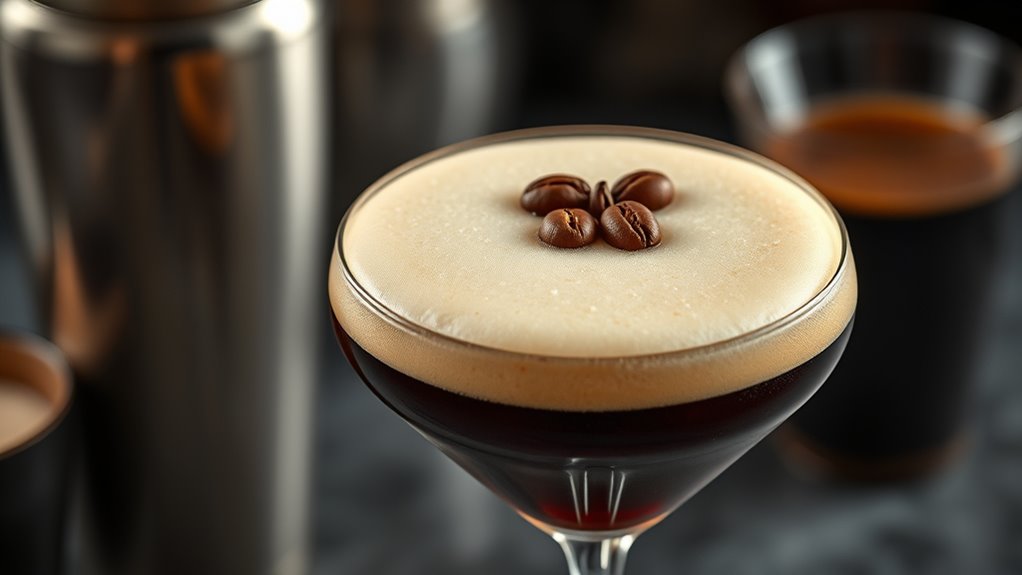
Although it might seem simple, achieving perfect foam on an Espresso Martini takes technique and the right ingredients.
Start by performing a dry shake. Shake the mixture without ice for 10 to 15 seconds. This step aerates the liquid and helps the foam form more effectively once you add ice.
Begin with a dry shake—no ice—for 10 to 15 seconds to aerate and enhance foam formation.
Then, shake vigorously with ice for at least 20 to 30 seconds. This chills the drink and whips up a thick, frothy top.
To boost foam stability, consider adding aquafaba or egg whites. They create a long-lasting, professional-quality froth.
Once you’ve shaken it properly, pour immediately into a chilled glass. This keeps the foam from dissipating too quickly.
Master these steps, and your Espresso Martini will have that signature creamy, velvety foam every time. Using fine ground coffee in your espresso shot enhances extraction and contributes to a richer foam texture.
Use Fresh Espresso For Rich, Creamy Foam
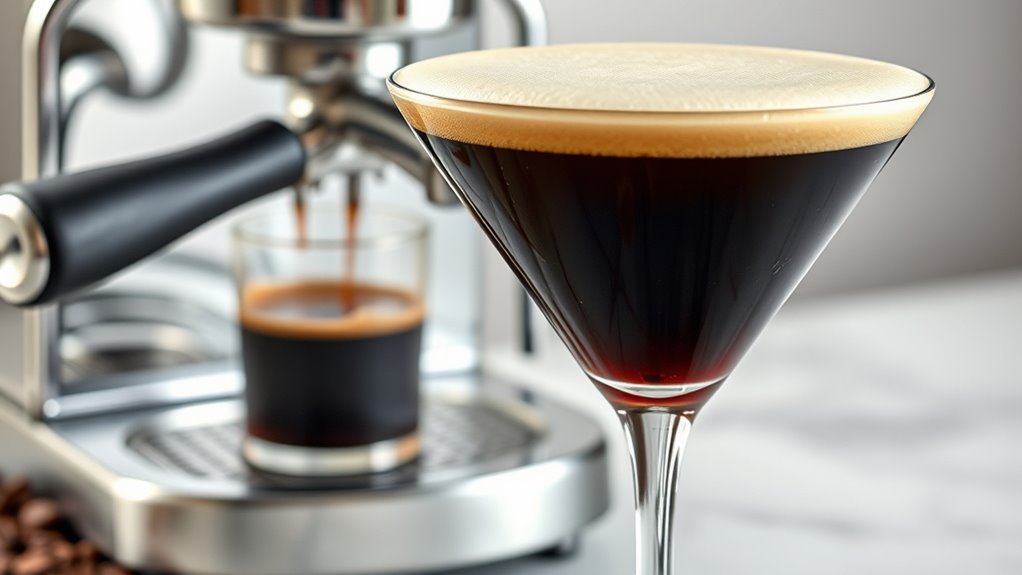
When you pull a fresh shot of espresso just before shaking, you capture the essential oils and proteins that create rich, creamy foam. These natural elements are key to forming a dense, velvety froth on your espresso martini.
Using espresso immediately after brewing guarantees the presence of crema, which boosts foam stability and texture.
Avoid cold brew or pre-made coffee. They lack the emulsifying oils needed for lasting foam.
Fresh espresso maximizes microbubble formation when shaken, resulting in a smooth, luxurious head.
If your espresso is stale, it won’t produce the froth you want. That leaves your cocktail flat.
The fine grind size and high pressure used in espresso extraction are crucial for preserving these essential compounds that contribute to foam quality.
Best Ingredient Ratios For Creamy Espresso Martini Foam
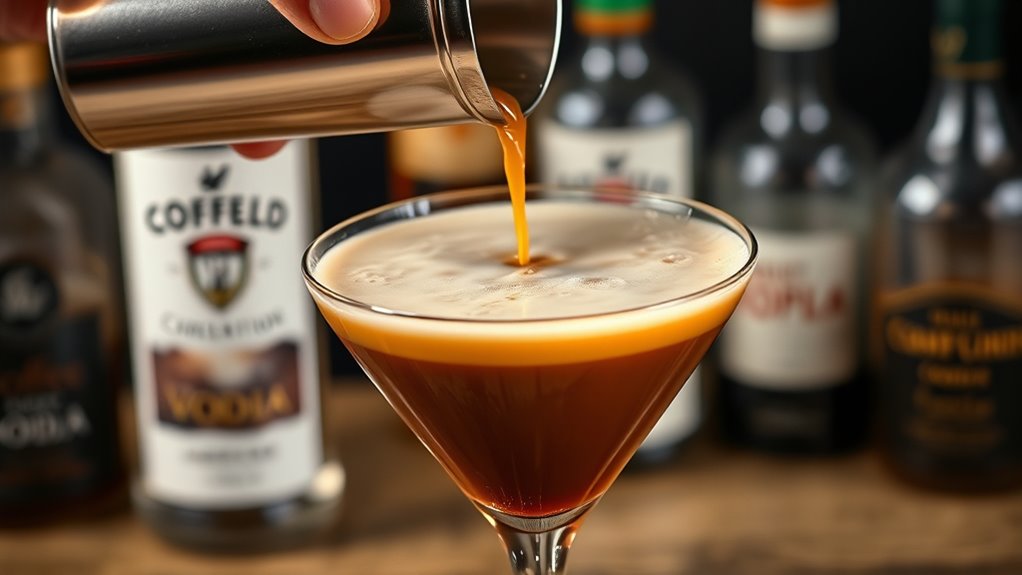
Fresh espresso sets the foundation, but getting the foam just right depends largely on the ingredient ratios you use. Start with the classic blend: 20 ml vodka, 10 ml coffee liqueur, 30 ml freshly brewed espresso, and 10 ml simple syrup.
Boost the espresso slightly to increase foam density and stability.
To enhance creaminess, add extra Kahlúa or a splash of creme de cacao. Both contain proteins that support foam formation.
For a richer, longer-lasting froth, incorporate ½ teaspoon of aquafaba or 1 oz of egg whites.
Remember, balancing alcohol, coffee, and sweeteners is key. Too much alcohol can break down the foam, while the right sweetener amount helps maintain smoothness.
Master these ratios, and your espresso martini will boast a flawless, creamy top every time.
Maintaining the optimal extraction time when brewing your espresso ensures maximum flavor and crema, which directly contributes to the quality of your martini’s foam.
Master Shaking Techniques For Maximum Foam
Start with a dry shake—that means no ice yet—to get that foam going.
Then, add ice to chill and aerate the mixture.
Give it a good, vigorous shake for at least 20 to 30 seconds. This helps create a thick, frothy top that really holds its shape.
Once you nail this timing, your espresso martini will have that perfect creamy texture every single time.
Using freshly brewed espresso with rich crema is key to achieving stable, long-lasting foam.
Dry Shake Benefits
Although it might seem counterintuitive, shaking your espresso martini without ice first, known as the dry shake, dramatically enhances foam quality. This step aerates the mixture, activating proteins and oils essential for rich, dense foam.
When you follow the dry shake with a vigorous ice shake, you create a lasting, professional froth. Here’s why you should always include a dry shake:
- Incorporates more air, boosting foam volume and texture
- Activates espresso proteins for a creamier, stable froth
- Develops a foam layer that supports coffee bean garnish
- Extends foam longevity, keeping your presentation sharp
Mastering the dry shake elevates your espresso martini’s visual appeal and mouthfeel. It really makes every sip a standout experience.
Shake Duration Impact
When you shake your espresso martini for at least 20 to 30 seconds, you incorporate enough air to build a thick, frothy foam that crowns your cocktail beautifully. Shaking less than 20 seconds usually leaves you with a thin foam that fades quickly.
If you extend the shake to 45-60 seconds, the foam becomes denser and more stable due to increased aeration.
To maximize this effect, start with a dry shake, which means vigorous shaking without ice. Then follow with a second, intense shake with ice.
This two-step process guarantees consistent aeration and a lasting, professional-looking frothy top.
Remember, the key is vigorous, steady shaking throughout to develop that creamy, textured foam that defines a perfect espresso martini.
Keep at it, and you’ll get that bar-quality finish every time.
Using espresso made with precise extraction techniques ensures the best flavor and crema, enhancing the foam’s texture and richness.
Boost Espresso Martini Foam With Aquafaba Or Egg Whites
If you want to achieve a rich, velvety foam on your espresso martini, adding aquafaba or egg whites is your best bet. Both act as natural emulsifiers, trapping air bubbles during shaking to boost foam volume and stability.
Here’s how to get it right:
Add ½ teaspoon of aquafaba for a stable, flavor-neutral foam. Use 1 oz of egg whites to create dense, professional froth. Perform a dry shake (no ice) for about 10 seconds after adding either to activate foam.
Shake vigorously after adding ice to combine liquids and perfect the texture. This method guarantees your espresso martini gets a smooth, long-lasting foam crown that impresses every time. Keep in mind that caffeine content varies significantly, so knowing the caffeine content in espresso can help you enjoy your drink safely.
Best Glassware To Preserve Espresso Martini Foam
To keep your espresso martini’s foam intact and visually striking, choosing the right glassware is essential. Chilled martini or coupe glasses slow down foam dissipation by maintaining the cocktail’s cool temperature longer. Always pre-chill your glass to prevent warmth from causing the frothy layer to vanish too quickly.
Opt for glasses with a wide, shallow bowl. They showcase the foam beautifully by providing a broad surface area. Double-straining your cocktail into a chilled glass creates a smooth liquid base, supporting better foam retention.
Clear glassware lets you appreciate the espresso martini’s layered, frothy top visually, adding to the drink’s allure. Selecting proper glassware not only preserves the foam but also enhances your overall drinking experience.
Avoid These Foam-Killing Mistakes (Plus Bartenders’ Quick Tips)
To get that perfect foam on your espresso martini, you’ve got to avoid some common slip-ups—like using warm espresso or shaking it for too short a time.
Bartenders are all about dry shaking and making sure your glass is nice and chilled to keep that froth locked in.
Using freshly brewed espresso extracted at approximately 9 bars pressure ensures a rich crema that contributes to the foam’s texture and stability.
Common Foam Mistakes
Although achieving that perfect foam on your espresso martini might seem straightforward, several common mistakes can sabotage your efforts. Avoid them to guarantee a rich, stable foam every time.
Using old or stale espresso kills foam. Always opt for freshly brewed shots.
Skimping on shaking time or vigor means less aeration, so shake energetically for at least 15 seconds.
Adding ice during the initial shake cools the mix prematurely, reducing foam formation. Start with a dry shake instead.
Letting ice melt too much dilutes the cocktail, weakening foam structure and causing it to collapse quickly.
Additionally, the quality of espresso and its fresh crema play a crucial role in forming a rich, lasting foam on your cocktail.
Bartender Foam Hacks
When you skip the dry shake or use warm ingredients, you’re already setting yourself up for foam failure. The dry shake aerates the mix before chilling, creating a stable froth. Warm espresso or stale coffee lacks oils and proteins needed for foam, so always use fresh, cooled shots. Using a machine with precise temperature control helps ensure the espresso is brewed at the optimal temperature for better foam quality.
Shake vigorously for at least 20 seconds in a well-sealed shaker, avoiding overload. Pour immediately to keep the foam intact.
| Mistake | Quick Fix |
|---|---|
| No dry shake | Always dry shake first |
| Warm/stale espresso | Use fresh, cooled espresso |
| Weak shaking | Shake hard for 20+ seconds |
| Slow pouring | Pour immediately after shake |
Frequently Asked Questions
Can I Use Instant Coffee Instead of Espresso for Foam?
You can use instant coffee, but it won’t create the rich, stable foam that espresso does.
To get proper froth, you’ll need fresh espresso or you can add foaming agents like egg whites or aquafaba. That helps mimic the texture better.
How Long Does Espresso Martini Foam Typically Last?
You’ll notice espresso martini foam typically lasts about 2 to 5 minutes before fading. To keep it frothy longer, shake well and serve in a chilled glass. Fresh espresso really makes a difference here.
It’s all about that creamy, airy layer on top that gives the drink its signature look and texture. So, the better you prepare it, the longer you get to enjoy that foam. Just keep it cool and fresh!
Does the Type of Coffee Bean Affect the Foam Quality?
Yes, the type of coffee bean affects foam quality. You’ll get richer, denser foam using Robusta because of its higher oil and protein content, while Arabica produces lighter foam.
Fresh, high-quality beans boost crema and foam stability. So, if you want a better foam, starting with good beans really makes a difference.
Can I Prepare Espresso Martini Foam in Advance and Store It?
You can prepare espresso martini foam in advance, but it’ll lose volume and texture. Store it airtight and refrigerated, then re-shake before serving to regain some fluffiness.
That said, fresh foam still delivers the best results. So if you can, make it just before serving for that perfect creamy top.
Is There a Difference in Foam Between Manual and Automatic Espresso Machines?
Yes, you’ll notice manual machines produce thicker, richer crema, creating denser, longer-lasting foam. Automatic machines offer consistency but often less crema, so your espresso martini’s froth won’t be as prominent or stable using them.
It’s all about control with manual machines. You get to tweak pressure and timing, which really impacts the foam quality. Automatic machines do the work for you, making things easier but sometimes at the cost of that creamy texture.
Conclusion
To get that perfect foam on your espresso martini, remember: practice makes perfect. Use fresh espresso, balance your ingredients, and master your shaking technique to create that creamy top.
Don’t hesitate to add aquafaba or egg whites for extra frothiness, and pick the right glass to keep your foam intact. Avoid common mistakes, and soon, your espresso martinis will impress every time.
A well-shaken drink always speaks louder than words. Cheers!