You should apply about 15 kilograms (30 pounds) of firm, even pressure when tamping espresso to create a level, compact puck without cracking or over-compressing the grounds. It’s more important to focus on consistent, steady pressure and a perfectly flat surface than hitting an exact number.
Using tools like calibrated tampers or scales can help you achieve uniformity. If you want to master tamping, understanding proper technique and common pitfalls will really elevate your espresso extraction.
How Much Tamping Pressure Is Ideal for Espresso
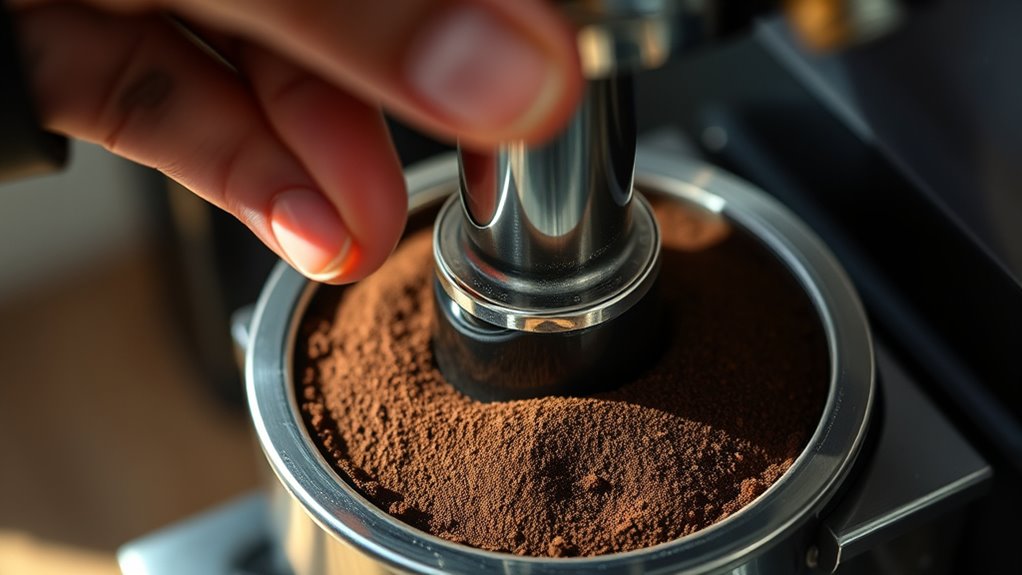
While many believe that tamping espresso requires a strict pressure, aiming for around 15 kilograms (30 pounds) is generally ideal. You want to apply enough force to create a firm, even coffee puck without risking damage.
Aim for about 15 kilograms to create a firm, even espresso puck without causing damage.
Pressing too hard, beyond 20 to 30 pounds, can crack or disrupt the puck. That leads to uneven extraction and off flavors.
Instead, focus on consistency and achieving a flat, level surface.
Modern research highlights that uniformity matters more than hitting an exact weight. To help maintain steady pressure, consider using a calibrated tamper or a scale during practice.
This way, you’ll consistently compress the grounds properly, setting the foundation for balanced and flavorful espresso shots every time you pull a shot.
Regular practice with a calibrated tamper is key to developing consistent tamping pressure and improving shot quality.
Why Consistent Pressure Matters More Than Exact Pounds
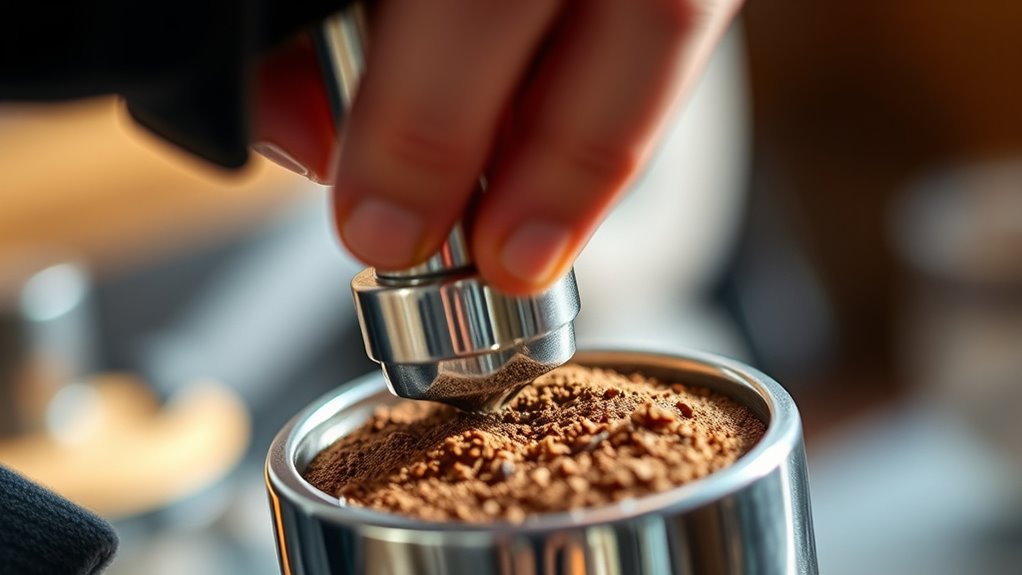
Because espresso extraction hinges on even water flow, applying consistent pressure during tamping matters more than hitting an exact pound measurement. When you maintain steady pressure, you guarantee uniform compression of the coffee grounds, which leads to predictable extraction and balanced flavor.
Variations in force cause uneven water flow, resulting in over-extracted or under-extracted espresso, no matter the exact pounds applied. Studies show most baristas struggle to replicate a precise tamping force consistently. So, having a reliable technique matters more than aiming for a specific number.
By focusing on consistent pressure, you create a flat, level puck that promotes even water distribution and ideal shot quality.
In the end, consistency in tamping pressure reduces variability and improves your espresso’s overall taste and texture. Consistent tamping pressure also helps maintain proper shot timing, which is crucial for balanced extraction and flavor.
Why Levelness Is More Important Than Force When Tamping
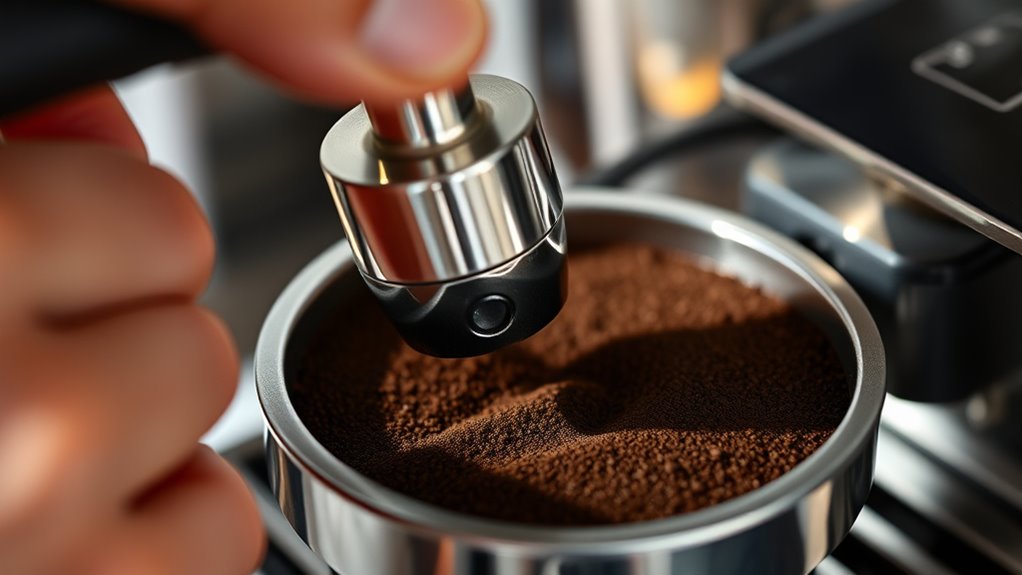
You want to make sure your coffee bed is perfectly flat when tamping, so water doesn’t find any uneven spots to channel through. Even if you don’t press down super hard, a level surface helps the water flow evenly, which means you get a consistent flavor every time.
If your tamping is uneven, it creates little slopes that make the water flow downhill instead of straight through. That usually results in weak, under-extracted espresso — definitely not what you’re aiming for.
Applying about 30 pounds of steady, level pressure using body weight helps achieve this evenness and prevents channeling.
Ensuring Flat Coffee Bed
Even if you apply the perfect amount of pressure, an uneven coffee bed can ruin your espresso. Levelness ensures water flows uniformly through the grounds, promoting even extraction and consistent flavor.
Focus more on creating a flat surface than on tamping force. Here’s how to ensure a flat coffee bed:
- Distribute coffee grounds evenly before tamping.
- Use a consistent, level tamping motion rather than pressing harder.
- Check the surface with a spirit level or visually for flatness.
- Adjust your tamp if you spot any slants or uneven spots.
An uneven puck causes over-extraction on one side and under-extraction on the other, which leads to poor espresso quality. So, prioritize flatness to guarantee a balanced brew every time.
Additionally, controlling the coffee grounds dose and distribution can impact the caffeine content and overall extraction quality.
Preventing Water Channeling
How does tamping influence the flow of water through your espresso puck? It’s not just about pressure; the levelness of your tamp matters more.
When you create a flat, even coffee bed, water flows uniformly through the puck. This prevents it from finding easier paths that cause channeling.
Slight tilts or uneven tamping let water channel downhill, leading to inconsistent extraction. Some parts get over-extracted, while others are under-extracted.
By focusing on leveling rather than just force, you guarantee consistent water pressure across the entire puck.
This uniformity enhances espresso quality by promoting even extraction. So, while applying adequate tamping pressure is important, prioritizing a perfectly level surface is key to preventing water channeling and achieving that balanced, flavorful shot you’re aiming for.
The grind size also plays a critical role in how effectively tamping can prevent channeling and ensure even extraction.
How to Apply Firm, Steady Pressure Without Overdoing It
Although tamping might seem straightforward, applying firm, steady pressure without overdoing it requires control and consistency. To achieve the perfect tamp, apply about 15-20 pounds of force to create a flat, even surface without cracking the puck.
Press consistently and steadily, avoiding sudden or forceful shoves to guarantee uniform density. Keep your tamper perpendicular to the basket to prevent uneven tamping and channeling.
Stop pressing once the grounds no longer compress. Extra force doesn’t help and may cause over-densification.
Using a calibrated tamper or scale can train you to apply the right pressure every time. By mastering these steps, you’ll tamp efficiently, ensuring even extraction and better espresso quality without risking damage or inconsistency. Proper tamping pressure is essential because espresso extraction occurs under approximately 9 bars pressure, which relies on uniform puck density to produce rich crema and balanced flavor.
Why You Don’t Need to Worry About the 30-Pound Rule
Once you’ve mastered applying firm, steady pressure within the 15-20 pound range, you can set aside concerns about the so-called 30-pound tamp. Modern research shows coffee grounds fully compress at 15-20 pounds, so pushing harder doesn’t improve extraction.
In fact, tamping beyond 20 pounds risks cracking the puck, which slows extraction and causes bitterness. Most baristas and home users can’t reliably hit 30 pounds without a scale, making that rule impractical.
Instead, focus on creating a flat, level coffee bed with consistent pressure. Excessive force can damage your puck and machine components without enhancing coffee quality.
How to Achieve Maximum Coffee Bed Density Without Excess Force
To achieve maximum coffee bed density without applying excessive force, you need to press just hard enough to fully compress the grounds until you feel resistance.
This ensures ideal extraction without risking over-compression. Here’s how to do it right:
Apply 15 to 20 pounds of pressure. This range typically achieves full compression.
Applying 15 to 20 pounds of pressure ensures optimal coffee ground compression for perfect extraction.
Using a calibrated tamper or bathroom scale helps you maintain consistent force.
Stop tamping as soon as you feel firm resistance. Don’t push harder than you need to.
Avoid exceeding 20 pounds to prevent puck cracking or slow, bitter extraction.
Consistent tamping pressure is crucial for maintaining optimal flavor extraction and achieving a balanced espresso shot.
How to Ensure Your Tamp Is Level and Even
Ensuring your tamp is level and even requires careful alignment of the tamper with the espresso basket before applying pressure. Start by visually confirming the coffee bed is evenly distributed within the portafilter, using its edges as a guide.
Position the tamper so it sits flat and parallel to the basket to avoid uneven puck formation.
Apply consistent downward pressure with a straight, vertical motion, preventing any tilt. After pressing, gently spin the tamper to detect wobbling. Any movement signals an uneven tamp.
Finally, inspect the coffee surface for a smooth, uniform finish without slopes or ridges. If you spot imperfections, adjust your technique accordingly.
Maintaining a level tamp ensures ideal extraction and a balanced espresso shot. Proper tamping combined with the right shot timing is essential for optimal flavor and crema development.
Tools and Techniques to Measure and Control Tamping Pressure
Although mastering tamping pressure takes practice, using the right tools can make it easier to achieve consistency. You can rely on several methods to measure and control your tamping force effectively.
First, try using a bathroom scale to calibrate your pressure around 30 lbs. This helps ensure you get repeatable tamping strength every time.
Another great option is investing in heavy, calibrated tampers designed to apply uniform pressure with less effort.
You can also employ pressure-sensitive tampers or gauges that provide real-time feedback on the force you’re applying.
Practicing with tools that offer tactile or visual feedback is helpful too. They assist you in developing a reliable, consistent tamping rhythm.
And remember, always tamp with a steady, vertical motion. This ensures even compression no matter how much pressure you’re applying.
These techniques help you dial in your tamping pressure precisely, leading to better espresso extraction every time.
Consistent tamping pressure is crucial because grind size and consistency directly affect extraction quality and flavor.
Common Tamping Mistakes and How They Hurt Your Espresso
When you tamp unevenly or apply too much force, you risk channeling or cracking the puck, both of which disrupt water flow and ruin your espresso’s balance. Uneven pressure causes water to take the path of least resistance, leading to under-extraction in some areas and bitter over-extraction in others.
Applying excessive force can crack the puck, slowing water flow and creating bitterness. Tamping too lightly leaves the puck loosely packed, allowing water to rush through and produce weak, underwhelming espresso.
Inconsistent pressure shot to shot results in unpredictable flavors and makes it hard to replicate your best pulls. Also, failing to level the tamp surface encourages uneven extraction.
Avoid these common mistakes to maintain consistent, balanced espresso with ideal flavor and body. It’s really worth paying attention to your tamping technique! For best results, ensure you use freshly ground espresso with rich crema to achieve optimal extraction and flavor balance, as detailed in the espresso preparation guidelines.
Tips for Practicing and Perfecting Your Tamping Technique
To perfect your tamping technique, try to apply consistent pressure around 15 kg. You can use a calibrated scale or even a reliable bathroom scale to get a good feel for it.
Make sure your tamp is level and even — a handy trick is to spin the tamper gently after pressing.
Also, think about using distribution tools to create a uniform coffee bed.
Keeping track of your pressure and routine really helps build muscle memory, so you can get repeatable results every time.
Consistent Pressure Practice
Since consistent tamping pressure directly affects espresso quality, you need to practice applying the same force every time. Developing muscle memory is key. Use tactile feedback or a scale to gauge your pressure accurately.
Aim for around 15 kg (30 lbs) using a bathroom scale to calibrate your tamp. To perfect your technique, start by practicing pressing down evenly until you feel firm resistance without overexerting.
Perform regular tamping drills to build consistency and confidence. Focus on applying vertical pressure to compress the coffee bed uniformly.
Record and analyze your tamping technique, then adjust based on espresso flow and taste. With practice, you’ll get a feel for just the right pressure every time.
Levelness And Evenness
Although applying the right pressure matters, guaranteeing your tamp is perfectly level is just as critical to avoid channeling and uneven extraction. Use a spirit level or check for wobbling to confirm even pressure across the coffee bed. Focus on applying consistent, vertical pressure without tilting.
After pressing, gently spin the tamper to smooth the surface and create an even puck. Regularly inspect your technique and adjust to develop muscle memory for consistent tamping.
| Practice Tip | Purpose |
|---|---|
| Use spirit level or wobble check | Guarantees flat tamp surface |
| Apply vertical, consistent pressure | Prevents uneven extraction |
| Gentle tamper spin | Smooths puck, promotes even flow |
Mastering levelness and evenness improves espresso quality markedly. Keep practicing, and you’ll notice the difference!
Use Distribution Tools
Achieving a perfectly level tamp starts with how you prepare the coffee grounds. Using distribution tools like the Weiss Distribution Technique (WDT) or a leveler guarantees an even spread, reducing channeling risks. Proper distribution creates a uniform bed, making tamping pressure more consistent and extraction more balanced.
To practice and perfect your technique, use a distribution tool to gently break clumps and spread grounds evenly. Then, apply gradual pressure to level the coffee without disturbing the bed’s flatness.
Combining distribution and tamping consistently helps build muscle memory. Repeat regularly to improve shot quality by eliminating uneven density and enhancing extraction consistency.
Mastering distribution tools really streamlines your tamping, leading to better espresso shots every time.
Frequently Asked Questions
What Type of Tamper Is Best for Different Espresso Machines?
You’ll want flat tampers for most home machines, convex ones for larger portafilters, and calibrated tampers if you need precision.
Make sure to match tamper size to your portafilter. Also, think about the weight. Around 400g offers better control and feel.
How Often Should I Clean My Tamper?
You should clean your tamper after every use by wiping it down. Doing a deep clean weekly or monthly depends on how often you use it.
This keeps it sanitary and prevents flavor contamination. Plus, it guarantees consistent tamping pressure.
Regular cleaning might sound like a hassle, but it really makes a difference in your coffee’s taste and quality.
Can Tamping Pressure Affect Espresso Flavor With Different Coffee Roasts?
Just like a painter adjusts brush pressure for detail, you must tweak tamping pressure by roast. Lighter roasts need gentler tamping to highlight brightness. Dark roasts demand caution to avoid bitterness from over-extraction.
It’s all about balance. Adjusting tamping pressure helps bring out the best in each roast. So, don’t be afraid to experiment a little!
Is Tamping Pressure Different for Single vs. Double Espresso Shots?
You don’t need to change tamping pressure between single and double shots. Keep it consistent, around 15-30 lbs, to guarantee even extraction.
Just focus on uniform distribution and grind calibration for the best espresso flavor. That’s really what makes the difference.
How Does Grind Size Impact the Pressure Needed for Tamping?
If you use a fine grind like a barista in Seattle, you’ll need less tamping pressure to avoid over-compression. Coarser grinds require more force to create an even puck and prevent channeling during extraction.
It’s all about balance. Too much pressure on a fine grind can squash it too much, while not enough on a coarse grind leaves it loose. Finding the right tamping pressure helps get that perfect shot every time.
Conclusion
You might worry that not pressing exactly 30 pounds will ruin your espresso, but consistency and level tamping matter far more than hitting a specific number.
Focus on applying steady, even pressure to create a uniform puck. Overthinking tamp force can cause frustration and uneven extraction.
Instead, practice your technique to build muscle memory. With patience, you’ll craft rich, balanced espresso shots that prove perfect pressure is about control, not pounds.