You’ll typically pay between $2 and $5 for a double shot of espresso, depending on where you buy it and the coffee quality. Specialty cafés and urban locations tend to charge more, especially if they use premium or single-origin beans.
Chain shops like Starbucks price around $2.50 to $3.00. Prices can also vary if the double shot’s added to a drink.
Keep exploring to discover what influences these costs and tips to save.
What Is a Double Shot of Espresso?
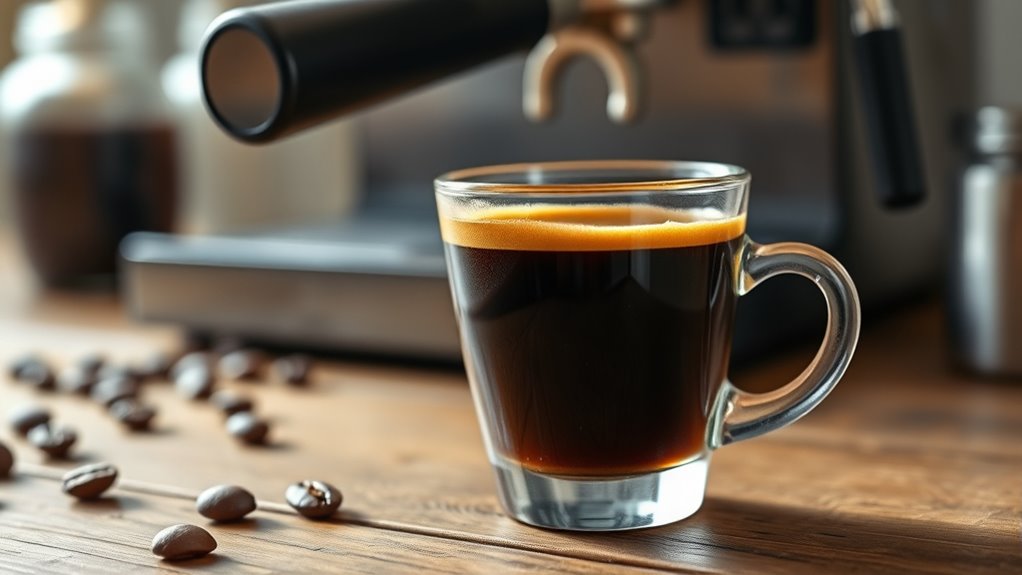
What exactly makes a double shot of espresso different from a single? When you order a double shot, you’re getting roughly twice the amount of coffee grounds, about 14 to 18 grams, compared to a single shot.
This results in approximately 2 fluid ounces (60 milliliters) of liquid espresso.
You get about 2 fluid ounces (60 milliliters) of rich, concentrated espresso with a double shot.
The double shot extracts a more concentrated, robust flavor because it uses twice the coffee, delivering a richer experience. Most cafes treat the double shot as the standard base for espresso drinks, so it’s what you’ll typically find in lattes, cappuccinos, and more.
Depending on the barista or machine settings, the exact weight of coffee might vary slightly, but the double shot consistently offers a stronger, fuller espresso than a single.
Espresso is often the base ingredient for making espresso powder, which enhances flavor complexity in various recipes.
Typical Double Shot Prices at Coffee Shops
How much should you expect to pay for a double shot of espresso at your local coffee shop? Typically, prices range from $2 to $3.50, but they vary based on the type of café and location.
Specialty cafes often charge $3.50 to $5, while chain shops like Starbucks usually price around $2.50 to $3.00. Urban areas tend to have higher prices due to demand and overhead costs.
Here’s a quick snapshot:
| Coffee Shop Type | Typical Price Range | Notes |
|---|---|---|
| Regular Local Café | $2.00 – $3.50 | Standard quality |
| Specialty Café | $3.50 – $5.00 | Premium beans, unique blends |
| Chain Coffee Shop | $2.50 – $3.00 | Consistent pricing |
| Urban Area | $3.00 – $5.00 | Higher demand, costs |
| Suburban/Rural Area | $2.00 – $3.00 | Lower operating costs |
The quality and flavor of a double shot depend heavily on factors like extraction time and grind size, which baristas adjust to ensure the best taste.
Comparing Double Shot Prices Alone and in Drinks
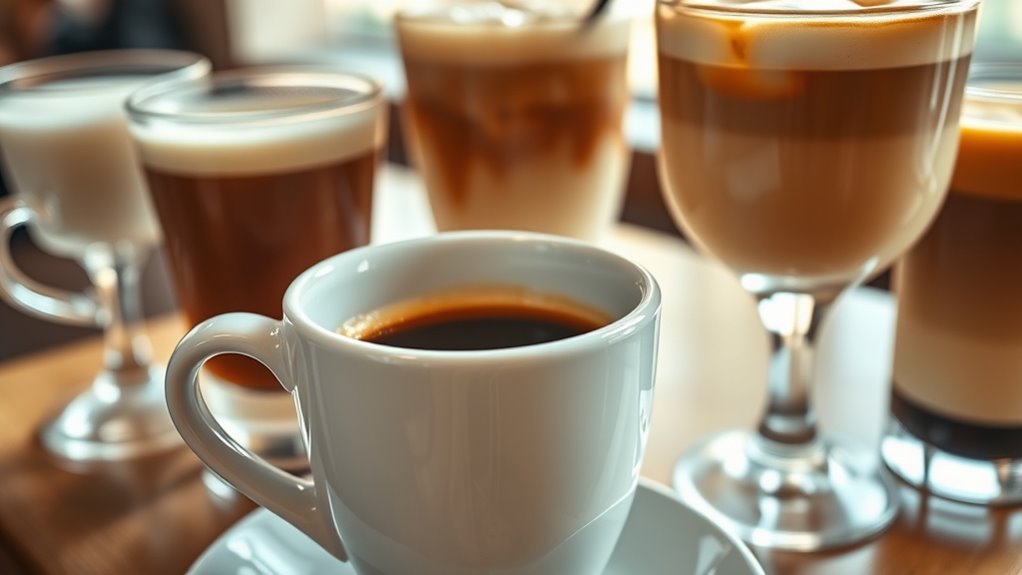
You’ll notice that double shot prices can change depending on whether you buy them by themselves or as part of an espresso-based drink. It’s pretty interesting how that works!
When you understand how these costs affect the final price, it becomes easier to figure out what you’re really paying for.
For example, a standard Venti hot drink typically includes 2 shots of espresso, which influences the overall cost and caffeine content.
Double Shot Price Variations
Where do double shots of espresso offer the best value, when purchased alone or as part of a drink? Typically, buying a double shot on its own costs between $2 and $4.50. Specialty cafes might charge up to $5 for premium beans or unique brewing methods.
However, when it’s part of an espresso-based drink, the additional charge usually ranges from $1.50 to $3.50. This depends on the size and customization you choose.
Chain coffee shops like Starbucks often include a double shot in larger drinks at no extra cost.
Though they may charge if you order it separately, so while the price is more transparent when buying shots alone, you often get better value when the double shot is integrated into a drink. This is especially true at chains or when ordering larger beverages.
Optimal extraction often requires maintaining stable brew temperature, which can influence the quality and consistency of espresso shots included in your drinks.
Cost Impact In Drinks
Understanding the price difference between purchasing a double shot of espresso alone and as part of a drink can help you make smarter choices when ordering.
A double shot typically costs between $0.75 and $1.50 by itself, but when added to espresso-based drinks, it usually adds $2 to $4 to the total price.
Many cafes include the double shot in the base price of drinks like lattes and cappuccinos, embedding its cost seamlessly.
Specialty cafes may charge up to 50% more for a double shot compared to a single shot, which pushes drink prices higher.
Since the double shot often forms a significant portion of larger drinks’ costs, knowing this helps you understand pricing structures.
It also lets you decide when it’s worth paying for that extra espresso kick.
The cost is also influenced by the espresso extraction ratio, which affects the amount of coffee used and ultimately the price of the shot.
Value Comparison Strategies
Although the price of a double shot of espresso varies depending on whether you buy it alone or within a drink, comparing these costs can help you spot the best value.
A standalone double shot typically costs between $0.50 and $1.50. Adding it to a drink increases the overall price but keeps the per-shot cost fairly consistent.
Some cafés include the double shot as a standard in espresso-based beverages. This spreads its cost across the entire drink, often making specialty or larger drinks more cost-effective per shot.
When you weigh ordering a double shot alone against its inclusion in complex drinks, you’ll notice that purchasing it separately usually costs less.
Understanding these price dynamics ensures you make smarter, value-driven choices. It’s all about knowing when you’re really getting more for your money.
Additionally, factors such as bean quality and origin heavily influence the final price you pay for a double shot, whether ordered alone or in a drink.
What Affects the Price of a Double Shot?
Why does the price of a double shot of espresso vary so much from one place to another? Several key factors influence the cost, shaping what you pay at your local café. Knowing these can help you understand the price tags and find the best value.
Consider these elements that affect pricing:
- Geographic location affects rent and operational costs, which impact prices.
- The type of establishment, whether it’s a high-end café or fast-food chain, sets different price points.
- Specialty certifications like organic or fair-trade add to the cost because of ethical sourcing.
- Investment in high-quality espresso machines and equipment influences the price.
- Overhead expenses, including staff wages and utilities, also play a role in pricing decisions.
Additionally, using high-quality decaf beans with specialized processing can affect costs when offering decaf espresso options.
Understanding these factors helps you appreciate the value behind your double shot. It’s not just about the coffee—it’s about everything that goes into making it great.
How Coffee Bean Quality Impacts Double Shot Prices
When you go for a double shot, the origin of the beans really affects how much you’ll pay. Arabica beans, which are known for their smooth flavor, usually cost more than robusta beans.
Robusta tends to have a stronger, more bitter taste.
Then there are specialty roasts—these have unique flavor profiles and are carefully processed, which can drive the price up even more.
The roast level also plays a crucial role in price, as darker roasts designed for espresso often require longer and more precise roasting processes.
Bean Origin and Cost
How much you pay for a double shot of espresso often hinges on the quality and origin of the coffee beans used. Beans from rare origins or specialty-grade crops typically push prices higher, reflecting their unique flavors and cultivation methods. When you choose a double shot made from premium beans, expect to pay more because these coffees require more care and often cost more to source.
Consider these factors influencing bean origin and cost:
- Single-origin beans, like Ethiopian Yirgacheffe, command higher prices due to distinct taste profiles.
- Rare beans, such as Jamaican Blue Mountain, significantly increase espresso costs.
- Organic or sustainably farmed beans carry a premium reflecting ethical production.
- Standard commercial beans keep prices lower.
Bean cost directly impacts the final price of your double shot, often doubling or tripling it.
Your choice shapes both flavor and expense. So, it’s worth thinking about what you want in your cup before you decide how much to spend. Additionally, roast level can influence the overall cost since darker roasts commonly used for espresso may require specialized roasting techniques that affect pricing.
Arabica Versus Robusta
Beyond bean origin and farming methods, the type of coffee bean you choose plays a major role in the price of your double shot. Arabica beans, prized for their complex flavors and higher quality, tend to cost markedly more than Robusta beans.
Because Arabica plants yield less and require more care, cafes charge a premium, often 20-50% higher, for double shots made from these beans.
On the other hand, Robusta beans are cheaper to produce and are commonly blended to lower costs. This makes espresso shots more affordable but less nuanced in flavor.
When you opt for Arabica, you’re paying for superior taste and quality, which directly influences the price you see on the menu.
Understanding this difference helps you make informed choices about your espresso’s flavor and cost.
Additionally, Robusta beans contain about twice the caffeine of Arabica, which can affect both the strength and appeal of your espresso shot’s caffeine content.
Specialty Roast Pricing
Because specialty coffee beans offer unique flavors and come from limited sources, they often drive up the price of a double shot of espresso. When you choose specialty roasts like single-origin or micro-lot beans, expect to pay an extra $0.50 to $1.00 compared to standard blends. These premium beans reflect careful sourcing and distinct flavor profiles, which specialty cafes factor into their pricing.
Typically, a double shot using high-grade beans ranges from $2.50 to $4.00, higher than the $1.50 to $2.50 for regular beans. The complexity of roasting darker specialty beans also adds to the cost.
- Unique flavor profiles justify the premium
- Limited supply increases scarcity and price
- Meticulous sourcing raises production costs
- Specialty roasts add $0.50 to $1.00 per shot
- Darker roasts demand more precise handling
Why Some Cafés Charge More for Double Shots
Although a double shot might seem like a simple upgrade, many cafés charge more due to factors you might not immediately notice. Higher-quality beans, specialized brewing methods, and extra labor all drive costs up. Location plays a big role too. Premium areas often have steeper prices.
Plus, pulling a double shot requires equipment and grind adjustments that add complexity.
| Factor | Reason | Impact on Price |
|---|---|---|
| Quality & Method | Premium beans, brewing techniques | Higher ingredient cost |
| Location | Rent and demand in upscale areas | Increased overhead |
| Labor & Equipment | Time, skill, specialized equipment use | Extra operational costs |
Understanding this helps you see why your double shot might come with a slightly higher price tag.
How to Get a Cheaper Double Shot
Three simple strategies can help you enjoy a double shot without breaking the bank. First, try ordering through apps like Starbucks’, where a double shot often costs less than adding an extra espresso to a regular drink.
Ordering double shots through apps like Starbucks’ can save money compared to adding extra espresso.
Second, customize your drink by requesting specific numbers of espresso shots and flavors like vanilla syrup, which might lower the overall price.
Third, take advantage of loyalty rewards and membership programs to reduce costs further. Additionally, keep an eye out for promotions offered by cafés and compare prices online. Using coupons can also make a difference.
- Order double shots via coffee shop apps
- Customize drinks with specific espresso shots and syrups
- Use loyalty rewards and memberships
- Look for café discounts and promotions
- Compare prices and use online coupons
Frequently Asked Questions
Can I Get a Double Shot of Espresso Decaf?
Yes, you can get a decaf double shot of espresso at most cafes. Just be sure to specify “decaf” when ordering, as not all machines or brands automatically prepare it without caffeine.
How Many Caffeine Milligrams Are in a Double Shot?
Think of a double shot as a caffeine powerhouse, packing 120 to 150 milligrams. You’ll get a robust kick, roughly equal to a standard cup of coffee.
The exact levels depend on the beans and brewing nuances, so it can vary a bit. But overall, it’s a strong and reliable caffeine boost.
Is a Double Shot of Espresso the Same Worldwide?
No, a double shot of espresso isn’t exactly the same worldwide. You’ll find consistent coffee amounts, but preparation styles, serving sizes, and prices vary by region.
These differences reflect local customs and coffee culture. So, it’s something you should definitely keep in mind when ordering.
Can I Use a Double Shot in Iced Coffee Drinks?
You can absolutely use a double shot in iced coffee drinks. It’s like adding a bold heartbeat to your brew.
It boosts flavor and caffeine, creating a rich, energizing drink that perfectly balances ice, milk, and intensity. Trust me, it’s a great way to kick up the flavor without overwhelming the cool, refreshing vibe.
What Equipment Is Needed to Make a Double Shot at Home?
You’ll need an espresso machine with around 9 bars of pressure, a burr grinder for consistent grounds, and a digital scale to measure 14–18 grams.
A tamper is important too, so you can compress the grounds evenly. Plus, having a shot glass helps you measure your double shot accurately.
With these tools, making a great double shot at home becomes way easier and more consistent.
Conclusion
Now that you know the ropes around double shot prices, you’re ready to navigate the coffee world like a pro. Think of your espresso as a little liquid gold. Its value is shaped by bean quality, café style, and location.
Don’t let high prices drip away your enthusiasm. With savvy choices, you can sip rich flavors without burning your budget. So, go ahead, brew smart, spend wisely, and savor every bold, robust drop.