Espresso vodka typically contains caffeine naturally from the coffee or espresso used during its production. It usually has around 30 to 50 mg per serving, which is less than a standard brewed coffee.
The caffeine level depends on factors like the type of coffee bean, brewing methods, and whether decaffeinated beans are used. Pure caffeine isn’t added because of safety regulations, so the amount of caffeine varies naturally.
If you want to understand how these factors influence caffeine content and your choices, keep exploring the details behind espresso vodka. It’s pretty interesting once you dive into it!
What Is Espresso Vodka And How Is It Made?
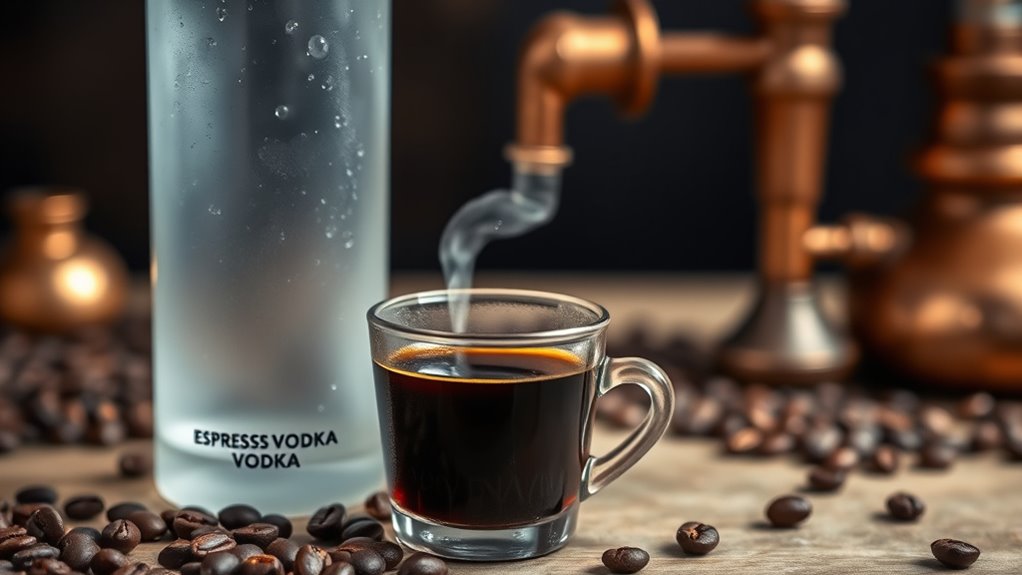
Although you might assume espresso vodka simply mixes coffee and alcohol, it’s actually a carefully crafted flavored spirit combining vodka with coffee or espresso elements to achieve a rich, aromatic profile. The production process typically involves infusing high-quality vodka with brewed espresso or coffee extracts.
This infusion blends vodka with coffee beans or flavoring agents, followed by filtration to guarantee a smooth, consistent taste. Many producers use real Arabica coffee beans to enhance authenticity and aroma. Others incorporate natural or artificial coffee flavorings to replicate the distinctive coffee notes without brewing espresso directly.
This methodical approach results in a balanced, flavorful spirit that captures the essence of coffee while maintaining vodka’s clean character. So, it’s not just about mixing; it’s about crafting a unique taste experience. The infusion process often considers the roast profile to enhance flavor and aroma extracted from the coffee.
Does Espresso Vodka Naturally Contain Caffeine?
Because espresso vodka incorporates coffee elements, it often contains caffeine, but this depends heavily on the production method and ingredients used. If a producer uses real brewed espresso or coffee extract, the resulting vodka retains caffeine naturally present in coffee.
However, if the flavoring is artificial, the caffeine content can be negligible or nonexistent.
You need to take into account the type and amount of coffee used during production since these factors directly influence caffeine levels. Not all espresso vodka products contain caffeine naturally. It varies considerably by brand and manufacturing process.
Understanding this variability helps you make informed choices about caffeine intake when consuming espresso vodka, especially if you’re sensitive to stimulants or monitoring your caffeine consumption. The caffeine content in espresso liqueurs can range from 10 mg to over 100 mg per serving, which highlights the importance of checking specific product details for caffeine content levels.
How Much Caffeine Is In Espresso Vodka?
When you choose an espresso vodka, you’ll typically consume between 30 to 50 mg of caffeine per serving, depending on the brand and how it’s made. This caffeine content mainly comes from the coffee or coffee extracts used during production, influenced by coffee bean type and roasting.
It’s important to note this amount is about half or less than what’s found in an 8-ounce brewed coffee.
| Brand Type | Caffeine Content (mg) | Coffee Source |
|---|---|---|
| Brand A | 30 | Light roast beans |
| Brand B | 40 | Medium roast beans |
| Brand C | 50 | Coffee extract |
This variation reflects differences in formulation and coffee input. So, depending on what you pick, the caffeine kick can be a bit different. Keep in mind that factors such as coffee bean type and processing methods can significantly influence the caffeine content in espresso vodka.
Why Pure Caffeine Isn’t Added To Espresso Vodka
While caffeine naturally occurs in espresso vodka through the use of coffee or coffee extracts, manufacturers don’t add pure caffeine directly. Regulatory agencies like the FDA and TTB prohibit it as an adulterant in alcoholic beverages. They restrict the inclusion of pure caffeine because of safety concerns and classification issues.
Instead, espresso vodka’s caffeine content comes from real coffee ingredients incorporated during production. This guarantees compliance with safety and labeling standards.
By relying on natural coffee components, producers avoid regulatory violations and potential health risks linked to adding isolated caffeine.
This approach also allows caffeine levels to vary naturally, depending on the type of coffee used. So, the absence of pure caffeine addition aligns with both legal requirements and consumer safety priorities.
Consistent extraction timing during coffee preparation is essential to maintaining the natural caffeine content and flavor balance in espresso vodka.
How Coffee Beans And Brewing Affect Espresso Vodka’s Caffeine
Although the caffeine content in espresso vodka varies, the type of coffee beans used plays an essential role in determining its concentration. You’ll find that Robusta beans contain considerably more caffeine than Arabica, directly impacting the final product’s potency.
The roasting process also matters; longer roasting slightly reduces caffeine, though the difference between light and dark roasts is minimal.
Brewing method influences caffeine extraction. Espresso machines yield higher caffeine concentrations compared to instant or French press methods.
Additionally, using decaffeinated beans can drastically lower caffeine levels, catering to sensitive consumers.
- Robusta beans provide higher caffeine content than Arabica
- Extended roasting marginally decreases caffeine levels
- Espresso machine brewing extracts more caffeine than other methods
- Quantity and quality of brewed coffee affect caffeine in vodka
- Decaffeinated beans offer low-caffeine espresso vodka alternatives
For a consistent and strong flavor, many producers use instant espresso powder dissolved in hot water during infusion, which also contributes to caffeine levels.
Comparing Espresso Vodka To Coffee Liqueurs And Cocktails
When you compare espresso vodka to coffee liqueurs, their caffeine levels are pretty similar, usually falling between 30 and 50 mg per serving. That said, espresso vodka tends to have a more consistent caffeine kick because it’s directly infused with brewed espresso.
You’ll also notice the flavors are quite different. Espresso vodka brings a sharper, more intense coffee taste, while coffee liqueurs lean towards sweeter, more complex flavor notes.
Caffeine Levels Comparison
Because espresso vodka is distilled from coffee without added coffee extract or beans, its caffeine content is generally lower than that of coffee liqueurs like Kahlúa or Tia Maria, which contain about 30-50 mg of caffeine per serving.
The distillation process reduces caffeine levels, making espresso vodka a milder option.
When comparing cocktails, those made with espresso vodka tend to have less caffeine than ones using coffee liqueurs or fresh espresso.
For precise caffeine intake, consider these factors:
- Coffee liqueurs’ caffeine varies by recipe and coffee concentration
- Espresso vodka’s caffeine depends on distillation specifics
- Espresso Martinis with coffee liqueur and espresso can exceed 60 mg caffeine
- Cocktails with only espresso vodka typically have minimal caffeine
- Distillation removes most caffeine but may leave trace amounts
For those interested in homemade espresso, understanding roast level impact on caffeine content can help tailor the strength and flavor of your coffee.
Flavor Profiles Difference
While espresso vodka and coffee liqueurs both draw from coffee, their flavor profiles diverge markedly. You’ll notice espresso vodka offers a cleaner, more neutral taste, emphasizing intense, bitter roasted coffee notes without added sweetness.
In contrast, coffee liqueurs like Kahlúa or Tia Maria present richer, sweeter flavors, often with chocolate, vanilla, and syrupy textures due to added sugars.
When you use espresso vodka in cocktails, the bold, straightforward coffee essence stands out, whereas coffee liqueur-based drinks deliver a milder, dessert-like complexity.
Additionally, espresso vodka’s aroma tends to be more robust and pure, directly reflecting the espresso’s quality, unlike coffee liqueurs that often carry aromatic hints of vanilla or caramel.
This difference shapes how each spirit influences your cocktail experience.
For the best extraction of those intense coffee notes in espresso vodka, maintaining precise temperature control during brewing is essential to preserve the balanced flavor profile.
Tips To Enjoy Espresso Vodka Without Too Much Caffeine
If you want to enjoy espresso vodka without getting too much caffeine, it’s a good idea to watch your serving sizes. Try to stick to one or two drinks, so you don’t overdo it.
Another tip is to choose decaffeinated coffee liqueurs, or you could use brewed espresso that’s been cooled down instead of instant coffee when mixing your cocktails.
And one more thing—avoid adding other caffeinated ingredients. This way, you can keep a better handle on how much caffeine you’re actually consuming.
Manage Serving Sizes
Although espresso vodka offers a rich coffee flavor, managing your serving sizes is key to controlling caffeine intake. Each serving contains roughly 30-50 mg of caffeine, which is about the same as a small cup of coffee.
To keep things balanced, you should aim for just 1-2 servings.
It’s better to choose neat or diluted drinks instead of caffeine-heavy cocktails because that helps reduce how much caffeine you consume.
Also, reading product labels is super helpful—it lets you know the exact caffeine content per serving so you can make informed choices.
Here are some tips to keep in mind: limit your intake to 1-2 servings per occasion, pick neat or diluted drinks over mixed cocktails, and remember the caffeine content is similar to a small coffee cup.
Always read labels carefully for caffeine amounts, and try to avoid combining multiple caffeine sources in one serving.
Since espresso is brewed under high pressure with finely ground coffee, it delivers a concentrated caffeine dose and rich flavor that influences the caffeine content in espresso vodka, highlighting the importance of extraction techniques when considering caffeine levels.
Choose Decaf Options
How can you enjoy the rich flavor of espresso vodka without consuming too much caffeine? Choosing decaf espresso vodka is a great way to do that. These options use specially processed coffee beans with most of the caffeine removed, cutting the typical 30-50 mg caffeine per serving substantially.
To keep your caffeine intake low, try mixing decaf espresso vodka with low-caffeine or non-coffee mixers. This way, you minimize caffeine while still enjoying the taste.
Just make sure to check product labels or ask manufacturers because some decaf varieties might still have trace amounts of caffeine. The caffeine content in decaf espresso can vary, typically ranging from 3 to 15 mg per shot depending on the decaffeination method used.
Limit Coffee Mixers
When you limit the use of coffee-based mixers in your espresso vodka drinks, you considerably reduce your overall caffeine intake without sacrificing flavor. Managing caffeine begins with awareness of the caffeine content in typical espresso liqueurs, which ranges from 30 to 50 mg per serving.
To keep things under control, consider these strategies: use decaffeinated coffee or coffee liqueur to lower caffeine levels. Also, try to limit your consumption to 1-2 espresso vodka cocktails per day.
Opting for smaller serving sizes, like shots or half-glasses, can help too. Mixing espresso vodka with non-caffeinated beverages such as tonic water or fruit juices is another great idea.
Lastly, keep an eye on your caffeine intake to avoid overdoing it. These approaches let you enjoy espresso vodka responsibly, balancing flavor with caffeine moderation.
How To Choose Espresso Vodka Based On Caffeine Content
Since caffeine levels in espresso vodka depend largely on the coffee type and extraction method used, you should carefully evaluate product details to make an informed choice.
Caffeine levels in espresso vodka vary by coffee type and extraction, so check product details before choosing.
Look for brands that specify using Arabica coffee and freshly brewed espresso, as these typically provide 30-50 mg of caffeine per serving.
If you want flavor without caffeine, choose decaffeinated espresso vodka, which contains negligible caffeine.
Also, consider the caffeine from other cocktail ingredients to avoid excessive intake.
Reviewing labels or product descriptions for extraction methods and coffee origin can help you estimate caffeine content accurately.
For those interested in the brewing process, understanding how extraction time and temperature affect caffeine content can provide deeper insight into the final caffeine levels in espresso vodka.
Frequently Asked Questions
Can Espresso Vodka Cause Insomnia or Sleep Disturbances?
Consuming espresso vodka can cause insomnia or sleep disturbances because its caffeine content stimulates your system. If you’re sensitive, you’ll likely experience disrupted sleep, so timing and moderation are essential to control these caffeinated consequences.
It’s all about when and how much you drink. Having espresso vodka too close to bedtime might keep you tossing and turning. So, if you want a good night’s rest, be mindful of your intake and when you have it.
Is Espresso Vodka Safe to Consume During Pregnancy?
You shouldn’t consume espresso vodka during pregnancy, as its caffeine and alcohol content pose risks like miscarriage and low birth weight.
It’s safer to avoid it entirely and choose caffeine-free, non-alcoholic alternatives instead. That way, you can keep both you and your baby safe.
How Does Espresso Vodka Interact With Other Caffeinated Drinks?
When you mix espresso vodka with other caffeinated drinks, you increase your total caffeine intake, which can amplify alertness and jitteriness. You should monitor consumption carefully to avoid overstimulation and potential negative health effects.
It’s easy to get carried away when you’re trying to stay alert or have fun, but too much caffeine can backfire. Just keep an eye on how much you’re having, and listen to your body. That way, you can enjoy the buzz without the crash.
Does Espresso Vodka Affect Alcohol Absorption or Intoxication Levels?
Espresso vodka doesn’t change how your body absorbs alcohol or your actual intoxication levels. However, its caffeine can mask drunkenness, making you feel more alert. This might lead you to drink more than you realize.
Are There Any Health Risks Specific to Espresso Vodka Consumption?
Like juggling fire, espresso vodka poses health risks by combining caffeine and alcohol. This mix can increase your heart rate, make you feel anxious, and mess with your sleep.
You should avoid drinking too much, especially if you have heart problems or are sensitive to caffeine. It’s better to take it easy and listen to your body.
Conclusion
You might worry that espresso vodka’s caffeine could keep you wired, but it actually contains much less caffeine than a regular cup of coffee. Since it’s distilled, most caffeine is removed, leaving you with a smoother experience.
If you want a little energy boost without overdoing it, espresso vodka is a smart choice. Just be mindful of your overall caffeine intake when mixing drinks to stay balanced and enjoy responsibly.