Espresso does raise your blood pressure quickly, especially if you’re not a regular drinker. Its unique mix of caffeine and other bioactive compounds causes a sharper rise than caffeine alone, often within 30-60 minutes.
Sensitivity varies, with young people and those with cardiovascular risks most affected. Regular espresso drinkers typically develop tolerance, which helps reduce those spikes.
Managing your intake and keeping an eye on how you respond can help you maintain safe levels. There are more details that explain why this happens and how to handle these effects.
How Does Espresso Immediately Affect Blood Pressure?
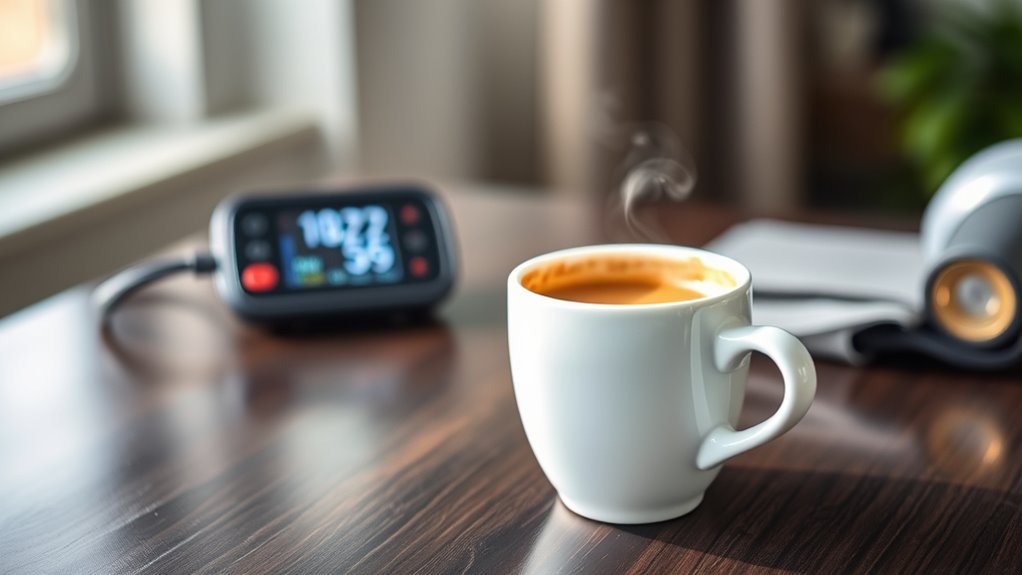
Although you might expect caffeine alone to raise blood pressure, drinking a triple espresso causes a more significant immediate increase.
In non-habitual drinkers, systolic pressure goes up by about 13 mm Hg and diastolic by 7 mm Hg.
This acute rise usually happens within 30 to 60 minutes after drinking it.
Interestingly, blood caffeine levels after espresso intake are similar to those seen with intravenous caffeine.
Yet, the blood pressure increase is more pronounced with espresso.
This suggests that compounds other than caffeine are contributing to this effect.
If you regularly drink espresso, you probably develop a tolerance that minimizes these immediate blood pressure spikes.
Knowing how your body reacts right after drinking espresso is important.
This is especially true if you’re sensitive to blood pressure changes or have hypertension, since the temporary increase might pose cardiovascular risks for some people.
The extraction time and method of brewing can influence the concentration of these compounds in espresso, potentially affecting its impact on blood pressure.
Why Does Espresso Raise Blood Pressure More Than Caffeine Alone?
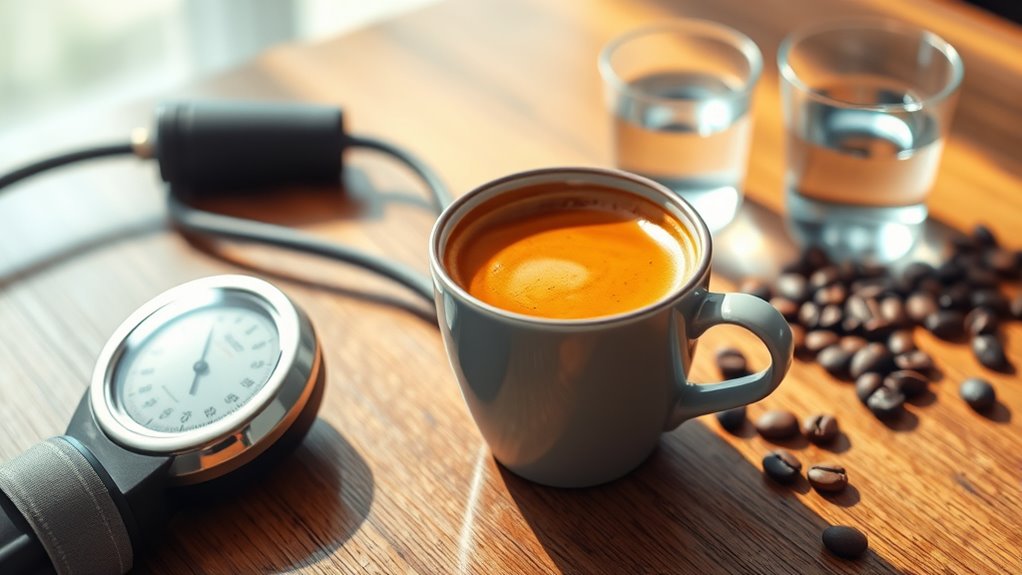
You should know that espresso isn’t just about caffeine. It also has other compounds like oils and polyphenols that can impact how your blood vessels work and raise your blood pressure.
Everyone reacts differently to these components, so your own sensitivity plays a big role in how much your blood pressure goes up.
When you understand these factors, it makes sense why espresso can raise your blood pressure more than caffeine by itself.
The presence of crema, a dense foam rich in emulsified oils and proteins, also contributes to the unique physiological effects of espresso.
Non-Caffeine Blood Components
Because decaffeinated espresso still raises systolic blood pressure by about 12 mm Hg in non-drinkers, it’s clear that compounds beyond caffeine contribute to this effect. You should consider that espresso contains bioactive compounds such as chlorogenic acids and diterpenes. These can independently cause vasoconstriction.
The espresso’s rapid extraction process releases higher concentrations of these oils and acids compared to other brewing methods. These non-caffeine components may stimulate your sympathetic nervous system.
This triggers increased vascular resistance and elevated blood pressure. Additionally, the doppio espresso extraction method intensifies the concentration of these bioactive compounds, potentially amplifying their impact on blood pressure.
Individual Sensitivity Variations
The presence of bioactive compounds beyond caffeine in espresso explains why it raises blood pressure more than caffeine alone. These additional compounds can induce vascular constriction, amplifying the hypertensive effect.
When you consume espresso, especially if you’re not a habitual drinker, your systolic blood pressure may spike by approximately 13 mm Hg. That’s significantly higher than the increase caused by caffeine on its own.
Your individual sensitivity plays a vital role. Some people experience a stronger vascular response due to these specific espresso components.
While regular caffeine consumers often develop tolerance to its blood pressure effects, sensitivity to espresso’s extra bioactive substances may persist.
This enhanced response highlights that espresso’s impact on blood pressure involves more than caffeine alone. So, it’s important to consider this if you’re monitoring your cardiovascular health.
Additionally, the aeration and frothy foam produced in shaken espresso preparation can influence the overall sensory experience, which may indirectly affect how the body responds to the beverage.
Who Is Most Sensitive to Espresso’s Blood Pressure Effects?

If you’re not someone who drinks espresso regularly, you’ll probably notice your blood pressure going up more after having a cup. It’s a bit more noticeable for young people and those who already have high blood pressure or other related risk factors.
Interestingly, it’s not just the caffeine in espresso that can raise your blood pressure. There are other compounds in the coffee that can have this effect too—even if you’re drinking decaf.
Espresso contains about 63 mg of caffeine per shot, which can cause a quick, concentrated increase in blood pressure due to its rapid absorption and immediate effects.
Non-Habitual Drinkers
When you rarely consume espresso, your blood pressure is more likely to rise markedly after intake. Non-habitual drinkers can experience an increase in systolic blood pressure by approximately 13 mm Hg and diastolic by 7 mm Hg.
This acute elevation happens because your body lacks caffeine tolerance, making your cardiovascular system more responsive to espresso’s stimulant effects.
Even decaffeinated espresso may cause short-term systolic increases of about 12 mm Hg in sensitive individuals like you.
Over time, regular consumption leads to physiological adaptations that reduce or eliminate these blood pressure spikes.
Because espresso delivers a high caffeine concentration per ounce, its effects on blood pressure can be more intense compared to other coffee types.
Young Individuals’ Sensitivity
Because young individuals generally have lower caffeine tolerance, they tend to experience more pronounced increases in blood pressure after consuming espresso.
If you’re a young person, especially a non-regular coffee drinker, your systolic blood pressure may rise by approximately 13 mm Hg following a triple espresso.
This heightened sensitivity results from your cardiovascular system’s more reactive response to caffeine, driven by a more excitable nervous system.
Unlike older or habitual consumers, your body is less adapted to caffeine’s stimulant effects, making your blood pressure more susceptible to acute elevations.
Understanding this sensitivity is essential, as it means you should monitor your espresso intake carefully to avoid potential hypertensive episodes.
This is especially important if you have underlying cardiovascular concerns or are prone to blood pressure fluctuations.
Additionally, choosing espresso varieties like white espresso with higher caffeine content could further influence blood pressure responses in sensitive individuals.
Ingredients Beyond Caffeine
Although caffeine is the primary stimulant in espresso, other compounds like diterpenes and organic acids also contribute to increases in blood pressure. You should know that non-regular drinkers, young individuals, and those with hypertension or cardiovascular issues are the most sensitive to these effects.
Even decaffeinated espresso can raise systolic blood pressure, which shows that caffeine isn’t the only factor at play.
| Sensitive Group | Reason for Sensitivity |
|---|---|
| Non-regular coffee drinkers | Limited tolerance to espresso compounds |
| Young individuals | Heightened metabolic response |
| Hypertensive patients | Pre-existing cardiovascular strain |
| Genetic predisposition | Variability in metabolic pathways |
Understanding your individual health status and genetics can help predict how you’ll respond to espresso’s impact on blood pressure beyond caffeine alone.
The difference in brewing pressure between espresso and other coffee types affects the concentration of these compounds, potentially influencing their impact on blood pressure.
Why Regular Espresso Drinkers Don’t See Blood Pressure Spikes
Even if you regularly enjoy espresso, your blood pressure likely won’t experience significant spikes because your body develops a tolerance. When you consume espresso habitually, your body adapts in ways that reduce caffeine’s effects on raising blood pressure.
Research shows that regular espresso drinkers have a much less noticeable blood pressure response compared to people who drink it irregularly or those who are sensitive to caffeine. This tolerance happens because of long-term changes in how your blood vessels and nervous system function.
Regular espresso drinkers develop tolerance, experiencing milder blood pressure effects due to long-term vascular and nervous system changes.
So, if you’re a habitual espresso drinker, your cardiovascular system stays pretty stable and avoids the sudden blood pressure jumps seen in people who don’t drink espresso regularly.
That’s why an occasional espresso might raise your blood pressure, but consistent drinking usually doesn’t cause big spikes for you. Additionally, factors like caffeine concentration and serving size influence how much caffeine enters your system, affecting blood pressure responses.
Which Other Espresso Ingredients Affect Your Blood Pressure?
While caffeine is the primary compound linked to blood pressure changes in espresso, other ingredients also play significant roles. You should consider the following components that impact your blood pressure:
- Chlorogenic acids and diterpenes. These compounds influence blood vessel constriction, which can potentially elevate blood pressure.
- Minerals like magnesium. They may help relax blood vessels, which can reduce hypertensive effects.
- Cafestol and kahweol. These are present in unfiltered espresso and can raise cholesterol, posing an indirect cardiovascular risk.
- Adrenal-stimulating compounds. Certain ingredients can activate hormonal pathways, further affecting how your blood pressure is regulated.
Additionally, the process of aerating espresso through shaking can influence the concentration and texture of the drink, potentially affecting how these compounds are absorbed and their impact on blood pressure.
Understanding these factors helps you see why espresso’s impact on blood pressure goes beyond just caffeine. It really shows how complex its effects on your body can be.
Does Decaffeinated Espresso Raise Blood Pressure?
Because decaffeinated espresso contains minimal caffeine, you might expect it to have little effect on blood pressure. However, studies show that even without caffeine, decaf espresso can raise systolic blood pressure by approximately 12 mm Hg in non-drinkers.
This suggests that compounds other than caffeine, such as diterpenes, may contribute to vascular constriction and hypertensive effects.
The blood pressure response to decaf espresso varies from person to person, with some experiencing more noticeable increases than others.
Also, regular consumption of decaffeinated espresso has been weakly linked to a slight elevation in heart disease risk.
So, while caffeine is a well-known factor, other ingredients in decaf espresso might also influence your cardiovascular system.
It’s something to keep in mind if you’re monitoring your blood pressure or heart health.
Paying attention to how your body reacts to decaf espresso can be helpful in managing your overall cardiovascular risk.
Is Espresso Risky for People With High Blood Pressure?
Understanding how espresso affects blood pressure is especially important if you have hypertension. Espresso can cause a temporary systolic increase of about 13 mm Hg in people who don’t usually drink it. This might be risky for those with high blood pressure.
Espresso can temporarily raise systolic blood pressure by 13 mm Hg, posing risks for those with hypertension.
But here’s the thing—if you drink espresso regularly, your body often builds up a tolerance, which means the spike tends to be less noticeable. Interestingly, even decaffeinated espresso can raise systolic pressure by around 12 mm Hg in people who don’t normally drink it.
This suggests there might be other ingredients in espresso that affect blood pressure.
If you have hypertension, keep a few things in mind:
- Watch how your blood pressure reacts after you have espresso.
- Remember that drinking it only occasionally might cause bigger spikes.
- Know that decaf isn’t completely risk-free.
- And definitely talk to your healthcare provider for advice tailored to you.
Generally, moderate espresso consumption with some careful monitoring should be safe.
Safe Espresso Limits to Avoid Blood Pressure Spikes
You should try to limit your espresso intake to just one or two cups a day to help keep blood pressure spikes at bay.
It’s important to really notice how your body responds, especially if you have high blood pressure or are sensitive to caffeine.
Also, think about when and how often you’re drinking espresso to better manage your own risk.
Recommended Daily Espresso Intake
Although moderate espresso consumption can fit within safe caffeine limits, you should monitor your intake to prevent blood pressure spikes. The FDA deems up to 400 mg of caffeine daily safe for most adults, which is roughly 4-5 espresso shots.
To maintain safe levels, consider these guidelines:
- Limit yourself to no more than 6 espresso shots per day (approximately 378 mg caffeine).
- Avoid consuming more than 3-4 shots in a short time span to prevent acute blood pressure rises.
- If you have hypertension or sensitivity, restrict intake to 1-2 shots daily.
- Regular consumption may build tolerance, potentially reducing blood pressure spikes over time.
Managing Individual Sensitivity
Since individual responses to espresso vary, managing your personal sensitivity is essential to prevent blood pressure spikes. If you’re not a habitual espresso drinker, a single triple shot can raise your systolic blood pressure by about 13 mm Hg and diastolic by 7 mm Hg.
Regular drinkers often develop tolerance, resulting in minimal increases. But if you have hypertension or heightened sensitivity, limiting your intake is vital.
Even decaffeinated espresso can elevate systolic pressure by roughly 12 mm Hg in non-drinkers, which shows that compounds beyond caffeine affect blood pressure.
To establish safe limits, you should monitor your blood pressure before and after espresso consumption. This objective data lets you tailor your intake and minimize cardiovascular risks associated with excessive blood pressure elevation.
Timing and Consumption Frequency
Individual sensitivity plays a significant role in how espresso affects your blood pressure, but timing and consumption frequency also determine the magnitude and duration of these effects.
Consuming a single shot can raise systolic pressure by about 13 mm Hg in non-habitual drinkers, with the most significant increase occurring within 30 to 60 minutes post-intake.
To avoid sustained elevation and blood pressure spikes, follow these guidelines: Limit espresso intake to 1-2 shots daily, especially if you’re sensitive.
Space shots at least 3-4 hours apart to allow pressure normalization.
Avoid multiple shots in quick succession.
And make sure to monitor your response closely when adjusting timing or frequency.
Sticking to these limits helps minimize cardiovascular risks associated with espresso consumption.
It’s all about finding the balance that works best for you.
Best Time to Drink Espresso for Heart Health
When you drink espresso in the morning, you maximize its potential heart health benefits by aligning caffeine intake with your body’s natural metabolism. Consuming espresso before midday allows caffeine metabolism to peak within 30-60 minutes, which helps reduce prolonged blood pressure elevation. This way, you minimize cardiovascular risk during the evening.
Limiting espresso to morning hours also supports antioxidant effects. Plus, it avoids interference with sleep and overnight blood pressure regulation.
| Time of Day | Caffeine Metabolism | Cardiovascular Impact |
|---|---|---|
| Early Morning | Peaks in 30-60 min | Supports heart health |
| Mid Morning | Active metabolism | Minimal blood pressure rise |
| Early Afternoon | Declining metabolism | Increased risk if consumed |
| Late Afternoon | Low metabolism | Higher blood pressure risk |
| Evening | Minimal metabolism | Avoid for heart safety |
How to Monitor Your Blood Pressure Response to Espresso
Although espresso can affect blood pressure differently among people, you should monitor your response carefully to understand its impact on your cardiovascular health.
Begin by measuring your blood pressure before drinking espresso to establish a baseline. Then, take readings 30 to 120 minutes after consumption to note any changes.
Use a reliable, calibrated monitor for accuracy and record measurements consistently at the same time on multiple days.
Also, keep track of any symptoms you experience during or after drinking espresso. This way, you can see how those feelings relate to your blood pressure readings.
Follow these steps:
- Measure baseline blood pressure before espresso consumption.
- Record readings 30 to 120 minutes after drinking.
- Use a calibrated, dependable monitor.
- Maintain consistent timing and document symptoms.
This method makes sure you get a clear picture of how espresso influences your blood pressure.
Frequently Asked Questions
Can Espresso Interact With Blood Pressure Medications?
Yes, espresso can interact with blood pressure medications by causing vasoconstriction, which might reduce how well your medication works.
It’s a good idea to keep an eye on how your body responds when you have espresso.
Make sure to talk with your healthcare provider to ensure you’re consuming it safely and to avoid any unexpected spikes in blood pressure.
Does Espresso Affect Blood Pressure Differently in Men and Women?
Yes, espresso affects blood pressure differently in men and women because of hormonal influences. You might notice stronger increases if you’re male. But individual responses can vary quite a bit.
How Does Age Influence Espresso’s Impact on Blood Pressure?
You experience a stronger blood pressure increase from espresso as you age because reduced vascular flexibility and slower caffeine metabolism prolong its effects. This is especially true if you have hypertension.
Can Drinking Espresso Cause Long-Term Hypertension?
Drinking espresso doesn’t cause long-term hypertension in healthy individuals. You may experience a temporary blood pressure rise, but regular consumption builds tolerance. This minimizes sustained effects and prevents chronic hypertension linked specifically to espresso intake.
Are There Alternative Coffee Drinks Safer for Blood Pressure?
You can choose brewed or filtered coffee, which has less concentrated caffeine and fewer compounds affecting circulation.
Opting for decaffeinated or half-caffeinated espresso also reduces blood pressure impact while letting you enjoy coffee’s flavor safely.
It’s a simple way to keep enjoying your coffee without worrying too much about your blood pressure.
Conclusion
Think of espresso as a spark. It can ignite a swift rise in your blood pressure, especially if you’re sensitive or not used to it. But with regular, moderate intake, your body adapts, and the flame dims.
By understanding your limits and timing your espresso wisely, you get to control the fire rather than letting it control you. Keep an eye on how your body responds. That way, you make sure your heart stays steady, not scorched, by your espresso ritual.