Espresso contains about 0.5 grams of carbohydrates per ounce, mainly from residual sugars and fiber left after roasting breaks down most carbs in green beans. Pure espresso has no added sugars, making it ideal for low-carb and keto diets.
However, adding milk, flavored syrups, or toppings can substantially raise the carb count. Choosing unsweetened milk and sugar-free flavors helps you maintain low carbs. Understanding these factors lets you optimize your espresso choices and manage your intake effectively.
Where Do the Carbs in Espresso Come From?
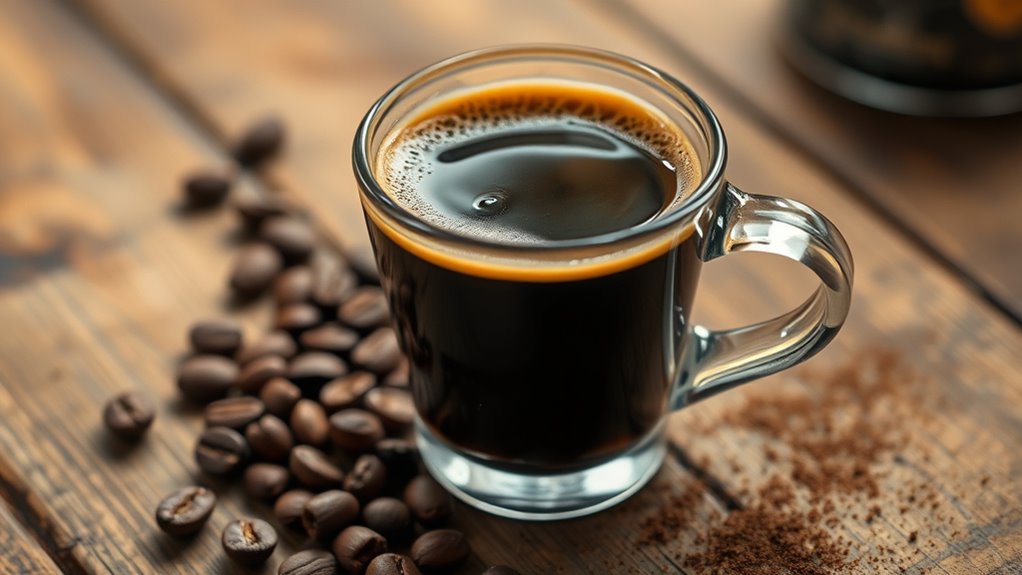
Although green coffee beans contain about 40-50% carbohydrates, most of these carbs break down during roasting. So, the espresso you drink contains only trace amounts.
The carbohydrates in raw beans are mainly stored in cotyledons, which serve as energy reserves for the coffee plant. When roasting happens, high temperatures break down most sugars and fibers. This greatly reduces the carb content.
When you brew espresso, the extraction process pulls out very little carbohydrates, roughly 0.5 grams per ounce. These come mainly from leftover sugars and structural fibers that survive roasting.
Additionally, factors like extraction time influence how much of these carbohydrates are extracted into your espresso.
How Many Carbs Are Actually in Your Espresso?
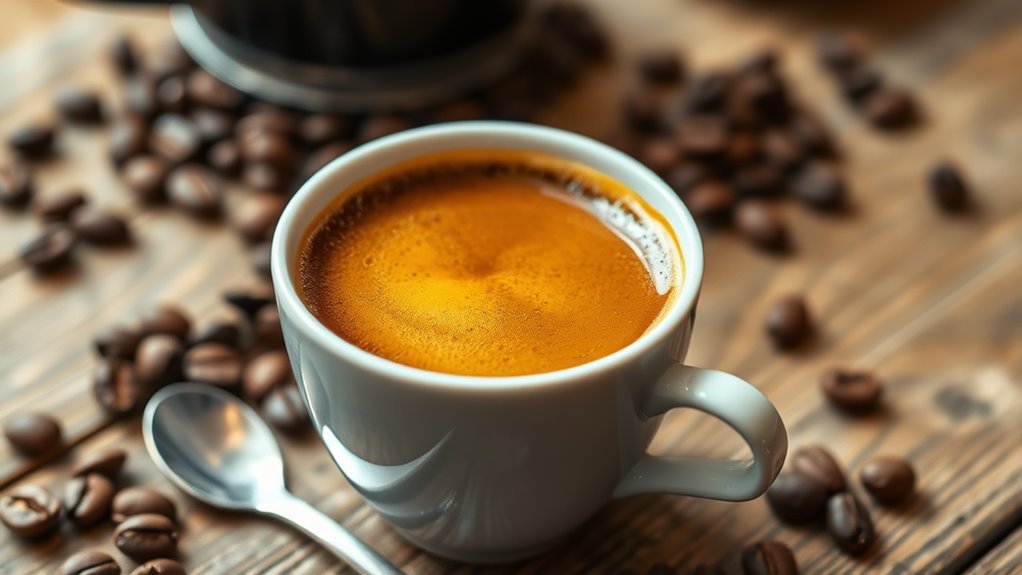
Exactly how many carbs does your espresso contain? A standard 1 oz shot of pure espresso has about 0.5 grams of carbohydrates. These carbs mainly come from residual sugars and fibers that stay after the roasting process. Roasting breaks down most of the carbohydrates found in green coffee beans.
If you’re looking at an 8 oz serving of brewed black coffee, including espresso, it usually contains less than 1 gram of carbs. That’s a pretty minimal amount, making pure espresso a great low-carb choice.
Just keep in mind that flavored or specialty espresso drinks can have more carbs because of added syrups, milk, or toppings. But if you’re sticking with straight espresso, you can expect it to have almost no carbs at all.
This makes it perfect for low-carb and ketogenic diets.
Comparing Carbs: Espresso vs. Other Coffee Types
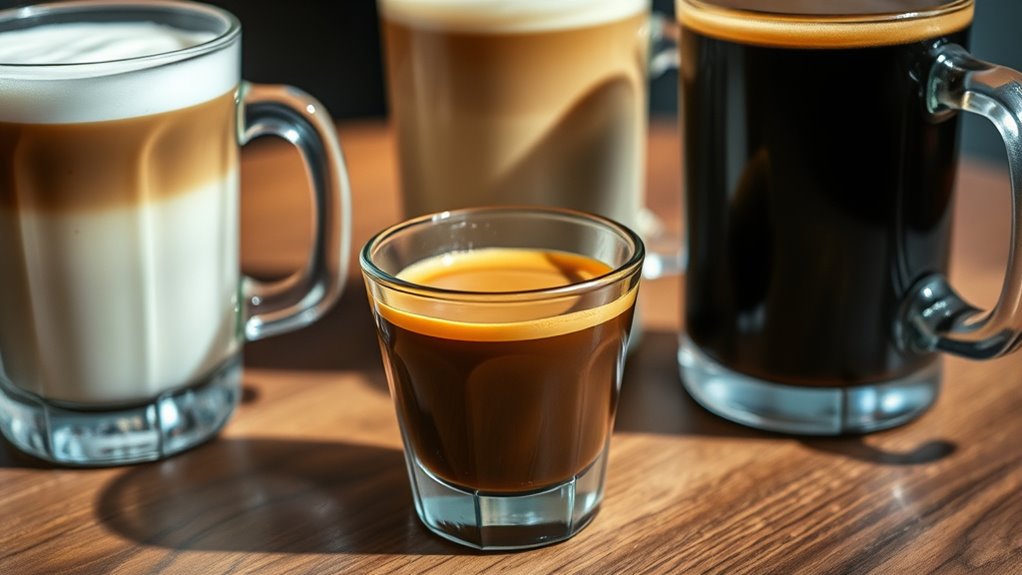
Now that you know a single shot of espresso contains about 0.5 grams of carbs, it’s useful to compare this with other coffee types. Black brewed coffee remains similarly low in carbs, while cold brew shows a modest increase due to extraction differences.
| Coffee Type | Serving Size | Carbohydrates (g) |
|---|---|---|
| Espresso | 1 oz | 0.5 |
| Black Brewed Coffee | 8 oz | <1 |
| Cold Brew Coffee | 8 oz | 2-4 |
This data highlights that pure espresso and black coffee fit well into low-carb diets. Knowing these differences can help you make informed choices depending on your dietary goals. It’s all about picking what works best for you. Understanding the extraction process in espresso machines can further clarify how these carb levels are influenced.
Milk and Add-Ins: How They Affect Espresso Carbs
When you add milk or other ingredients to your espresso, the carbohydrate content can increase quite a bit. Whole milk adds about 12 grams of carbs per cup, which is a lot more than unsweetened almond milk. Almond milk usually contributes only 1 to 2 grams per cup.
Adding whole milk to espresso significantly raises carbs compared to just 1-2 grams in almond milk.
Flavored syrups have an even bigger impact. Each pump can add anywhere from 5 to 20 grams of sugar and carbs. That quickly adds up and boosts the total carbohydrate count in your drink.
Whipped cream adds roughly 1 gram of carbs per 6 grams used, depending on the type and how much you add. Heavy cream contains about 9.1 grams of carbs per cup, but the small splashes you typically use in espresso drinks add very few carbs.
If you want to keep your espresso low in carbs, go for unsweetened nondairy milks. And try to skip the sweeteners or flavored syrups when customizing your drink. It makes a noticeable difference! The roast level of the espresso beans used can also subtly influence the overall flavor profile of your drink, even if it doesn’t affect the carb content directly.
Espresso Drinks With the Most Carbs
When you order espresso drinks with milk, syrups, or toppings, the carb content goes up quite a bit compared to plain espresso.
See, milk adds lactose, which boosts the carbs, and flavored syrups bring in a lot of sugar with each pump.
Regular maintenance, including descaling frequency, is essential to keep your espresso machine functioning properly and delivering consistent quality.
High-Carb Espresso Drinks
Although espresso itself contains minimal carbohydrates, many popular espresso-based drinks can pack a high carb load because of added ingredients. Sweetened syrups, chocolate, and whipped cream really boost the carbohydrate content in these beverages.
For example, a 16 oz caffè mocha with 2% milk usually contains about 43 grams of carbs, mostly from chocolate syrup and milk. Caramel macchiatos and flavored cappuccinos also include sweetened syrups, which raise carb levels quite a bit.
| Drink | Approximate Carbs (16 oz) | Primary Carb Source |
|---|---|---|
| Caffè Mocha | 43 grams | Chocolate syrup, milk |
| Caramel Macchiato | 35+ grams | Sweetened caramel syrup |
| Flavored Latte/Cappuccino | 40+ grams | Syrups, milk, whipped cream |
Knowing these figures helps you manage your carb intake more effectively. It is important to note that while espresso is concentrated in caffeine, its total caffeine content per serving is generally lower than larger brewed coffee drinks.
Milk Impact On Carbs
How much do milk and flavorings affect the carbohydrate content in your espresso drinks? Adding 8 oz of cow’s milk to your espresso increases carbs by about 12 grams, which can really add up. This has a noticeable impact on the total carbohydrate count.
Whole milk contains more carbs compared to unsweetened almond milk, which adds only 1 to 2 grams per serving. Espresso-based beverages like lattes, cappuccinos, and mochas, which combine milk and flavorings, usually have the highest carb content.
So, if you’re watching carbs, it’s something to keep in mind.
Choosing sugar-free or unsweetened milk alternatives helps you keep carbs low. While flavorings also influence carbs, focusing on your milk choice is key. It’s the best way to manage carbohydrate intake in your espresso drinks accurately. Because espresso is a concentrated coffee shot with a syrupy texture, the addition of milk significantly changes the drink’s overall nutritional profile.
Syrups And Toppings
Beyond milk choices, syrups and toppings considerably impact the carbohydrate content of your espresso drinks. Flavored syrups like chocolate or caramel add 5 to 20 grams of carbs per pump, drastically increasing your drink’s total carbs.
Whipped cream also contributes, with at least 1 gram of carbs per 6 grams used.
Additional toppings such as caramel drizzle or chocolate shavings can add 2 grams or more per serving.
To visualize the impact:
- Flavored syrup (1 pump): 5–20 grams of carbs
- Whipped cream (6 grams): ~1 gram of carbs
- Extra toppings (caramel drizzle, chocolate shavings): 2+ grams of carbs
Choosing sugar-free syrups can reduce carbs since they use artificial sweeteners instead of sugar. This helps you manage overall carbohydrate intake more efficiently. Since espresso is brewed using high pressure extraction, it provides a concentrated coffee base with minimal inherent carbs before adding any extras.
How Flavored Syrups Add Carbs to Espresso Drinks
When you add flavored syrups like chocolate or caramel to your espresso, you considerably increase its carbohydrate content. Each pump of syrup can add between 5 to 20 grams of carbs, primarily from added sugars such as high-fructose corn syrup.
A single ounce of these syrups typically contains around 24 grams of carbohydrates.
This significant carb addition is why flavored syrups are major contributors to the elevated carbohydrate counts in specialty espresso drinks. The sugars in these syrups quickly raise the total carb content, shifting what’s otherwise a low-carb beverage into a high-carb one.
Understanding this helps you accurately assess the nutritional impact of your espresso drink when flavored syrups are involved. This is especially important if you’re monitoring carbohydrate intake for health or dietary reasons.
Additionally, espresso beans themselves contain minimal carbs but are a rich source of antioxidants and caffeine, which influence their nutritional profile beyond carbohydrates.
Tips to Keep Your Espresso Low-Carb and Keto-Friendly
Although espresso naturally contains minimal carbohydrates, about 0.5 grams per ounce, keeping it low-carb really comes down to the ingredients you add. To stay keto-friendly, you’ll want to skip milk, sweetened syrups, or sugar-loaded toppings since they can quickly bump up the carb count.
Instead, try using low-carb nondairy alternatives or keto-approved flavorings to keep things on track.
Here are some practical tips to help you maintain a low-carb espresso:
Use unsweetened almond or coconut milk instead of dairy milk to cut down on carbs.
Opt for black espresso or add sugar-free syrups made specifically for keto diets.
If you can, make your espresso at home so you have full control over what goes in. That way, you avoid any hidden carbs lurking in processed additions.
To ensure consistent flavor and quality, focus on dose, tamping, and grind size when preparing your espresso.
Follow these simple steps, and your espresso will stay perfectly suited for keto and low-carb lifestyles.
Why Espresso Is a Great Choice for Low-Carb and Keto Diets
You’ll find that espresso has only about 0.5 grams of carbs per ounce, which makes it a fantastic option for anyone on low-carb or keto diets.
Because it’s so low in carbs, it helps support ketosis while still giving you a nice, low-calorie energy boost.
For the best flavor and texture, using freshly brewed espresso is recommended when preparing espresso-based drinks.
Minimal Carbohydrate Content
Since a standard shot of espresso contains only about 0.5 grams of carbohydrates, it fits seamlessly into low-carb and ketogenic diets. This minimal carb content comes from the natural sugars and carbs in green coffee beans, which mostly break down during roasting. When you choose pure espresso, you avoid added sugars that would increase your carb intake.
Its low carbohydrate presence makes it a great beverage choice if you’re watching your macronutrient consumption.
Consider these points: A single 1 oz shot of espresso contains approximately 0.5 grams of carbs. Brewed black coffee, including espresso, generally has less than 1 gram of carbs per 8 oz.
Just keep in mind, adding milk, syrups, or flavorings can raise espresso’s carbohydrate content quite a bit.
Pure espresso provides a scientifically sound option for sticking to your low-carb dietary goals.
Keto-Friendly Beverage Option
Why does espresso stand out as an excellent beverage for low-carb and keto diets? Its carb content is extremely low, about 0.5 grams per ounce, thanks to the roasting process that breaks down most carbohydrates in raw coffee beans. This negligible carb level lets you enjoy espresso without disrupting ketosis or spiking blood sugar.
Since unsweetened espresso contains no added sugars, it fits perfectly into keto meal plans. It provides rich flavor and a strong caffeine boost without carbs.
| Feature | Benefit |
|---|---|
| Carb content | ~0.5g per ounce (nearly zero) |
| Roasting effect | Degrades original carbs |
| Sugar content | None if unsweetened |
| Keto compatibility | Supports ketosis and blood sugar stability |
Espresso is a precise, keto-friendly beverage option you can consume freely.
Low-Calorie Energy Boost
Espresso offers a powerful energy boost with minimal calories and carbohydrates, making it ideal for low-carb and keto diets. With only about 0.5 grams of carbs per 1 oz shot, espresso delivers a strong caffeine kick without interfering with your carbohydrate limits.
Because it contains no added sugars or milk, it aligns perfectly with ketogenic dietary goals.
This low-calorie profile not only supports weight management but also helps maintain ketosis. By incorporating espresso into your routine, you can enjoy sustained energy without compromising your diet.
- Approximately 0.5 grams of carbs per shot, ideal for carb counting
- Zero added sugars or high-carb ingredients to maintain ketosis
- Supports weight management by keeping calorie intake low
Espresso efficiently balances energy and dietary restrictions for low-carb lifestyles. It’s a great way to stay energized without overdoing the carbs or calories.
Frequently Asked Questions
Does Espresso Affect Blood Sugar Levels?
Espresso doesn’t considerably affect your blood sugar levels because it contains minimal carbohydrates. If you avoid adding sugar or milk, you’ll maintain stable glucose.
Are There Vitamins in Espresso?
Yes, espresso contains vitamins, especially about 0.18 mg of vitamin B2 per 100 g. That’s roughly 45% of your daily needs, which is pretty impressive.
It’s also a modest source of vitamin B3. Other vitamins, though, are minimal. So, while espresso won’t cover all your vitamin needs, it does contribute a bit.
Can Espresso Contribute to Daily Mineral Intake?
Yes, espresso can contribute to your daily mineral intake by providing small amounts of iron, magnesium, potassium, and sodium. These minerals support various bodily functions.
Is Espresso Calorie-Free?
Espresso isn’t completely calorie-free, but it contains about 2.7 kcal per 1 oz shot. That’s pretty negligible for most diets.
You can confidently include it in low-calorie plans without worrying about significant energy intake. So, go ahead and enjoy your espresso without the guilt!
How Does Espresso Impact Energy Levels?
Espresso boosts your energy quickly, delivering about 63 mg of caffeine per shot. This caffeine stimulates your central nervous system, increasing alertness and reducing fatigue. It typically kicks in within 15 minutes for a rapid energy lift.
Conclusion
When you savor espresso, you’re indulging in a beverage naturally modest in carbohydrates. This makes it an elegant choice for those mindful of carb intake. The subtle presence of carbs comes mainly from the coffee beans themselves.
But the real impact depends on what you add to your espresso. By choosing minimal or no sweeteners and dairy, you keep espresso’s refined nutritional profile intact. This way, it fits perfectly with low-carb and keto lifestyles. Plus, you still get to enjoy a rich, concentrated coffee experience.