Yes, you can over tamp espresso. Doing so compresses the coffee grounds too much, which restricts water flow and slows down the extraction time. This usually leads to bitter, over-extracted shots with flat, harsh flavors and a dense, dry puck.
To avoid this, aim for an even tamp with about 20-30 pounds of pressure. Make sure you distribute the grounds properly and keep your technique consistent.
Understanding how tamping pressure affects flavor and flow will really help you pull better, balanced shots every time. It’s all about finding that sweet spot!
What Is Over-Tamping Espresso?
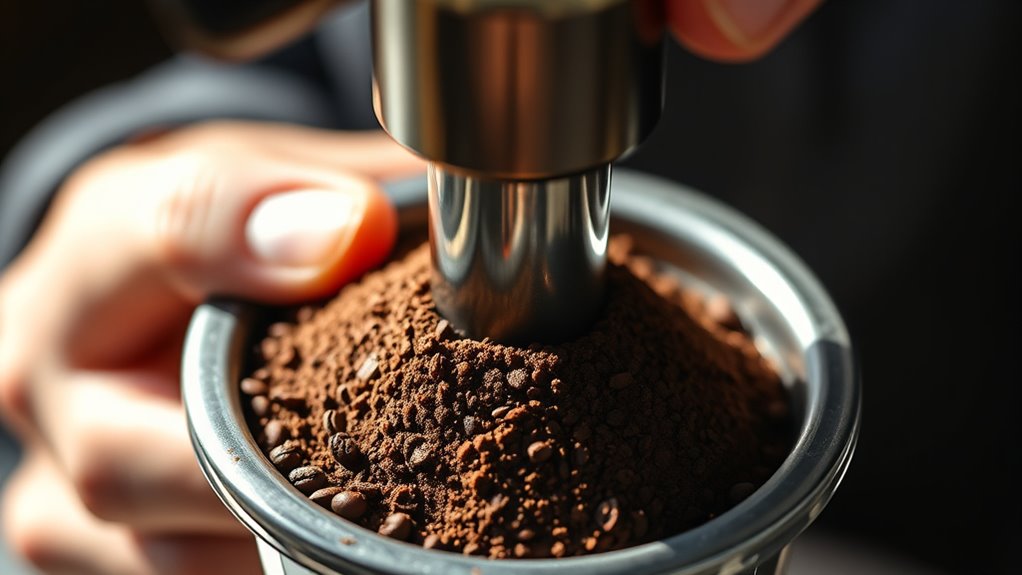
While tamping espresso grounds is essential for a good shot, applying too much pressure, known as over-tamping, compresses the coffee beyond the most favorable level. When you over-tamp, you restrict water flow through the puck, causing it to slow down.
This slower extraction can lead to over-extracted espresso, which tastes bitter and overly strong. Typically, you should aim for about 20-30 pounds of pressure when tamping.
Exceeding this range makes the puck too dense, increasing brewing time and often leaving it dry and uneven.
Over-tamping compromises shot quality by preventing an even, smooth extraction. To pull the best shot, focus on consistent, moderate pressure rather than pushing too hard and risking these negative effects. Regular practice with a scale helps improve consistency and reproducibility in tamping pressure.
Signs Your Espresso Is Over-Tamped (And How to Fix It)
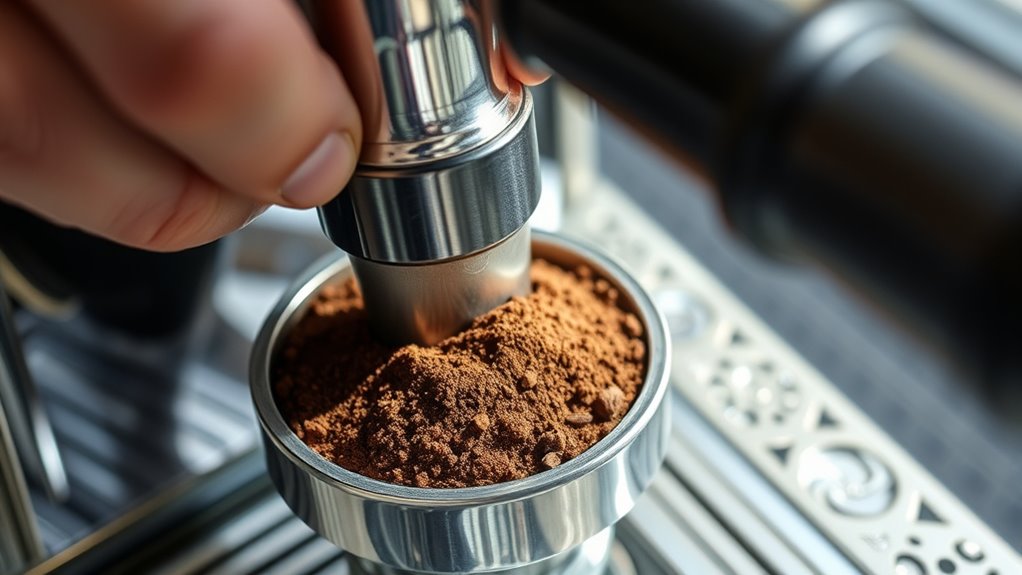
If your espresso shot takes longer than usual to extract, tastes bitter or astringent, or leaves behind a dry, cracked puck, you’re probably over-tamping. That happens because the water struggles to flow evenly through the coffee grounds.
To fix this, try easing up on your tamping pressure a bit. Also, make sure you’re distributing the coffee grounds evenly before you press down. Adjusting the grind size can also help improve extraction and prevent over-tamping issues.
Slow Extraction Time
How do you know when your espresso is over-tamped? One clear sign is a slow extraction time. That’s when your shot takes longer than 30 seconds to pull.
Over-tamping compresses the coffee grounds too tightly. This increases resistance and slows water flow through the puck.
This prolonged brewing isn’t just inefficient; it can also throw off your espresso’s balance.
To fix this, ease up on tamping pressure to avoid excessive compression. You can also try adjusting your grind size to be coarser.
This helps improve water permeability and speeds up extraction.
Keep a close eye on your extraction time. It helps you find the right tamp pressure and grind size. That way, you get a smoother flow and a well-balanced shot every time.
Just remember to make these adjustments carefully. That’s the best way to keep your espresso quality consistent.
Additionally, understanding how baristas control the extraction time can further improve your espresso results.
Bitter Or Astringent Taste
Why does your espresso sometimes taste bitter or astringent? Over-tamping restricts water flow, causing over-extraction and a harsh flavor. When you press too hard, water struggles to pass evenly through the puck, which prolongs brew time and pulls out undesirable bitter compounds.
This uneven resistance leads to a dry, metallic aftertaste. That’s a sign your puck is over-pressed.
To fix this, focus on reducing tamping pressure to allow proper water flow. Make sure you distribute the coffee evenly before tamping. Also, adjusting the grind size can help balance extraction.
Avoid using excessive force that compacts the grounds too tightly. And keep an eye on your brew time to prevent over-extraction.
Regularly monitoring and adjusting brew time and grind size ensures a balanced extraction and smoother espresso.
Puck Appearance Changes
When you tamp your espresso grounds too hard, the puck often becomes overly firm and smooth, sometimes even developing a shiny surface. This excessive compression makes the puck look dense and solid, with few or no visible cracks or gaps.
Because it resists water flow, extraction times lengthen, which can lead to over-extraction and a flat, dull crema.
You’ll notice the puck’s polished appearance and hardness as clear signs you’ve applied too much pressure. To fix this, reduce your tamping force slightly and focus on evenly distributing the grounds before tamping.
Applying a firm but controlled press ensures the puck is compact without being overly compressed. This allows water to flow properly and deliver a balanced espresso shot.
Using a consistent and fine grind size, such as one produced by a burr grinder, also helps maintain proper extraction and prevents issues caused by over-tamping.
How Over-Tamping Slows Water Flow
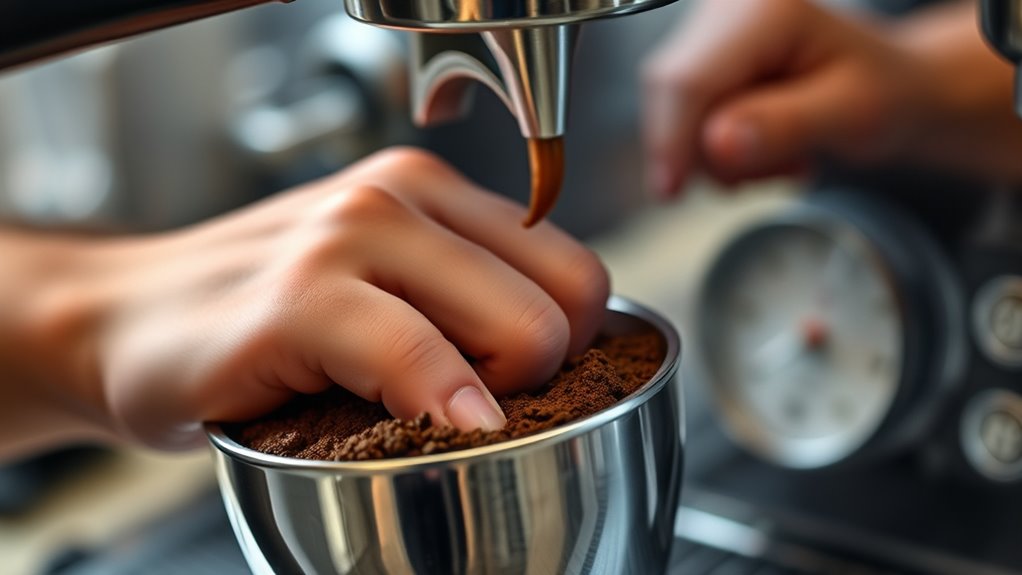
Although tamping is essential for a consistent espresso shot, applying too much pressure increases the density of the coffee puck and makes it harder for water to flow through.
When you over-tamp, the grounds compress tightly, increasing resistance and slowing water passage. This extended brew time affects extraction dynamics, even though it reduces channeling.
Here’s what happens when you over-tamp:
- Water faces greater resistance moving through the dense puck
- Flow rate markedly decreases, prolonging extraction
- Brew time lengthens as water seeps more slowly
- Increased density reduces channeling but can cause uneven extraction
- Slower flow risks over-extraction due to extended contact
Understanding this impact helps you find the right tamp pressure to balance flow and extraction efficiency. It’s really about getting that perfect middle ground to make your espresso taste just right. Consistent tamping pressure is crucial to maintain proper shot timing and avoid flavor imbalances.
How Over-Tamping Changes Espresso Flavor
Since water flows too slowly through an over-tamped coffee puck, you’ll end up extracting bitter compounds that overpower the shot’s flavor. When you compress the grounds too tightly, it restricts water permeability, causing prolonged contact that draws out harsh, astringent notes instead of balanced sweetness.
This over-extraction makes your espresso taste dry and overly intense, stripping away the nuanced flavors you want. Instead of a smooth, rich profile, your shot becomes flat and bitter, lacking complexity and depth.
To preserve the espresso’s natural balance, you need to avoid excessive tamping pressure that compacts the coffee beyond ideal density. Understanding this helps you prevent bitterness and ensures a more enjoyable, flavorful espresso every time you pull a shot.
Balancing extraction is crucial, as the alcohol content in espresso-based cocktails like the Espresso Martini depends on the quality and flavor profile of the espresso used.
Finding the Right Tamping Pressure (20–30 Lbs)
Avoiding excessive tamping pressure is key to preventing bitterness, but knowing how much force to apply can be just as important. The ideal tamping pressure falls between 20 and 30 pounds. This range ensures proper extraction without over-compacting your coffee grounds.
Staying within this range helps create a uniform puck. That reduces channeling and uneven water flow.
Keep these points in mind when tamping:
- Aim for 20 to 30 lbs of consistent pressure
- Use a bathroom scale to calibrate your force
- Apply firm, even pressure without pushing too hard
- Focus on compacting grounds uniformly for steady extraction
- Remember consistency matters more than exact pressure values
Since true espresso requires about 9 bars of pressure, maintaining proper tamping pressure is vital for achieving the optimal extraction in professional espresso machines.
Tools and Techniques to Avoid Over-Tamping
To avoid over-tamping, it’s important to use the right tools. A properly sized tamper is key, and using a bathroom scale can help you gauge your pressure consistently.
Next, focus on your technique. Keep your wrist straight and apply even, downward force. This helps ensure you’re tamping evenly without pressing too hard.
You might also want to try ergonomic aids, like tamping stations or fixed-force tampers. These tools make it easier to maintain uniform pressure every time, so your tamping is consistent and perfect.
Additionally, practicing with a digital scale helps develop muscle memory for consistent tamping pressure and technique.
Essential Tamping Tools
Although tamping may seem straightforward, using the right tools is crucial to prevent over-tamping and guarantee consistent espresso quality. Proper equipment ensures you apply the correct pressure evenly, avoiding channeling or bitterness caused by excessive force.
To help you tamp precisely, consider these essential tools:
- High-quality tamper with a flat, full-sized base for even pressure
- BANLEE Force Impact Tamper delivering a fixed 30 lbs pressure
- Tamping stations or stands to organize tools and maintain technique
- Calibration pressure scales for practicing consistent 20-30 lbs force
- Ergonomic tampers designed to reduce wrist strain and improve control
These tools support consistent tamping pressure and help you avoid the pitfalls of over-tamping. Ultimately, they improve your espresso extraction and flavor. Regular practice with calibrated tampers can further enhance your tamping consistency and shot quality.
Proper Tamping Techniques
When you use a tamper that matches your portafilter basket size, you guarantee even pressure distribution. This is key to preventing over-tamping.
Start by evenly distributing coffee grounds with a method like the Weiss Distribution Technique (WDT) to promote uniform density.
Apply about 20-30 pounds of force. Use a scale to find your ideal pressure and keep the tamper level and parallel to the basket rim throughout. This avoids uneven compression and channeling.
Make sure to maintain proper posture by positioning your elbow directly above the portafilter. This reduces wrist strain and helps you apply consistent force.
Using ergonomic tampers and practicing these techniques ensures you compress the grounds just right. It prevents over-tamping and helps you achieve better espresso extraction every time.
Why Consistency Matters More Than Tamping Force
Even if you vary the tamping force each time, inconsistent pressure leads to uneven puck density. This undermines shot quality more than the actual amount of force applied. You’ll find that focusing on consistency improves extraction and flavor more effectively than pushing for maximum force.
Research shows tamping between 12 to 42 lbs yields similar results, highlighting steady pressure as key. When you develop a consistent tamping routine, you avoid channeling and over-extraction.
Tamping with steady pressure between 12 to 42 lbs prevents channeling and ensures balanced extraction.
This makes your espresso shots more balanced and predictable.
Remember these points:
- Uniform puck density prevents uneven flow
- Consistent pressure reduces extraction variability
- Stable technique lowers risk of channeling
- Similar results occur across a range of moderate forces
- Calibration of pressure supports repeatable shot quality
Ultimately, consistency beats force every time.
Frequently Asked Questions
Can Grind Size Affect the Risk of Over-Tamping?
Yes, grind size affects your risk of over-tamping. Finer grinds pack tighter, so tamping too hard can block water flow and over-extract.
Coarser grinds resist less, making over-tamping less problematic but needing careful adjustment. It’s all about finding the right balance to get the best shot.
Does Tamping Pressure Vary With Different Espresso Machines?
Think of tamping like setting a book on a shelf. You want steady pressure, not crushing.
You don’t really change that force much between machines. Instead, you adjust the grind or dose.
Keep your tamp consistent for the best espresso every time. It’s all about that even pressure.
How Does Coffee Freshness Influence Tamping Results?
You’ll need to adjust tamping pressure based on coffee freshness. Fresher grounds require gentler tamping to avoid over-compaction.
Older beans, on the other hand, need firmer tamping to guarantee even extraction and prevent channeling during brewing. It’s all about finding the right balance for the best flavor.
Can Over-Tamping Damage Espresso Machine Components?
Think of over-tamping like tightening a bolt too much. It strains parts.
Yes, you can damage seals, pumps, and valves by over-tamping. This can cause leaks or premature wear.
Are There Alternative Methods to Tamping for Espresso Extraction?
Yes, you can use dose tapping, finger distribution, or the Weiss Distribution Technique to evenly spread grounds. Levelers and calibrated tampers also help.
Plus, pre-infusion and pressure profiling improve extraction without needing heavy tamping pressure.
These methods give you options beyond just pressing down hard. It’s all about finding what works best for your espresso setup.
Conclusion
If you over-tamp your espresso, you’ll notice slow water flow and a bitter taste. Imagine pressing your puck so hard that water struggles to pass through, resulting in an uneven extraction.
To avoid this, aim for consistent pressure around 20–30 lbs using a reliable tamper. Remember, consistency beats brute force. Steady tamping helps you pull balanced shots every time.
It turns your espresso from frustrating to flawless with simple, practical technique.