Espresso is made by forcing hot water through finely ground coffee at high pressure. This extracts rich oils, solids, and aromatic compounds into a concentrated shot topped with crema. Crema is a velvety foam of emulsified oils and gases.
The right roast, grind size, water quality, and machine settings all shape its bold flavor and texture. Crema signals freshness and proper brewing, giving espresso its unique sensory experience.
Keep exploring to understand how each factor influences your perfect cup. It’s pretty fascinating once you dive into all the details!
What’s in Espresso?
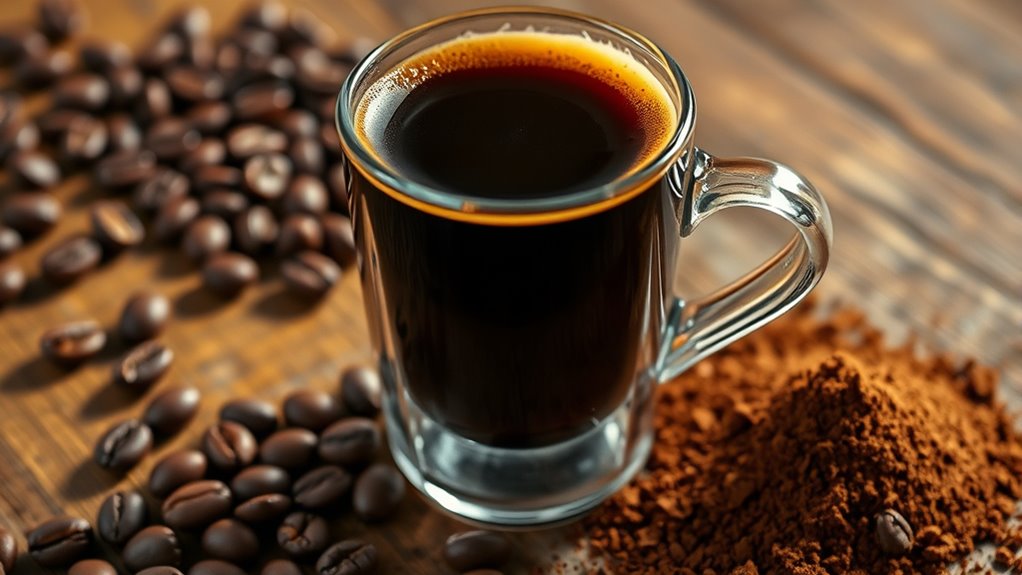
Although espresso might seem simple, it’s actually a complex brew made by rapidly forcing hot water through finely ground coffee beans at high pressure, typically around 9 bars. This process extracts concentrated coffee solids, oils, and aromatic compounds, creating a rich, full-bodied drink.
On top, you’ll notice a thick crema, a dense foam of emulsified oils and gases that enhances both flavor and aroma. A standard double shot yields about 25-30 ml of liquid and contains roughly 65 mg of caffeine.
Beyond caffeine, espresso delivers antioxidants, B vitamins, and minerals like magnesium, contributing to its unique chemical profile. When you sip espresso, you’re tasting a carefully balanced blend of these compounds, all extracted in mere seconds for a powerful, flavorful experience. The crema is essential not only for flavor but also for creating the signature frothy texture found in drinks like the Espresso Martini.
How Coffee Beans Shape Espresso
Because the coffee beans you choose directly impact the taste and texture of your espresso, understanding their role is essential. Any variety can be used, as espresso isn’t limited to specific beans. However, the roast level and freshness play a bigger role in flavor than the bean origin itself.
Robusta beans, for example, tend to create a stronger taste with more crema, while Arabica beans offer delicate, aromatic notes that bring complexity. The chemical makeup of the beans, the oils and sugars, also influences how well flavors extract during brewing.
To get the best espresso, focus on high-quality, fresh beans, regardless of type. This guarantees a balanced, flavorful shot every time you pull espresso. Using a machine with a built-in conical burr grinder helps achieve consistent grind size and optimal extraction.
How Grind Size and Roast Affect Espresso
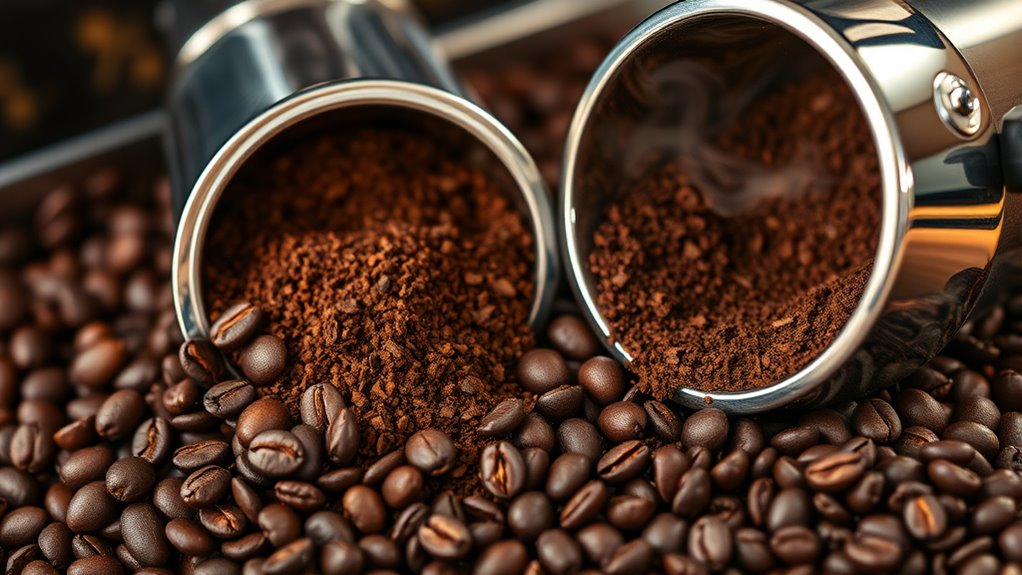
You’ll want to fine-tune your grind size because a very fine grind creates the resistance needed for rich crema and bold flavors. That’s what gives your espresso that signature thickness and depth.
Now, keep in mind that darker roasts bring oils to the surface, which can affect grind consistency. So, you might need to adjust your grind a bit to account for that.
Nail these factors, and you’ll be pulling perfectly extracted espresso shots every time. It’s all about finding that sweet spot!
Also, remember that grind size directly influences extraction time and shot quality, so small adjustments can make a big difference.
Grind Size Impact
When dialing in your espresso, understanding how grind size interacts with roast level is essential for extracting the best flavors. A finer grind increases resistance during extraction, producing a thicker crema and more concentrated taste. If your grind is too coarse, you’ll end up with under-extracted espresso that’s weak and watery, lacking crema.
Because darker roasts are more brittle, you may need to adjust grind size to maintain consistent extraction. Achieving the ideal contact time, typically 25 to 30 seconds, depends heavily on your grind size. This ensures a balanced flavor and aroma.
Continuously fine-tuning your grind based on roast and machine performance is key to pulling espresso shots with rich body and vibrant crema every time. Keep experimenting until you find that sweet spot!
Additionally, factors such as extraction time and water temperature play a crucial role in maximizing caffeine yield and flavor during the brewing process.
Roast Level Influence
Adjusting your grind size goes hand in hand with understanding how roast level shapes the espresso’s character. Darker roasts release oils that enhance crema and deepen flavor, while lighter roasts yield a brighter, more acidic shot. You’ll need to tweak grind size accordingly for balanced extraction.
Here’s how roast level influences your espresso:
- Dark roasts require a coarser grind to prevent over-extraction due to their porous structure.
- Lighter roasts need a finer grind to extract their denser, subtle flavors properly.
- Finer grinds increase resistance, intensifying body and flavor, especially in dark roasts.
- Roast and grind together control extraction time, directly affecting flavor complexity and crema quality.
Mastering this balance lets you craft espresso tailored to your taste. It’s all about finding what works best for you and your beans. Adjusting grind size within the ideal range of 200-400 microns helps ensure balanced extraction and flavor clarity.
Why Water Quality and Temperature Matter
Why does water quality and temperature play such an essential role in crafting the perfect espresso? When you brew espresso, water temperature between 90°C and 96°C (194°F to 205°F) is critical to extract the right balance of oils and flavors without bitterness.
If the temperature swings outside this range, your shot risks under- or over-extraction, altering its taste.
Equally important is water quality. Hard water with excessive minerals can cause scale buildup in your machine and disrupt extraction, while overly soft water might yield dull flavors.
Using filtered or purified water reduces impurities, delivering a cleaner, more balanced espresso.
By controlling both water temperature and quality, you guarantee every espresso shot captures the coffee’s true aroma, richness, and complexity, giving you a consistently satisfying cup.
It’s all about getting that perfect balance every time.
Additionally, maintaining a consistent water temperature during extraction helps support milk frothing and prevents unwanted bitterness or sourness in your espresso.
How Pressure Creates Espresso’s Crema
Because pressure plays an essential role in espresso extraction, understanding how it creates crema will elevate your brewing technique. Crema forms as high-pressure water, usually around 9 bars, forces hot water through finely ground coffee. This process emulsifies oils and traps carbon dioxide gases into tiny bubbles.
To master this, focus on these key factors:
- Apply consistent pressure to push water through the coffee puck.
- Use the right grind size to ensure proper resistance and extraction.
- Allow emulsified oils and gases to combine, forming a thick, stable foam.
- Recognize that insufficient pressure or incorrect grind leads to weak or no crema.
The composition of crema includes emulsified oils, proteins, microbubbles, and aromatic compounds that contribute to its rich texture and flavor.
Why Crema Is Essential
You’ll notice crema isn’t just a pretty layer. It’s actually made up of carbon dioxide bubbles, emulsified oils, and fine coffee particles that give your espresso its unique texture.
This foam does more than look good—it plays a key role in trapping aromatic compounds, which boosts both the flavor and the mouthfeel with every sip.
When you understand what crema is made of, you start to see how it really takes the espresso experience to the next level, beyond just how it looks.
Even in decaf espresso, the crema contributes to the overall sensory experience, despite the significantly reduced caffeine content.
Crema Composition Breakdown
Although often overlooked, crema plays a crucial role in defining the quality of your espresso. This dense, golden-brown foam forms when high-pressure hot water emulsifies oils, proteins, and carbon dioxide bubbles during brewing.
Understanding its composition helps you appreciate why crema is more than just a visual indicator.
Here’s what crema consists of:
- Emulsified Oils – Tiny oil droplets that trap gases and contribute to crema’s texture.
- Proteins – These stabilize the foam, ensuring crema stays intact longer.
- Carbon Dioxide Bubbles – Created by fresh coffee beans, they form the foam’s structure.
- Aromatic Compounds – These enhance crema’s rich aroma, signaling freshness and proper extraction.
Recognizing these elements helps you gauge espresso quality and brewing precision. It’s pretty neat how much goes into that little layer on top, right? Proper extraction at about 9 bars of pressure ensures crema quality and aroma preservation.
Crema’s Role In Flavor
When you savor a shot of espresso, crema plays an indispensable role in shaping its flavor profile and overall experience. This dense, golden-brown foam forms from carbon dioxide bubbles emulsified by oils and fine coffee particles under high pressure, signaling freshness and quality.
Crema carries aromatic compounds and emulsified oils that intensify the espresso’s rich aroma and complex taste. It also acts as a visual indicator of proper brewing conditions like grind size, temperature, and pressure.
Beyond aesthetics, crema adds a smooth texture and enhances the sensory depth with every sip. Without it, espresso would lose much of its character. Achieving a rich crema depends on factors such as grind size, pressure, and extraction time, all of which contribute to a balanced and flavorful shot.
How Machines Affect Espresso
Because espresso machines generate around 9 bars of pressure, they play a crucial role in extracting the rich crema and full-bodied flavor you expect from a shot. The machine’s precision influences every aspect of your espresso experience. Here’s how:
- Pressure Consistency: Electric pumps or levers maintain steady pressure, ensuring balanced extraction.
- Temperature Stability: Keeping water between 90-96°C (194-205°F) helps develop ideal flavor compounds.
- Group Head & Portafilter Design: These affect resistance and flow, shaping texture and aroma.
- Advanced Features: Pre-infusion and programmable pressure profiles let you customize extraction for peak quality.
Frequently Asked Questions
Can Espresso Be Made Without an Espresso Machine?
You can’t make true espresso without an espresso machine or a high-pressure alternative.
But using a Moka pot or manual lever device lets you brew strong, espresso-like coffee at home. It’s with lower pressure but still delivers rich flavor.
How Long Does a Typical Espresso Shot Take to Brew?
A typical espresso shot takes about 25 to 30 seconds to brew. You’ll want to control grind size and tamping pressure carefully.
If you don’t, you might end up with sour or bitter flavors from under- or over-extraction. It’s all about finding that sweet spot to get the best taste.
What Is the Ideal Serving Size for a Single Espresso Shot?
The ideal serving size for a single espresso shot is 25–30 milliliters. You’ll get the perfect balance of rich flavor and crema by using about 7 grams of finely ground coffee within this volume range.
It’s all about getting that smooth, intense taste without overdoing it. Just the right amount makes your espresso shine every time.
Can Espresso Be Made With Decaffeinated Coffee Beans?
Yes, you can make espresso with decaffeinated beans. You’ll get a similar rich shot but with much less caffeine. Just expect a slightly different flavor.
You use the same brewing techniques as regular espresso. It’s pretty much the same process, just with decaf beans. So go ahead and enjoy your espresso without the jitters!
How Should Espresso Be Stored After Brewing for Best Taste?
Don’t let your espresso throw a party with oxygen. Seal it airtight and stash it in the fridge.
Drink within 24 hours, and skip reheating. You want bold, not bitter burnt disappointment.
Conclusion
So, next time you sip espresso, remember it’s not just crushed coffee beans and hot water pretending to be magic. It’s a diva performance. Pressure, grind size, water quality, and crema all demanding center stage.
You might think a machine just presses a button, but no, it’s a caffeinated symphony. Now, go impress your friends by explaining why their espresso isn’t just bitter water. It’s science, art, and a tiny miracle in a cup.