You should pick an espresso machine that fits your brewing style and skill level. For quick, easy shots, consider automatic models like the Breville Bambino Plus or Barista Pro with built-in grinders.
If you want full control and simultaneous brewing and steaming, dual boiler machines like the Lelit Bianca V3 or La Marzocco GS3 excel. Remember, a quality grinder and precise temperature control are essential for consistent flavor.
Explore further to match features and costs with your coffee goals. It’s all about finding the right balance that works for you and your routine.
Matching Espresso Machines to Your Coffee Habits
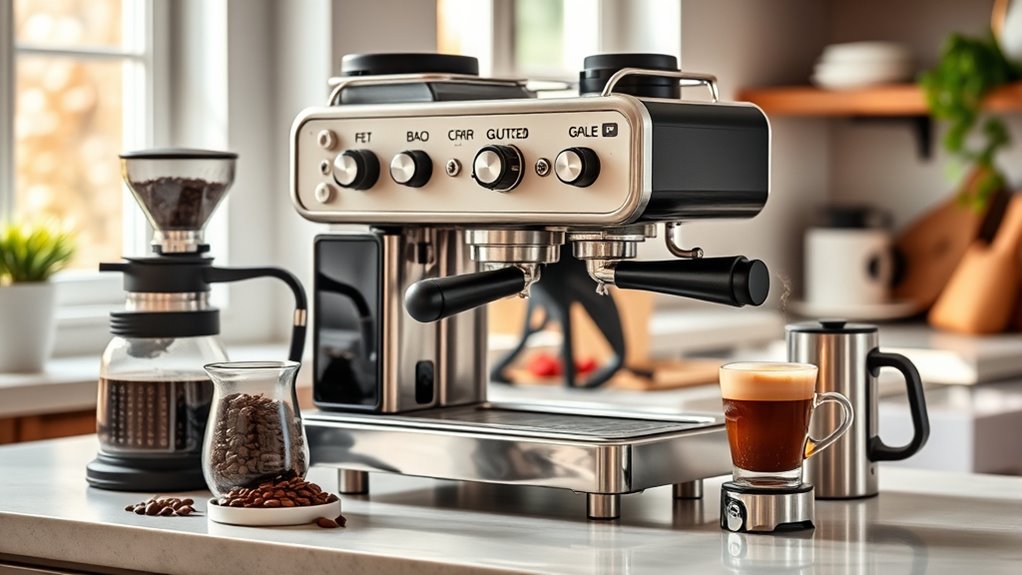
When matching an espresso machine to your coffee habits, you’ll want to weigh how much control and convenience you need. If you prioritize quick, effortless shots, an automatic machine like the Breville Bambino Plus suits you well.
Should you crave precision and skill development, a manual or semi-automatic model like the Sanremo YOU offers customizable extraction.
For precision and skill growth, choose a manual or semi-automatic espresso machine like the Sanremo YOU.
For those who mostly enjoy milk-based drinks, focus on machines with reliable steaming capabilities, such as the Lelit Bianca V3, rather than advanced shot features.
Casual drinkers benefit from integrated grinders and preset functions found in models like the Breville Barista Pro.
If you seek professional-level control with simultaneous brewing and steaming, dual boiler machines like the La Marzocco GS3 provide consistent temperature stability and performance tailored to serious home baristas.
Additionally, considering machines with PID temperature control can significantly enhance your brewing precision and espresso quality.
Types of Espresso Machines: Single Boiler, Dual Boiler, and Manual
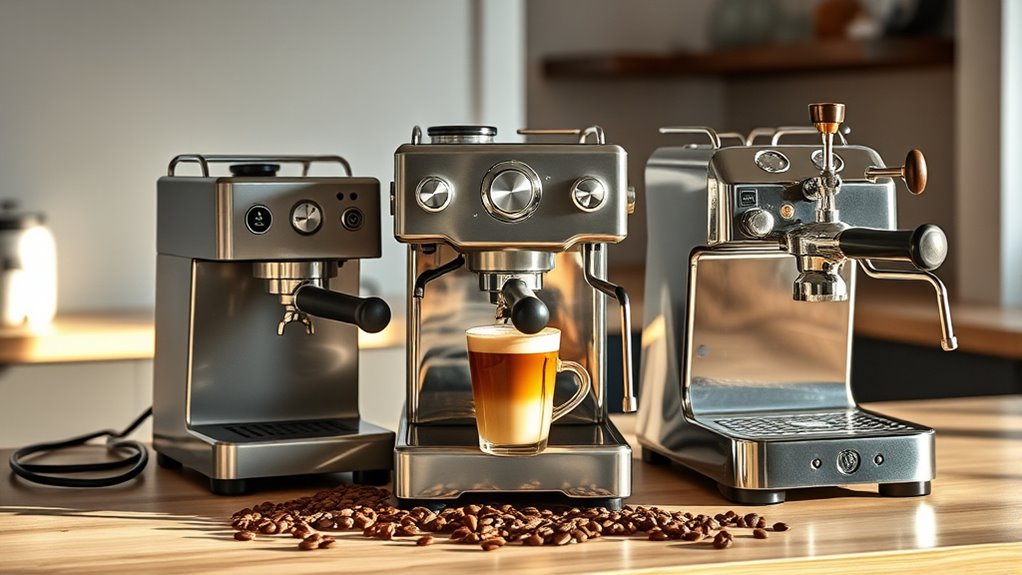
You’ll find that single boiler machines combine brewing and steaming in one chamber. That means you have to pause between these functions.
On the other hand, dual boilers keep these tasks separate, so you can brew and steam at the same time.
Manual machines are a bit different—they require your skill to control temperature and pressure precisely. This gives you the most customization but also means more hands-on effort.
In the end, choosing between them depends on how much control you want, how fast you like your workflow, and what your budget looks like.
Dual boiler machines offer superior temperature stability and faster operation due to their separate brewing and steaming boilers.
Boiler Types Explained
Although espresso machines come in various designs, understanding the boiler type is essential since it directly affects temperature stability, operation speed, and user control.
Single boiler machines use one heating element for both brewing and steaming, which means you have to wait as the temperature adjusts between functions.
Dual boiler machines have separate boilers, so you can brew and steam at the same time. This setup offers precise temperature consistency, making it perfect if you’re pulling multiple drinks in quick succession.
Manual machines don’t have automated heating. Instead, they put full control of temperature and pressure in your hands. This demands some skill but gives you nuanced control over your espresso.
Then there are thermoblock systems, which heat water rapidly on demand. They’re quick but don’t hold temperature as steadily as boilers.
Your choice here affects not just performance but also machine size and energy efficiency.
Maintaining proper water temperature between 195°F and 205°F is crucial for optimal espresso extraction and flavor.
Manual Vs Automatic
Since espresso machines vary widely in automation, understanding the differences between manual and automatic options is essential for selecting the right model. Manual machines demand you control pressure and timing, offering unparalleled customization but requiring skill and attention.
Automatic machines automate these parameters, delivering consistent shots with minimal input. They’re ideal for convenience and repeatability.
| Feature | Manual Espresso Machines |
|---|---|
| Control | Full user control over extraction |
| Skill Level | High, requires experience |
| Consistency | Variable, depends on technique |
| Convenience | Low, manual operation needed |
| Customization | Maximum, tailored brewing possible |
Choosing between manual and automatic hinges on your preference for control versus ease, balanced against your skill level. It really comes down to what you want from your coffee experience. Additionally, understanding factors like roast profile and caffeine content can help you choose beans that complement your machine and personal taste preferences.
Essential Features That Improve Espresso Quality and Convenience
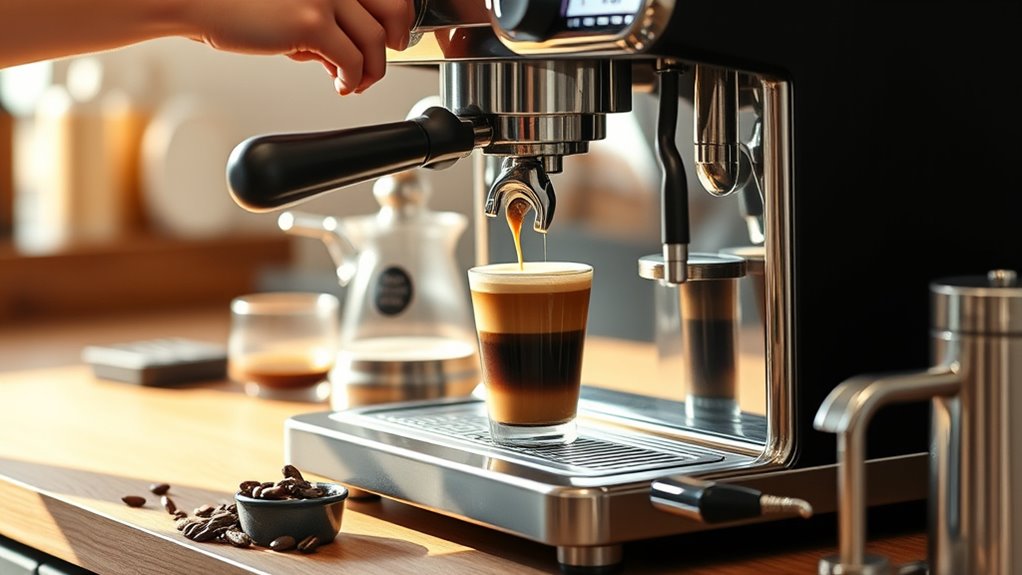
You need precise temperature control to keep the water within ±1°C for consistent extraction. It’s all about hitting that sweet spot every time.
Plus, monitoring pressure with accurate gauges ensures you reach the ideal 9-bar level, which is key for a rich, creamy crema.
And don’t forget about the steaming wand quality—it really makes a difference. A good wand not only improves milk texture but also makes the whole preparation process a lot more convenient and enjoyable.
Maintaining proper water mineral content also plays a crucial role in achieving rich and nuanced espresso flavors.
Temperature Control Precision
When dialing in your espresso, maintaining precise water temperature is critical to extracting consistent flavors, and PID controllers excel at this task. PID systems continuously monitor and adjust water temperature, eliminating fluctuations that thermostats or pressurestats often allow.
This stability guarantees each shot hits the ideal extraction temperature, reducing variability and enhancing flavor clarity.
Especially when working with premium beans or advanced techniques, precise temperature control enables the full flavor spectrum. By integrating a PID controller, your machine not only improves shot consistency but also boosts convenience.
You can rely on stable, repeatable brewing conditions every time.
Choosing a machine with advanced temperature regulation like a PID controller is essential if you want reliable performance and the best espresso quality every time. It’s really the key to dialing in shots that consistently taste just right.
This level of control is especially important when using single-origin Arabica beans, which highlight subtle flavor notes that can be lost without precise temperature management.
Pressure Monitoring Tools
A pressure gauge is an indispensable tool for dialing in espresso extraction with precision and consistency. By providing real-time pressure feedback, it lets you adjust grind size and tamping force to achieve ideal shot quality.
Accurate pressure monitoring prevents over-extraction or under-extraction, maintaining balanced flavor profiles across every pull.
Many modern machines feature built-in pressure profiles or manual pressure control, so you can customize brewing variables to match specific beans or preferences.
Monitoring pressure also helps you detect issues like channeling or insufficient tamping, allowing for immediate troubleshooting.
Incorporating precise pressure control and monitoring tools elevates your espresso-making to professional standards. This ensures consistent, high-quality results in your home setup.
If you’re serious about perfecting your espresso craft, this feature is essential.
Furthermore, maintaining steady machine pressure throughout extraction is key to balancing flavor and achieving rich, full-bodied shots.
Steaming Wand Quality
Although often overlooked, the quality of the steaming wand plays an essential role in achieving ideal milk texture and espresso presentation. You need a wand that produces microfoam with fine, smooth bubbles, which is critical for latte art. Steam pressure around 15-20 psi ensures efficient steaming and consistent foam.
Manual wands give you precise temperature and texture control. Adjustable features like swivel joints enhance maneuverability for different pitcher sizes. Durable materials such as stainless steel tips improve longevity and make cleaning easier.
Using freshly steamed milk enhances the creamy finish often desired in espresso-based drinks like brown sugar shaken espresso.
| Feature | Benefit |
|---|---|
| Microfoam Quality | Silky texture, artistic pours |
| Steam Pressure | Faster steaming, better foam |
| Manual Control | Precise temperature management |
| Adjustable Wand | Easy handling, versatile use |
| Stainless Steel Tips | Durable, easy to clean |
Why a Quality Espresso Grinder Matters Just as Much
Since grind consistency directly influences extraction quality, you can’t overlook the importance of a high-quality espresso grinder. A grinder delivering uniform particle size ensures balanced extraction, which directly affects flavor and crema. You’ll want precise grind size adjustments to dial in your shot, as even slight inconsistencies can cause bitterness or weak flavor.
Here’s why a quality grinder matters:
- Consistent grind size prevents over-extraction and under-extraction, stabilizing shot quality.
- Fine-tuning grind settings lets you control espresso’s delicate flavor balance.
- Durable grinders maintain performance over time, minimizing shot variability.
Ultimately, investing in a reliable grinder impacts your espresso’s taste and crema more than upgrading your machine alone. So, don’t underestimate the grinder’s role in crafting your perfect shot. Regularly adjusting the grind size helps control the extraction speed, which is key to achieving the ideal flavor profile.
Top Espresso Machines for Home Use in 2026
Mastering your espresso starts with consistent grind quality, but selecting the right machine shapes how effectively you extract those flavors.
In 2026, the Breville Bambino Plus stands out for its affordability and rapid heat-up, delivering efficient performance.
If you want integrated grinding with customizable settings, the Barista Pro suits casual to intermediate users perfectly.
For advanced control and lasting durability, the Lelit Bianca V3 offers precision PID temperature control and robust build quality.
Enthusiasts appreciate the straightforward, reliable Gaggia Classic Pro and Rancilio Silvia.
Compact options like the ZURIGA E2-S provide quick heat-up and minimal setup, ideal for small kitchens.
Features such as PID control, built-in grinders, and automatic steaming have become standard, ensuring user-friendly, consistent espresso extraction at home.
It’s easier than ever to get great espresso without fuss. Just pick the machine that fits your style and needs!
Many machines now include pre-infusion technology, which gently saturates grounds to enhance flavor complexity and shot consistency.
Maintenance and Long-Term Costs of Espresso Machines
When you invest in a high-end espresso machine like the La Marzocco GS3, you should expect total ownership costs that extend beyond the initial price tag of around $6,800. Over a decade, these costs can potentially exceed $7,500 due to repairs and maintenance.
To manage these costs effectively, focus on routine maintenance. Annual gasket replacements, cleaning, and descaling typically cost $100-$300 and are crucial to prevent wear.
Major repairs, like fixing leaks or upgrading the group head, can run between $400 and $1,000. This is especially true if hard water causes mineral buildup, which can really add up.
Using filtered water helps reduce mineral deposits and lowers how often you need repairs.
Plus, brands with dedicated service, such as Lelit and Breville, can minimize downtime and expenses, making your life a bit easier.
Frequently Asked Questions
Can I Use Regular Coffee Beans in an Espresso Machine?
You can use regular coffee beans in an espresso machine, but you’ll need to grind them very fine and adjust tamping.
For ideal crema and flavor, beans roasted specifically for espresso perform considerably better under high pressure.
How Long Does It Take to Make a Shot of Espresso?
Making a shot of espresso takes about 25 to 30 seconds of extraction once your machine’s ready. It’s kind of like timing a rocket launch.
Including warm-up and prep, expect 1 to 5 minutes. It really depends on how efficient your machine is.
Are Espresso Machines Noisy During Operation?
Yes, espresso machines can be noisy, especially during grinding and steaming. Noise levels vary with pump pressure, boiler size, and built-in grinders.
But some quieter models use sound-dampening features to reduce operational sound for your environment. So, if noise is a concern, it’s worth looking into those options.
Can I Make Tea or Other Drinks With an Espresso Machine?
Yes, you can make tea using an espresso machine if it has a hot water spout or steam wand. Just be careful to avoid milk residue contamination.
For specialty drinks like chai, you’ll need extra tools beyond what the machine can do. It’s not really designed for that kind of preparation. But for a simple cup of tea, it works fine!
What Warranty Options Are Typically Available for Espresso Machines?
Warranty options are your safety net, ranging from 1-2 years on home machines to 5+ years on prosumer models. Some brands offer paid extensions. Coverage usually includes defects but excludes wear items like gaskets and filters.
Conclusion
Choosing the right espresso machine is like tuning a precision instrument. Each component has to work perfectly together. Just like a skilled musician depends on both their instrument and technique, you need a machine paired with a quality grinder to make espresso that really sings.
Think about your coffee habits and match them with the right boiler type and features. That way, you’ll get consistent, high-quality shots every time. It’s all about finding the perfect fit for how you like your coffee.
Invest wisely and keep up with regular maintenance. If you do, your espresso setup will perform like a finely calibrated masterpiece for years to come. It’s worth the effort, trust me.