Espresso packs a powerful caffeine punch despite its small size, with a standard 1-ounce shot delivering about 63 mg of caffeine. That’s more concentrated per ounce than drip coffee. Its caffeine strength varies based on bean type, grind size, and extraction time, making every shot unique.
If you manage your caffeine with proper serving sizes and technique, espresso offers quick, intense alertness without going overboard. It’s all about balance and knowing what works for you. Keep exploring to understand how these factors shape your perfect brew.
What Is Espresso?
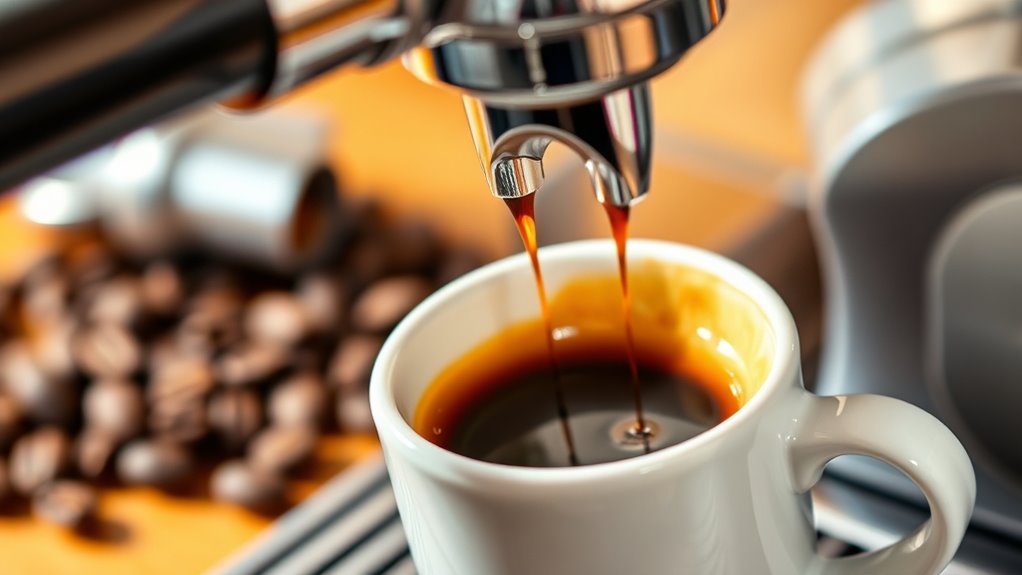
Although espresso might seem like just a small cup of coffee, it’s actually a concentrated brew made by forcing hot water through finely-ground beans under high pressure. When you order an espresso, you’re getting a 1- to 2-ounce shot packed with intense flavor and a thicker texture than regular drip coffee.
The process uses about 7 grams of finely ground coffee, extracted in roughly 25 to 30 seconds. This method draws out the rich oils and compounds, creating espresso’s signature crema, a creamy, golden layer on top.
Espresso isn’t just a standalone drink; it’s the foundation for lattes, cappuccinos, and Americanos. Understanding this brewing technique helps you appreciate the complexity and precision behind every espresso shot you enjoy. The extraction time plays a crucial role in balancing flavor and achieving the perfect crema.
How Much Caffeine Is in a Typical Espresso Shot?
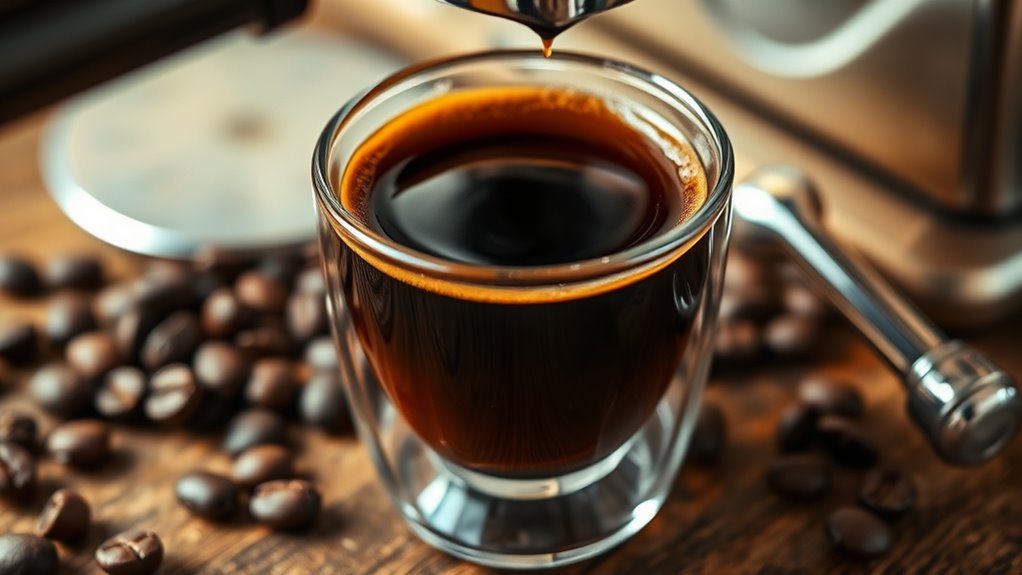
Now that you know what makes espresso unique, it’s worth exploring how much caffeine is packed into that small but powerful shot. A typical single shot of espresso contains about 63 milligrams of caffeine.
But this can range from 30 to 90 milligrams depending on factors like the bean type and extraction method.
If you opt for a standard double shot, you’re looking at roughly 125 milligrams of caffeine. Despite its smaller volume, espresso delivers a higher caffeine concentration per ounce compared to drip coffee.
This concentrated caffeine is absorbed quickly into your bloodstream, making espresso an efficient way to boost alertness and energy in a short amount of time.
The caffeine content can also be influenced by variables such as bean type and roast level, which affect the final strength of your espresso.
How Is Espresso Caffeine Measured?
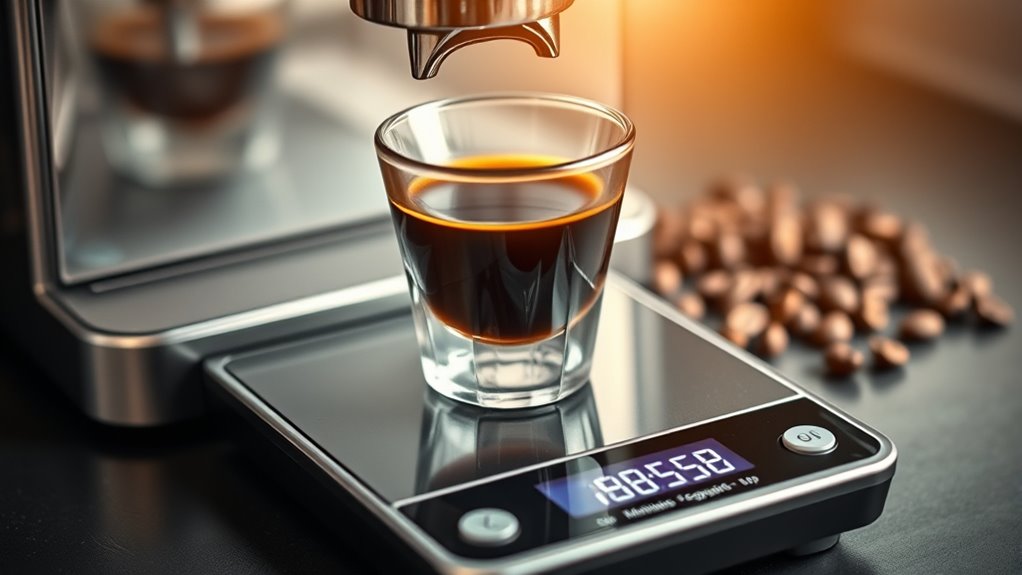
When you measure espresso caffeine, you usually look at milligrams per shot. On average, that’s about 63 mg, but it can change depending on things like the type of bean, how it’s roasted, the grind size, and how long you extract it.
In labs, they use precise methods like high-performance liquid chromatography to figure out the exact caffeine content in brewed espresso.
Knowing these factors, along with standardized serving sizes, makes it easier to compare caffeine levels across different espresso drinks accurately.
Consuming multiple shots can quickly add up to high caffeine intake, so understanding safe consumption guidelines is important.
Measurement Methods Explained
Because caffeine content can vary widely, scientists use high-performance liquid chromatography (HPLC) to measure espresso’s caffeine levels accurately. This technique separates caffeine molecules from the coffee sample, allowing precise quantification.
To guarantee reliable results, researchers brew espresso under standardized conditions, controlling variables that could affect caffeine concentration. Measurements are typically reported in milligrams per shot or per fluid ounce, providing a clear comparison of strength.
When evaluating espresso caffeine content, consider these key points:
- HPLC offers accuracy by isolating caffeine from other compounds
- Standardized brewing ensures consistency across tests
- Results are expressed in mg per shot or fluid ounce for clarity
Understanding these methods helps you grasp how espresso’s caffeine strength is scientifically determined. It’s pretty neat how much goes into making sure those numbers are spot on!
Caffeine Content Factors
Accurately measuring espresso’s caffeine content involves more than just the analytical techniques previously discussed. While methods like high-performance liquid chromatography (HPLC) precisely quantify caffeine in a given volume, several factors influence the actual caffeine level you get in your shot.
The type of coffee bean and its origin play key roles, as different beans naturally contain varying caffeine amounts. Roasting also affects caffeine content. Lighter roasts generally retain more caffeine than darker ones.
Grind size and extraction time impact how much caffeine is pulled during brewing. Finer grinds and longer extraction can increase caffeine concentration.
Because espresso is brewed under pressure and in small volumes, it delivers a considerably higher caffeine dose per ounce compared to drip coffee. So, these factors are essential in determining its overall strength.
Additionally, maintaining approximately 9 bars pressure during extraction is critical to achieving the proper caffeine yield and crema quality.
Standard Serving Sizes
How much caffeine does a standard shot of espresso actually contain? Typically, one 1-ounce (30-milliliter) shot holds about 63 milligrams of caffeine. This serving size is the industry standard and forms the basis for measuring espresso’s caffeine strength.
However, caffeine levels can vary due to bean type, roast level, and brewing techniques. Labs measure caffeine content precisely, but estimates based on volume are common.
Keep in mind:
- A single espresso shot has roughly half the caffeine of an 8-ounce brewed coffee.
- Standardizing serving size helps maintain consistency in caffeine measurement.
- Variability in beans and brewing affects caffeine concentration.
Understanding these factors lets you gauge espresso’s strength accurately and tailor your caffeine intake. It’s pretty handy when you want to keep track of how much caffeine you’re having.
Factors That Affect Espresso Caffeine Content
You’ll notice that the type of coffee beans you choose plays a big role in how much caffeine ends up in your espresso.
Also, adjusting the grind size makes a difference—coarser grinds usually extract less caffeine.
And don’t forget about brewing time; the longer you let it extract, the more caffeine gets pulled into your shot.
Using a doppio espresso doubles the caffeine content by increasing the coffee dose and volume while maintaining balanced extraction.
Bean Type Influence
Although many factors influence espresso’s caffeine content, the type of coffee bean you choose plays a crucial role. Robusta beans pack considerably more caffeine, about twice as much compared to Arabica beans. Specifically, Robusta contains 2.2% to 2.7% caffeine, while Arabica ranges from 1.2% to 1.5%.
Beyond bean variety, the origin and growing conditions subtly affect caffeine levels by altering the bean’s chemical makeup.
Although roasting slightly impacts caffeine, it’s minimal since caffeine is heat-stable.
When selecting beans, keep in mind:
- Robusta beans deliver a stronger caffeine punch.
- Arabica offers a smoother, less caffeinated profile.
- Growing environment influences caffeine concentration.
Additionally, the caffeine content per bean can vary between 1.2 and 2 mg depending on the bean type and roast level, which affects overall strength in espresso. This variation in caffeine per bean is an important factor in understanding espresso’s caffeine content.
Grind Size Impact
Since grind size directly affects the surface area of coffee grounds, it plays a critical role in caffeine extraction during espresso brewing. When you use a finer grind, you increase the surface area, which allows water to extract more caffeine efficiently.
This means your shot can pack a stronger caffeine punch.
Conversely, coarser grinds reduce surface area, leading to under-extraction and lower caffeine content. Getting your grind size just right is essential; it balances flavor and caffeine strength, ensuring you’re not sacrificing one for the other.
Even small adjustments in grind size can cause noticeable differences in caffeine levels, despite using the same coffee dose and brewing time.
Adjusting grind size controls the extraction time, which directly influences both flavor and caffeine concentration in your espresso.
Brewing Time Effects
Adjusting grind size sets the stage for how long your espresso should brew to extract the right amount of caffeine. Brewing time plays a vital role.
If it’s too short, you get under-extraction with weak caffeine content. But if it’s too long, bitterness creeps in without much caffeine gain.
Typically, aiming for 25-30 seconds maximizes caffeine extraction. This helps balance strength and flavor.
Keep these points in mind:
- Longer brewing times increase caffeine up to a limit before bitterness dominates.
- Over-extraction beyond the ideal window yields minimal caffeine boost but harsh taste.
- Quick shots risk under-extraction, resulting in less caffeine and diluted flavor.
Ensuring precise temperature control during brewing also helps prevent over- or under-extraction, maintaining balanced flavor and caffeine content.
How Espresso’s Caffeine Compares to Other Coffee Drinks
When you compare espresso to other coffee drinks, you’ll notice it packs a powerful caffeine punch in a small package. A standard 1-ounce shot contains about 63 milligrams of caffeine, which is highly concentrated compared to an 8-ounce brewed coffee’s 95 milligrams.
Though brewed coffee offers more caffeine per serving due to its larger volume, espresso delivers a swift energy boost thanks to its intensity.
Larger servings, like a 16-ounce Starbucks coffee with around 330 milligrams, far exceed espresso’s caffeine content but dilute the concentration.
Keep in mind, espresso’s caffeine can vary based on bean type, grind size, and extraction time. Still, it remains a potent source of caffeine relative to its size, making it a preferred choice for those needing a quick, strong jolt.
How Serving Size and Brewing Method Change Caffeine Levels
Although espresso is often thought of as a fixed measure of caffeine, the amount you get can change dramatically depending on how it’s brewed and the serving size. A standard 1-ounce shot usually contains about 63 mg of caffeine, but this can vary from 40 to 75 mg.
Your grind size and extraction time play vital roles: finer grinds and longer pulls increase caffeine, while coarser grinds or under-extraction reduce it.
Brewing methods like AeroPress or French press often yield higher caffeine per serving due to longer brewing times and larger volumes.
Keep in mind larger servings or multiple shots multiply caffeine content.
Finer grinding and longer extraction boost caffeine concentration.
Alternative methods can produce stronger caffeine doses than classic espresso.
Understanding these variables helps you control your caffeine intake precisely.
Tips for Enjoying Espresso Without Overdoing Caffeine
Understanding how brewing methods and serving sizes influence caffeine levels helps you make smarter choices when enjoying espresso.
A standard shot packs about 63 milligrams of caffeine, which is twice that of brewed coffee ounce for ounce. So, it’s a good idea to limit yourself to one or two shots per sitting.
Try to avoid consuming multiple shots back to back to prevent caffeine overload.
If you’re sensitive, go for shorter, more concentrated shots that deliver rich flavor with less caffeine.
Also, watch out for added ingredients like chocolate or energy supplements since they can push your caffeine intake higher than you expect.
Finally, try drinking espresso earlier in the day to minimize sleep disturbances and jitters.
Remember that the type of coffee bean you choose, such as Arabica or Robusta, can significantly affect your caffeine intake.
With these strategies, you can savor espresso’s bold taste while keeping caffeine effects in check. It’s all about enjoying your coffee without the crash later on.
Frequently Asked Questions
Can Espresso Caffeine Affect Sleep Patterns Differently Than Other Coffees?
Yes, espresso caffeine can affect your sleep differently because it’s more concentrated and absorbed quickly. You’ll likely feel its stimulant effects faster, which might disrupt your sleep more than regular brewed coffee.
This is especially true if you drink it late in the day. So, if you’re sensitive to caffeine, it’s something to keep in mind.
Does Espresso Caffeine Impact Anxiety or Heart Rate More Strongly?
Espresso caffeine impacts anxiety and heart rate more strongly because a single shot contains about 63 mg of caffeine. This causes rapid absorption that can trigger quicker, more intense increases in heart rate and anxiety symptoms. This is especially true if you’re sensitive.
Are There Decaffeinated Espresso Options With Similar Flavor Profiles?
Yes, you’ll find decaffeinated espresso options that closely match regular espresso’s flavor. Modern decaffeination methods preserve essential oils and aromatic compounds, so specialty roasters deliver rich, authentic taste with markedly reduced caffeine content.
It’s pretty impressive how much flavor stays intact these days. So, if you’re avoiding caffeine but still want that deep espresso experience, there are definitely great choices out there.
How Does Espresso Caffeine Interact With Common Medications?
Think of espresso’s caffeine as a key that can open unexpected doors in your body. It interacts with medications by intensifying effects or reducing absorption. So, you should always check with your doctor before combining them.
Is Espresso Caffeine Content Consistent Across Different Coffee Bean Origins?
No, espresso caffeine content isn’t consistent across coffee bean origins. You’ll find Arabica beans generally have less caffeine than Robusta.
Plus, factors like roast, grind, and extraction also considerably impact the final caffeine level in your shot. So, it’s not just where the beans come from that matters.
Conclusion
Now that you know espresso’s caffeine content can vary like a rollercoaster, you’re better equipped to enjoy it wisely. Whether you prefer a single shot or a double, remember that factors like roast and grind size play a big role.
By understanding these nuances, you can savor espresso’s bold kick without overloading your system. So go ahead, sip smartly and let that rich, intense flavor energize your day just right.