You get about 60 to 80 mg of caffeine in a single serving of Nescafé Gold Espresso, which is similar to a standard espresso shot. The exact amount varies depending on the Arabica-to-Robusta bean ratio, serving size, and preparation method.
Longer extraction times and using more coffee powder can increase the caffeine content. This potent concentration means you get a strong stimulant effect even in small volumes.
Knowing these factors can help you optimize your caffeine intake and understand how it affects your alertness and tolerance. It’s all about finding what works best for you.
How Much Caffeine Is in One Serving of Nescafé Gold Espresso?
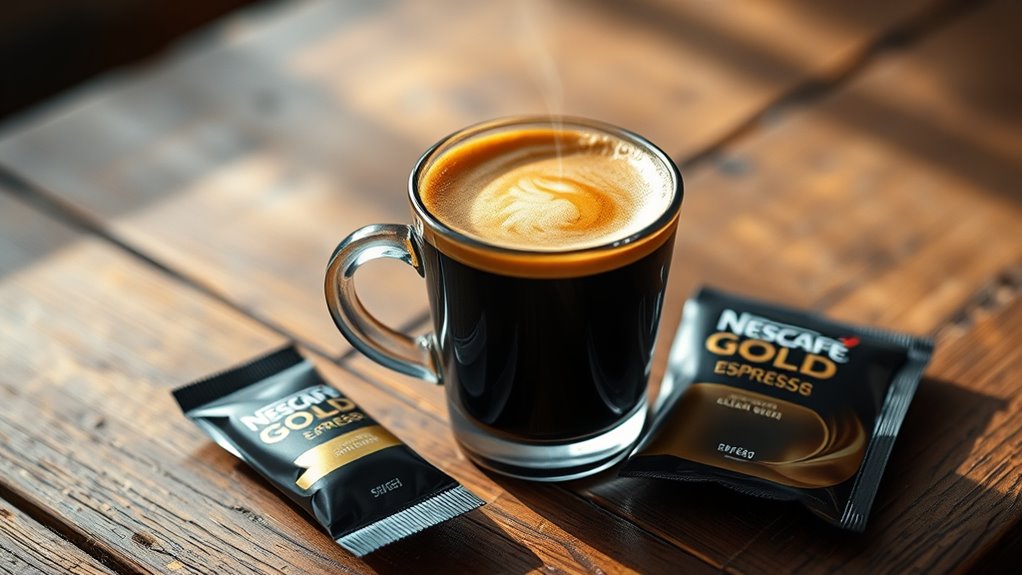
A single serving of Nescafé Gold Espresso contains approximately 60 to 80 milligrams of caffeine, depending on the coffee quantity and preparation method used. You’ll find that a standard serving typically involves 30 to 40 grams of powder, crafted from a blend of Arabica and Robusta beans.
A single serving of Nescafé Gold Espresso offers 60 to 80 mg of caffeine from a rich Arabica and Robusta blend.
This blend directly impacts the caffeine concentration, as Robusta beans generally have higher caffeine content than Arabica.
The caffeine amount in one serving aligns closely with that of a standard brewed espresso shot, delivering a comparable stimulant effect. When you consume Nescafé Gold Espresso, you receive a precise caffeine dose that supports quick alertness and energy.
It makes for an effective choice if you want immediate caffeine intake without excessive variability within the typical serving size. Because of its roasting and bean blend, Nescafé Gold Espresso’s caffeine content can be compared to the higher levels found in white espresso due to minimal heat damage during roasting.
Which Factors Influence Caffeine Levels in Nescafé Gold Espresso?
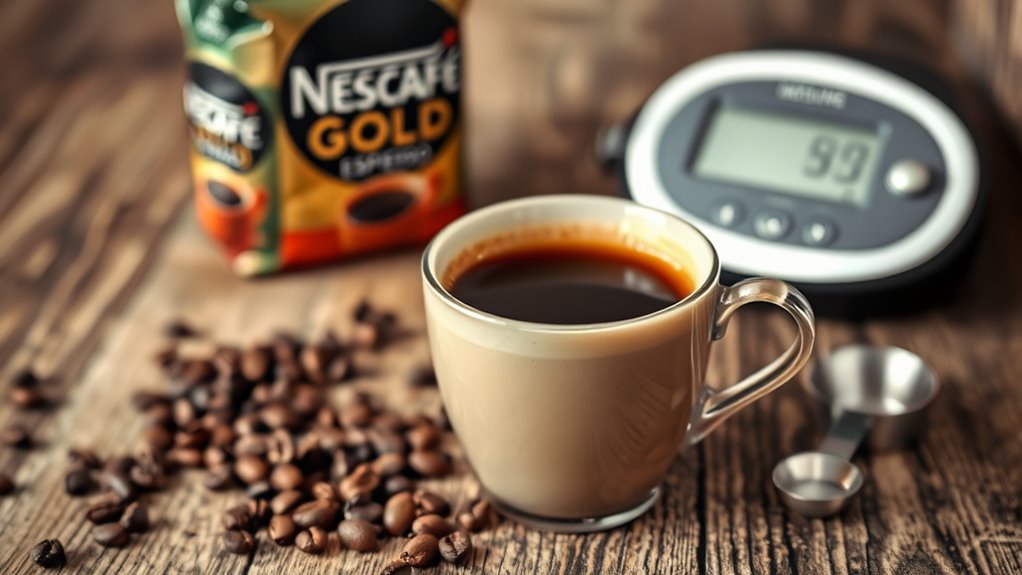
Understanding the caffeine content in a single serving of Nescafé Gold Espresso is just the starting point. Several factors actively shape that caffeine level.
The blend ratio of Arabica and Robusta beans is critical since Robusta contains almost twice the caffeine of Arabica.
You also need to take into account natural caffeine variations due to bean origin and harvest conditions.
The quantity of coffee powder you use directly scales the caffeine amount, as more grounds mean more caffeine.
Additionally, serving size and water volume influence the final caffeine concentration, with larger volumes diluting it.
While brewing parameters like temperature and extraction time impact caffeine extraction efficiency, these fall under preparation methods and are addressed separately.
Moreover, the espresso extraction pressure plays a key role in how caffeine and flavor compounds are drawn from the coffee grounds.
Does Preparation Affect Caffeine in Nescafé Gold Espresso?
Although the caffeine content in Nescafé Gold Espresso is primarily dictated by the coffee beans themselves, your preparation choices can slightly influence the final caffeine levels. Factors such as brewing strength, coffee quantity, and extraction time affect caffeine extraction, but these variations are relatively minor.
Water temperature and brewing technique have minimal impact compared to the coffee amount used. Proper extraction time helps achieve consistent caffeine levels by balancing flavor and strength.
| Preparation Factor | Effect on Caffeine Content |
|---|---|
| Coffee quantity | Directly increases caffeine levels |
| Brewing duration | Longer time extracts more caffeine |
| Water temperature | Minimal influence |
| Brewing technique | Slight effect on extraction |
How Does Nescafé Gold’s Caffeine Compare to Other Coffee Types?
When you compare Nescafé Gold Espresso to other coffee types, you’ll find it delivers a moderate caffeine concentration, typically ranging from 50 to 80 mg per 30 ml shot. This places it below the caffeine level found in a standard drip coffee, which generally contains more caffeine per serving due to larger volume and extraction methods.
However, Nescafé Gold Espresso exceeds the caffeine content of decaffeinated coffees and regular instant coffees, thanks to its concentrated espresso formulation. The actual caffeine amount depends on preparation variables like serving size and brewing strength, which can increase or decrease the dose.
Overall, Nescafé Gold Espresso provides a balanced caffeine boost, making it an efficient option for quick energy without reaching the higher caffeine intensities characteristic of drip or brewed coffees. Its caffeine content can also be influenced by factors such as coffee bean type and roast level, which affect the final caffeine concentration.
How to Control Caffeine Intake From Nescafé Gold Espresso
Controlling your caffeine intake from Nescafé Gold Espresso starts with accurately measuring the coffee grounds, as the caffeine content typically ranges between 50 to 90 mg per 2-gram serving. Use a precise scale or smaller scoop to regulate the amount of coffee per brew.
Adjusting the coffee-to-water ratio by adding more water dilutes caffeine concentration, producing a milder cup.
Try to limit your daily consumption by spacing out cups to avoid caffeine overload and keep track of your total intake. It really helps to monitor how much caffeine you’re getting throughout the day.
Additionally, consider opting for decaffeinated or lower-caffeine Nescafé Gold Espresso variants to reduce caffeine exposure even more. These methods let you maintain control over your caffeine consumption while still enjoying your espresso.
That way, you can match your intake with your personal tolerance and health guidelines. Remember that most adults can safely consume up to 400 mg of caffeine daily, which is roughly equivalent to 6-7 shots of espresso.
Is Nescafé Gold Espresso Right for Your Caffeine Needs?
You’ll find that Nescafé Gold Espresso delivers between 50 and 80 mg of caffeine per serving. That’s right in the range of what’s considered moderate for daily caffeine intake.
Plus, you can adjust how you prepare it, which means you can easily tailor the caffeine content to suit your personal needs.
Taking a moment to think about these caffeine levels will help you decide if it matches up with what you’re aiming for in your daily consumption.
For comparison, a doppio espresso contains roughly 150 mg of caffeine, providing a much stronger dose to consider when choosing your coffee.
Caffeine Levels Explained
Although caffeine sensitivity varies among individuals, understanding the caffeine content in Nescafé Gold Espresso is essential for aligning it with your daily intake goals. Typically, a 30 ml shot contains 50-80 mg of caffeine, placing it in the mid-range of espresso drinks. This makes it suitable if you need moderate caffeine levels without excessive stimulation.
Consider these factors when evaluating its caffeine profile:
- Adjust the caffeine dose by choosing multiple shots or larger servings for a stronger boost.
- Dilute with milk or water to lower caffeine concentration while maintaining flavor.
- Match caffeine intake with your tolerance and daily limits to avoid overconsumption.
Suitability For Daily Intake
When determining if Nescafé Gold Espresso fits your caffeine needs, consider its 50-80 mg caffeine content per 30 ml shot as a moderate dose.
Consuming 1-2 shots daily keeps you well within the generally accepted 400 mg caffeine limit for adults. This provides a concentrated energy boost without risking overconsumption.
This makes it suitable if you need focused alertness in a compact serving. However, if you have caffeine sensitivity, you should carefully monitor your total daily intake.
Even moderate doses can provoke jitters or disrupt sleep.
Incorporate Nescafé Gold Espresso into your routine based on your individual tolerance. Balance its benefits with your overall caffeine consumption to maintain ideal physiological responses and avoid adverse effects.
Because espresso has a high caffeine concentration per ounce, it delivers a potent stimulant effect even in small volumes.
Frequently Asked Questions
What Is the Shelf Life of Nescafé Gold Espresso?
You can expect Nescafé Gold Espresso to last 2 to 3 years if you store it in a cool, dry, and airtight place.
Once you open it, try to consume it within 1 to 2 months. This way, you’ll keep the flavor and aroma at their best.
Keeping it fresh really makes a difference when you want that perfect cup!
Can Nescafé Gold Espresso Be Used in Espresso Machines?
Yes, you can use Nescafé Gold Espresso in most espresso machines, as long as you match the product format, like capsules or ground coffee, with what your machine can handle.
It’s important to make sure the grind size and pressure are right. This helps you get the best extraction and a nice crema on your espresso.
Just double-check your machine’s compatibility before you brew, and you should be good to go!
Is Nescafé Gold Espresso Gluten-Free?
Yes, Nescafé Gold Espresso is gluten-free. It contains zero gluten ingredients and undergoes rigorous testing to prevent cross-contamination. This means you can enjoy it safely even if you have celiac disease or gluten sensitivity.
What Is the Best Water Temperature for Brewing Nescafé Gold Espresso?
You should brew Nescafé Gold Espresso between 90°C and 96°C to optimize extraction. Staying within this range prevents bitterness or weak flavor, ensuring a balanced, full-bodied espresso with the best aroma and taste.
This temperature range really helps bring out the rich flavors you want without any harshness. So, keeping your water just right makes a big difference in every cup. Give it a try and enjoy your perfect espresso!
Are There Any Known Allergens in Nescafé Gold Espresso?
You won’t find allergens lurking in Nescafé Gold Espresso; it’s pure coffee beans, free from soy, dairy, nuts, or additives.
Still, you should always check labels for cross-contact warnings if you have severe allergies.
Conclusion
So, you want to know how much caffeine is in your Nescafé Gold Espresso? Turns out, it’s enough to jolt you awake but not enough to turn you into a jittery mess. That is, unless you forget to account for preparation methods and serving size.
Controlling your caffeine intake here actually requires more calculation than brewing the coffee itself. In the end, Nescafé Gold Espresso offers a predictable caffeine dose if you’re precise enough to measure it.