You can use instant coffee instead of espresso powder by doubling the amount to match its deep, bold flavor. Just be careful not to add too much, or you might end up with bitterness and extra moisture that can mess with your recipe’s texture.
Dissolve the instant coffee in hot water so it blends evenly, and try using a dark roast for a richer taste. You might need to adjust the liquids in your recipe to keep everything balanced.
Keep reading to discover more tips on perfecting coffee flavor substitutions and making your baked goods even better.
How Instant Coffee Differs From Espresso Powder in Flavor and Use
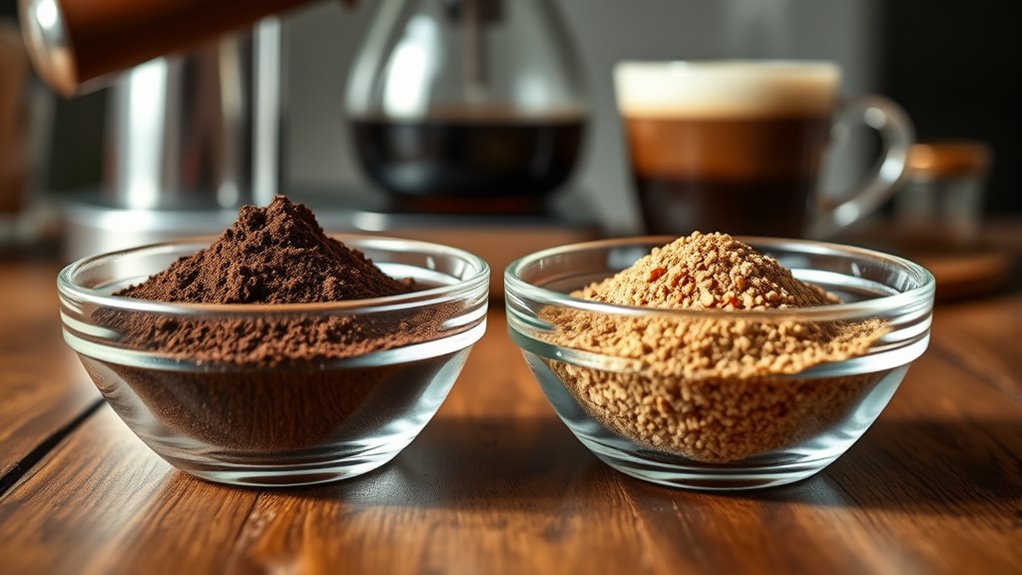
Although both instant coffee and espresso powder come from coffee beans, they differ quite a bit in flavor and how you use them.
Instant coffee tends to be milder and less concentrated, giving you a lighter, more acidic taste.
Instant coffee offers a milder, lighter flavor with a touch of acidity.
Espresso powder, on the other hand, is made from dehydrated brewed espresso. This gives it a robust, intense flavor with deep roasted bitterness.
When you add espresso powder to recipes, it adds a rich coffee punch without extra liquid.
Instant coffee can introduce some moisture, which might affect your dish.
You can substitute instant coffee, but just know it may change the depth and richness of what you’re making.
The flavor intensity of espresso powder is influenced by factors like extraction time and roast profile, which contribute to its bold taste.
Adjusting Instant Coffee Amounts for Espresso Powder Substitution
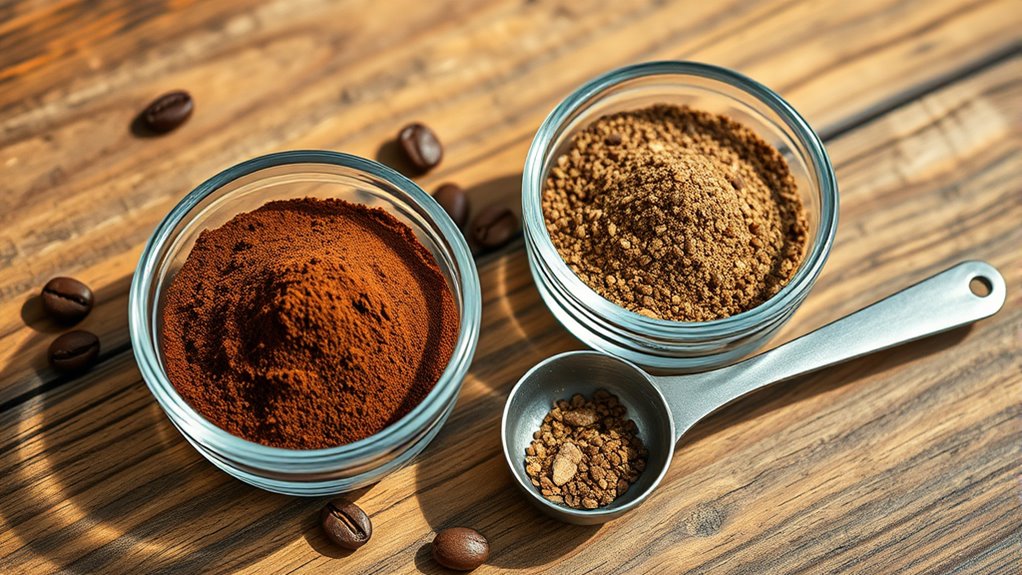
When you need to substitute instant coffee for espresso powder, adjusting the amount carefully is key to maintaining the right flavor balance. Use a 2:1 ratio—two parts instant coffee for every one part espresso powder—to get closer to that rich, intense flavor.
Since instant coffee is less concentrated, doubling the amount helps mimic espresso powder’s depth. However, start with less and increase gradually to avoid overpowering bitterness.
Keep an eye on your recipe’s liquid content too, as adding more instant coffee can slightly change moisture levels. By adjusting thoughtfully, you guarantee your baked goods or recipes retain their intended bold coffee notes without becoming bitter or overly moist.
Remember that espresso powder is produced through dehydration which preserves oils and acids, resulting in a more complex and intense flavor compared to instant coffee.
Tips to Avoid Bitterness When Using Instant Coffee in Baking

To keep your baked goods from turning bitter, use instant coffee sparingly compared to espresso powder since it’s less concentrated but can still overpower flavors if overused. Here are three tips to help you avoid that sharp bitterness when baking:
First, choose dark roast instant coffee. It has a richer, smoother flavor and is less likely to add unwanted bitterness.
Next, dissolve instant coffee in a small amount of hot water before mixing it into your batter. This step controls intensity and helps blend flavors more evenly.
Finally, add a touch of sugar or sweetener to balance out any lingering bitter notes, especially if you want a bit more coffee punch.
Give these a try, and your baked treats will taste just right! Remember, using filtered water when dissolving instant coffee can enhance flavor clarity and reduce any off-notes.
When to Brew Strong Coffee Instead of Using Instant Coffee or Espresso Powder
If you don’t have instant espresso powder on hand but want a robust coffee flavor, brewing strong coffee like a double shot of espresso can be an excellent alternative. Use this method when your recipe allows adding liquid without compromising texture.
Remember to chill the brewed coffee before mixing it in to avoid disrupting temperature-sensitive processes in baking.
Adjust your recipe’s liquid content to keep the right consistency. You might also want to consider reducing leavening agents slightly.
Using Cocoa Powder to Boost or Replace Espresso Powder
Although espresso powder provides a distinctive bitterness and depth, you can effectively boost or even replace it with natural or Dutch-processed cocoa powder in your recipes. Cocoa powder enhances chocolate flavor with a rich, roasted character similar to espresso powder.
Here’s how to use it:
- Choose natural cocoa powder for a fruity bitterness or Dutch-processed for a smoother, mellow flavor.
- Adjust liquids slightly when substituting to balance cocoa’s moisture content and maintain the right batter consistency.
- Use cocoa powder alone to deepen chocolate notes or combine it with espresso powder for a layered flavor.
It’s pretty simple once you get the hang of it! Just pick the type of cocoa powder that suits your taste and tweak the liquids a bit if needed. You’ll get that rich, complex flavor without always needing espresso powder. Because espresso powder is derived from finely ground coffee roasted to enhance flavor and crema, understanding its roast profile can help you better mimic its taste with cocoa powder.
Boosting Chocolate Flavor With Instant Coffee Instead of Espresso Powder
When you want to deepen the chocolate flavor in your baked goods but don’t have espresso powder on hand, instant coffee offers a convenient and effective alternative. Since instant coffee is milder, you’ll need about twice as much to achieve a similar rich, chocolatey depth. Be careful not to overdo it, as too much instant coffee can introduce bitterness.
Using instant coffee subtly enhances the chocolate taste with a gentle coffee note. It’s perfect for brownies, cakes, or cookies.
| Feature | Espresso Powder | Instant Coffee |
|---|---|---|
| Flavor Intensity | Strong, concentrated | Milder, less intense |
| Quantity Needed | 1x | 2x |
| Taste Impact | Bold coffee notes | Subtle coffee undertone |
Adjust amounts to suit your recipe and taste!
Frequently Asked Questions
Can Instant Coffee Replace Espresso Powder in Savory Recipes?
Yes, you can replace espresso powder with instant coffee in savory recipes. Just use a similar amount, but adjust carefully to avoid bitterness. Instant coffee offers a milder, less concentrated coffee flavor that still enhances your dish.
It’s a handy swap when you’re out of espresso powder. Just keep in mind the flavor won’t be quite as intense. But overall, it works well and adds that nice coffee note to your cooking.
Does Using Instant Coffee Affect the Shelf Life of Baked Goods?
You won’t notice any ticking clock difference in shelf life when using instant coffee. It quietly blends in, keeping your baked goods fresh as long as you store them airtight.
Letting other factors take center stage. It’s really those other things that decide how long your treats last. So, no worries about the coffee changing the game.
Can Instant Coffee Be Used in Cold Desserts Instead of Espresso Powder?
Yes, you can use instant coffee in cold desserts instead of espresso powder. Just dissolve it first to avoid clumps, and use a bit more for a stronger flavor. It adds a rich, roasted note that complements creamy treats.
It’s pretty simple and works well. Just keep in mind that instant coffee might be slightly less intense than espresso powder, so adjusting the amount helps. Overall, it’s a great substitute when you don’t have espresso powder on hand.
Is There a Difference in Caffeine Content When Substituting Instant Coffee?
Yes, you’ll find less caffeine when you substitute instant coffee for espresso powder since espresso powder is more concentrated.
To match caffeine levels, you’ll need to use more instant coffee or check labels carefully for accuracy. It’s all about making sure you get the strength you want without any surprises. Just keep an eye on those measurements!
How Does Instant Coffee Substitution Impact Gluten-Free Baking Recipes?
Using instant coffee in gluten-free baking can mellow the flavor intensity and affect moisture balance. You’ll need to adjust the quantity carefully to maintain texture and richness. This is especially true in chocolate recipes.
Making these tweaks helps ensure your baked goods stay delicious and well-structured. It’s all about finding the right balance so your treats turn out just right every time.
Conclusion
Using instant coffee instead of espresso powder is like swapping a sharp brushstroke for a softer watercolor wash in your baking masterpiece. While instant coffee brings warmth and mild bitterness, espresso powder delivers bold intensity.
You’ll want to adjust your amounts carefully so you don’t overpower the flavors. Sometimes, brewing strong coffee or adding cocoa powder can give you the rich depth you’re after.
With these tips, you’ll confidently craft desserts that dance between subtle and striking every single time.