To backflush your espresso machine, insert a blind filter basket in the portafilter and add espresso machine-specific detergent if needed. Lock it in place, run the brew cycle for about 10 seconds, then stop and repeat several times to loosen oils and residues.
Finish with thorough water rinses to clear out cleaning agents. Regular backflushing keeps your espresso tasting fresh and your machine running smoothly.
Keep going to discover helpful tips and common pitfalls to avoid.
What Backflushing Is and Why It’s Important
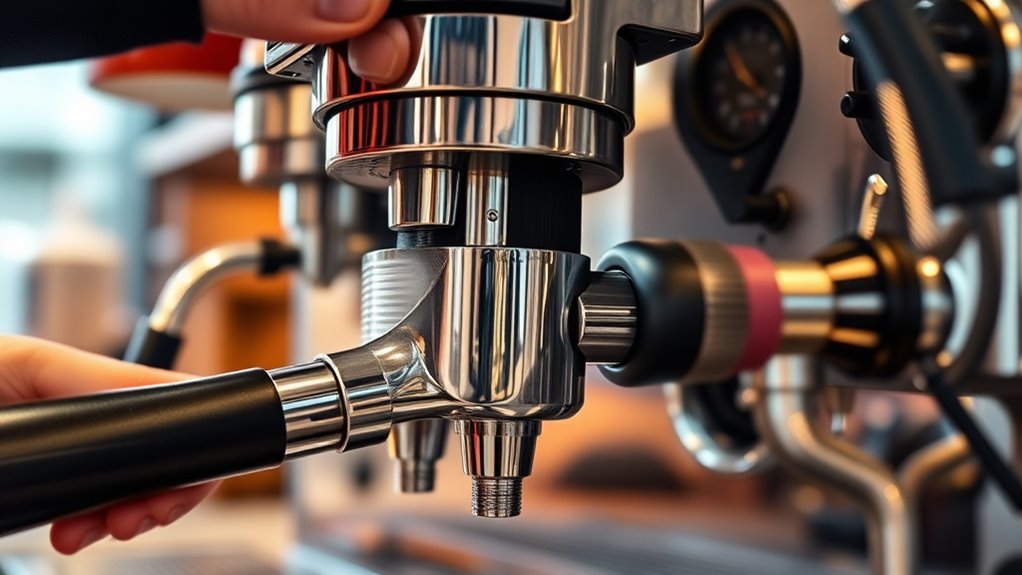
Although it might seem technical, backflushing is a straightforward cleaning process that you can perform to keep your espresso machine running smoothly. It involves running water and cleaning agents backward through the internal components to remove built-up coffee oils and residues.
Backflushing is a simple cleaning method that removes coffee oils from your espresso machine’s internal parts.
This cleaning helps prevent flavor degradation by clearing the group head, diffuser screen, and water passages of oils and debris that affect taste.
Regular backflushing ensures ideal water flow, maintaining consistent extraction and preventing clogs. It also preserves the longevity of your machine’s internal parts.
Backflushing is especially important for machines with a three-way solenoid valve since it cleans areas wiping can’t reach, preventing cross-contamination.
By backflushing regularly, you keep your espresso tasting great and your machine functioning efficiently. It’s a simple step that really makes a big difference in both flavor and machine health.
Incorporating backflushing as part of your daily maintenance routine helps maintain optimal performance and prevents costly repairs over time.
How to Tell If Your Espresso Machine Needs Backflushing
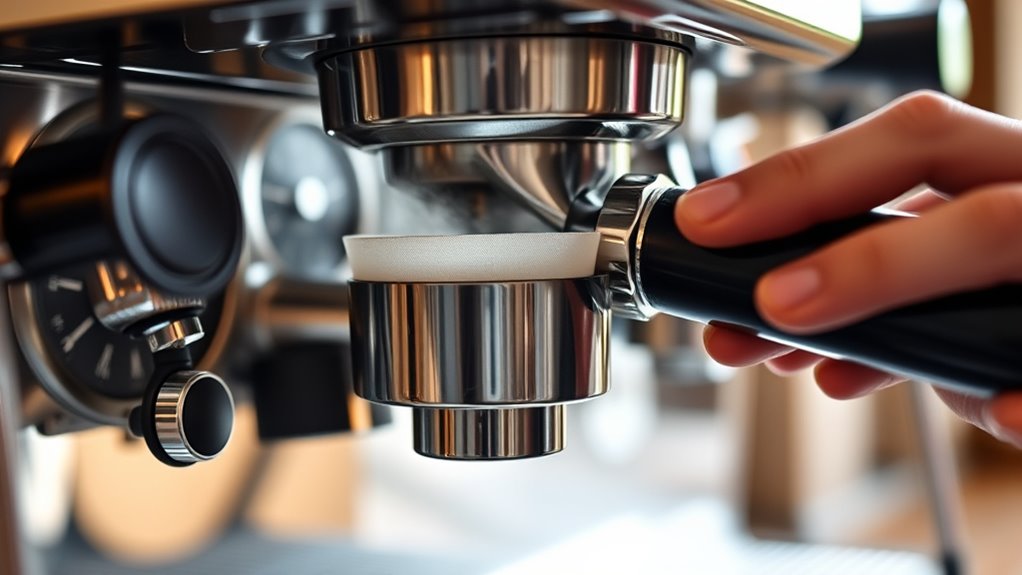
Keeping your espresso machine clean through backflushing helps maintain great taste and smooth operation. But how do you know when it’s time to perform this maintenance?
If your espresso shots start tasting bitter or rancid, it’s often due to oil buildup inside the machine. You might also notice slow or uneven water flow during brewing, which signals clogged internal passages.
Reduced or inconsistent pressure during extraction is another warning sign, showing blockages in the group head or solenoid valve. Check around the shower screen and portafilter for visible coffee oils or residue. If you see this, backflushing is definitely overdue.
After backflushing, if rinse water appears dark, foamy, or discolored, it confirms accumulated residues inside that need cleaning. Paying attention to these signs helps keep your espresso machine performing at its best. Regular backflushing also supports maintaining steady machine pressure for consistent flavor and extraction quality.
Tools and Cleaners You’ll Need for Backflushing
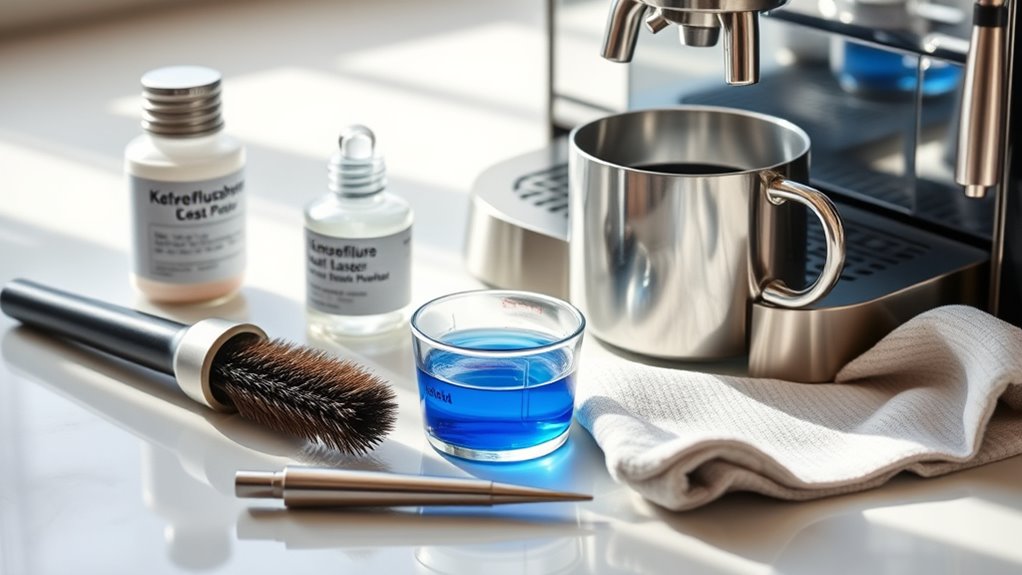
To backflush your espresso machine effectively, you’ll want to have the right tools on hand, like a blind filter basket and a group head brush. These make the process a lot easier and more thorough.
Also, be sure to use cleaning detergents made specifically for espresso machines. Avoid household cleaners since they can be too harsh or leave unwanted residues.
Having the proper filter baskets and cleaning solutions ready not only helps you get the job done well but also ensures your machine stays safe and in great shape.
Regular backflushing with detergent is recommended every 1-3 days for frequent use to maintain optimal machine performance.
Essential Backflush Tools
Before you start backflushing your espresso machine, make sure you have the right tools on hand. These tools guarantee a thorough clean and protect your machine. A blind filter basket is essential. It blocks water flow and lets the cleaning solution circulate properly.
You’ll also need a group head brush for scrubbing stubborn coffee oils. A soak container helps you clean the portafilter and basket thoroughly. Avoid household cleaners. Stick with products made specifically for espresso machines.
| Tool | Purpose |
|---|---|
| Blind filter basket | Blocks water for backflushing |
| Group head brush | Scrubs coffee oils off surfaces |
| Soak container | Cleans portafilter parts |
| Cleaning powders | Dissolves oils and residues |
| Dedicated cleaners | Safe for espresso machines |
Recommended Cleaning Detergents
Choosing the right cleaning detergent plays a crucial role in maintaining your espresso machine’s performance. Use a specialized espresso machine cleaning powder or tablet designed specifically for backflushing to effectively remove oils and residues.
Avoid household cleaners like dish soap, baking soda, or vinegar, as they can harm internal components.
Select a detergent that dissolves easily in hot water, and always follow the manufacturer’s recommended dosage for best results.
Keep a dedicated group head brush and a portafilter soak container handy to assist with regular maintenance.
Be sure to replace your cleaning tablets or powder regularly to maintain cleaning efficacy and prevent buildup of residual agents.
Using the right cleaning products ensures your espresso machine stays in top condition and delivers great-tasting coffee every time.
Regular descaling and cleaning are vital because proper machine maintenance, including descaling, significantly impacts extraction quality and flavor.
Proper Filter Basket Types
Although backflushing requires specific tools, the most essential is the blind filter basket. It blocks water flow and forces the cleaning solution through your espresso machine’s internal components. Make sure you use the correct size, usually 58mm for standard machines, to guarantee a proper seal and effective cleaning.
Replacement blind baskets cost between $5 and $15 and are readily available from espresso equipment suppliers.
Along with the blind basket, a group head brush is useful for cleaning the dispersion screen and surrounding areas during routine maintenance.
Remember to use only espresso machine-specific cleaning powders or tablets designed for backflushing. Avoid household cleaners like vinegar or baking soda, as they can damage your machine.
Choosing the right filter basket keeps your backflushing efficient and protects your espresso machine. Proper cleaning ensures optimal extraction performance and flavor quality over time.
How to Backflush Your Espresso Machine: Step-by-Step
When you backflush your espresso machine, start by removing the portafilter and inserting a blind filter basket designed for this purpose. Add a small amount of espresso machine cleaner or detergent into the blind basket if you’re doing a detergent backflush.
Lock the portafilter into the group head, then run the brew cycle for about 10 seconds before stopping it.
Repeat this cycle several times to circulate the cleaning solution and break down coffee oils and residue inside the machine.
Once done, remove the portafilter and rinse both it and the group head thoroughly with clean water to wash away any remaining cleaner.
This step-by-step process guarantees your espresso machine stays clean and maintains peak performance. It’s a simple routine that really helps keep your coffee tasting great every time. For optimal machine care, it’s also important to perform regular descaling procedures to remove mineral buildup that can affect performance.
How Often Should You Backflush for Best Results?
You should backflush your espresso machine regularly to keep it running smoothly and prevent oil buildup. How often you need to do it really depends on a few things, like how much you use the machine, the type of roast you’re brewing, and whether it’s a home setup or a commercial one.
Keep an eye out for signs that it’s time to backflush, too. If you notice the water flow slowing down or the taste of your espresso starting to change, those are good clues that your machine could use a clean.
Maintaining proper temperature stability during extraction also helps reduce buildup and extend machine performance.
Recommended Backflush Frequency
Since maintaining your espresso machine’s performance hinges on cleanliness, establishing a regular backflush schedule is essential. You should backflush daily using just water to prevent oil buildup and keep water flowing smoothly.
For a deeper clean, perform a detergent backflush weekly or monthly, depending on how often you use the machine.
If you run a busy commercial setup, you might need to backflush multiple times daily to keep up with heavy use. At home, once a week usually suffices.
Machines pulling dark-roasted coffee require more frequent backflushing because oils accumulate faster.
Sticking to a consistent backflush routine not only preserves espresso quality but also prevents clogging and extends your machine’s lifespan. This way, you ensure reliable performance every time you brew.
Using the correct grind size can also reduce residue buildup and improve extraction quality, helping maintain machine cleanliness.
Factors Affecting Backflushing
Establishing a backflush routine depends largely on several factors that influence how often your machine needs cleaning. The volume of use plays a big role: the more shots you pull daily, the more frequently you should backflush.
If you use darker roasts, which contain more oils, you’ll need to clean your machine more often to prevent buildup.
For daily upkeep, water backflushing after the last espresso shot keeps things clear.
Detergent backflushing is best done weekly or monthly.
Commercial machines usually require backflushing every 1-2 days, whereas home machines can often get by with a monthly schedule.
Sticking to these intervals helps maintain flavor quality and prolong your machine’s life.
Just adjust the frequency based on your specific usage and coffee type.
It’s really about finding a routine that works for you and your espresso habits.
Since espresso involves high-pressure extraction, consistent maintenance ensures optimal caffeine extraction and flavor.
Signs To Backflush
When your espresso starts showing signs like decreased water flow, uneven extraction, or a bitter taste, it’s a clear indicator that it’s time to backflush. If water sprays or sputters from the group head, that’s another red flag signaling internal clogging.
For heavy-use machines, backflush every 2 to 4 hours to prevent coffee oil and residue buildup.
At home or in low-traffic settings, once a week or after each day’s use usually suffices.
Regular backflushing stops rancid oils and mineral deposits from accumulating, keeping your espresso tasting fresh and machines performing smoothly.
Backflushing Mistakes to Watch Out For
Although backflushing is essential for maintaining your espresso machine, using the wrong cleaner or skipping detergent can leave oils behind and reduce its effectiveness. You should also avoid rushing cycles or skipping rinses, as this can cause residue build-up and off flavors.
Remember to clean the dispersion screen regularly and use detergent in the right amounts to protect internal components. Taking these steps will keep your machine running smoothly and your espresso tasting great. Regular backflushing with the correct procedure helps preserve the grouphead seal and ensures consistent water flow during extraction.
| Mistake | Effect | How to Avoid |
|---|---|---|
| Wrong cleaner | Oils and residue remain | Use espresso-specific detergent |
| Skipping detergent | Reduced cleaning power | Always add recommended amount |
| Ignoring dispersion screen | Poor water flow, incomplete clean | Remove and clean often |
| Rushing cycles | Ineffective oil removal | Follow recommended cycle timing |
| Skipping rinse | Contaminated taste, clogging | Always complete rinse cycle |
Frequently Asked Questions
Can I Use Homemade Cleaners for Backflushing My Espresso Machine?
You shouldn’t use homemade cleaners for backflushing your espresso machine. They can damage internal parts and cause corrosion.
Instead, always use commercial, manufacturer-recommended detergents designed specifically to clean coffee oils safely and effectively. It’s just the safer bet to keep your machine running smoothly. Trust me, your espresso machine will thank you!
Does Backflushing Affect the Taste of My Espresso?
Yes, backflushing directly impacts your espresso’s taste. Regular cleaning removes built-up oils and residue, which helps prevent bitter or rancid flavors.
If you skip it, your espresso can end up tasting stale or off. So, keep your machine clean to enjoy consistently delicious shots every time.
Can Backflushing Damage My Espresso Machine?
Yes, backflushing can damage your espresso machine if you use harsh cleaners, overdo cycles, or skip rinsing.
Stick to manufacturer guidelines, use proper tools, and rinse thoroughly to protect seals and internal components effectively.
Taking these steps really helps keep your machine running smoothly without any unexpected issues.
Is Backflushing Necessary for All Espresso Machine Types?
Not all espresso machines need backflushing. Think of it like oil changes for cars. If your machine lacks a three-way valve, backflushing isn’t necessary.
Check your manual to avoid unnecessary steps and keep things running smoothly. It’s all about knowing what your specific machine needs. That way, you won’t waste time or effort on something that’s not required.
How Long Does a Typical Backflush Cycle Take?
A typical backflush cycle takes about 30 seconds to 1 minute. If you’re using detergent, the cycles often last around 10 seconds with pauses in between.
You can expect about 5 to 10 cycles per cleaning. Altogether, this usually adds up to around 3 to 5 minutes, including rinsing.
Conclusion
Now that you know what backflushing is, why it’s important, and how to do it right, you’re ready to keep your espresso machine clean, efficient, and long-lasting. Remember to check regularly, use the right tools, and avoid common mistakes.
Backflush consistently, backflush correctly, and backflush confidently to enjoy the best coffee every time. Your machine will thank you, and so will your taste buds.