You can expect about 40 to 108 mg of caffeine in a typical serving of instant espresso, averaging roughly 67 mg per ounce. This amount is slightly lower than brewed espresso but generally higher than regular instant coffee. Factors like bean type, serving size, and preparation influence caffeine levels.
With larger servings, your caffeine intake goes up. If you want a more detailed breakdown of these variables and how to optimize your caffeine boost, there are important insights to explore next.
How Much Caffeine Is in Instant Espresso?
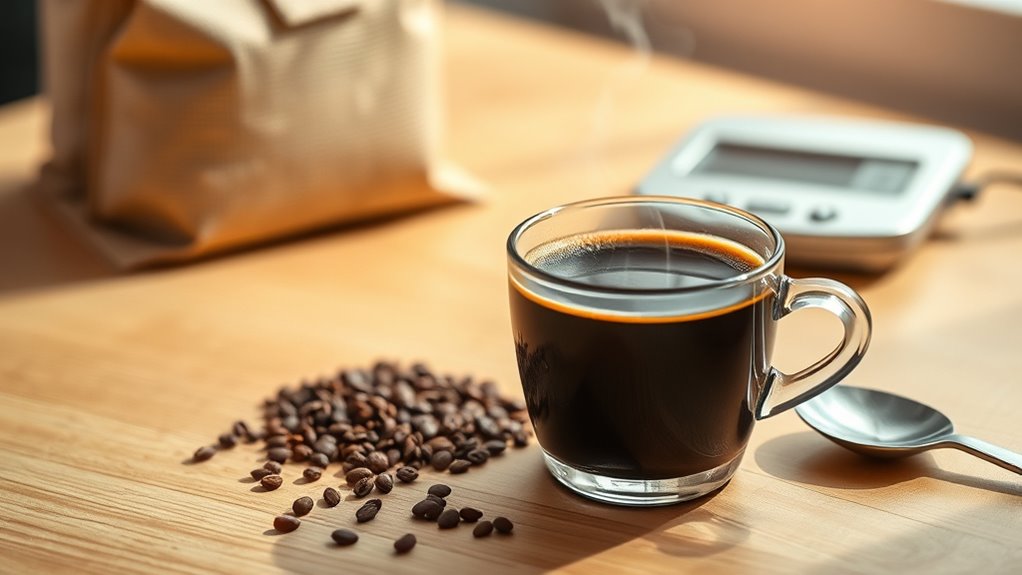
Although the caffeine content in instant espresso varies by brand, serving size, and preparation method, you can typically expect between 40 to 108 milligrams per serving, averaging around 67 milligrams.
A standard one-ounce serving of instant espresso powder yields approximately 30 to 50 milligrams of caffeine once brewed.
Compared to traditional brewed espresso, instant espresso generally contains slightly less caffeine per serving. The levels are comparable to those found in instant coffee, though they fluctuate depending on the specific product and how you prepare it.
Understanding these consistent ranges helps you gauge your caffeine intake accurately when choosing instant espresso. This way, you can make informed decisions based on your caffeine sensitivity and consumption preferences.
Instant espresso’s caffeine content is influenced by factors such as bean type, roast level, and preparation methods, similar to those affecting traditional espresso.
Key Factors That Affect Instant Espresso Caffeine Content
Understanding the caffeine content in instant espresso involves more than just looking at average milligrams per serving. You need to take into account several factors that cause variation.
The brand you choose impacts caffeine levels due to differences in coffee bean selection. Arabica beans contain less caffeine than Robusta.
The coffee-to-water ratio you use during preparation also plays a vital role. A more concentrated mix increases caffeine concentration.
While the processing method, whether freeze-drying or spray-drying, doesn’t greatly affect caffeine levels, the type of beans and preparation strength do.
Typically, caffeine ranges from 40 to 108 milligrams per serving, with an average near 67 milligrams.
Additionally, the brewing method influences caffeine extraction and thus the final caffeine content in your instant espresso.
How Serving Size Impacts Instant Espresso Caffeine
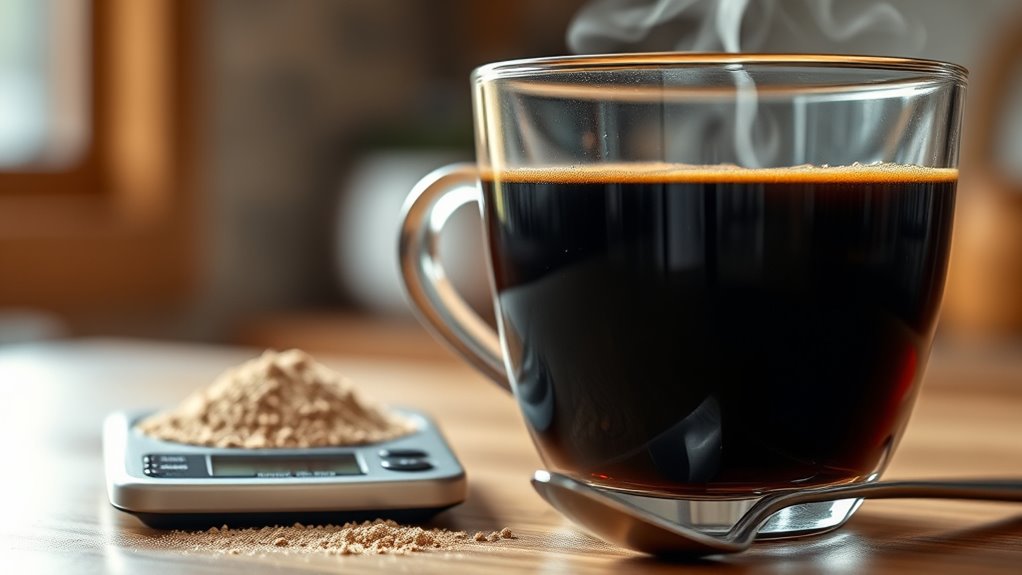
One key factor that directly influences the caffeine content in your instant espresso is the serving size you choose. A typical 1-ounce shot contains about 67 mg of caffeine, but if you increase the serving size, the caffeine content will rise proportionally.
For example, using two tablespoons instead of one can push caffeine levels beyond 100 mg. While caffeine concentration per fluid ounce stays fairly consistent, total intake depends on how much espresso you consume. Here’s a clear breakdown:
| Serving Size | Caffeine Content (mg) |
|---|---|
| 1 ounce (1 tbsp) | ~67 |
| 1.5 ounces (1.5 tbsp) | ~100 |
| 2 ounces (2 tbsp) | >108 |
Adjusting serving size lets you control your caffeine intake precisely based on your preferences. It’s pretty straightforward once you get the hang of it! Additionally, maintaining consistent timing during espresso extraction can help ensure that each serving delivers a reliable caffeine content and flavor profile.
How Preparation Affects Instant Espresso Caffeine Levels
When you make instant espresso, the amount of powder you use and the size of your serving play a bigger role in caffeine levels than how long you brew it or the water temperature.
It turns out that brewing time and water temperature don’t really change the caffeine much in instant espresso. So, if you want to control how much caffeine you get, it’s better to pay attention to how much powder you add and how concentrated your shot is. This is because unlike traditional espresso, instant espresso does not rely on high pressure extraction to affect caffeine content.
Brewing Time Impact
How much does brewing time affect the caffeine content of your instant espresso? The answer is: hardly at all. Since instant espresso is pre-processed and dried during manufacturing, the caffeine level is set before you even prepare it.
Unlike traditional brewed coffee, where extraction time influences caffeine concentration, dissolving instant espresso powder in hot water quickly releases nearly all its caffeine. Whether you stir for 10 seconds or let it steep for a minute, you won’t alter the caffeine amount.
The caffeine content primarily depends on the quantity of instant espresso powder you use, not on brewing duration. This quick dissolution ensures consistent caffeine levels in your drink, making brewing time an insignificant factor in determining the caffeine content of instant espresso. Regular cleaning and maintenance are essential to preserve the flavor and quality of your espresso, as buildup from oils and residues can affect taste and performance, which is especially important when comparing instant espresso to freshly brewed varieties with coffee oils and residue buildup.
Water Temperature Effects
Why does water temperature matter when preparing instant espresso? It directly affects how much caffeine dissolves into your cup. The caffeine extraction efficiency depends on temperature, with ideal extraction occurring between 195°F and 205°F (90°C to 96°C).
Here’s what you should know:
Higher temperatures within this range increase caffeine solubility, maximizing caffeine content. Water hotter than 212°F (100°C) risks over-extraction, causing bitterness without boosting caffeine levels considerably.
Cooler water reduces extraction efficiency, resulting in slightly less caffeine in your espresso.
While temperature variations cause minor caffeine fluctuations, these differences are generally small. To guarantee consistent caffeine content, aim for water in the perfect temperature window during preparation.
This precision helps you control both flavor and caffeine levels effectively.
Serving Size Variation
Water temperature sets the stage for caffeine extraction, but the actual caffeine content you get depends heavily on serving size and how you prepare your instant espresso.
A standard single shot typically delivers between 40 and 67 mg of caffeine.
If you increase the serving size or make a more concentrated brew, your caffeine intake can exceed 100 mg.
On the flip side, diluting your espresso with water or milk lowers the caffeine concentration per serving, reducing the total caffeine you consume.
Understanding this variation is essential if you want precise control over your caffeine intake.
By adjusting the volume and concentration of your instant espresso, you directly influence the caffeine dose.
Additionally, factors like grind size and extraction can also affect the caffeine levels and overall flavor of your espresso.
Comparing Instant Espresso and Brewed Espresso Caffeine
Although both instant and brewed espresso deliver caffeine, their content varies substantially due to differences in preparation and concentration. When comparing these two, consider the following key points:
Instant espresso typically contains 40-108 mg of caffeine per serving, depending on the brand and preparation.
Brewed espresso, on the other hand, ranges from 58-185 mg per shot.
So, brewed espresso tends to be more potent overall.
Brewed espresso’s extraction under high pressure yields a more concentrated caffeine content.
This process also offers greater consistency in strength per volume.
Instant espresso’s caffeine level is usually lower or comparable but can vary quite a bit depending on concentration and serving size.
It really depends on how much you use and the brand you choose.
For those seeking consistent caffeine levels with added control, investing in espresso machine features can significantly improve the quality and strength of brewed espresso.
Comparing Instant Espresso and Instant Coffee Caffeine
You’ll find that instant espresso usually has more caffeine per ounce than instant coffee. That said, their caffeine amounts can sometimes overlap.
When you’re comparing the two, it’s good to think about things like the brand, how big the serving is, and how it’s made. All of these can change how much caffeine ends up in your cup.
Knowing these details can help you pick the right option based on how much caffeine you want. The caffeine content in espresso varies based on factors like bean type, roast level, and extraction time, which also influence the overall flavor and strength.
Instant Espresso Caffeine Levels
When comparing caffeine content, instant espresso delivers a markedly higher concentration per serving than regular instant coffee. It typically ranges from 40 to 108 mg of caffeine depending on the brand and preparation. You’ll find the average caffeine content around 67 mg per serving, but this varies based on these factors:
- Brand differences: Some brands formulate instant espresso with higher caffeine concentrations.
- Preparation method: The amount of powder used and brewing strength directly affect caffeine levels.
- Serving size: Variations in portion size influence the total caffeine content you consume.
Understanding these variables helps you gauge the caffeine dose accurately. Instant espresso offers a more concentrated caffeine kick per ounce, making it a potent choice for quick energy boosts without having to drink a full cup. The caffeine content in instant espresso can be influenced by extraction time and the type of coffee beans used, much like traditional espresso shots.
Instant Coffee Caffeine Comparison
How does the caffeine content in instant espresso measure up against regular instant coffee? Instant espresso typically delivers between 40 to 108 mg of caffeine per serving, averaging around 67 mg per shot, which surpasses most regular instant coffees.
This higher caffeine density means you get a stronger caffeine concentration per ounce with instant espresso.
While both provide quick caffeine boosts, instant espresso’s elevated caffeine content makes it a more potent choice per serving. The variability in caffeine levels depends on the powder amount and preparation, but overall, instant espresso consistently contains more caffeine than standard instant coffee.
For a quick alternative to espresso shots, you can dissolve 2 teaspoons of instant espresso powder in hot water, which helps achieve a balanced coffee flavor efficiently.
Factors Affecting Caffeine Content
Although instant espresso generally contains more caffeine than regular instant coffee, several factors influence the exact caffeine content you get in each serving. Understanding these variables helps you predict how much caffeine is in your cup.
First up is the bean type. Robusta beans, which are used in some instant espressos, have way higher caffeine levels than Arabica beans. So, this can really affect the final caffeine content you end up with.
Then, there’s the brew strength and how much powder you use. The concentration depends on those two things, and they directly change the caffeine amount per serving.
Lastly, manufacturing and serving size play a big role. Different brands have different production processes and portion sizes. This means the caffeine can vary quite a bit, usually somewhere between 40 and 108 mg per serving in instant espresso.
Health Effects of Caffeine in Instant Espresso
Because caffeine content in instant espresso varies widely, from about 40 to 108 mg per serving, you need to take into account your sensitivity and consumption levels carefully.
Moderate intake can enhance alertness and concentration by stimulating the central nervous system. However, if you’re sensitive, even moderate amounts may cause jitteriness or disrupt sleep.
Consuming excessive caffeine from instant espresso risks increasing heart rate, anxiety, and digestive discomfort.
While instant espresso contains antioxidants that may offer health benefits, these effects depend largely on how much caffeine you consume.
If you’re pregnant or have certain health conditions, limiting your caffeine intake is advisable to reduce potential risks.
Understanding these effects helps you balance the benefits and drawbacks of instant espresso’s caffeine in your diet. So, it’s all about knowing your limits and listening to your body.
How to Choose Instant Espresso for Your Caffeine Needs
When selecting instant espresso to meet your caffeine needs, it’s essential to focus on the product’s specified caffeine content. This can range widely from 40 to 108 mg per serving. Knowing this helps you make a choice that fits your energy goals.
Prioritize brands with clear caffeine labeling so you know the exact milligrams per serving. Also, consider serving size. Larger portions mean more total caffeine, even if the concentration per gram stays the same.
If you want a stronger caffeine boost, look for “high-caffeine” or “extra-strength” labels. These usually have above 80 mg per serving. But remember, caffeine content can vary by manufacturer and coffee bean blend.
Tips to Get the Most From Your Instant Espresso
To get the most from your instant espresso, guarantee you use water heated to about 195°F (90°C) rather than boiling. This temperature maximizes flavor extraction without bitterness.
Stir the espresso powder thoroughly to dissolve all granules, ensuring the best taste and caffeine release.
Use 1 to 2 teaspoons per cup to achieve a stronger caffeine boost, aligning with recommended serving sizes.
Adding a pinch of salt or a small amount of sugar can enhance flavor perception and improve overall richness.
Finally, store your instant espresso in a cool, airtight container to preserve freshness and maintain caffeine potency over time.
Following these tips will help you extract maximum flavor and caffeine efficiency from every cup of instant espresso. Give these a try and enjoy a better espresso experience!
Frequently Asked Questions
Can Instant Espresso Be Used in Baking Recipes?
Yes, you can use instant espresso in baking recipes. It dissolves quickly and intensifies flavors. Plus, it blends really well with batters or frostings.
Just adjust the amount to get the strength you want. It’s a great way to boost coffee or chocolate notes without any hassle.
Is Instant Espresso Gluten-Free?
Yes, instant espresso is generally gluten-free since it’s made from roasted coffee beans. However, you should check labels for additives or cross-contamination warnings.
It’s a good idea to choose certified gluten-free products if you have a sensitivity. That way, you can enjoy your espresso without worry. Just keep an eye out when shopping!
How Long Does Instant Espresso Last After Opening?
Once you’ve revealed the secret treasure, instant espresso stays vibrant for about 3 to 6 months if you keep it sealed and dry.
Moisture dulls its magic, so store it airtight to preserve flavor and potency. Keep it away from heat and light, too. That way, your espresso stays fresh and tasty longer.
Does Instant Espresso Contain Antioxidants?
Yes, instant espresso contains antioxidants like chlorogenic acids. While levels can vary due to bean type and processing, you’ll still get beneficial compounds that help reduce oxidative stress and support your overall health.
Can Instant Espresso Be Mixed With Milk Alternatives?
Yes, you can mix instant espresso with milk alternatives like almond or oat milk. This combination doesn’t affect caffeine content but changes the flavor a bit. Stir it thoroughly to make sure everything blends well.
That way, you get an even mix and a consistent taste in your customized coffee drink. It’s a simple way to enjoy your espresso with a dairy-free twist!
Conclusion
You now know that instant espresso typically contains about 30-90 mg of caffeine per serving, depending on factors like serving size and preparation. Notably, a single shot of brewed espresso has roughly 63 mg, putting instant espresso in a comparable range.
By understanding these nuances, you can tailor your caffeine intake more precisely and make informed choices that suit your energy needs without overdoing it.