Espresso can raise your LDL cholesterol because it contains natural oils like cafestol, especially when brewed without filters. Drinking several shots daily may cause a small increase in cholesterol levels. But using paper filters and limiting your intake can reduce this risk.
Additives like cream or butter can make cholesterol effects worse. So, choosing low-fat options helps keep things in check. If you enjoy espresso often, getting regular cholesterol checks is a smart idea.
Keep exploring to understand how brewing methods and lifestyle choices influence your heart health. It’s all about finding the balance that works for you.
How Does Espresso Affect Your Cholesterol?
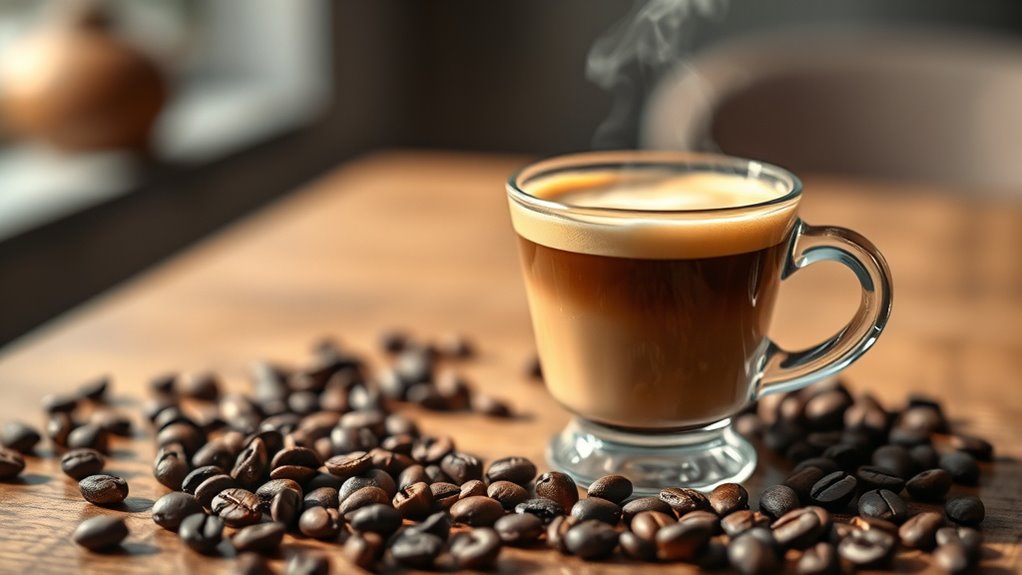
Although espresso is a popular coffee choice, it contains natural oils called cafestol and kahweol that can raise your LDL cholesterol levels. These oils pass through unfiltered brewing methods like espresso, which means higher concentrations of cholesterol-raising compounds end up in your cup.
If you drink three to five shots daily, studies show a small increase in total cholesterol, about 0.09 to 0.16 mmol/L. In places like Norway, larger espresso servings might expose you to even more cafestol than traditional servings.
But don’t worry, you can reduce this effect by using paper filters or switching to filtered brewing methods. These options considerably lower the cafestol content.
Understanding these details helps you make informed choices about espresso and how it affects your cholesterol. Proper cleaning and maintenance of your espresso machine, including regular removal of coffee oils, can also minimize the buildup of compounds like cafestol that influence cholesterol levels, as discussed in daily maintenance.
What Cafestol Does to Your “Bad” Cholesterol (LDL)
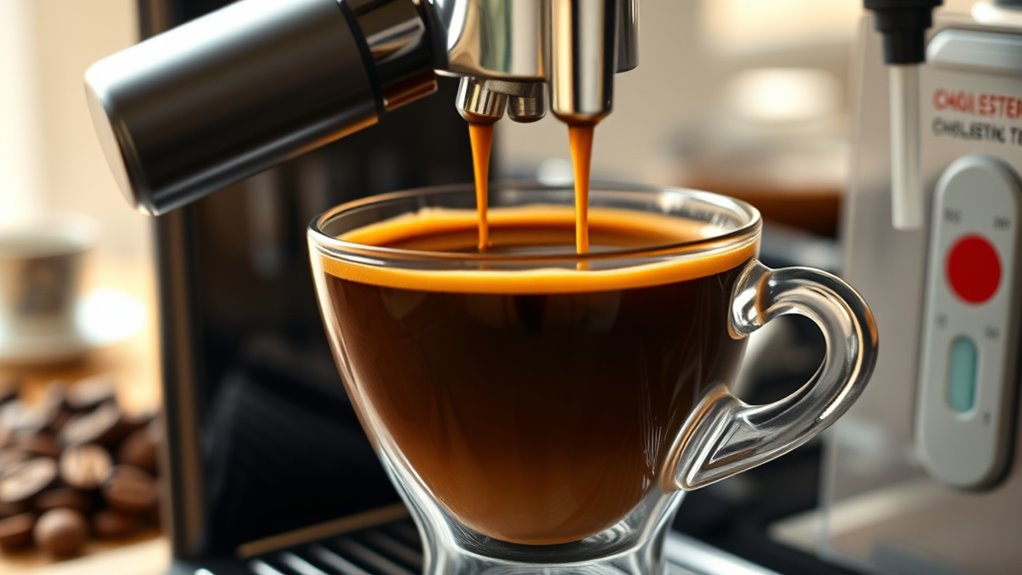
Because cafestol interferes with bile acid production in your liver, it directly raises your LDL cholesterol, the type often labeled as “bad.” When you consume unfiltered coffee like espresso or French press, you’re ingesting higher amounts of this natural oil.
Unfiltered coffee like espresso contains cafestol, a natural oil that raises your LDL cholesterol.
Studies link this to significant increases in total and LDL cholesterol levels.
Here’s what cafestol does to your “bad” cholesterol:
- It disrupts bile acid synthesis, reducing cholesterol breakdown.
- Elevated cafestol intake correlates with increases in LDL cholesterol by up to 16 mg/dL.
- Unfiltered brewing methods allow more cafestol to pass through, raising cholesterol more than filtered coffee.
Knowing how cafestol works can help you make better choices about your coffee and heart health. Notably, espresso’s high-pressure brewing process preserves more oils like cafestol compared to other methods, contributing to its impact on cholesterol.
Comparing Espresso With Other Coffee Brewing Methods
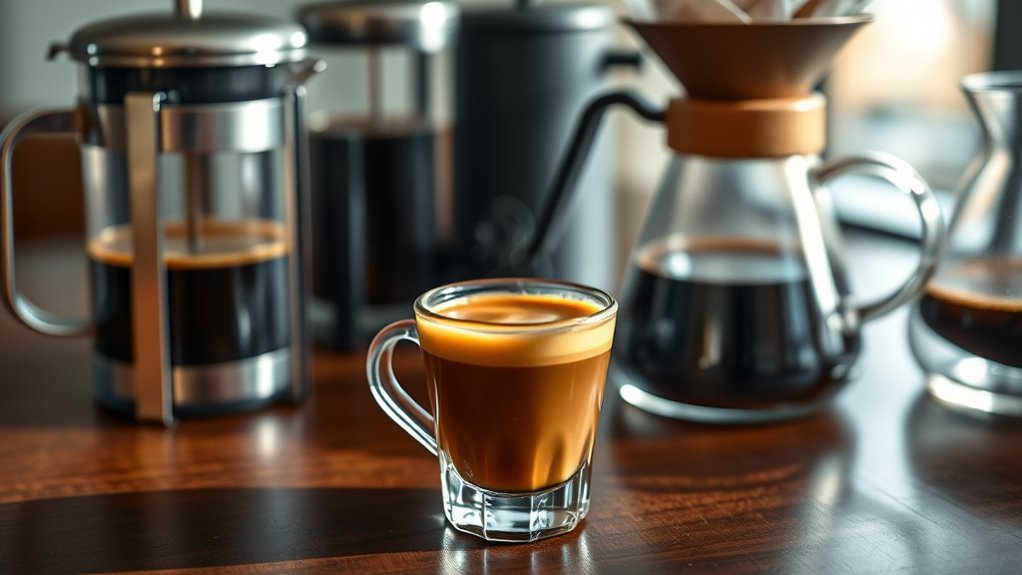
Understanding how cafestol impacts your LDL cholesterol sheds light on why different coffee brewing methods affect cholesterol levels differently. Espresso contains moderate cafestol but is served in small amounts, so its effect on cholesterol is less than unfiltered methods like French press or Turkish coffee.
These unfiltered methods involve longer brewing times and larger coffee quantities, extracting more cafestol and considerably raising total and LDL cholesterol.
On the other hand, drip coffee uses paper filters that trap cafestol, reducing its presence and making it a healthier option cholesterol-wise.
Your espresso’s brewing technique and serving size also influence how much cafestol ends up in your cup.
Additionally, the brewing pressure and extraction time during espresso preparation can affect the concentration of cafestol in the final cup.
How Additives in Espresso Influence Cholesterol Levels
When you add cream, half-and-half, or butter-based ingredients to your espresso, you introduce saturated fats that can raise your LDL cholesterol levels. These additives can greatly influence your heart health, especially with regular consumption.
To make smarter choices, opt for nonfat or low-fat dairy to reduce saturated fat intake. Also, avoid sweetened espresso drinks loaded with syrups and saturated fats, which harm cholesterol and heart health.
Choose nonfat or low-fat dairy and skip sweetened, syrup-heavy espresso drinks to protect your heart.
Be cautious with bulletproof coffee variants containing butter and MCT oil, as they may sharply increase LDL cholesterol. Understanding these impacts helps you enjoy espresso without compromising your cholesterol levels.
Moderation and choosing healthier additives can make a big difference in maintaining cardiovascular health. So, next time you grab your espresso, think about the extras you add!
Additionally, the roast level of your espresso primarily affects flavor rather than health impacts like cholesterol, so focus on additives rather than the coffee itself.
Why Filtered Coffee, Including Espresso, Is Better for Cholesterol
Managing what you add to your espresso is just one part of protecting your cholesterol levels. The brewing method plays a vital role too. Filtered coffee, including espresso made with paper filters, markedly reduces compounds like cafestol and kahweol that raise LDL cholesterol.
In contrast, unfiltered methods such as French press or Turkish coffee allow these diterpenes to pass into your cup, increasing cholesterol risk. Although espresso isn’t typically filtered like drip coffee, its smaller serving size and brewing process limit diterpene exposure, making its impact on cholesterol lesser. Additionally, the high pressure extraction used in espresso preparation enhances flavor while limiting the transfer of cholesterol-raising compounds.
How Much Espresso Is Safe for Your Heart?
Although espresso contains compounds that can affect cholesterol, moderate consumption is generally safe for most people. Drinking 3 to 5 shots daily might slightly raise your total cholesterol by 0.09 to 0.16 mmol/L, which is usually not clinically significant.
However, the brewing method matters because unfiltered espresso has more cafestol, a compound linked to increased LDL cholesterol.
Here’s what you should keep in mind:
- Limit unfiltered espresso intake to under six cups daily to avoid a cholesterol increase of up to 0.30 mmol/L.
- Consider using paper filters or switching to filtered coffee methods to reduce cafestol exposure.
- If you have high cholesterol or heart disease, consult your healthcare provider before increasing espresso consumption.
Following these tips helps you enjoy espresso while protecting your heart health. The presence of crema in espresso also plays a role in trapping aromatic compounds, contributing to the overall sensory experience without affecting cholesterol levels.
Monitoring Your Cholesterol When You Drink Espresso
If you drink espresso regularly, it’s a good idea to get your cholesterol checked with blood tests. This way, you can see how your espresso habit might be affecting your levels.
How you prepare your coffee—whether filtered or unfiltered—can really make a difference in your LDL cholesterol. So, keeping track of both how you brew your coffee and your overall lifestyle can be helpful.
Plus, working with a healthcare professional can guide you in making choices that let you enjoy your espresso while keeping your heart healthy.
Ensuring proper espresso extraction time and preparation can also influence the compounds in your coffee that affect cholesterol levels.
Importance of Regular Testing
Since espresso consumption can influence your lipid levels, regular cholesterol testing becomes vital in tracking these changes. By monitoring your cholesterol, you gain valuable insight into how your coffee habits might affect your heart health.
Blood tests are most accurate when fasting and should be done periodically as your healthcare provider suggests.
Here’s why regular testing matters:
- Detects fluctuations in your lipid levels linked to espresso intake.
- Helps you make informed decisions about adjusting coffee consumption or lifestyle.
- Supports ongoing cardiovascular risk management in consultation with your doctor.
Consistent testing ensures you stay proactive about your heart health. It allows you to balance your love for espresso with well-informed health choices. Additionally, understanding the minimal calorie content of espresso can help you manage your overall dietary intake while monitoring your cholesterol.
Impact of Coffee Preparation
Because the way you prepare your espresso directly affects the levels of cholesterol-raising compounds like cafestol, understanding these differences is key to managing your lipid profile.
Unfiltered espresso contains natural oils that can raise LDL cholesterol, but the impact varies with serving size and brewing method.
For example, drinking 3 to 5 cups daily might increase total cholesterol slightly, by about 0.09 to 0.16 mmol/L.
The type of coffee beans, whether Arabica or Robusta, and your espresso’s serving size also influence diterpene levels.
Brewing methods using paper filters, like drip coffee, reduce cafestol, whereas unfiltered styles retain more.
To keep track, regularly monitor your cholesterol, especially if your espresso intake is high.
This way, you can adjust your habits based on how your lipid profile responds.
Instant espresso powder is typically made from dark-roasted Arabica beans, which contribute to its distinctive flavor profile.
Role of Lifestyle Factors
Understanding how your espresso consumption affects cholesterol levels involves more than just knowing the brewing method. You need to actively monitor your cholesterol through regular blood tests to catch any changes that might be linked to your espresso habits.
Keeping tabs on your lipid profile helps you understand if your coffee intake, combined with how you brew it, impacts your heart health.
To manage this effectively, focus on three key lifestyle factors:
- Schedule consistent cholesterol testing to track changes over time.
- Maintain a balanced diet and engage in regular exercise to offset potential cholesterol increases.
- Consult a healthcare professional if your levels rise, so you can adjust your espresso consumption or lifestyle accordingly.
This approach guarantees you make informed decisions about both your espresso and overall well-being.
Frequently Asked Questions
Can Espresso Consumption Affect Triglyceride Levels?
Espresso consumption can modestly affect triglyceride levels, mainly if you add sugar or cream. Drinking moderate, plain espresso usually won’t raise triglycerides considerably. But excessive additives or intake might influence your lipid metabolism.
Does Espresso Impact HDL (“Good”) Cholesterol?
Espresso doesn’t considerably impact your HDL cholesterol, even though it can raise LDL.
While moderate coffee might boost HDL slightly, espresso’s effect remains unclear.
Are There Genetic Factors Influencing Cholesterol Response to Espresso?
Yes, your genetics can influence how espresso affects your cholesterol. Variations in genes like APOE and those related to lipid metabolism may make you more sensitive to cholesterol changes from espresso’s cafestol.
How Does Decaffeinated Espresso Affect Cholesterol Levels?
Decaffeinated espresso isn’t a free ride; it still carries cholesterol-raising diterpenes like cafestol. You’ll find unfiltered brews affect your LDL similarly to regular espresso, so filtering remains key to keeping cholesterol in check.
It’s kind of surprising, right? Even without caffeine, some compounds stick around that can impact your cholesterol. So if you’re watching your heart health, paying attention to how your espresso is brewed really matters.
Can Espresso Interact With Cholesterol-Lowering Medications?
Yes, espresso can interact with cholesterol-lowering medications by raising LDL levels due to cafestol.
So, it’s a good idea to keep an eye on how much espresso you’re drinking.
Make sure to talk with your healthcare provider about it. That way, you can enjoy your coffee without messing with your medication’s effectiveness.
Conclusion
When it comes to espresso and cholesterol, remember: moderation is key. While espresso contains cafestol, which can raise LDL cholesterol, its impact is less than unfiltered coffee.
Adding sugar or cream might affect your heart health more than the espresso itself. By choosing filtered options and keeping your intake moderate, you can enjoy your espresso without worry.
Keep an eye on your cholesterol, and you’ll find the right balance for a healthy heart.