Cold-pressed espresso is a unique brewing method where you use cold water under pressure to extract coffee, rather than hot water. This process takes longer, about 45 to 75 seconds, and creates a smooth, sweeter, and less bitter shot with vibrant fruity and floral notes.
Unlike traditional espresso, it won’t develop crema and retains delicate aromas. If you’re curious about how it differs from iced espresso or how to enjoy it best, there’s plenty more to discover.
What Is Cold-Pressed Espresso?
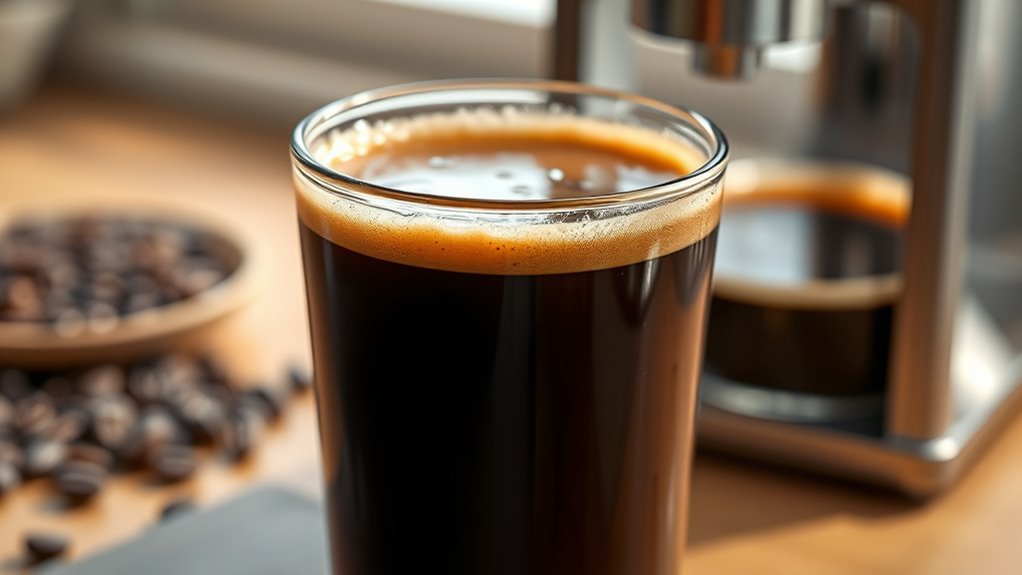
Although traditional espresso relies on hot water, cold-pressed espresso uses cold water under pressure to extract coffee, creating a unique flavor profile. You’ll need a specialized machine or manual lever device to apply consistent pressure during the extraction process.
It starts with pre-infusion, where cold water saturates the coffee grounds evenly, followed by a longer extraction time of 45 to 75 seconds.
This method produces a shot that’s noticeably sweeter, more aromatic, and less bitter than its hot counterpart. Unlike cold brew or AeroPress, cold-pressed espresso uniquely combines cold water and active pressure to generate a concentrated espresso-style shot.
Understanding this technique helps you appreciate the distinct qualities that cold-pressed espresso brings to your cup. Maintaining consistent timing during extraction is crucial for achieving balanced flavor and crema development even in cold-pressed espresso.
How To Make Cold-Pressed Espresso
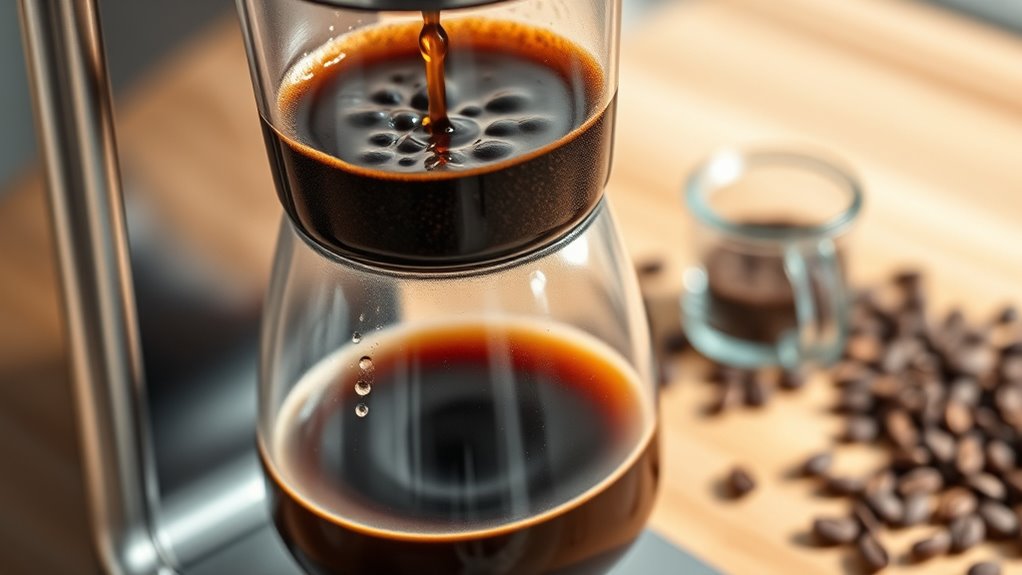
When you make cold-pressed espresso, you’ll need a manual espresso machine or AeroPress capable of applying steady pressure using cold water. Start by grinding your coffee beans finer than usual, about 3-4 notches finer, to maximize extraction.
Fill the reservoir with cold or room-temperature filtered water without pre-chilling. Pre-infuse by gently applying pressure for 2-3 minutes to saturate the grounds evenly. Then, press the plunger slowly and steadily until you achieve a yield of 30-40 grams.
This process produces a concentrated, cold espresso shot rich in flavor. Managing variables such as pre-infusion pressure and grind size is essential to ensure balanced extraction and avoid channeling.
| Step | Description |
|---|---|
| Equipment | Manual espresso machine or AeroPress |
| Grind Size | 3-4 notches finer than standard |
| Water | Cold or room-temperature filtered |
| Pre-infusion | 2-3 minutes gentle pressure |
| Extraction Yield | 30-40 grams slow, steady press |
How Cold-Pressed Espresso Differs From Traditional Espresso
Since cold-pressed espresso uses cold water and steady pressure over a longer extraction time, it delivers a distinctly different flavor and texture compared to traditional espresso brewed with hot water and steam.
Cold-pressed espresso’s slow, cold extraction creates a unique flavor and texture unlike traditional hot espresso.
When you explore the differences, keep these three points in mind:
- Temperature and Extraction Time: Cold-pressed espresso is extracted cold over about an hour, while traditional espresso uses hot water and finishes in under 30 seconds.
- Flavor Profile: Because cold-pressed espresso avoids heat, it’s sweeter and smoother, lacking the bitterness often found in hot espresso.
- Crema and Texture: Traditional espresso boasts a warm, crema-topped shot, whereas cold-pressed espresso remains cool and doesn’t develop crema during brewing.
Additionally, the brewing method significantly influences caffeine extraction, which is why cold-pressed espresso may have different caffeine levels compared to traditional hot espresso.
Understanding these distinctions helps you appreciate why cold-pressed espresso offers a unique coffee experience.
How Is Cold-Pressed Espresso Different From Iced Espresso?
Understanding how cold-pressed espresso differs from traditional espresso sets the stage for comparing it to iced espresso, which might seem similar at first glance. Unlike iced espresso, which is brewed hot and then cooled quickly over ice, cold-pressed espresso uses cold water under pressure right from the start.
This slow, pressure-driven extraction at low temperatures preserves more aromatic compounds and creates a smoother, sweeter profile. Iced espresso’s hot extraction often results in increased bitterness and harsher tannic notes, which cooling can’t fully erase.
Because of this, cold-pressed espresso tastes clearer and less acidic, offering nuanced flavors that iced espresso typically lacks. When you choose cold-pressed espresso, you’re opting for a refined flavor experience distinct from the quick, hot-brewed iced alternative. It also allows for the use of specific roast levels to enhance flavor profiles in a way that hot brewing methods cannot.
Cold-Pressed Espresso Or Cold Brew: What’s The Difference?
Although both cold-pressed espresso and cold brew offer invigorating cold coffee options, they differ quite a bit in how they’re brewed and their flavor profiles. Here’s what sets them apart:
- Brewing Process: Cold-pressed espresso uses cold water under pressure for a quick extraction. On the other hand, cold brew relies on a slow 12-18 hour steep without any pressure.
- Equipment: You’ll need specialized or manual gear to apply pressure for cold-pressed espresso. But cold brew doesn’t require any pressure systems at all.
- Serving Style: Cold-pressed espresso is ready to drink cold or iced without any dilution. Meanwhile, cold brew is often a smooth concentrate that you can dilute however you like.
- The extraction quality of cold-pressed espresso plays a crucial role in achieving a balanced and flavorful drink despite the quick brewing process.
Distinct Flavor Notes In Cold-Pressed Espresso
You’ll notice cold-pressed espresso delivers a brighter, cleaner flavor profile that highlights fruity and floral notes. This happens because the lower temperatures preserve volatile aromatic compounds that are often lost in hot brewing. Additionally, cold-pressed methods can enhance citrus and floral notes, similar to the flavor profile found in blonde espresso.
Flavor Profile Characteristics
Because cold-pressed espresso uses a low-temperature extraction method, it preserves delicate floral and fruity notes that often get muted in traditional hot espresso. This approach highlights the coffee’s unique characteristics, giving you a brighter, more nuanced experience.
You’ll notice:
- Brighter acidity and clearer flavor notes The cold process accentuates fruity and floral tones, making each sip vibrant and distinct.
- Smoother, sweeter taste With less bitterness and tannins, the espresso feels silky and balanced on your palate.
- Cleaner, less roasted profile It avoids smoky, heavy flavors, allowing the single-origin beans’ subtle nuances to shine through.
Cold-pressed espresso offers a layered, complex profile that invites you to explore coffee’s finer details without overwhelming bitterness. It’s a great way to enjoy all those subtle flavors without anything harsh getting in the way. This method contrasts with the high-pressure pumps used in traditional espresso machines that extract flavor at elevated temperatures.
Aromatic Compound Preservation
When you choose cold-pressed espresso, you’re tapping into a brewing method that preserves a richer array of volatile aromatic compounds by avoiding high temperatures. This technique prevents evaporation and degradation of delicate floral and fruity notes, allowing subtle nuances to fully develop.
Studies confirm cold extraction retains more aromatic oils, resulting in a more complex aroma profile than hot brewing methods. You’ll notice these distinct flavor notes create a deeper sensory experience with every sip.
Cold-pressed espresso often features a smooth, clean finish similar to light herbal tea, enhancing its nuanced flavor profile.
| Aromatic Compound | Cold-Pressed Espresso | Hot Brewed Espresso |
|---|---|---|
| Floral Notes | Well-preserved, delicate | Markedly diminished |
| Fruity Notes | Pronounced, vibrant | Muted or lost |
| Aromatic Oils | Higher concentration | Lower concentration |
| Overall Aroma Profile | Complex, nuanced | Simpler, less intense |
How To Enjoy Cold-Pressed Espresso And What To Pair It With
You’ll find cold-pressed espresso really shines in iced drinks like tonics and lattes. Its rich flavor stays intact without getting watered down, which is a big plus.
If you’re into desserts, try pairing it with something creamy like vanilla or fior di latte ice cream. It really brings out those smooth, sweet notes in the espresso.
For a bit of a refreshing twist, mix it with citrus or sparkling water. That way, you get a nice balance with its bright acidity.
Give it a try—you might be surprised how great it tastes!
Cold-pressed espresso retains much of the rich, full-bodied flavor typical of traditional espresso shots, making it a versatile choice for cold beverages.
Ideal Drink Pairings
Although cold-pressed espresso boasts a smooth and nuanced flavor, its versatility truly shines when paired thoughtfully with complementary drinks and foods.
To fully enjoy its profile, consider these ideal drink pairings:
Mix cold-pressed espresso with sparkling water or citrus-based drinks. The espresso’s higher acidity enhances refreshment without overpowering.
Craft iced lattes or espresso tonics using cold-pressed espresso. Its milder bitterness guarantees the flavor remains bright and undiluted.
Combine it with vanilla or fior di latte ice cream in affogatos. This pairing highlights the espresso’s sweet, smooth characteristics for a rich treat.
For an extra layer of flavor, add caramel or vanilla syrup to enhance sweetness and complexity in your cold-pressed espresso creations.
Dessert Complement Options
Pairing cold-pressed espresso with desserts releases a new dimension of flavor that complements its smooth, bright character. Try it with vanilla or Fior di Latte ice cream in an affogato to enhance the espresso’s sweet, creamy notes.
Its intense aroma and lively acidity balance rich chocolate desserts like mousse or tarts perfectly.
When paired with fruit-based treats such as berry compotes or citrus sorbets, cold-pressed espresso highlights their fresh, vibrant qualities without overwhelming bitterness.
You can also drizzle it over panna cotta or gelato to add nuanced depth.
For lighter options, enjoy it alongside delicate pastries like biscotti or shortbread cookies.
Here, its clean, aromatic profile shines through, creating a refined and harmonious dessert experience.
Give it a try and see how it transforms your dessert time!
Cold Drink Applications
How can cold-pressed espresso elevate your favorite chilled beverages? Its smooth, less acidic profile keeps bold flavors intact without dilution, making it perfect for revitalizing drinks.
Here’s how you can enjoy it: mix it into iced lattes or affogatos to savor intense aroma and brightness without bitterness. Or combine it with citrus or sparkling water for a vibrant espresso tonic that balances acidity and sweetness.
You can also prepare it in advance to craft layered coffee beverages or summer dessert cocktails with convenience.
Cold-pressed espresso prevents the harsh tannic notes typical of cooled hot espresso, enhancing your cold drinks’ flavor. Plus, its longer shelf life means you can experiment with new pairings confidently.
This way, you transform everyday chilled beverages into gourmet experiences.
The Future Of Cold-Pressed Espresso In The Coffee Industry
As consumer interest in distinctive cold extraction methods rises, the coffee industry is poised to embrace cold-pressed espresso more fully. You’ll see dedicated cold-pressed espresso machines emerging, expanding its presence in specialty coffee shops.
Innovations in manual and semi-automatic equipment will make it easier for you, as a home barista, to master this brewing style. Manufacturers are actively designing new tools tailored specifically for cold-pressed espresso, responding to its limited availability and growing demand.
As cafes incorporate these unique cold extraction experiences into their menus, cold-pressed espresso could evolve from niche to mainstream. Advances in technology combined with evolving consumer preferences mean you can expect cold-pressed espresso to become a significant and exciting segment in the coffee industry’s future.
Frequently Asked Questions
What Equipment Is Essential for Making Cold-Pressed Espresso at Home?
You’ll need a manual espresso machine like the Flair, a burr grinder for a fine grind, a heat-resistant pitcher, a timer to control extraction, and a reliable scale to measure coffee and water precisely for consistent cold-pressed espresso.
Having the right tools makes all the difference. Trust me, getting a good grinder and scale really helps nail the taste every time. Plus, timing the extraction is key to that perfect shot.
Can Cold-Pressed Espresso Be Used in Espresso-Based Drinks Like Lattes?
Yes, you can use cold-pressed espresso in lattes, and it actually enhances them. You’ll notice smoother, less bitter flavors and a bright, aromatic profile that blends perfectly with milk.
There’s no need to reheat or dilute it, which keeps things simple and tasty. It’s a great way to enjoy espresso-based drinks with a fresh twist.
How Long Can Cold-Pressed Espresso Be Stored Before It Loses Flavor?
You can store cold-pressed espresso up to 48 hours refrigerated in an airtight container, but it starts losing flavor after 24 hours.
To enjoy its vibrant, fresh taste, consume it as soon as possible.
Is Cold-Pressed Espresso Suitable for People Sensitive to Caffeine?
Cold-pressed espresso hits like a lightning bolt. If you’re sensitive to caffeine, you should tread carefully.
Start with small servings to gauge your tolerance, since its concentrated caffeine content can quickly overwhelm your system. Just take it slow and see how your body reacts.
What Is the Environmental Impact of Producing Cold-Pressed Espresso?
You reduce energy use with cold-pressed espresso since it skips heating water, but longer brew times might increase water consumption.
Choosing manual equipment and sustainable beans helps lower your overall environmental impact effectively. It’s a simple way to make your coffee routine greener. Just a few small changes can add up to a big difference.
Conclusion
Now that you know cold-pressed espresso offers a smoother, less acidic twist on traditional espresso, it’s clear why its popularity is soaring. Sales of cold coffee beverages have grown by over 20% annually.
You’ll appreciate its unique flavor complexity and versatility. It’s perfect for pairing with everything from rich desserts to fresh citrus.
Embracing cold-pressed espresso means diving into a revitalizing future. It’s where innovation meets bold taste in every cup.