An espresso martini typically contains around 300 calories, mainly from vodka, coffee liqueurs like Kahlúa, and added sugar syrups. Espresso itself adds minimal calories, so the main drivers are alcohol and sweeteners.
You can cut calories considerably by using sugar-free syrups, low-calorie spirits, or coffee extracts. This way, you can create keto-friendly versions without sacrificing taste.
If you want to enjoy a lighter cocktail, exploring ingredient swaps and preparation tips will help you craft a healthier espresso martini option. It’s all about finding what works for you while keeping that rich coffee flavor.
What’s the Typical Calorie Count in an Espresso Martini?
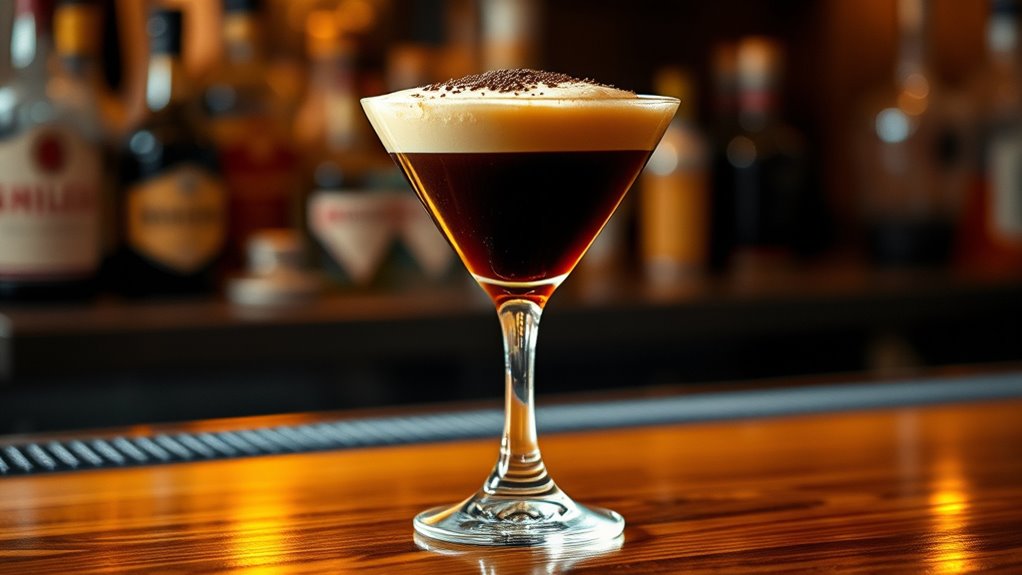
While the exact calorie count can vary depending on the recipe, a standard espresso martini typically contains about 300 calories per serving. Most of these calories come from the alcohol. The vodka and coffee liqueur, such as Kahlúa, contribute considerably.
You’ll also find that sweetened coffee syrup or added sugar pushes the calorie count higher. If you choose to customize your espresso martini with flavored or extra ingredients, the calories can shift accordingly, either increasing or decreasing.
On average, a typical espresso martini clocks in around 302 calories for a standard-sized cocktail. So, when you order or make this drink, keep in mind that its calorie content is mainly driven by the alcoholic components and sweeteners. They influence the overall energy intake more than the coffee itself.
The quality and flavor balance of the coffee used in the cocktail can be enhanced by paying attention to espresso extraction time, which influences the overall taste experience.
Which Espresso Martini Ingredients Pack the Most Calories?
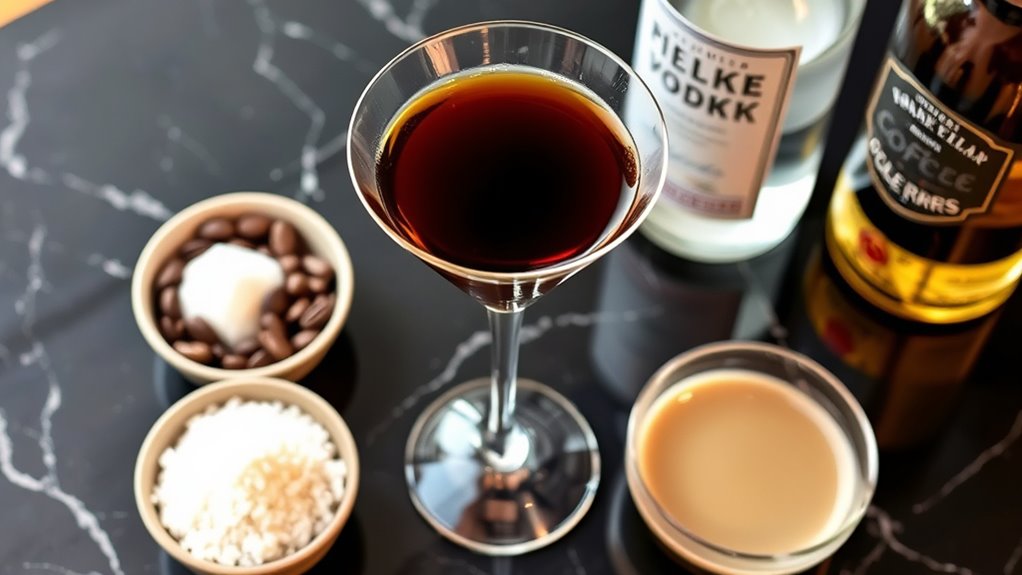
Because an espresso martini combines several ingredients with varying calorie levels, understanding which ones pack the most calories can help you make informed choices.
Kahlúa, a sweetened coffee liqueur, contributes about 45 calories per 20ml serving, making it one of the highest-calorie components.
Sugar syrup adds roughly 62 calories per 10ml, also notably increasing the drink’s calorie count.
Vodka, typically 40ml, provides around 87 calories but is less calorie-dense since it’s pure alcohol without added sugars.
The espresso shot adds a minimal 9 calories, so it has little impact on the overall calorie content.
Using high-quality espresso, such as espresso powder, can enhance the drink’s flavor without adding significant calories.
How Can You Make a Lower-Calorie or Keto-Friendly Espresso Martini?
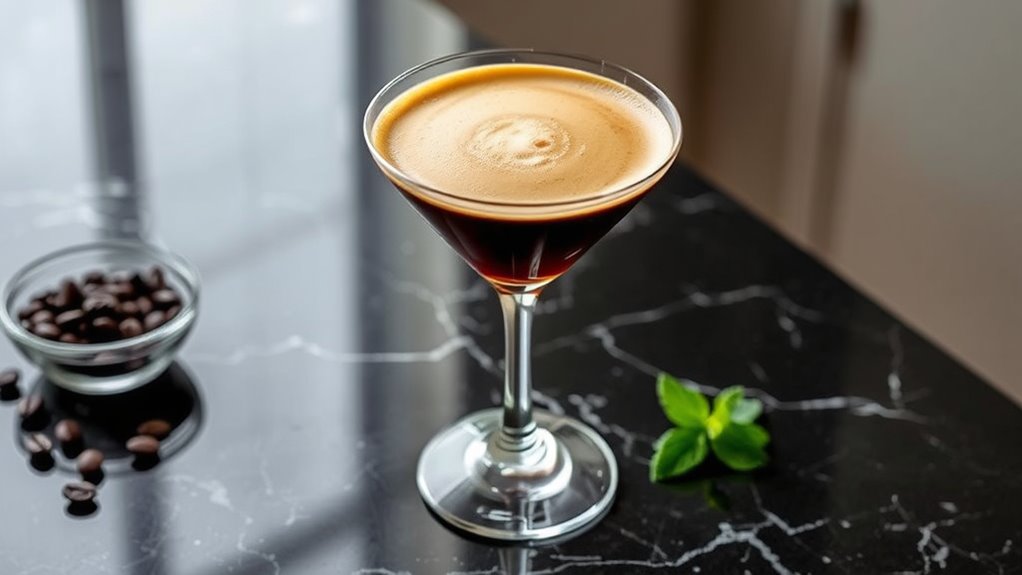
If you want to make a lower-calorie espresso martini, start by choosing sugar-free coffee syrups. They give you that rich coffee flavor without the extra sugar.
You can also swap out traditional vodka for low-calorie or flavored versions to keep things light.
Another great tip is to use keto-friendly sweeteners like erythritol, allulose, or stevia. These help keep your drink sweet without adding any carbs.
And instead of sugary liqueurs, try replacing them with black coffee or cold brew concentrate—it’s an easy way to cut down on sugar and calories while still packing a punch.
Using freshly brewed espresso with its concentrated shot ensures a rich flavor without extra calories.
Sugar-Free Syrup Options
How can you enjoy an espresso martini without the extra calories? Opt for sugar-free syrups like Torani or homemade versions made with erythritol or allulose. These syrups contain little to no calories since they use non-nutritive sweeteners instead of sugar.
Swapping traditional coffee syrup with sugar-free alternatives markedly reduces calories, making your espresso martini keto-friendly and low-carb compatible. You can easily make your own by simmering water with a keto sweetener until dissolved, then cooling it for use.
Using fresh, high-quality espresso as the base enhances both flavor and aroma, contributing to a richer cocktail experience with a smooth crema layer.
| Syrup Type | Calories Per Serving | Keto-Friendly |
|---|---|---|
| Torani Sugar-Free | 0-5 | Yes |
| Erythritol Simple Syrup | 0-2 | Yes |
| Allulose Simple Syrup | 0-3 | Yes |
| Regular Coffee Syrup | 50-60 | No |
| Homemade Keto Syrup | 0-2 | Yes |
Alcohol Substitutions
When aiming to reduce calories or maintain ketosis, swapping traditional vodka for lower-calorie spirits like gin or flavored distilled water can make a noticeable difference in your espresso martini.
You might also consider flavored vodka varieties, such as vanilla or citrus, which offer enhanced taste without added sugars.
To further cut calories, replace Kahlúa with coffee extracts or unsweetened coffee concentrates, effectively eliminating added sugars.
For a keto-friendly version, using sugar-free coffee syrups and sweeteners like erythritol or allulose is essential, though that falls under sweetener choices.
Alternatively, you can create a zero-calorie mocktail by substituting alcohol entirely with non-alcoholic coffee or espresso concentrate combined with sugar-free flavorings.
These substitutions guarantee you enjoy a flavorful espresso martini with considerably fewer calories while supporting dietary goals.
Low-Carb Sweeteners Choices
A key strategy to making a lower-calorie or keto-friendly espresso martini involves selecting low-carb sweeteners that maintain sweetness without adding unnecessary sugars or calories. You can replace traditional sugar syrup with a homemade sugar-free simple syrup using erythritol, allulose, or monk fruit syrup. This dramatically lowers calorie content.
Opting for sugar-free coffee syrups, either flavored or unsweetened, also keeps carbs minimal while preserving the cocktail’s sweetness. Additionally, avoid sugary liqueurs like Kahlúa. Swap in sugar-free coffee liqueurs to better suit keto and low-calorie goals.
Using flavored or infused vodka with calorie-free extracts can enhance flavor without raising calories. These choices help you enjoy a satisfying espresso martini that aligns with low-carb or ketogenic diets effectively. For the best flavor and texture, it’s important to use freshly brewed espresso as it provides essential oils and crema that contribute to the cocktail’s signature frothy top.
How Do Sweeteners and Syrups Affect Espresso Martini Calories?
Why does the choice of sweetener matter in your espresso martini? It directly affects the cocktail’s calorie content. Traditional simple syrup adds about 62 calories per 10ml, considerably increasing the total calories in your drink.
Choosing the right sweetener impacts your espresso martini’s calorie count significantly.
If you swap in sugar-free syrups or low-calorie sweeteners like allulose or erythritol, you keep the calories close to 93 per serving, similar to the original recipe without added sugars.
Be cautious with commercial coffee syrups, as they often contain hidden sugars that can unexpectedly boost calorie counts when used liberally.
Choosing your sweetener carefully is essential for controlling your espresso martini’s calorie load and crafting a lower-calorie version without sacrificing flavor or sweetness. It’s all about finding that balance between taste and health.
Calories in Classic vs. Sugar-Free Espresso Martinis Compared
You’ll notice a classic espresso martini packs about 302 calories. That’s mostly because of the sugar-based syrups and liqueurs it contains.
But if you opt for a sugar-free version, the calories drop to roughly 93. This happens by swapping in low-calorie sweeteners and alcohol, which also cuts down the carb content quite a bit.
A standard espresso martini typically includes a double shot of espresso, which adds a rich, concentrated coffee flavor along with a moderate caffeine boost.
Calorie Comparison Breakdown
Although espresso martinis are known for their rich flavor and energizing kick, their calorie content can vary dramatically depending on the recipe you choose.
A classic espresso martini typically contains around 302 calories per serving, primarily due to alcohol and added sugar syrups.
In contrast, a sugar-free espresso martini reduces calories considerably, averaging about 93 calories per serving.
This substantial difference, roughly 209 calories, comes from replacing sugar and sweetened liqueurs with sugar-free syrups and lower-calorie alcohol options.
By eliminating carbs and excess sugars, sugar-free versions offer a leaner, keto-friendly alternative without sacrificing taste.
When comparing these two, you can clearly see how ingredient choices directly impact the calorie count.
Keep in mind that espresso itself contains only 1-3 calories per shot, so most calories in the cocktail come from added ingredients.
Sugar-Free Ingredient Benefits
When you swap traditional ingredients in an espresso martini for sugar-free alternatives, you considerably cut down the calorie count without sacrificing taste. A classic espresso martini contains about 302 calories per serving, mostly from sugar-laden liqueurs like Kahlúa.
By replacing these with sugar-free syrups and alcohol, you reduce calories to roughly 93 per drink, a reduction of over 60%. Sugar-free coffee syrups have negligible calories, making them perfect for low-calorie versions.
This substitution not only lowers calories but also removes added carbohydrates and sugars, aligning the drink with keto and low-carb diets. You can enjoy the same rich flavor and smooth texture while benefiting from a markedly lighter calorie profile.
For the best flavor extraction in your espresso martini, ensure your espresso shot is pulled correctly with precise timing and pressure control, as explained in the espresso extraction process.
Carb Content Differences
How much do carbohydrates impact the calorie content of your espresso martini? Quite notably. A classic espresso martini contains about 23 grams of carbs, mainly from sugar-rich liqueurs like Kahlúa, contributing to its 302-calorie count.
When you switch to a sugar-free version, you eliminate nearly all carbs, zero grams per drink, because sugar-free syrups and liqueurs replace those sugary ingredients.
This change cuts the calories down to approximately 93 per serving.
The stark contrast in carbohydrate content clearly shows how added sugars in traditional recipes inflate both carbs and calories.
Tips to Enjoy Espresso Martinis Without Extra Calories
To enjoy espresso martinis without adding extra calories, you can make strategic ingredient choices and adjust your serving habits. Start by using sugar-free coffee syrups and sweeteners like allulose or erythritol to lower calorie content without sacrificing sweetness.
Opt for smaller serving sizes or limit how many cocktails you have to control total calorie intake effectively.
Choosing lower-calorie alcohol options, such as vodka with fewer additives or minimally flavored spirits, also helps reduce calories. Avoid heavy toppings like whipped cream or garnish lightly to prevent adding unnecessary calories.
Additionally, shake your cocktail vigorously with plenty of ice; this dilutes the drink slightly, decreasing calorie concentration per serving.
These evidence-based strategies allow you to enjoy espresso martinis while managing calorie consumption precisely. Give them a try and see how easy it’s to keep things light without missing out on flavor!
Using white espresso in your martini can add a unique, mild, nutty flavor with less bitterness and acidity, enhancing taste without extra calories.
Popular Low-Calorie Espresso Martini Variations to Try
If you want to explore beyond basic calorie-saving tips, trying popular low-calorie espresso martini variations offers practical ways to enjoy the cocktail without the usual calorie load.
You can notably cut calories by swapping traditional vodka for flavored or lower-calorie spirits. Using sugar-free coffee syrup and minimizing sweeteners often drops the calorie count below 100 per serving.
For added creaminess without the extra calories, try almond milk or other cream substitutes instead of heavy cream. Some recipes replace Kahlúa with coffee extracts or lighter liqueurs, slashing hundreds of calories while preserving the cocktail’s rich flavor.
These evidence-based substitutions let you savor espresso martinis without the 300+ calorie hit typical of the classic version, making them a smart choice for calorie-conscious drinkers.
To maintain the best flavor quality in your espresso martini, ensure that your espresso machine receives regular cleaning and maintenance to avoid any off-tastes from residue buildup.
Frequently Asked Questions
What Is the Caffeine Content in an Espresso Martini?
You’ll find about 80-120 mg of caffeine in an espresso martini, mainly from the espresso shot. The exact amount varies depending on coffee type and strength, but alcohol itself doesn’t add caffeine.
How Does the Alcohol Percentage Affect the Drink’s Calories?
The alcohol percentage directly increases your espresso martini’s calories because alcohol contains 7 calories per gram. Higher percentages mean more alcohol volume, boosting calorie content.
On the other hand, lower percentages reduce calories by decreasing alcohol’s contribution. So, if you want to cut back on calories, opting for a drink with less alcohol can help. It’s a simple way to enjoy your cocktail without going overboard on calories.
Can Espresso Martinis Be Made Vegan-Friendly?
You can make espresso martinis vegan-friendly by swapping dairy cream for plant-based options like almond milk. About 70% of bartenders now offer vegan cocktails, using vegan liqueurs and syrups to keep the flavor authentic and animal-free.
It’s easier than you might think to enjoy a classic cocktail without any animal products. Just a few simple swaps can make all the difference!
What Glassware Is Best for Serving an Espresso Martini?
You should serve an espresso martini in a chilled martini or coupe glass. Their wide, shallow bowls enhance aroma and presentation. Plus, stemmed glasses keep your cocktail colder longer by minimizing heat transfer from your hand.
It really makes a difference when you want to enjoy every bit of that rich flavor and smooth finish. So, grab a nice glass, chill it well, and your espresso martini will taste even better.
How Long Does an Espresso Martini Stay Fresh Once Mixed?
Your espresso martini is like a sunset. It’s best enjoyed quickly. Drink it within 1-2 hours for peak froth and flavor.
But it stays drinkable up to 24 hours if you keep it refrigerated. Just know that freshness and texture will decline noticeably after a while. So, the sooner you sip, the better!
Conclusion
Imagine your espresso martini as a car: the cream and sugary syrups are the gas guzzlers, while vodka and espresso are the fuel-efficient parts. By swapping heavy cream for almond milk or using sugar-free syrup, you trim around 100 calories without losing flavor.
Knowing the calorie impact helps you enjoy your favorite cocktail guilt-free. So, mix smart, sip mindfully, and keep your indulgence both delicious and balanced.